

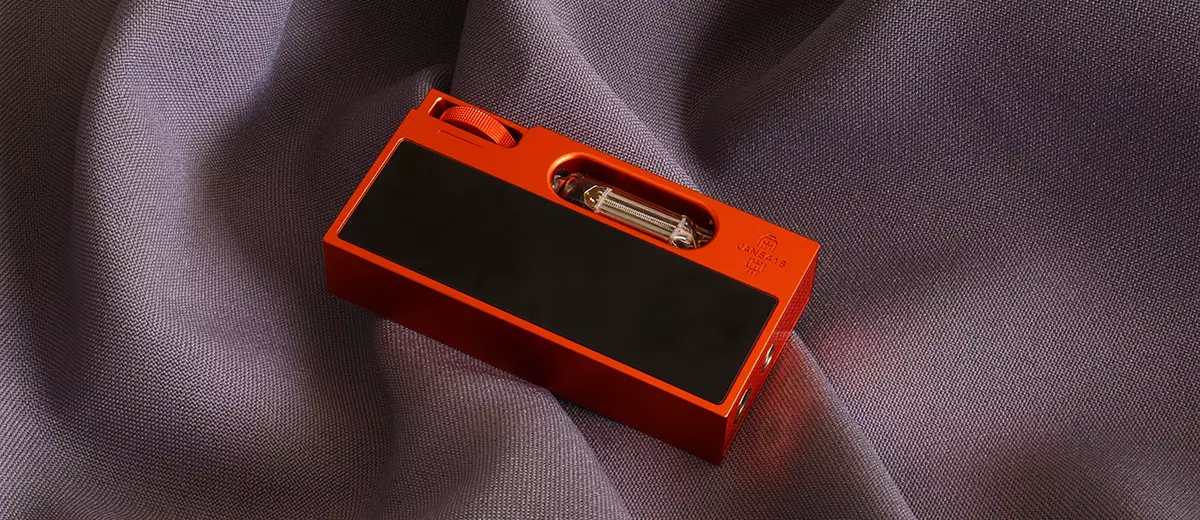
Louis reviews the Shanling UA7, a new flagship dongle DAC featuring dual JAN6418 vacuum-tube amplification and up to 577 mW of output power. It is currently priced at $298.00.
Disclaimer: This sample was sent to me in exchange for my honest opinion. Headfonics is an independent website with no affiliate links or status. I thank Shanling for their support.
Click here to learn more about Shanling Audio products previously reviewed on Headfonics.
This article follows our current scoring guidelines, which you can read in more detail here.
Dongle DACs have become quite advanced lately, and the latest trend seems to be to tube them and combine old tech with new to deliver two different sonic flavors in one small, portable package.
The recent iBasso Nunchaku, for example, reviewed back in July 2025, employs this particular concept. The ONIX Beta XI2 also has a mix of solid-state circuitry and tubes in its amplifier configuration. There are not many out there, yet.
This configuration has also slipped into devices like the xDuoo XD05T and the Cayin RU9, just to name a couple that also incorporate this trending design of combining old-world tube components with solid-state tech.
The latest entry into this up-and-coming class of dongles comes from Shanling and their flagship UA7. The Shanling UA7 combines solid-state and tube amplification with some nuanced design cues that are eye-catching.
Features
The joint Army and Navy collab 5-lead, RIAA-compliant JAN6418 Vacuum tubes from Ratheon are the apparent favorite piece of hardware in this new uptrend in tube-equipped dongle DACs.
The Shanling UA7 employs a pair of these pentodes in a side-to-side configuration alongside a separate OP+BUF circuit consisting of two OPA1662 and four BUF634 to cover the solid-state amplifier stage section, which is selectable separately from tube mode.
The amplifier section produces up to 577 mW per side balanced and 195 mW per side single-ended. It’s a solid output level, but not class-leading. FiiO takes pole position in the dongle sector in power output with their QX13 at 990 mW, but it involves using two power sources.
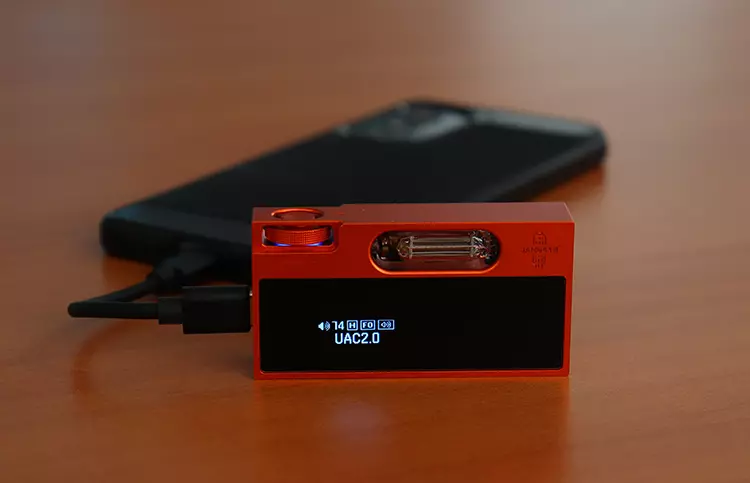
The UA7 supplies portable power via a single USB-C input connection. The output is controllable via a built-in rotary volume knob that doubles as a selector switch when you need to access all the internal features via a 0.87-inch OLED display.
The internal digital DAC section uses a single ESS ES9069 similar to the FiiO KA17 and the Cayin RU3. The UA7 offers decoding levels of up to 768k/32-bit PCM and native DSD512.
Design
The UA7’s rigid body is made from a solid piece of anodized aluminum with a volume knob behind a frame that lets the tip of the wheel protrude a bit so you can make adjustments.
I’m guessing the frame around the knob was placed there to protect the knob from accidental bumping, keeping your ears safe.
The button itself is side-mounted, contrary to others like the iBasso Nunchaku. But it has a similar feeling to the button used on the iFi audio GO blu in that it has a button on top to access the menu and make adjustments.
The button also has an LED that glows from the shaft outward to indicate the bitrate at a glance. The designated RGB name doesn’t fit since the button glows in multiple colors.
The Shanling UA7 is a very elegant-looking dongle. And because of design implementations, such as the visible tubes placed inside an open chamber, it will help reduce latent heat, but it also leaves them exposed.
The UA7 is available in three colors: Titanium Grey and Deep Black. I got Radiant Orange, which is uniquely gorgeous to my eyes, and that’s not even my favorite color. But it works on the UA7.
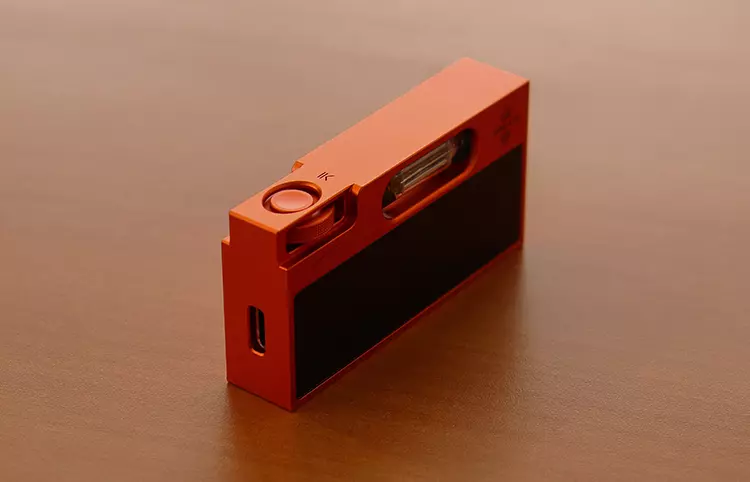
Tube Shock Absorption Structure
Imagine using a portable device with tubes, and every time you take a step, you hear a thud or a ringing sound, marring sonic enjoyment. I thought about that when these tube dongles were first introduced, and so did Shanling.
Shanling implemented a shock–absorbing base inside the UA7 that prevents the tubes from ringing, pinging, and producing echo-like sounds. They mounted the tubes on what looks like a soft silicone base.
You can get the UA7 to thump if you hit it hard enough, but during normal use, no negative sonic anomalies occurred while carrying it around. If it’s in your pocket, all the negative traits that tubes characteristically display will be minuscule, if any.
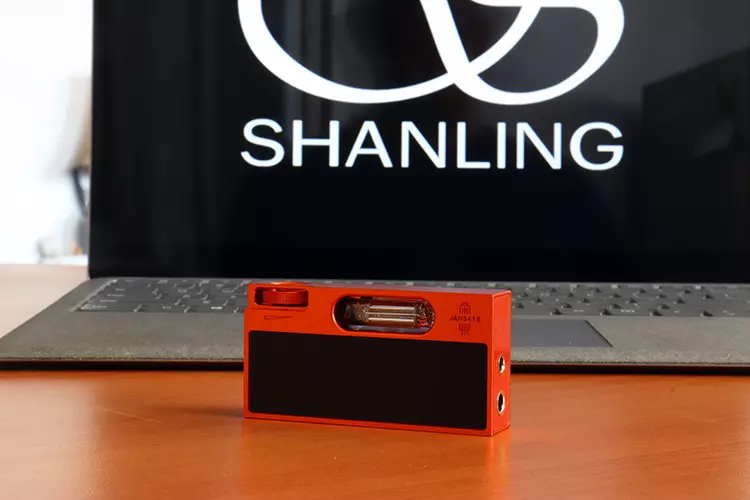
I/O
The IO is similar to other dongles. There’s a USB-C input that’s switchable over to UAC 1.0 mode. The UA7 also works on older iOS models via Shanling’s L3 Lightning cable, available separately. You do get a dual USB–C cable with a full-sized adapter.
A 100-step volume stage is a nice feature that is quite common nowadays and allows fine volume adjustments along with a two-stage gain setting that gives the user lots of flexibility.
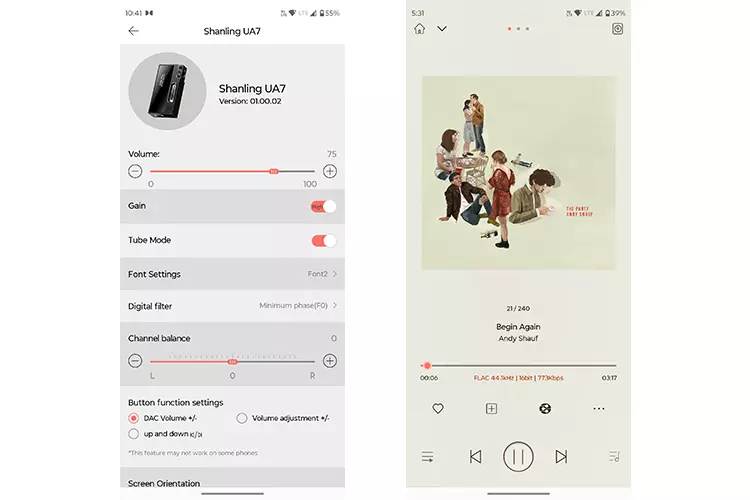
Eddict App
The Shanling UA7 menu features can also be found within the Eddict app, apart from being accessible from within the OLED screen via the top-mounted button on the volume knob.
The app lets you do everything you can do on the built-in screen, with the addition of firmware updates when they become available from Shanling.
Up to now, I haven’t found any bugs that need fixing, so no firmware updates are needed unless Shanling wants to throw in some new features down the road.
About the only feature that I miss is an equalizer or tone customization, since I do like to color my music on occasion. You could always engage one of the eight digital filters, but they’re subtle at best.
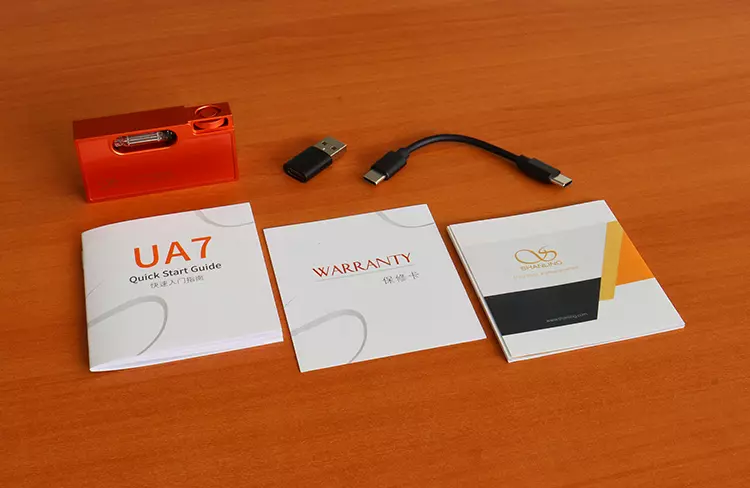
Packaging & Accessories
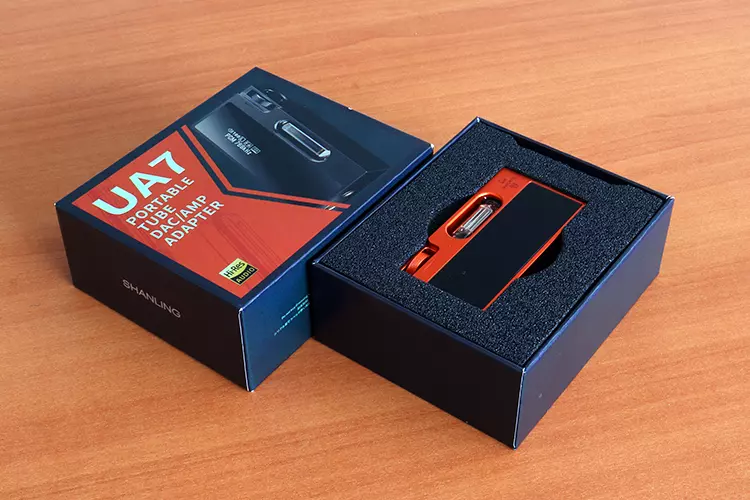
The box that the UA7 comes in has a bright sheen and is well-laminated with pics and some basic information on what’s inside. The UA7 itself sits within a foam mold that protects it from damage in transit.
Inside, there’s a basic 4″ USB-C to USB-C cable and a full-sized USB adapter. You’ll also find a warranty pamphlet, a quick start guide, and a Shanling product brochure. That’s all she wrote and nothing too elaborate.
Sound Impressions
I used my Motorola Edge running Android 15 with FLAC files and the Eddict player, along with the Jet Audio + player app. My custom Windows 11 Pro PC was also used as a source via a USB 3.2 port and Foobar.
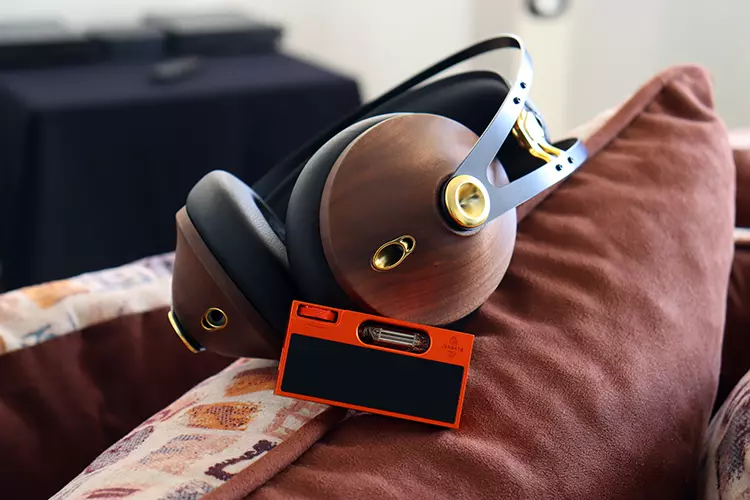
I broke out the upscaled HIFIMAN HE1000 Unveiled, the not-so-upscale now-well-broken-in Sundara, the HEDD Audio HEDDphone D1, and the Meze Audio 99 Classics 2nd Gen with combined single-ended and balanced connectivity via Meze Audio’s Upgraded Silver cable.
I also used FiiO’s FX17 and their FH9, as well as the Grand ORIVETI Supremacy and the OH700VB for IEM pairings.
Solid State mode
The Shanling UA7 produces a clean, unaltered sound profile in its Solid State mode. What I found most peculiar was the bass response, which came across as pleasantly colored. I was expecting that from the Tume mode.
Then again, the UA7 executes a sonic signature that has an attitude in that it wants you to hear everything in the mix and brings forth aspects of recordings that were subtle on other gear, and an unfiltered characteristic that brings those elements forward.
Of course, it’s a colorful presentation, but a nearly balanced profile is obtained that is striking when first heard. It’s an impressive dongle, sonically speaking, and even some of my audiophile friends said similar words when I obtained their opinion.
The UA7 produces a high amount of dynamism that comes across as punchy, energetic, and lively, presenting a sonic scape that doesn’t smear detail.
To be honest here, I feel that this tuning is not a typical Shanling tuning, since Shanling has usually been my smooth-sounding tuned gear to go to of late, but I prefer the new sonic profile the most.
For example, I prefer the UA7 tuning over their H2, which happens to be one of the smoothest-sounding DAC amplifier combo models in my collection, and I use it when I want a relaxing listening session.
The UA7 is forward and engaging. Its detailed nuance production is on the high side, and frequency response seems ample and bountiful. High dynamics and a dark background are some of the other sonic traits of the UA7 in this mode.
Tube Mode
The second tuning option is selected when you select the tube mode. Although tubes are associated with warmth and analog-like audio, the UA7 manages to sound as clean as the digital format counterpart, with lots of detail and a deep, focused soundstage.
I thought there would be more detail from the solid-state mode, but on this dongle, you get more detail in the tube mode. It’s a revealing analog-like sound that is musical and engaging.
The bass tightens up a bit in this mode, the midrange comes across as a smooth, natural experience, and the high frequencies are uncommonly detailed and crystalline for being passed through vintage surplus tubes.
Shanling seems to have gone for a modern tube sound rather than a Classic Tube tuning. In doing so, the UA7 has a more neutral tone but still sounds quite vivid. It’s also punchy, vibrant, with an impressive amount of authority and driving confidence.
Staging & Dynamics
Overall, the Shanling UA7 is capable of a formidable soundstage performance level that will upscale with headphones or IEMs that possess that sonic character, and performs leagues above what past dongles were capable of, including some older Shanling models.
The staging is wide enough to be considered ample with lots of real estate, but focused enough not to sound unnaturally sparse. Elements remain focused within the large sonic panorama.
Depth and layering are all presented in a modest amount since the UA7 is capable of frontal depth, strong imaging capabilities, and lots of separation, depending on the recording.
However, it maintains a controlled expanse that doesn’t lose the ability to hone in on what’s in a recording.
Click on page 2 below for my recommended pairings and selected comparisons.
