

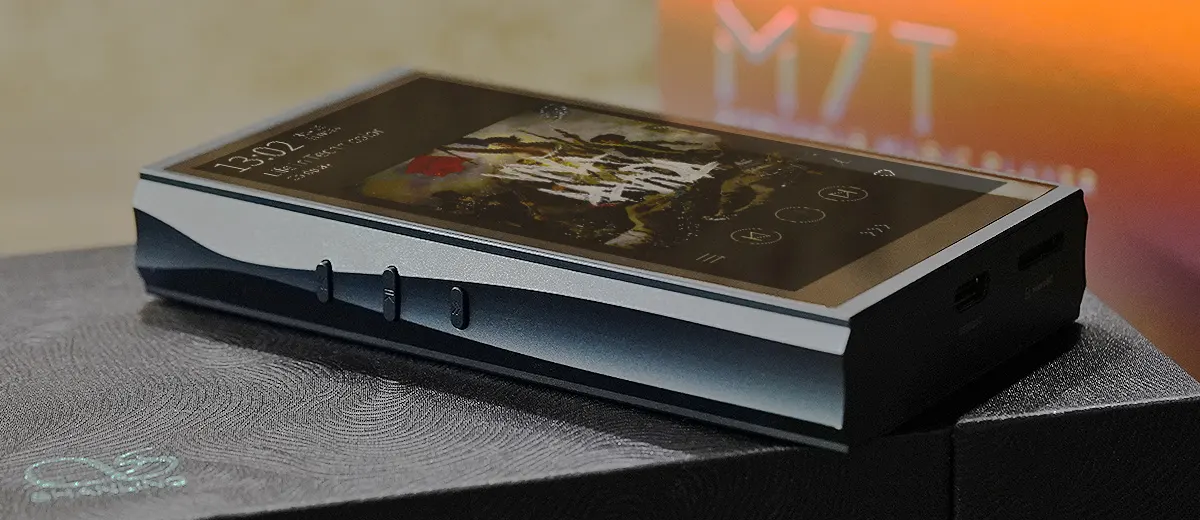
James reviews the Shanling M7T, a dual AK4498EX DAC Android DAP with solid-state and JAN 6418 tube modes capable of up to 980mW output power.
Disclaimer: This sample was sent to me in exchange for my honest opinion. Headfonics is an independent website with no affiliate links or status. I thank Shanling for their support.
Click here to learn more about Shanling products previously reviewed on Headfonics.
This article follows our current scoring guidelines, which you can read in more detail here.

Following on from my flagship Shanling M8T tube DAP review, I now have its smaller sibling, the M7T DAP, which is Shanling’s second tube-based portable player design.
The M7T features a new DAC, enhanced software capabilities, a robust unibody metallic design, and a more appealing price tag of $1,199.
While the price is close to that of the M8T, the M7T is essentially a more compact version of its flagship counterpart rather than a tweak of the original M7 and comes with a cooler design plus some new features.
If you’re seeking an all-in-one solid-state amping and portable tube experience and prefer a light-weight design, then the M7T is a device you shouldn’t overlook.
Features
Tubes
Like the M8T, the M7T features dual military-grade JAN6418 tubes, enhancing harmonics and delivering a lush tube signature.
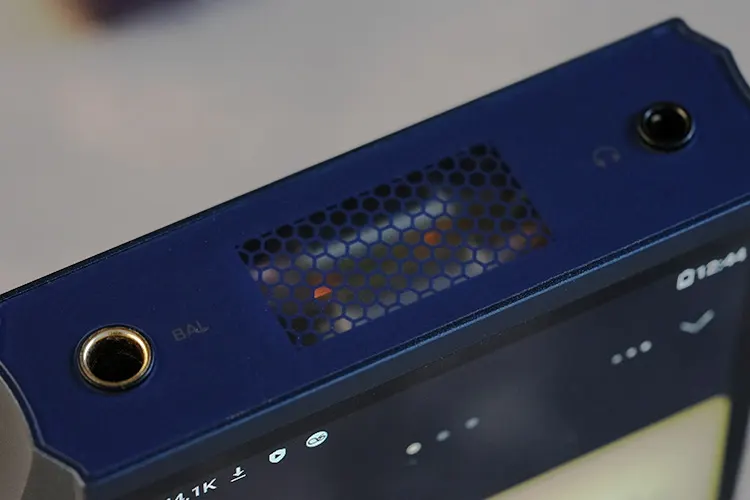
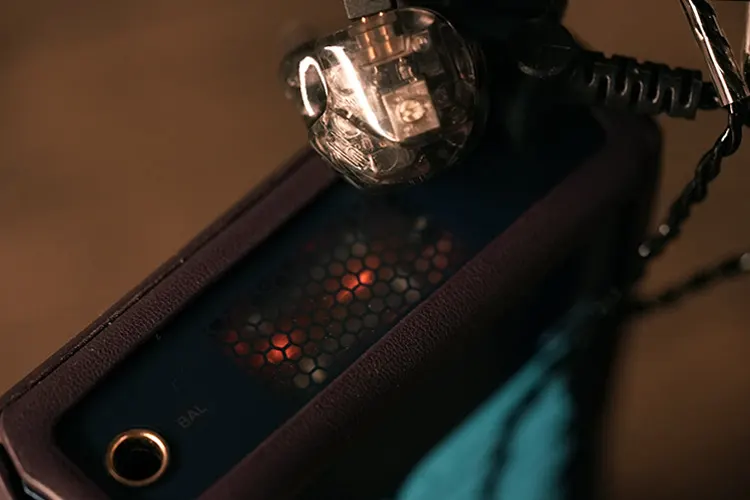
This time, the tubes are displayed beneath a glass top panel rather than a vented metallic mesh cage, giving the device a more modern look and allowing for a clear view of the tubes as they warm up and light up.
Switching to Tube mode requires only a brief warm-up period, and any faint hisses typically fade within one or two songs, making it manageable unless you’re using very sensitive IEMs.
For those who prefer it, the M7T also offers a solid-state amplification option with marginally higher output power (about 10%).
Over 4.4mm balanced, the M7T can deliver up to 980mW @32Ω loads, and 245mW through the 3.5mm single-ended connection, which is still adequate for sensitive gear.
From the drop-down menu, you can toggle between various DAC filters, allowing for a mix of sound signatures to fine-tune and match your equipment.
In comparison, the M8T outputs 500mW for single-ended connections and 1125mW for balanced connections at 32Ω, which is more discernible when you compare them with single-ended gears in 3.5 termination.
Decoding
The M7T uses an AK4191EQ modulator with a dual AK4498EX combo DAC, positioning it as a sub-flagship model compared to the AK4499EX used on the M8T.
Additionally, surrounding the DACs are Shanling’s 4th Gen FPGA-controlled KDS femto oscillators for enhanced jitter control, the same time-domain technologies implemented on the M8T.
The M7T continues the high decoding rate support seen in the M8T, handling PCM up to 32-bit/768kHz and DSD1024, placing it among the top players in the market.
This capability means it can read most, if not all, high-resolution files, including SACD ISO files, DXD, and DSD ISO, with the onboard player app operating seamlessly.
If you plan to use the M7T as a decoder for your PC or other USB outputs, it supports PCM decoding at 32-bit/768kHz and DSD256, which is more than adequate for most scenarios.
Design
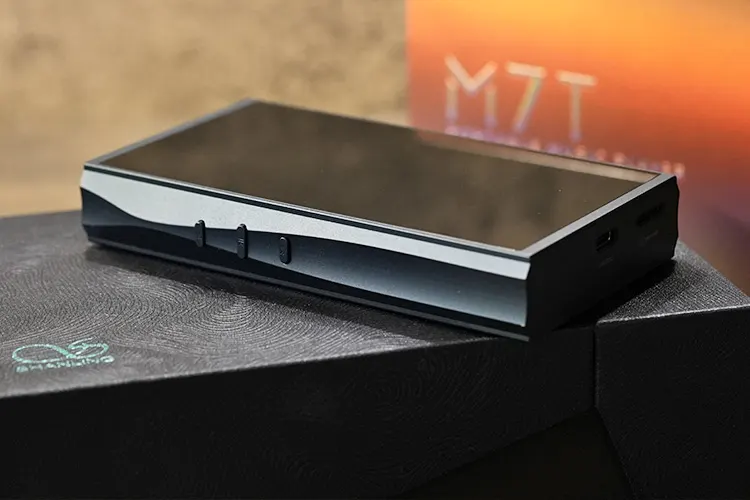
Shanling’s design has been evolving, becoming sleeker with a bolder, more muscular outline carved from solid aluminum.
The finish is smooth, and the machining quality is impressive for this sporty design. The contour lines and curves are cleanly outlined, enhancing grip, and are still visible when using the leather case.
The tube viewing window is eye-catching, and I find myself staring at it from time to time while playing the music. The lighting is mesmerizing, adding warmth to the solid metallic design, and its placement on top allows for easy glimpses through the window.
This model features a 5″ full HD SHARP screen with 441 PPI, providing high definition and clear readability even outdoors in sunlight.
I received the navy-colored unit, but you may have noticed the grey and brown-orange options, reminiscent of the latest iPhone releases.
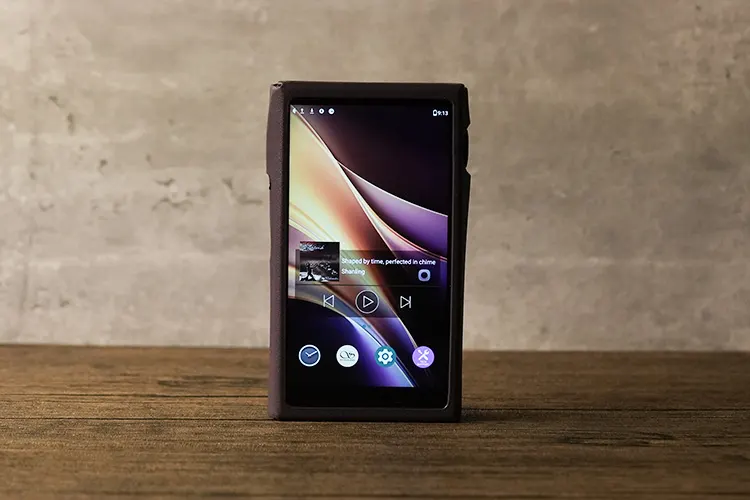
All colors appear more modern and premium compared to the last generation, and the leather case also comes in a cooler dark purple-ish color theme.
I/O
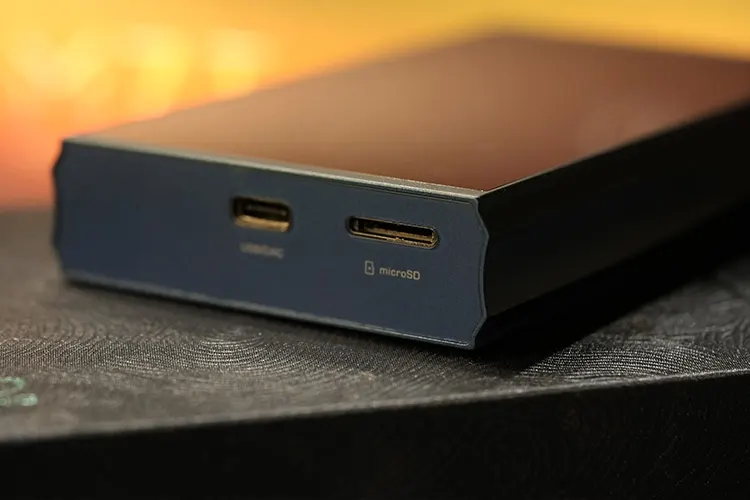
The layout of buttons and output jacks adheres to the familiar Shanling design, with headphone outputs placed on the top panel and the charging port located at the bottom, also a micro-SD card slot on the bottom right.
The 3.5mm output doubles as an SPDIF out with a converter cable, allowing connection to other decoding devices.
Controls
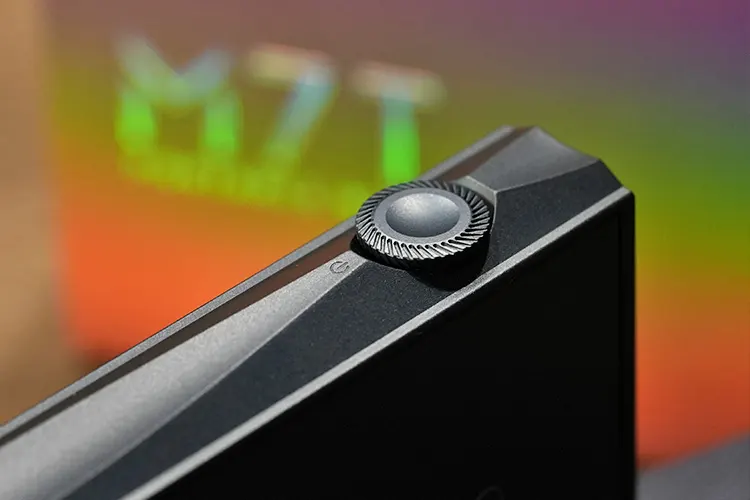
The control layout is straightforward, featuring a volume and on/off multi-knob on the right and navigation buttons on the left.
The buttons are well-machined, providing a clean click even when using the leather case, and there are enough steps for fine adjustments with sensitive IEMs or CIEMs.
The open Android 13 OS runs smoothly on the M7T without glitches, and there will always be firmware updates for big fixes and to further polish the experience.
You can enjoy tube sound while playing mini-games or listening to online radios and audiobooks on balanced output.
For those who want to control the device remotely, you can download Shanling’s Eddict Player App on iOS and Android. The app provides a quick connection through an on-screen tutorial and comes with plenty of other features.
Battery Life
The M7T is equipped with a 7000mAh battery and supports 18W fast charging. This setup provides approximately 12.5 hours of playback time on balanced output and an additional two hours with SE output.
When used as a Bluetooth transmitter, it offers an impressive 66 hours of playback time. With fast charging, you can nearly fully recharge the device during a lunch break, enhancing usability.
Based on my experience with the flagship M8T, the Tube mode doesn’t seem to consume significantly more power. For casual users who listen for about 1-2 hours daily during commutes, recharging the device just once a week should be sufficient.
Another observation is that the power management seems to be enhanced on recent Shanling products. Even if you leave it idling for a week, you can still instantly power it on with plenty of remaining power.
Packaging & Accessories
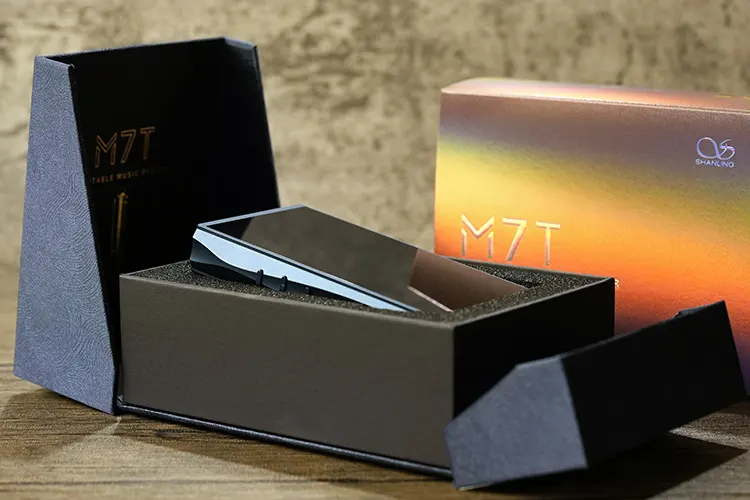
The M7T arrives in a petite yet well-designed package featuring a reflective print. Inside, you’ll find user manuals, a leather case, extra screen protectors, and a USB cable—everything you need to get started.
The included leather case is a great match, and at the back, there is a piece of vented metallic mesh that helps with heat dissipation. You can simply slide the M7T in, and it will fit securely by friction.
Software
The M7T also uses an 11 nm architecture, Octa-core Snapdragon 665 MCU, and comes with 6GB DDR4 RAM and 128GB ROM. The speed is decent for the M7T, and with a smaller screen, it is more power efficient compared to its bigger brother, the M8T.
Android 13
While Android 13 may not be the latest version in the smartphone world, it remains the most up-to-date for DAPs. Many other DAPs running older Android versions are losing support, which can hinder app availability and stability.
With the open Android OS on the M7T, you can easily install any applications without issues, and the international version comes pre-installed with Google Play. As usual, there is also a global SRC bypass for bit-perfect output on any applications.
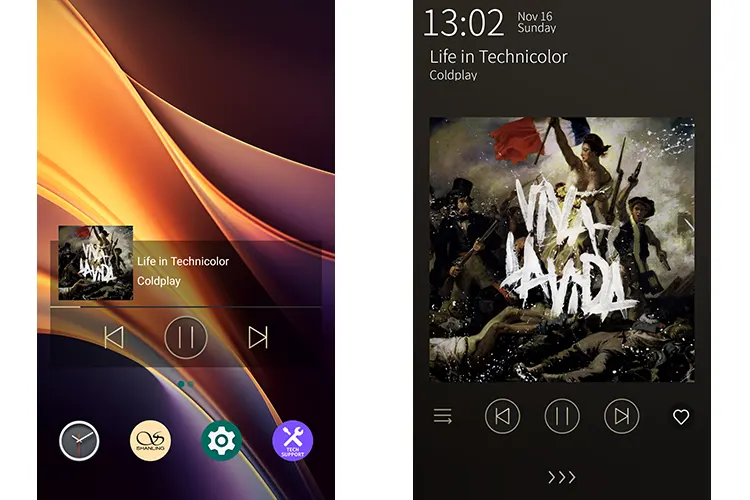
The UI/UX on the M7T is quite customized, with drop-down menu items focused on playback features.
This design optimizes the experience for audio use, making it feel fast and user-friendly. Everything is intuitive, though it would be helpful to have some explanations for the low-pass filters, which you may long-press on to enter the detailed settings.
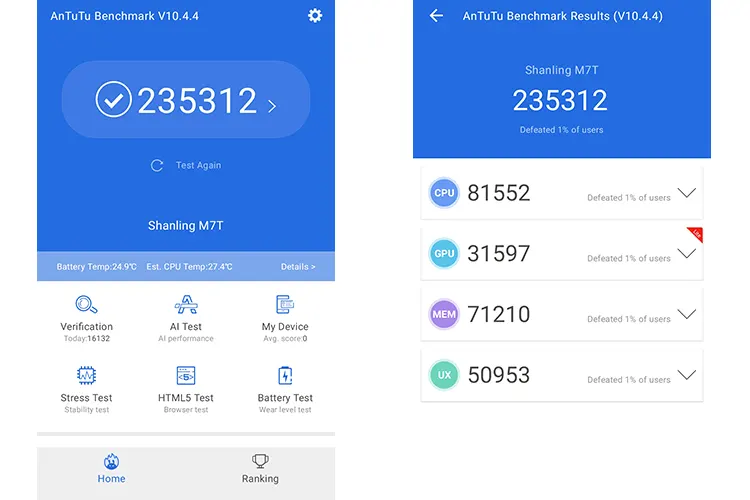
Running AnTuTu Benchmark v10.4.4 on the M7T, it scores pretty high at 235312, technically the same as what the M8T has achieved due to the identical SoC and flash memory.
Features
Transistor & Tube modes
The tube amplification section on the M7T mirrors that of the M8T, but it lacks the Triode/Superlinear mode.
Instead, it places it with 6 low-pass filters on the drop-down menu so that you can fine-tune the perceived roll-off behavior for smoothing, sharpening the output.
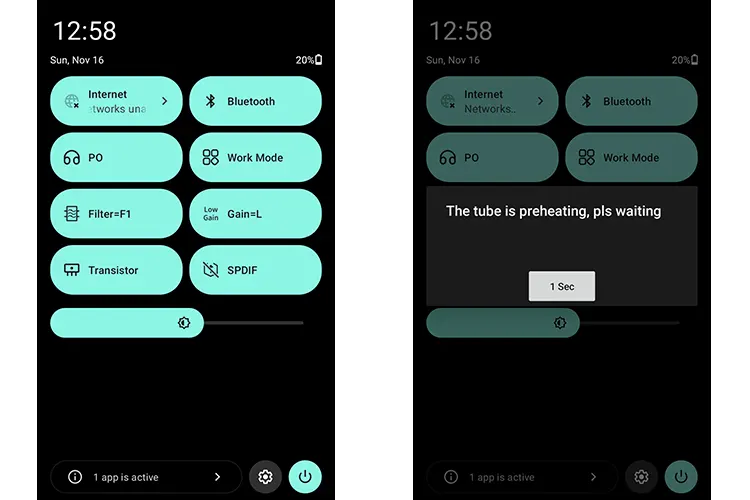
When you switch to Tube mode, there’s a quick 3-second countdown before you transition to the tube outputs. During the first one or two songs, you may notice a faint hiss, which stabilizes as the tube warms up sufficiently.
The switching process is fast and quiet, with no loud pops, and you can switch back and forth to compare which mode favors the music the most.
Working modes
To access Bluetooth receiver mode, USB DAC mode, Airplay receiver mode, and Prime mode, which force-closes all applications except the player app, simply slide down from the top to reveal the drop-down menu and click on the mode-changing button.
The equalizers and filters remain active in these modes, providing the M7T with significantly more flexibility compared to standard Bluetooth receivers or dongles.
Shanling Music App
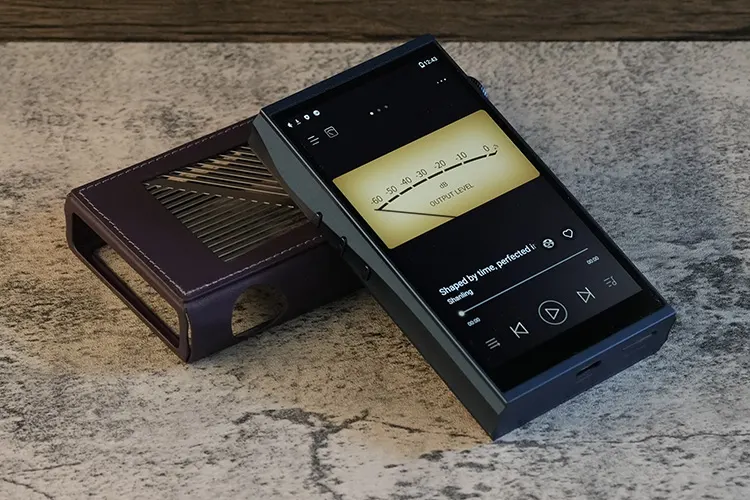
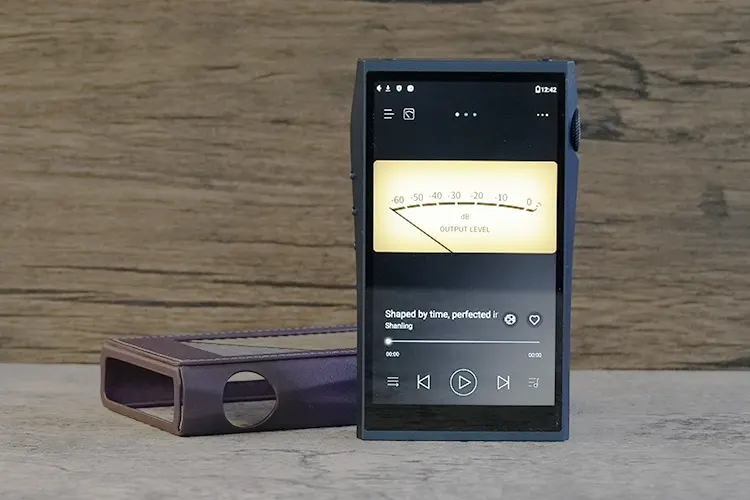
Most users will likely find themselves using the stock player application, which has been refined over the years to offer stable and comprehensive playback features, complete with appealing visualizers.
Like its competitors, it includes a variety of features such as Synclink for phone remote control, wireless music transfer, NAS connection over DLNA, AirPlay, and more.
It’s worth exploring these options, as the application is more than just a basic player. It has evolved from years of user feedback. You may discover many useful features, including automatic retrieval of lyrics, which may further enhance the overall listening experience.
But of course, you are using open Android, so you can also use other player apps such as UAPP.
Sound Impressions
After burning in the M7T for over a week, I have tested it with various headphones, including the Westone Audio Mach 80, Earsonics SWITCH 300 PRO, Final Audio’s A8000, Shanling’s HW600, and the Meze Audio 105 SILVA. I will also provide comparisons to the M8T and the M7 below.
Summary
The M7T clearly derives its architecture from the M8T, retaining the multiple timbres offered by both solid-state and Tube modes, plus the added filtering options, which I will explore in more detail below.
In pure solid-state amplification, the M7T feels more characterized, emphasizing both ends of the frequency spectrum. This approach gives bass instruments a sense of intimacy while clearly outlining treble details.
Conversely, the Tube mode resembles the signature on the M8T but offers a more relaxed, intimate, and fuller mid-lows. This mode enhances overall clarity and improves perceived vocal presence and expressiveness.
The rendered soundstage is more focused, making it well-suited for pop, bass-intensive tracks like EDM and rock, and it emphasizes dynamics, revealing vocal details more effectively than the M8T.
Tube Mode
After just 3 seconds of warming up, the Tube amplification mode delivers immediate warmth, rich texture, depth, and a robust sense of punchiness, particularly in the mid-bass.
It enhances the mid-range frequencies with a sweet, lush quality, presenting harmonics in a soothing, full-bodied way. Vocals come across as mellow and well-separated, maintaining a neutral yet warmish tone.
Though the Tube mode emphasizes the lower end, resulting in a fuller, darker sound profile, it doesn’t significantly compromise response speed, preserving ample clarity. For even sharper clarity, the Short-delay Sharp Roll-off filter can be applied to fine-tune the output.
When paired with the Meze Audio105 SILVA, the Tube mode gives more power to the fundamental vocal frequencies, delivering pronounced texture and strengthening the bass intensity.
I find the M7T complementing cleaner gear well, striking a balance between rounded warmth and detailed openness, and sounding immersive and rather balanced in tone at the same time.
It’s a standout for instrumentals, EDM, and house music, particularly tracks with intricate bass lines, ethereal vocals, or layered synthesized instruments. The M7T handles these with a steady, engaging yet unobtrusive manner, and not overly colored.
Further testing with vocal-heavy tracks and intense bass instruments, the M7T delivers good fullness and satisfactory speed and definition; it is also well-articulated transitions into the mids.
The treble is smooth, skillfully rounded, and extends effortlessly. String and brass instruments are nicely textured with vibrant harmonics and adequate extension, also rounded nicely with sharp roll-off filters.
Transistor Mode
The Transistor mode takes a more modernistic tuning approach with superior technicalities and speed. Its most noticeable strength lies in the upper mids and treble, where vocal details and airiness stand out vividly, alongside precise drumming details and imaging.
It delivers a more balanced sound with faster, more textured transients, resulting in greater control and speed as the mid-bass gets more swiftly articulated.
This difference becomes more apparent at higher volumes, where vocals feel more sharply defined but not shouty, with overtones presented more politely and bass sounding tighter, hitting with cleaner decay.
This mode works great when clarity is the priority, such as when distinguishing individual instruments in large ensembles or breathing new life into lossy, older tracks that need a boost in definition, and you may find some filters giving it stronger stability, or you could prioritize openness.
Compared to Tube mode with bells and brass instruments, Transistor mode shifts the focus to the extended, more detailed treble and firmer mid-lows, preserving more air and micro-details in the upper register and sounding more balanced overall.
The Tube mode will put your attention more to the vocal and bass range with its colors and stronger elaboration on the decay.
Staging & Dynamics
The M7T gives me an impression of listening in a small lecture hall and sounds a little bit more expansive and naturally extended with the Transistor amping mode.
It delivers the treble extension more clearly, heightening the response from Tube mode, and has a faster response. Filters with slower roll-off also help push the extension further.
The vocal image is more distinctively positioned with Transistor mode, while the Tube mode blends it more closely with the backing and sounds lusher, giving the vocal a slightly bolder image.
With the Tube mode, you may find the vocal not positioned as up front, and it renders a slightly more hollowed positioning with a stronger overall sense of depth, mainly due to how it outlines the upper vocal frequencies.
Click on page 2 below for my recommended pairings and selected comparisons.
