


Sound Impressions
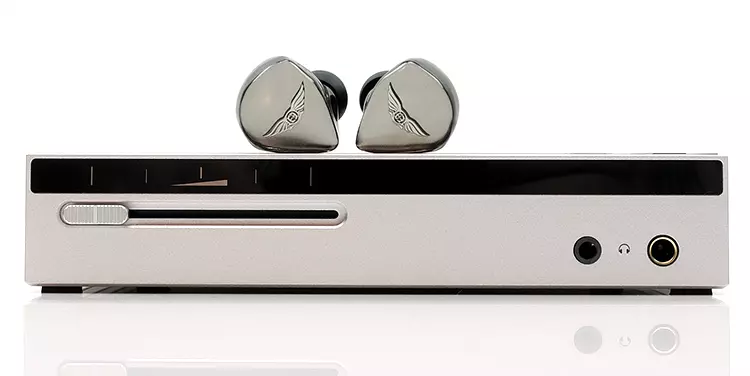
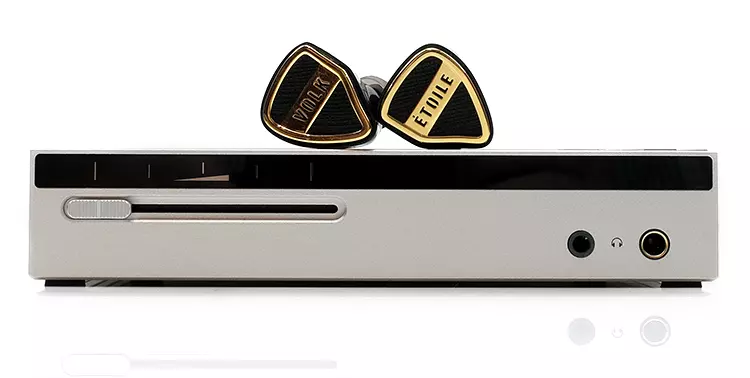
The following sound impressions of the EC Zero AKM were completed using the Volk Audio ETOILE, the Vision Ears VE PRO, Empire Ears ESR MKII, and the Austrian Audio Composer.
Summary
If you think the EC Zero AKM is a stripped-down Zero T with a similar wired tuning, then think again.
This is a very different presentation with a cleaner, punchier sound, but also one that some might infer as coming across as more ‘digital’, at least when compared to the EC Zero T’s buttery, smooth analog performance.
Thankfully, it’s not a sterile presentation. The EC Zero AKM is tuned for excitement, and to that end, it may have a more polished high-contrast note texture than its bigger sibling, but it also has a lot more vibrancy and energy courtesy of some excellent lows and enhanced vocal focus.
In some ways, I am not surprised. For the older folks in the community who geared up with sources that used the classic AK4493EQ chipset almost ten years ago, the DNA of that chipset’s stock tuning remains a force in the new S version.
That means a more aggressive bass response, but also one that has a slightly more chiseled feel to the note definition.
It’s not as warm and enveloping as the EC Zero T low-end, nor does it carry the same presence and body into the lower-mids. But it does convey a driving rhythm really well with a stronger perception of speed and control.
Midrange notes are lighter on their feet, and leaner body and texture than the R2R equivalent. However, the upshot is a more vocal-forward presentation that really leaps out at you with monitors such as the ETOILE and VE PRO.
Arguably, the EC Zero AKM sounds the more accurate of the two Shanling CD Players color-wise, with just slightly less openness in soundstage width courtesy of its more intimate upper-midrange imaging.
It’s an exciting sound signature and an excellent pairing with warm or bass-heavy IEMs.
Wireless Performance
The EC Zero AKM’s Bluetooth transmission module works in much the same way as the EC Zero T configuration.
It’s not quite as straightforward as I would like it to be with the button access and pairing system, but once it starts scanning, it found my Noble Audio FoKus Rex5 and Huawei Freebuds Pro 4 right away.
From there, it’s a quick play and then forward or backward press if you have more than one BT device show up on the list, then play once more to pick the BT device you wish to pair with.
There are some wireless control options available, including playback control, which I found handy.
Bear in mind that if you find you are pushing up the EC Zero AKM slider volume up really high to get it loud enough, you might want to try pushing up the earbuds volume first, as they are independent.
Stability over range was very good, at least on par with modern DAPs, but slightly behind my usually rock-solid connection using a smartphone such as the Xiaomi 15 Ultra (Hyper OS 3).
The major downside of the EC Zero AKM’s BT performance is the lack of an LDAC codec option. Do not get me wrong, aptX Adaptive is excellent for dynamic range and resolution out of my Rex5. It’s slightly behind a wired connection in terms of staging depth, but otherwise very serviceable.
It’s more of a case of what about those TWS that do not have aptX or ACC, meaning you go from LDAC down to SBC for Android and iPhone.
My Huawei Freebuds Pro 4 is one such example, with its SBC performance sounding soft and lacking in staging depth and the equivalent sparkle I get from my smartphone’s LDAC pairing.

Digital Output
I tested both the coaxial and optical performance from the EC Zero AKM using the iBasso D17 Atheris as my main receiver. Bear in mind that this reduces the EC Zero AKM to the role of a CD transport with less influence on the sound since the D17’s R2R DAC will act as the main decoder.
That being said, I could detect a slight difference between the two connections using the VE PRO in a balanced output low-gain mode.
The coaxial connection has a tighter, more energetic low-end, with slightly more contrast, and thus, to my ear, a bit more revealing compared to optical, and with better treble extension.
The optical output had more bass bloom but a softer, lusher-sounding set of mids and highs, creating a sweet, more even-harmonic sound from the VE PRO.
Analog Output
For IEMs, I do not think the balanced output has a clear advantage unless you are after a ‘peppy’, harder-hitting sound signature. You will need it more for balanced output demanding headphones if the connecting amplifier is capable of driving them.
For IEMs, the EC Zero AKM’s single-ended output delivered a smoother sound using the ESR MKII and the VE PRO. This was with the Cayin C9ii Classic Tube hyper-mode with a low-gain setting.
The C9ii Hyper Mode is a high-energy, impactful mode, and Classic Tube can help with bass presence. Combined with a 4.4mm output from the EC Zero AKM, the sound was driven, punchy, and big-sounding but also slightly more piercing and in your face in the mids and highs.
Its 4.1Vrms output is fantastic for high-energy rhythmic recordings, but for those who prefer a more relaxed listening experience, the 2.1Vrms is a steadier hand and a sweeter sound from the C9ii.
Synergy
The Shanling EC Zero AKM has slightly less PO output power than the Zero T at 836mW @ 32Ω using external power, but it’s still very much a current class leader for driving headphones in the modern portable CD player market.
That’s not the main talking point for me. Rather, the EC Zero AKM’s sub-ohm output impedance rating compared to the >4-6Ω output rating of the Zero T makes it a far more attractive offering to IEM users who are worried about the potential for impedance skew from the flagship player.
IEM pairings
Not every IEM will have skew; it depends on the specific driver, so much of the testing and confirmation is on a case-by-case basis.
And because the EC Zero T is warmer and more romantic-sounding than the EC Zero AKM, it’s hard to say for sure which IEMs are affected.
For example, the Vision Ears VE10 delivered a more L-shaped response curve from the Zero T with enhanced bloom and muddier mids. Whereas the EC Zero AKM sounded more neutral and accurate to what I am used to hearing from this IEM.
At the same time, the Austrian Audio Composer’s larger driver sounded a little edgy with the EC Zero AKM and not as rich and fulsome as the Zero T pairing.
It became clear that the EC Zero AKM prefers a neutral-to-natural or warm-sounding pairing rather than neutral-to-bright when compared to the Zero T.
Aside from the VE10, I also tested the Volk Audio ETOILE and the Vision Ears VE PRO, two IEMs that generally sound better without any additional warmth or lush coloration.
In both cases, the Zero AKM introduced some welcome clarity and a tighter bass performance than the ZERO T, creating a more aggressive sound with enhanced tonal contrast and vocal impact.
It was only in the VE PRO mids and highs performance that I started to pick up on a little of the delta-sigma ‘digital sound’ with some slight harmonic dissonance in the upper mids.
That is where the EC Zero T is a better pairing, fattening up any lighter, brighter mids and highs, and creating a smoother, more textured sound signature.
The EC Zero AKM was my pick for IEMs like the ETOILE and VE10, which already had some warmth and body in the lower-mids and bass response.

Headphone Pairings
I tested the EC Zero AKM with the dynamic driver low-impedance Austrian Audio Composer, and two planar driver alternatives, the ABYSS JOAL and the DCA NOIRE XO.
These pairings were primarily picked to showcase the difference between battery-only performance and external power mode.
Without external power, the soundstage shrinks a little, with all 3 headphones sounding comparatively flatter in their staging depth. With external power, all 3 sounded punchier and deeper with a more immersive staging quality.
However, the tonal quality also changed, and for those who prefer a slightly smoother sound, you might want to persevere with the battery mode.
I found the enhanced dynamics to significantly stiffen percussion strikes, with a more pronounced emphasis on upper harmonics that became more pervasive, creating a drier, higher-contrast sound.
Particularly so with the NOIRE XO and Composer, two headphones with energetic highs. I actually really enjoyed the EC Zero AKM/NOIRE XO pairing in high-gain battery mode for its sweeter-sounding mids and highs, though I cannot deny they sounded more dynamic using external power.
The JOAL works well with external power. It’s a darker, warmer-sounding headphone, so the clarity and tighter bass control suit it more than the other two.
It’s comparatively chilled in dynamics in battery mode, so the additional driver and power from using external power give it some welcome aggression and sparkle in the highs.
