

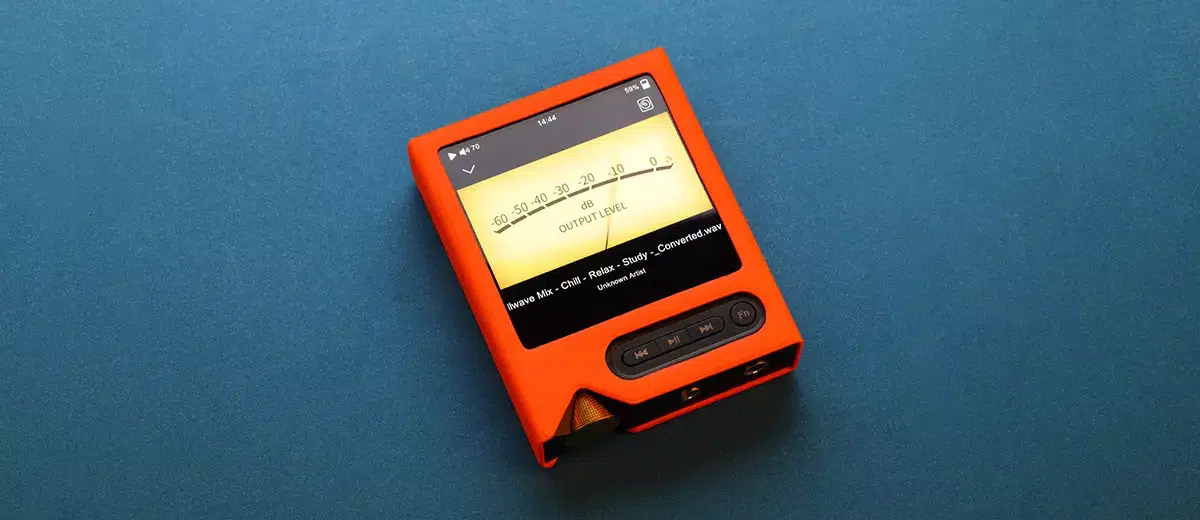
Wireless Connectivity
Bluetooth Transmission
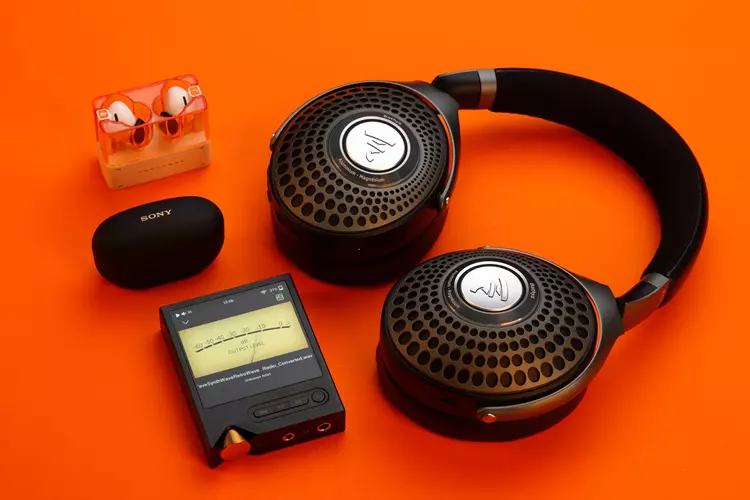
Thanks to Bluetooth 5.2, which is relatively recent, the initial pairing and subsequent connections with the ONIX XM2 and my Sony WF-1000XM5, MOONDROP Space Travel 2 TWS, and Focal Bathys wireless headphones are very fast and hiccup-free; I’ve never experienced errors or failed connections so far.
It takes less than five seconds to connect to the Bluetooth device mentioned above. From the moment I turn them on to properly placing them in my ears or head, the connection is already established and ready to play music.
The XM2 connects to my Sony WF-1000XM5 with LDAC and to my Focal Bathys with AptX codecs; these are two of the best Bluetooth codecs currently available. It also connects to the MOONDROP Space Travel 2 using the AAC codec, the standard Bluetooth audio codec.
I experience a strong signal connection with no interference through thick concrete walls and wooden doors while walking around my house, leaving the XM2 in my room. This performance is on par with my phones, Samsung S21 Ultra and OnePlus 13.
Receiving
I experienced fast, reliable connections when using the XM2 as a receiver as well. After the initial pairing, subsequent connections are fast, interference-free, and hiccup-free.
The signal strength is excellent. I can walk around the house with the phone in my room without losing the signal. The sound quality is also fantastic, thanks to LDAC.
WiFi
Since Tidal is not accessible in my county, and I don’t have, and never plan to have, a DLNA and AirPlay system in my house, as I find them irrelevant, I cannot test how the WiFi performs with them.
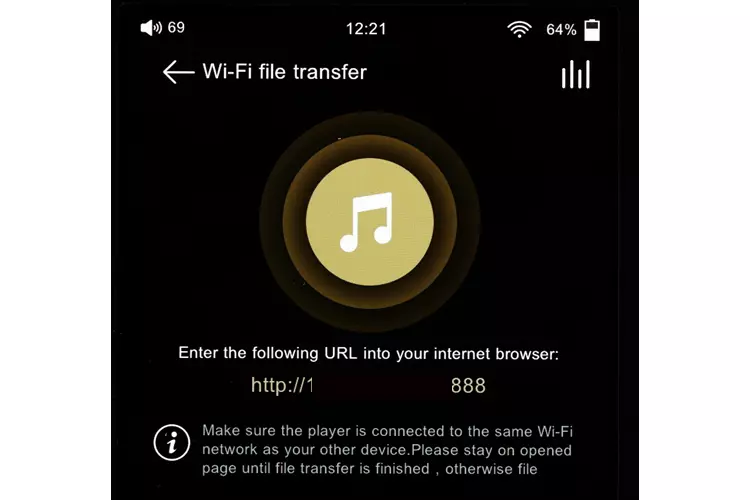
However, there is also a WiFi file transfer feature, allowing me to test transfer speeds over WiFi.
Transferring music files over WiFi is easy. After the PC and the XM2 are connected to the same WiFi network, go to System Settings > Network Services > WiFi file transfer.
The XM2 will show you an IP address that you can type in a web browser on the PC, then drag and drop the music files, and they will appear in the XM2 library.
It took less than 5 seconds to transfer a 1.17 GB worth of music files, which is fast.
Wired Connectivity
As a digital source
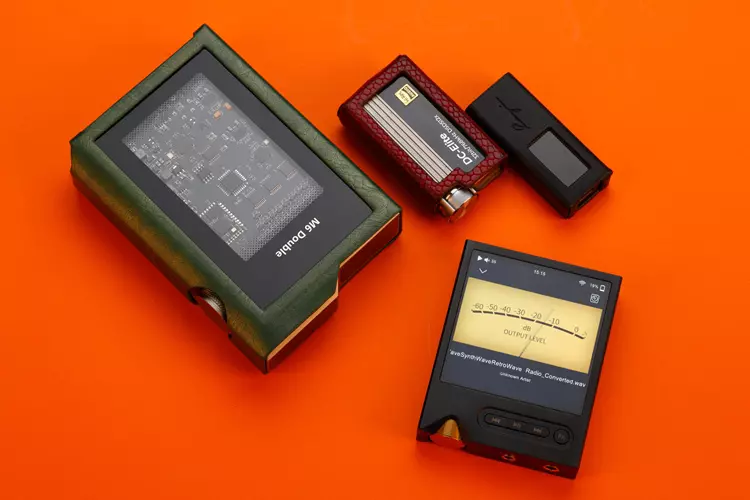
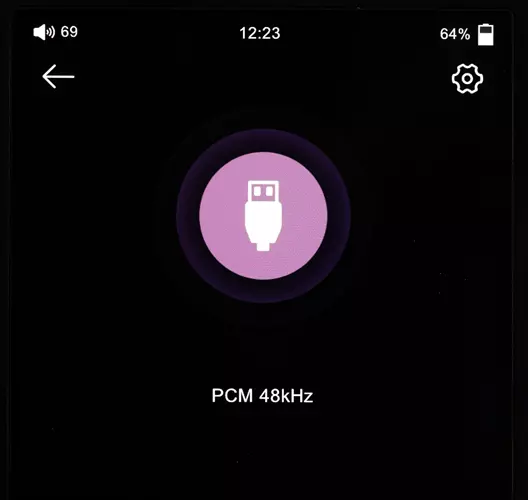
After switching the XM2 into USB audio mode in the drop-down menu, it worked flawlessly with any of my dongle DACs and DAC amplifiers, including Cayin RU3, MUSE HiFi M6 Double, and many other DACs not included in the review.
Even with my iBasso DC-Elite, which doesn’t always work with other DAPs, it worked flawlessly with the XM2.
As a DAC Amplifier
Clicking the same icon used to switch to USB audio mode would switch the XM2 to DAC amplifier mode. In this mode, the XM2 works flawlessly every time I connect it to my PC, Android phone, laptop, and DAPs.
In my experience, not all DAPs work as DAC amplifiers when connected to some DAPs; luckily, the XM2 works with all my DAPs, including the FiiO M15S, HiBy R3Pro II, and Shanling M3 Plus.
When plugged into my phone, PC, and laptop, the XM2 is instantly recognized, and the audio output is automatically routed to it.
Synergy
The XM2 has a very black background during silent passages. I couldn’t hear any noise with IEMs and headphones. There is no hiss, clicking, or popping sound during operation. It is clean and noise-free.
The XM2 sounds great with IEMs and headphones, even those not included in this review; the 800 mW rated output power makes driving any IEM or headphone effortless, including the difficult-to-drive 300Ω Sennheiser HD 6XX.
IEM Pairings
The XM2 has no issues powering IEMs, so I was forced to set the gain to low to avoid accidentally blasting my ears with very loud sound.
At about 50 percent volume in low-gain mode, depending on the IEM’s sensitivity, the music is loud enough to hit my normal listening level.
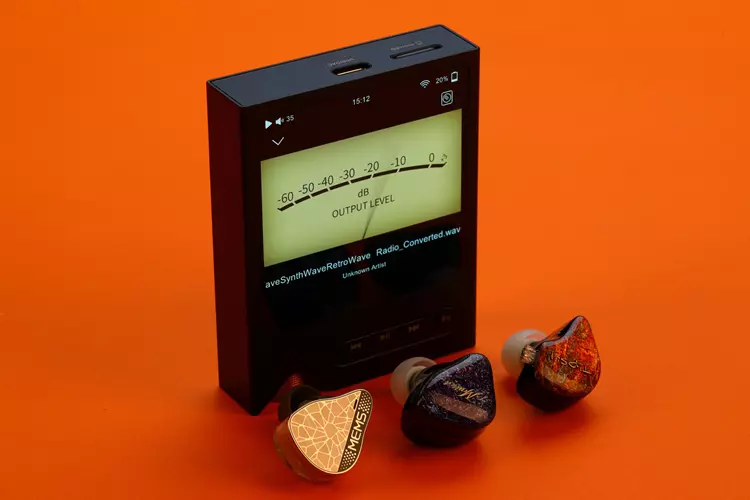
The neutrality and energy of the Tipsy M5, combined with the highly resolving yet non-fatiguing sound of the XM2, result in a very fulfilling musical experience, full of musical detail that I listened to for hours without getting tired.
When paired with the Binary Audio EP321 MEMS, the extra energy of the EP321 MEMS, along with its clean and highly technical sound, makes listening to every detail a joy, and the dynamics are lively and fun, especially with bassy electronic music.
With QoA Martini‘s refined, clean, mildly V-shaped sound, I hear a big sound presentation like that in a large stadium, with good soundstage width, depth, and height. And the XM2 effortlessly controls the bass of the Martini.
I tried many other IEMs with the XM2, and I must say, thanks to its high-power output and clean, highly resolving, uncolored sound, it generally pairs well with just about any IEM available.
Headphones Pairings
I switched to high-gain mode to test the headphones, and I was greeted with energetic sound with good extension in the bass and treble.
I hear no struggle coming from the XM2; it’s the headphones that I hear would give up first before the XM2 would struggle to push them.
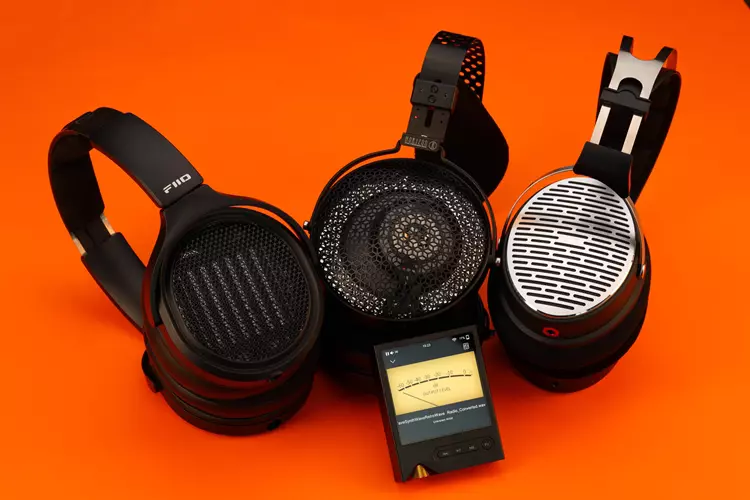
The MOONDROP Horizon is designed with a very sensitive dynamic driver, allowing it to be driven by low-powered sources. For that, it sacrificed its power-handling capability at high volume.
When paired with the XM2 using the 4.4mm plug in balanced mode, I only need to set the volume at 55 percent to hit my normal listening level.
The sound I get with the Horizon and XM2 pairing is very good. I hear a warm mid-bass, neutral midrange, and airy, extended, slightly laid-back highs; good staging with many details to hear; and effortless dynamics.
The FiiO JT3 is an average dynamic-driver headphone in terms of driving difficulty. The XM2 drives the JT3 effortlessly; they hit my normal listening level with the 3.5 mm connection at 60 percent volume. I hear a crisp, V-shaped sound and very good dynamics.
When I switched to the FiiO JT7, a 150-ohm planar headphone that is difficult to drive with most sources, I heard effortless dynamics, good tonality, crisp highs, tight bass, and a slightly forward midrange. I only need to set the volume at 60 percent with the 3.5mm connection to hit my normal listening level.
Finally, with the Sennheiser HD 6XX, which has the highest impedance in this group at 300 ohms, I only need to set the volume to 65 percent; the XM2 has plenty of headroom to spare. I hear a neutral sound with tight bass, clear mids, and crisp treble.
Select Comparisons
I used all the IEMs and headphones included in this review, but for serious listening, I mostly used the Tipsy M5 for its neutral and revealing sound. And the Sennheiser HD 6XX to see how the DAP behaves with difficult-to-drive headphones.
HiBy R3Pro II
Technical & Design
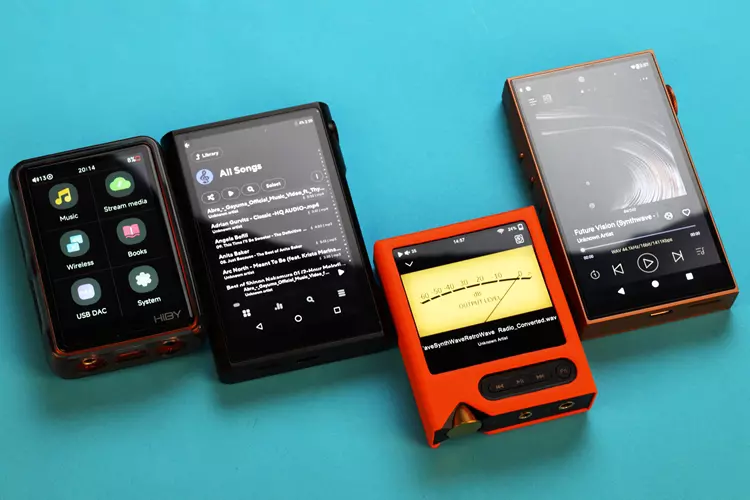
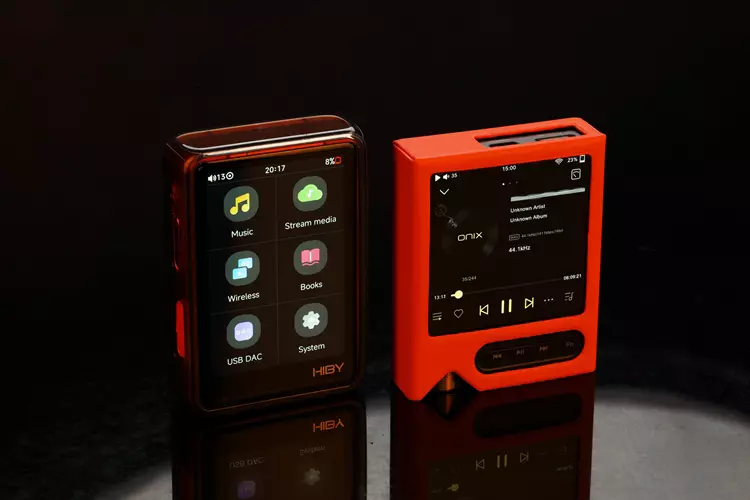
The HiBy R3Pro II is a non-Android DAP running HiBy OS, featuring dual CS43198 DAC chips and 4x OPA1622 headphone amplifier chips, with NOS (non-oversampling) mode and 480 mW of output power in balanced mode.
The R3Pro II features a bright 3.3-inch high-resolution touchscreen, PD 2.0 fast charging, and a 4000 mAh capacity battery.
The R3Pro II is a cute-looking, curved, fully metal body sandwiched between the front touchscreen and the suede backing.
My review sample came in orange color, but it is also available in black, silver, and green. There are four controls on the right and two on the left, with the lanyard and the MicroSD card slot located there. All the output jacks and the USB-C port are at the bottom.
Performance
There is not much difference in tonality between the R3Pro II and XM2. However, the XM2 has deeper, more powerful-sounding, and grippier bass; the midrange is about the same.
However, the XM2 has apparently cleaner treble, as I noticed the sibilance in the vocals sounds finer and smoother, while on the R3Pro II, there is some coarseness.
In terms of soundstage width, both are about the same. Still, the XM2 has greater depth, with greater clarity, accuracy, layering, separation, and edge definition in the imaging, most noticeable on faint instruments or background vocals. XM2 has a cleaner background.
Aside from differences in tonality, I don’t hear much difference in dynamics, whether I use IEMs or headphones at my normal listening levels.
The 480 mW of output power from the R3Pro II is apparently more than adequate to drive any of my IEMs and headphones. In terms of liveliness in sound, both are about equal.
Shanling M3X
Technical & Design
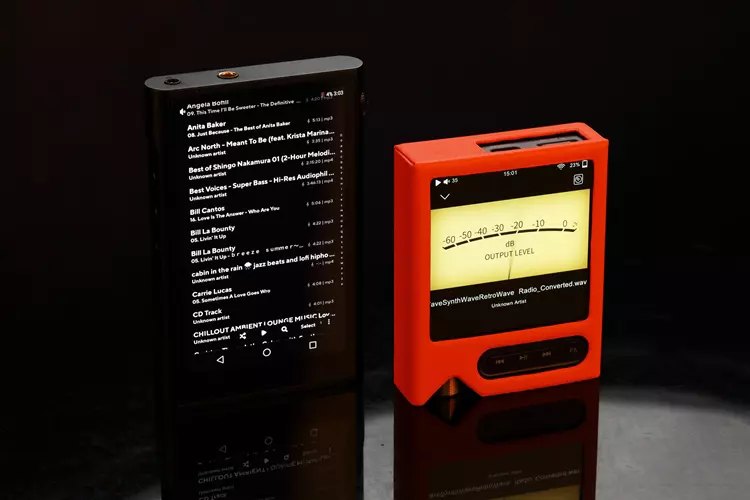
The Shanling M3X utilizes an ESS Sabre ES9219C DAC/AMP chip that directly drives both the 3.5 mm and 4.4 mm headphone outputs, with a maximum output power of up to 240 mW @ 32 Ω (Bal). It has a 3200 mAh battery that can last up to 19 hours in balance mode.
The M3X features Bluetooth 4.2, and its card slot supports up to 2 TB of storage. It features a 4.2-inch IPS touch screen with a 1280 x 768resolution.
The M3X has a CNC-machined aluminum alloy chassis, with the screen on the front and a tempered glass panel on the back.
It features 3.5 mm and 4.4 mm headphone jacks at the top, a volume knob on the right, three control buttons on the left, a microSD card slot, and a USB-C port at the bottom.
Performance
There is an apparent difference in their tonality; the M3X has a flatter, more neutral sound signature with a more extended upper treble.
In contrast, the XM2 has a bassier, darker treble, with a thicker, weightier instrument note. I noticed the deeper, more powerful subbass and the cleaner background with the XM2.
The M3X has an apparently wider soundstage due to its more forward treble balance, but the XM2 is apparently deeper, thanks to its cleaner background and instrument decay.
Both are dynamic-sounding, but I find the M3X livelier, thanks to its more forward treble presentation. The XM2 is more energetic in the bass, though.
I didn’t see any issues with either when driving the Sennheiser HD 6XX at normal listening level; however, the XM2 sounds bassier, while the M3X has more treble.
Shanling M3 Plus
Technical & Design
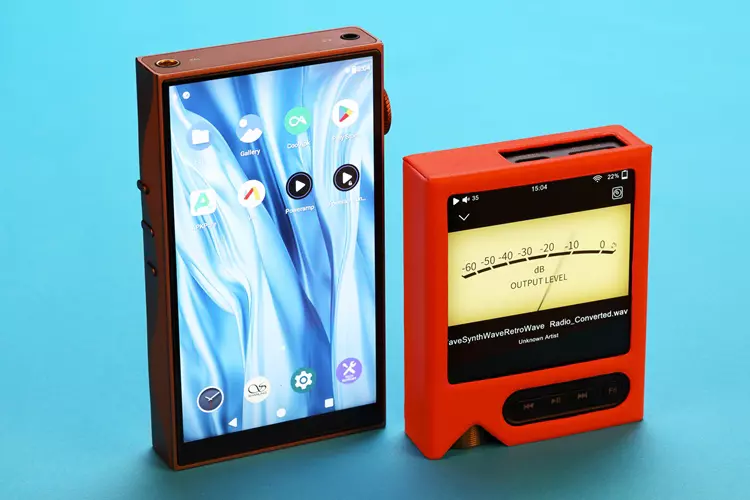
The Shanling M3 Plus is an Android 13-based DAP that supports app installation. It features the Snapdragon 665, 4 GB of memory, 64 GB of built-in storage, 4 Cirrus Logic CS43198 DACs, and dual SGM8262 amplifiers with 800 mW of balanced-mode power output.
The M3 Plus also features Bluetooth 5.0. It supports QC3.0 at 18W and PD (power delivery) charging, with a 3500 mAh battery.
The M3 Plus is a very modern-looking DAP featuring a 4.7-inch touch screen with a huge screen-to-bezel ratio approaching that of modern flagship phones.
There are nice, curvy shapes on both sides: a volume wheel on the right and three control buttons on the left.
Both the 3.5 and 4.4 mm jacks are on top, while the USB-C port and the MicroSD card slot are at the bottom.
Performance
Both the M3 Plus and the XM2 have a similar tonality, with only minor differences in the bass: the M3 Plus is tighter, and the XM2 is slightly bouncier, and in the treble, the M3 Plus is slightly more forward. Both have similar perceived resolution capabilities.
In terms of soundstage, M3 Plus is wider, while XM2 is deeper; overall, M3 Plus has a slightly larger soundstage.
I find the imaging on the XM2 to be more defined, layered, and separated. M3 Plus’s imaging is somewhat more diffuse and has less layering in comparison. I also find the XM2 has a cleaner background decay.
In terms of dynamics, both are excellent, thanks to their high-power output, but the M3 Plus sounds livelier thanks to its more forward treble presentation. At the same time, the XM2 has a somewhat relaxed presentation.
My Verdict
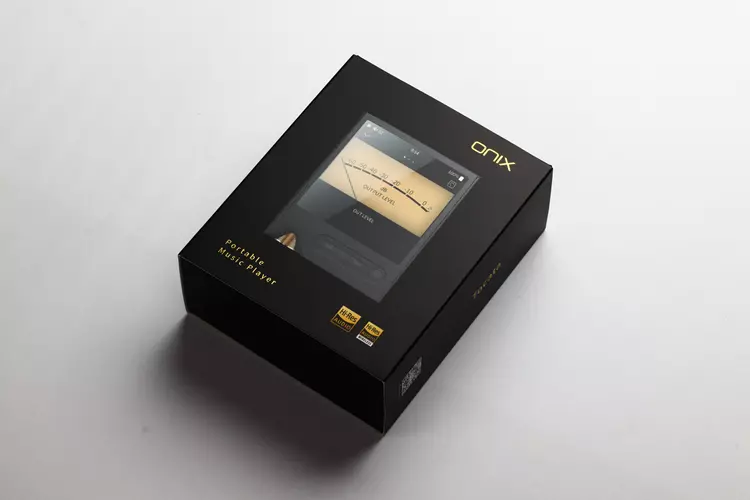
The ONIX XM2 is a fully featured non-Android-based DAP with good sound quality that has slightly exceeded my expectations.
And I must say, the use of the newly released Cirrus Logic CS4308P flagship DAC made a noticeable improvement in sound compared to the previous-generation DAC chip.
I like that the ONIX XM2 offers good perceived technical performance without sacrificing tonality, unlike other DAPs. I like the clean power it delivers, with high perceived resolution and detail.
My nitpick, I had to do it, is the soundstage. As it is, it is good; still, I wish it were larger and wider. The non-Android operating system also prevents me from installing my favorite music player app.
Overall, ONIX XM2 is easy and fun to use and enjoy, with good, powerful sound and a nice feature set.
I would encourage people looking for a good small DAP to highly consider the ONIX Tocato XM2 if they are okay with a non-Android operating system.
ONIX XM2 Technical Specifications
- Dimensions: 82 × 65 × 18 mm
- Weight: 140 g
- System Platform: Ingenic X2000
- Operating System: In-House Developed
- Display: 3-inch OLED Touch Screen, 720p
- Playback: MicroSD (up to 2TB), Tidal Streaming
- Controls: Touch Screen, 4 Hardware Buttons, Volume Wheel
- Remote Control: SyncLink via Eddict Player (Android & iOS)
- Bluetooth: Two-Way Bluetooth 5.2
- Bluetooth Codecs: LDAC, aptX HD, aptX, SBC, AAC
- Wi-Fi: 2.4G / 5G, DLNA, AirPlay, Tidal
- USB: USB DAC Mode, USB Digital Output
- Hi-Res Formats: PCM up to 768kHz / 32bit, DSD512
- Headphone Outputs: 3.5mm Single-Ended, 4.4mm Balanced
- Battery Capacity: 3000mAh
- Charging: USB-C
- Battery Life: Up to 8.5 Hours (SE or Balanced)
- 5mm SE Output (Low Gain)
- 28V @32Ω / 51mW
- 5mm SE Output (High Gain)
- 56V @32Ω / 204mW
- 5mm SE Output Impedance: 0.4Ω
- 4mm BAL Output (Low Gain)
- 54V @32Ω / 200mW
- 4mm BAL Output (High Gain)
- 08V @32Ω / 800mW
- Output Impedance (Balanced): 0.7Ω
- Frequency Response: 20Hz–40kHz (−0.5dB)
- THD+N: 0005% @32Ω (A-weighted)
- Channel Separation: 112dB
- SNR: 121dB @32Ω (A-weighted)
- Noise Floor: 114dB @32Ω (A-weighted)
