

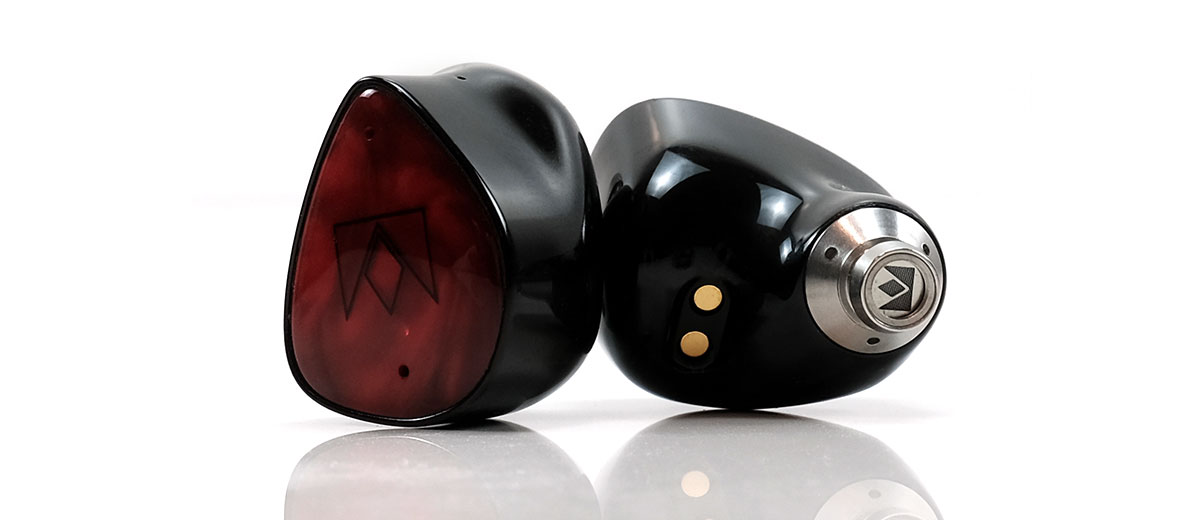
Today, Marcus reviews the Noble FoKus Amadeus, a new TWS with a custom 8.3mm triple-layer diaphragm dynamic driver, ANC, and LDAC decoding capability. It is priced at $320.
Disclaimer: This sample was sent to me in exchange for my honest opinion. Headfonics is an independent website with no affiliate links or status. I thank Noble Audio for their support.
Click here to read more about the Noble Audio products we have previously featured on Headfonics.
This article follows our latest scoring guidelines, which you can read in more detail here.
Hot on the heels of Noble Audio’s flagship FoKus Rex5 hybrid multi-driver TWS, we now have the FoKus Amadeus, resplendent in a dashing red, and delivering many of the Rex5 features but at a lower price of $320.
That is still a premium-tier True Wireless Monitor price point for the casual user, but Noble’s TWS has always gone after the ‘audiophile heart’ with their complex driver setups and exotic shell designs
The striking Amadeus boasts ANC, the latest generation of Bluetooth with decoding up to LDAC, superior battery life, and a new custom dynamic driver with a smoother tuning that strikes a very different path from the resolving Rex5 presentation.
How does it compare to the flagship and the previously popular FoKus Mystique and FoKus Pro offerings? I found out in my full review below.
Features
The Noble Audio FoKus Amadeus is a dynamic driver true wireless system with a unique custom-designed 8.5mm triple-layer diaphragm.
There isn’t a huge amount of information regarding the materials and implementation of each layer, but I presume it’s a mix of popular diaphragm materials such as titanium and graphene.
The driver is rated with an impedance of 37Ω and an SPL of 113 ± 2dB at 1kHz. However, given that these TWS have built-in amplification and are wireless, these numbers are largely irrelevant. You will not be plugging them into any amplifier.
Like the Rex5, the Amadeus is equipped with a BT5.4 capable QCC3091, which means it can decode up to LDAC and a maximum of 24-bit/96 kHz with support for AAC, SBC, aptX, and aptX HD, depending on your needs and platform.
The Amadeus is also ANC-capable and, like the Rex5, this can be controlled via the accompanying Noble FoKus app with ambient or transparent options also available.
The app also offers the Audiodo Personal Sound service, which further enhances or tweaks the overall performance and stores the profile in the earbuds rather than your phone so that you can apply it anywhere.
Design
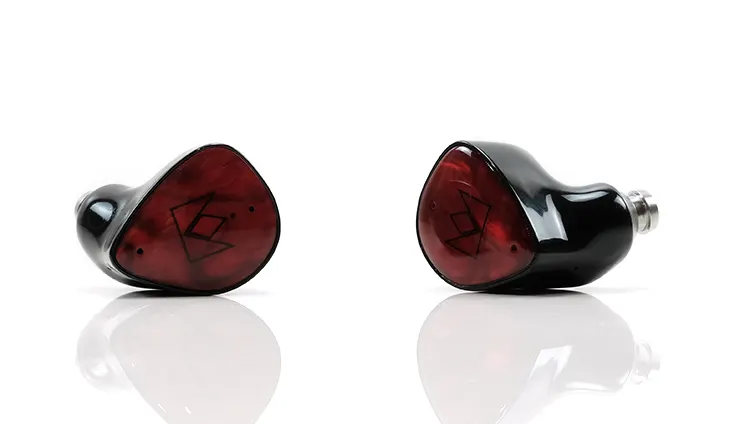
The Amadeus form factor is more reminiscent of the acrylic Mystique and FoKus Pro than the newer, aluminum, rounded two-tone shell of the flagship Rex5.
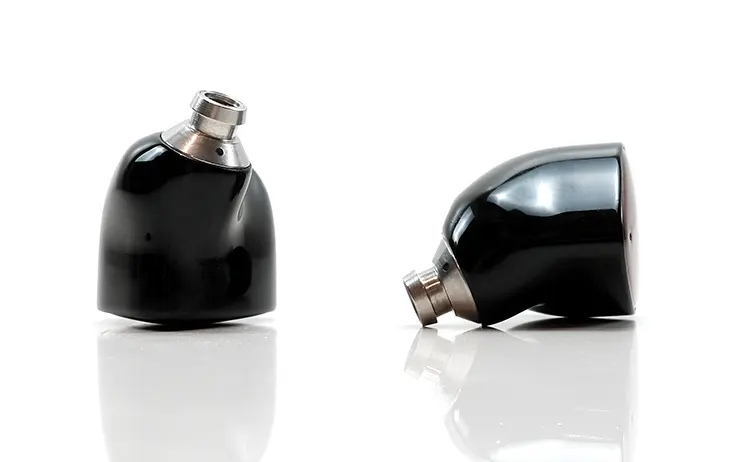
It’s a little bit narrower than the Rex5 and Mystique with a more angular cut on the plates, but what stands out is a return of the long nozzles, something Noble is known for, and a trait that often enhances the sealing capability of the shells.
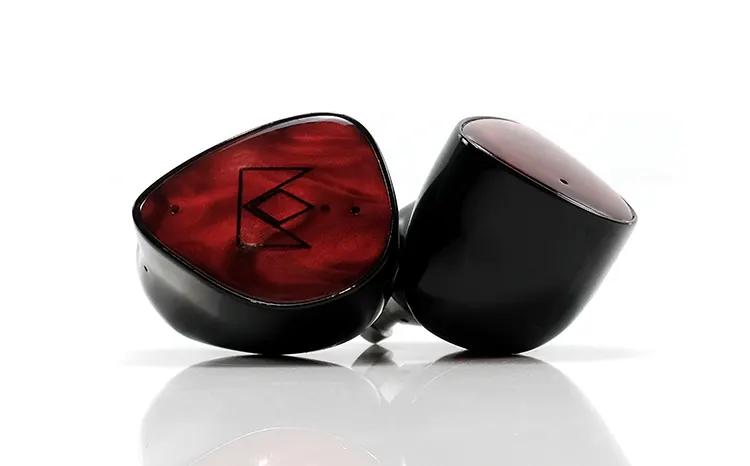
While there is a degree of familiarity in the design language, the Amadeus is quite distinct aesthetically, with a dashing deep red or ruby-toned shell finish to the plates, seen as a nod to Mozart’s signature tailcoat color and the inspiration behind the name itself.
As always, the plates have a nice, polished finish with a black Noble logo just underneath and a pure black polish main shell with aluminum spouts sporting the new, classy-looking laser-cut logo mesh guard.
You will also notice the multiple port openings for the cVc noise-canceling mics, with two around the nozzle and two more on top of the faceplate at either end.
As with most of Noble’s high-end TWS offerings, there is no IPX rating for the Amadeus. As with the Rex5, I suspect the introduction of ANC mic ports means it is unlikely this design is suited to rougher environments or sweaty workouts.
Still, I have used the Rex5 without issue for lighter running sessions, so they are not as fragile as you might think.
Cradle
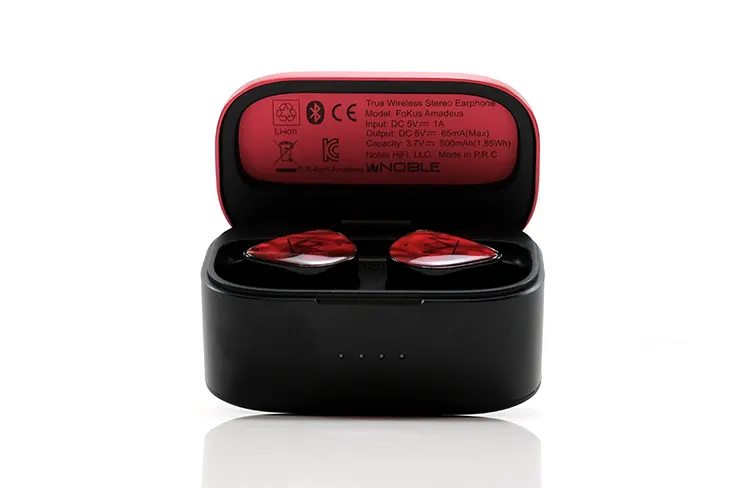
The Amadeus cradle is a return to the older, taller form factor of the Mystique. However, the matching red is a more attractive aesthetic than the blue of the former flagship TWS, and it also has an improved inner molding with a stronger hinge.
Side by side, it’s probably one of the biggest cradles from Noble, but the drivers do sit slightly higher in the base, meaning they are generally easier to grab and pull out than the older models.
I found the Mystique and FoKus Pro to sit a bit too low, making them hard to grip and pull out due to the strong magnets. Though not as finger-friendly as the more compact lie-flat style of the Rex5 cradle, the Amadeus shells are not as slippery as I initially feared.
The cradle is USB-C powered for charging and rated at 30 hours with quick charge capability of up to 2 hours of playback time from a 10-minute charge, which is excellent. A full charge is roughly 120 minutes, with the drivers taking 90 minutes.
One of the big selling points of the Amadeus, at least compared to the Rex5, is the improved battery life of the earbuds.
At 8 hours with ANC and 12 hours without, that is about 3-6 hours more than the flagship. With my real-world testing, it often lasted around 5-7 hours, roughly double the real-world ANC performance of the Rex5. Sadly, no wireless charging.
Comfort & Isolation
The Amadeus is a fairly tall and long TWS, and they stick out of the ears more than the Rex5. However, those long nozzle designs combined with the dual-flange tips do well for noise attenuation, better than the flagship, which has a more relaxed fitting.
I find that acrylic shells also work a bit better than aluminum for sealing, given their slightly stronger contouring and grippier, less porous texture when placed on the skin.
The ANC, combined with the dual-flange tips, does quite well in blocking out a wide range of noises of most frequency points, but it’s not quite as strong on the low-frequency areas as my Huawei Freebuds Pro 2.
The Amadeus delivers a decent level of attenuation and is generally good. However, the low-end rumble and wind noise are not as effectively canceled when compared to the Freebuds Pro 2 performance.
Once you link the Amadeus with the Nobel FoKus app, you can turn the ANC off and prolong your earbud driver life. You can also switch to Ambient mode, which ramps up the clarity of your surrounding environment and helps keep you aware of what is going on during playback.
Ear Tips
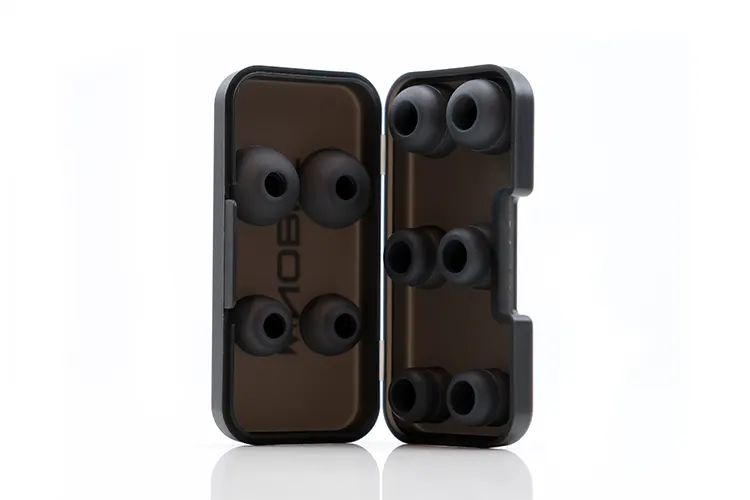
The ear tip choices for the Amadeus are not as plentiful as the Rex5, but at a lower price point, I was not expecting them to be equal in everything.
You get two silicone choices: a grey single flange narrow bore version and a wide bore dual flange alternative. Both tips come in small, medium, and large, with a spare single flange set on the drivers out of the box.
My ears much preferred the fit, seal, and audible performance of the Amadeus when using the dual-flange ear tips.
I couldn’t get an effective seal on any of the single-flange alternatives, which reduced the ANC performance and dulled the impact and vibrancy of the presentation. The dual-flange felt like the nozzle was much closer to the ear canal bend, allowing for a big and beautiful tuning to shine.
Controls
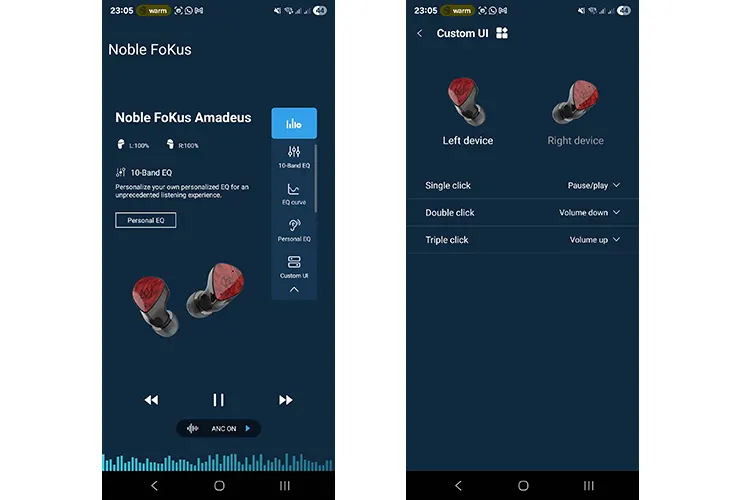
The Amadeus uses a touch-sensitive control system embedded into the faceplates with specific commands dependent on the number of clicks on either the left or right shell.
Commands include playback controls and volume levels, with the ability to customize each plate’s click count to match from a very wide range of options, including ANC.
The touch-sensitive area subjectively feels smaller than the Rex5 equivalent and not quite as sensitive to the touch, so you do have to be a bit firmer to get a response.
The response lag is also a little more noticeable with playback, and not always evenly synced to each driver, resulting in a bit of ‘signal flutter’.
It will sort itself out after 1-2 seconds, but it does feel like the Master/Slave driver relationship needs tightening up a little in any future firmware update.
Packaging & Accessories
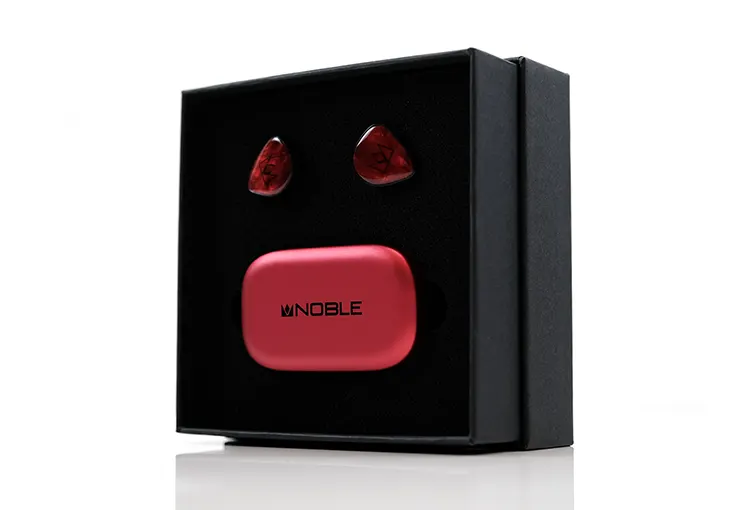
The FoKus Amadeus comes in a small, professionally packaged red-themed box with an attractive top layer cradle and earpiece presentation tucked into protective foam.
You get some decent accessories for a TWS system, including the tips tray, a USB-C to USB-A charging cable, and a classic Noble-branded black pouch.
You also get an assortment of leaflets and guides out of the box to help you quickly familiarize yourself with the control system and battery protocols.
It’s nothing I would term as exotic for accessories, but I have never really encountered a hugely fancy TWS unboxing experience to date.
Click on page 2 below for my sound impressions and wireless performance.
