

Synergy
Efficiency
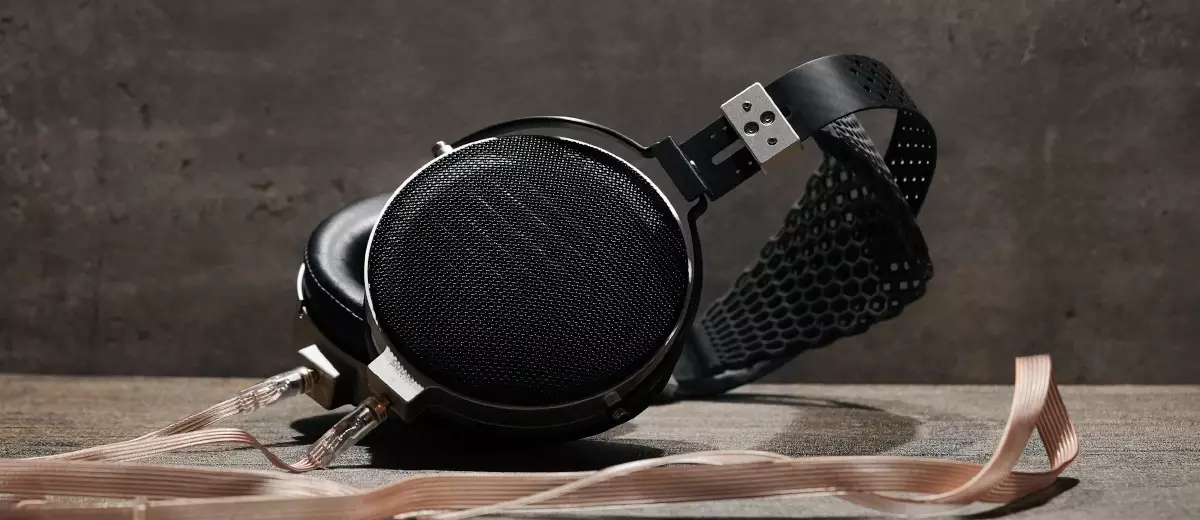
The Skyland can be driven loud on portable gears, but to give sufficient density and impact, it would require a desktop amplifier.
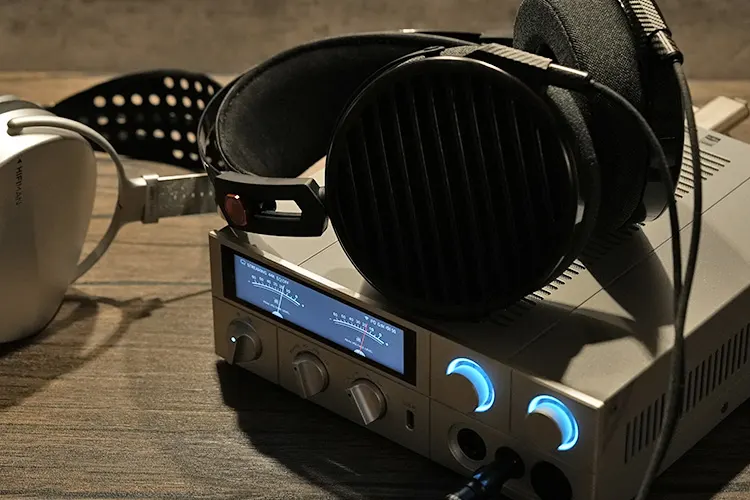
The background remains very quiet at different gain levels as the Skyland isn’t very sensitive, but it isn’t very insensitive either, and it would be preferred to use an amplifier with good control and energetic bass for the best balance.
Pairings
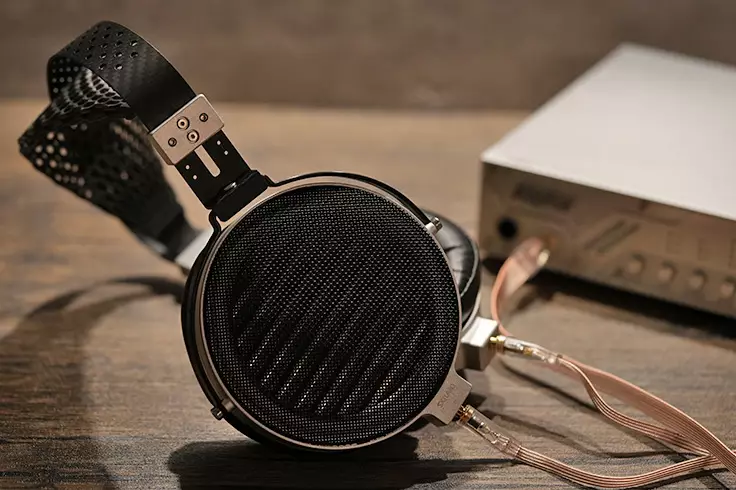
I tried the Skyland on FiiO K19 first, which is powerful but too clean and fast in its stock tuning, resulting in a presentation leaning toward the upper mids.
The definitive power is strong in the mids, the bass is powerful, and the vocal stands out a lot but doesn’t feel too bright; there is a lot of air, though occasionally the top end gets a bit sizzly.
There is generally good control for sharper voices, and it works nicely if there is sufficient bass in the track; you would just need some EQ to get the tuning more balanced and articulated.
The Luxsin X8 pairing with NOS mode sounds smoothest and most dense and textured in the bass, also sounding more balanced and textured in the bass.
Also, you can just tell the AI assistant what you think about the sound, and it can suggest a fix instantly. I think this combo yields the best dynamics and sounds most natural, while the K19 may feel stronger in technicalities but may need more expertise in equalizing.
The FiiO Warmer R2R and K17 combo also gives it an enjoyable push in the low end; the stage feels quite expanded with the vocal body enriched, so it feels more naturally articulated and balanced.
The bass also sounds punchier on this set while maintaining plenty of textures, and this set works well with Pops and ACG without the need for adjustment.
Selected Comparisons
MOONDROP COSMO
Technical
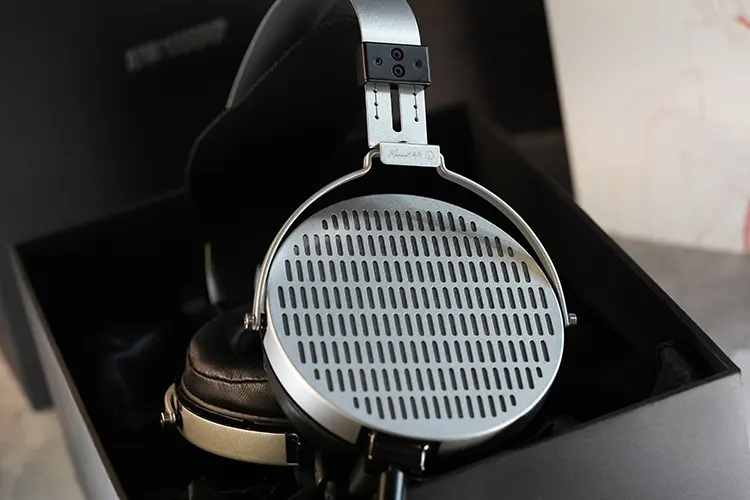
The MOONDROP COSMO is the previous-gen flagship, and it is easy to spot its similarities and differences. Both designs share a 100mm, 500nm planar driver and Skyland upgrades to N55 magnets from N52 on the COSMO.
The change is reflected in the specs as the Skyland’s sensitivity drops from 100db/Vrms to 60dB/Vrms compared to the COSMO, and the impedance is increased from 15Ω to 60Ω.
This could benefit pairings with stronger voltage output, which is a major improvement in terms of ease of pairing, sounding dynamic and balanced.
Design
While the two flagships share the same silhouette, they are very different in material choice when looking closer.
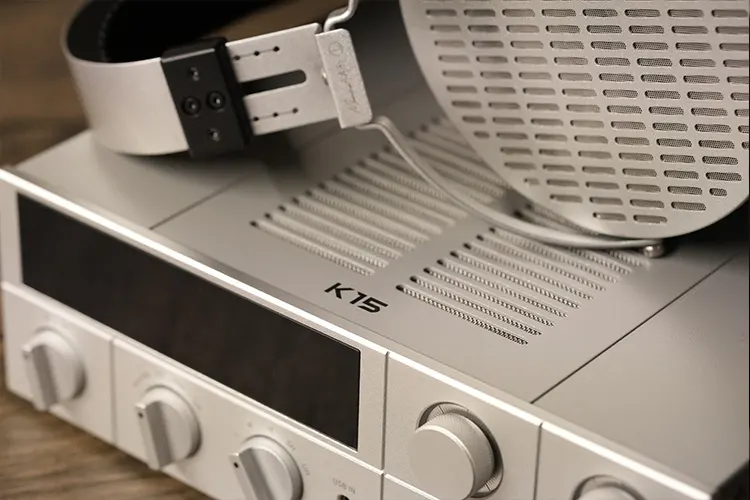
The older COSMO embraces a bright, classic industrial theme, utilizing silver-grey sheet-metal panels and standard CNC-machined components paired with a traditional, solid leather suspension strap.
In stark contrast, the Skyland adopts a contrasty colorway built around an all-aluminum alloy CNC hollow structure.
A dry-process carbon fiber suspension strap replaced the usual metallic band, and a futuristic, 3D-printed headband replaced the leather strap.
The pads are also more premium with the Skyland, using lambskin as a base material, which I prefer for longer listening sessions than PU leather or fabric pads.
Performance
In tonal character, the COSMO offers a thick, full-bodied presentation with rich energy in the core vocal frequencies, remaining completely free of harshness thanks to a prominent top-end roll-off. This tuning makes the COSMO sound lush with older, lossy masters.
The Skyland reveals a more elevated, expansive, and airy soundstage, capturing textures and upper-octave overtones with superior revealing power.
While both share a mid-centric focus and a 100mm driver design, MOONDROP’s structural updates make the Skyland much friendlier to source pair.
Their amplification requirements differ significantly. The COSMO demands heavy current delivery to sound fully textured and open, an appetite not every gear can handle.
The Skyland scales easily with higher voltage swing to deliver a solid low-end punch, and it synergizes best with a powerful, organic, and bassier source.
Vocals stand out on both headphones, but their delivery is distinct. The COSMO is tuned to be weightier, denser, and more authoritative, whereas the Skyland keeps presentation uncolored and clear while keeping the sibilance zone strictly controlled.
This allows each to cater to different vocal styles and tonal preferences in its own way. I prefer the Skyland for uplifting, faster music with its speedier transients performance, whereas the COSMO suits darker voices and slower BPM music with richer bass content.
While both models offer excellent EQ scalability without distorting, the Skyland proves far more flexible.
It achieves a balanced presentation much more easily than the current-hungry COSMO and sounds more swiftly articulated with a low-end EQ bump, making it more versatile across diverse music genres.
FiiO FT7
Technical
The FiiO FT7 has an even bigger diaphragm at 106mm and a 24k silver-gold plated circuit.
There are 18 magnets inside, but like the COSMO, they are N52 grade, and they give the FT7 a 25Ω, 110 dB/Vrms rating that is quite a bit more sensitive than the Skyland.
Based on the specifications, the FT7 would need a stronger current to shine, while the Skyland would benefit more from powerful voltage swings.
Design
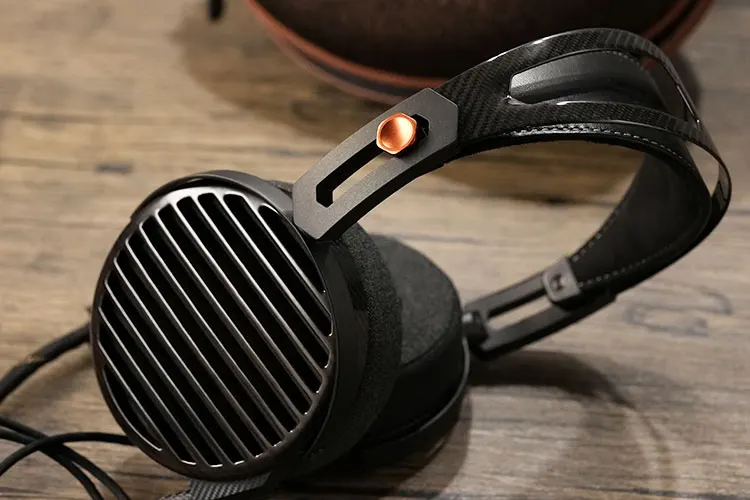
On the structural front, the FiiO FT7 introduces a sophisticated material mix, pairing a carbon-reinforced headband and a carbon middle frame with a wood faceplate.
It has superior weight distribution across the head, and you can move around with it without the need for adjustment. It is also paired with a significantly thicker, heavy-duty stock cable.
By comparison, the MOONDROP Skyland opts for a more industrial aesthetic. It feels sturdier in the hand, and its faceplate design is cleverly engineered to allow more uniform air movement, which is a crucial factor for optimizing planar magnetic diaphragm behavior.
I also prefer the pads on the Skyland for longer listening sessions. The 3D-printed headband is another fun feature, and it saves the Skyland from shifting away from the wearing position.
Performance
While the Skyland already features a quite large diameter, the FT7 is even larger with its 106mm driver.
While the two feel similar in size, the Skyland leans much more towards the treble end compared to the neutral-warmish FT7, though both have the treble well controlled.
Another interesting observation is that the FT7 behaves more like a traditional planar, featuring a slight bump in the 7–8kHz range.
However, because this peak is well-suppressed, the Skyland actually feels even smoother because its upper-midrange receives a similar level of elevation.
It may take a little while to adapt to the Skyland’s vocal-forward tuning, whereas the FT7 sounds more balanced and natural right out of the box without any tweaks.
In short, the FT7 leans toward a weightier, more authoritative signature with a smooth, non-fatiguing top end. When it comes to versatility and ease of pairing to achieve a dynamic, balanced sound, it is ahead of the Skyland, though it isn’t as characterized.
The Skyland sounds more stereophonic, separated, and expansive due to its tuning, and it lacks the usual spikes in the sibilance zone, which helps it sound much more rounded while bringing out more vocal details.
It also tolerates equalization very well. By boosting the bass, it can immediately sound quite smooth and evenly distributed in energy across the spectrum.
If you prefer more emphasis on vocalists and air, the Skyland is more transparent and articulate in its decay while maintaining excellent texture and fast transients.
Ultimately, the FT7 offers a more forgiving presentation, whereas the Skyland is not shy about bringing out overtone details, revealing nuances you normally wouldn’t hear in a recording.
My Verdict
The previous generation flagship, the MOONDROP COSMO, was a hard-to-tame beast, making the Skyland a much better choice if you want to experience the low distortion brought by planar technology.
While vocals can feel a bit too forward during the first few minutes of listening, once you adapt to the tuning and pair it with warmer gear or apply some equalization, it is easy to enjoy how it positions and reinterprets the midrange, while also polishing the upper register smoothly.
Without EQ, it can sound slightly lean, meaning it does not quite work with rock and other bass-intensive tracks, and it may not suit Western pop well.
However, after boosting the bass, it hits quite deep. You can feel the drop, dense texture, and bite on fast House and EDM tracks. Furthermore, its smooth, energetic treble and fast bass recovery work well with synths to sound silky smooth.
Overall, the open-back MOONDROP Skyland headphone is a fun alternative tuning that highlights the vocals, without sounding veiled, if you get the pairing right.
If you are into Asian pop and older recordings, and have a powerful amplifier on hand, the Skyland makes for an exciting choice packed with plenty of air and brilliance.
MOONDROP Skyland Technical Specifications
- Impedance: 60Ω±15%
- Sensitivity: 96 dB/Vrms
- THD: THD≤0.05% (@1kHz, 94 dB)
- Frequency Response: 8Hz – 34kHz (IEC61094, FreeField)
- Effective Frequency Response: 20Hz – 20kHz (IEC60318-4, -3 dB)
- Earphone Jack: Dual 3.5mm
- Cable Plug: 4.4mm Balanced Plug
