

Synergy
IEM Pairings
I tested the UM Multiverse Mentor, PLUSSOUND’s Allegro 2, the Vision Ears VE10, and the Noble Audio Shogun with the PB6/DX340/AMP17 combo on a low-gain balanced output.
The first positive note is the low noise floor and excellent channel balance, even with sensitive IEMs like the VE10. On the odd occasion, I picked up some tube microphonics, usually during IEM insertion, but they typically lasted only a few seconds.
Also, I would not recommend double-amping the PB6 MACAW, as background hiss will become very prevalent with IEMs the higher you go in volume and gain. Stick with a line-level input.
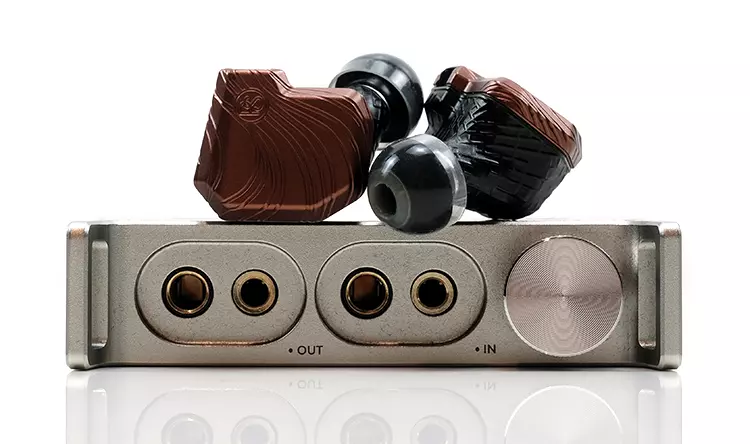
I found that most of the tested IEMs performed better in tube mode than in Class AB. The only time I preferred Class AB was when I wanted to calm the bloom with warmer IEMs, such as the VE10, or when I moved to low-bandwidth, Class AB with the Allegro II on brighter recordings.
Otherwise, the Tube mode sounded more immersive and almost mandatory with staging king customs such as the Multiverse Mentor.
The Mentor is a big-sounding IEM, though it doesn’t have much bass power. In Class AB mode, it was almost as if the treble and air were cut out compared with the wider, taller-tube mode performance.
I had the same preference with the Shogun, which surprised me, as I was expecting a wall of bass in tube mode. The lows stayed fairly controlled with additional treble overtones to counter the heavier bass delivery. Vocals did not sound veiled at all.
Headphone Pairings
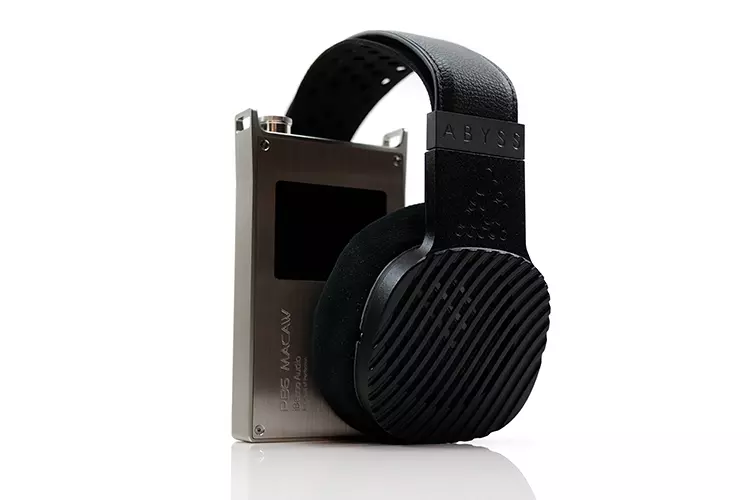
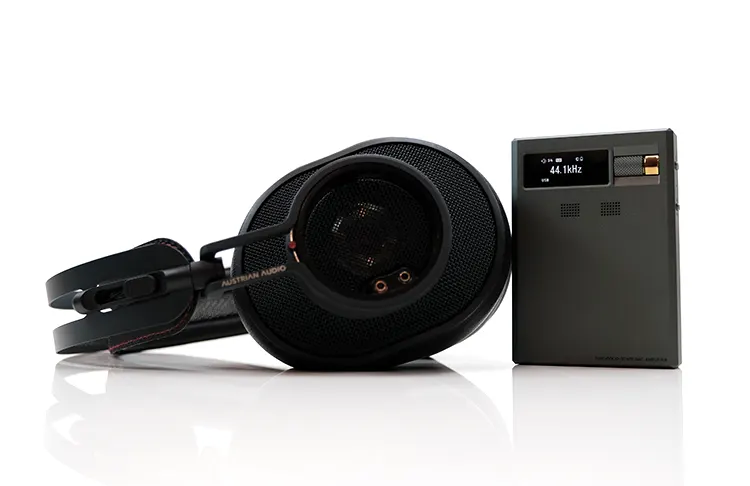
The PB6 MACAW can easily drive my chosen headphones, including the ABYSS JOAL, DCA’s NOIRE XO, the ZMF Headphones Atrium Closed (Olivewood Edition), and the Austrian Audio Composer when paired to the DX340/AMP17 balanced line output.
Low-impedance headphones such as the Composer are better suited to a low-gain setting on the PB6, particularly in the upper mids, where they can sound a little stressed with too much power.
However, for headphone pairings, I wanted to focus more on the DC input difference than on describing each pairing in its own right, as some owners might initially find the difference between battery and DC inputs quite subtle.
I have heard more transformative DC inputs from the likes of the FiiO M27 and the ONIX Mystic XP1. There is no significant ‘upscale’ in the PB6’s performance compared with how these two units sound when powered from the wall.
The PB6 MACAW DC Input draws me more to the low-end impact, which seems more forceful and pointed than the slightly softer thud of the battery-only performance.
I first noticed this difference with the Atrium Closed, which, out of the 4 chosen, has the heaviest-hitting bass, and any change there is easier to spot.
Once I zeroed in on the improved dynamics and slightly tighter sound, it was quite easy to pick out the changes in the other headphones’ bass tuning.
I would also recommend staying in Class AB, low bandwidth, with the Composer. The bloom and enhanced treble extension from the high-bandwidth mode seemed to energize the Composer’s sibilance to a distracting level. Low-bandwidth Class AB kept everything very smooth and punchy with DC input.
Selected Comparisons
The following comparisons with the iBasso PB6 MACAW were conducted using the Noble Audio Shogun, the Vision Ears VE PRO, the ABYSS JOAL, and the Austrian Audio The Composer.
The sources used included an iBasso DX180, the iBasso DX340/AMP17 balanced line-out, and a balanced 4.4mm PO connection.
iBasso PB5 Osprey
The iBasso PB5 Osprey was released in 2024 and won our Top Gear Award for Best Portable Amplifier that year.
Technical
I see the PB5 Osprey as an integral part of the D16 roadmap, with each offering unique features that complement one another. Whereas the PB6 MACAW feels more like a booster pack for the D17 Atheris or a standalone offering to pair with other DACs.
Both are balanced, portable tube headphone amplifiers, but their topologies and resulting output power differ slightly.
The PB5 has a single set of modern anode-grid Korg Nutube 6P1 tubes, compared to the quad array of JAN6418 tubes and the alternative op-amp-driven Class AB mode of the PB6 MACAW.
The PB5 Osprey has a maximum output voltage of 9 Vrms (balanced) and can deliver up to 1700 mW of power to a 32 Ω load. The PB6 MACAW is slightly lower at 8.5 Vrms and 1.6W in battery mode.
However, with the PB6 MACAW’s DC input, a missing feature on the PB5, it can exceed the Osprey’s maximum output, reaching 9.5Vrms and 2.3W of balanced output power. Its DC input can also bypass the battery, helping preserve battery health for longer.
With a more efficient Class AB mode, the PB6 MACAW offers up to 13.5 hours of battery life, but in tube mode it drops to 9.5 hours, slightly lower than the PB5’s rated 10-hour cycle.
Design
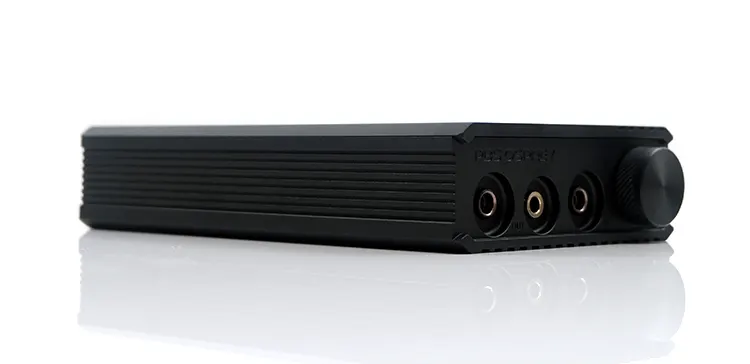
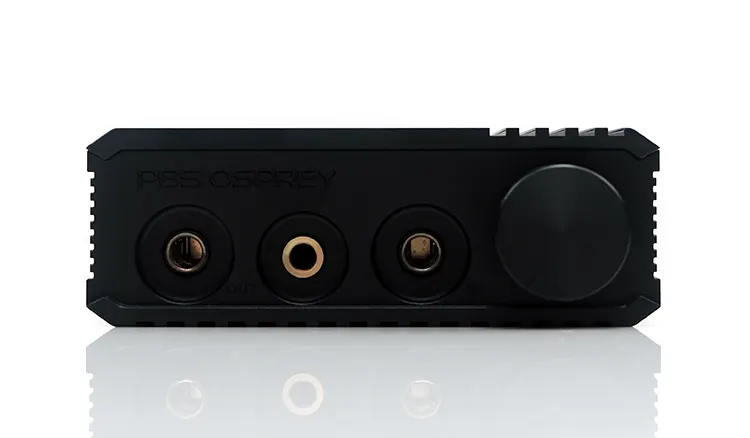
The PB5 Osprey is larger than the PB6 MACAW. It’s also slightly heavier, but it sounds hollow during a knock test, indicating a lot of free space inside the chassis.
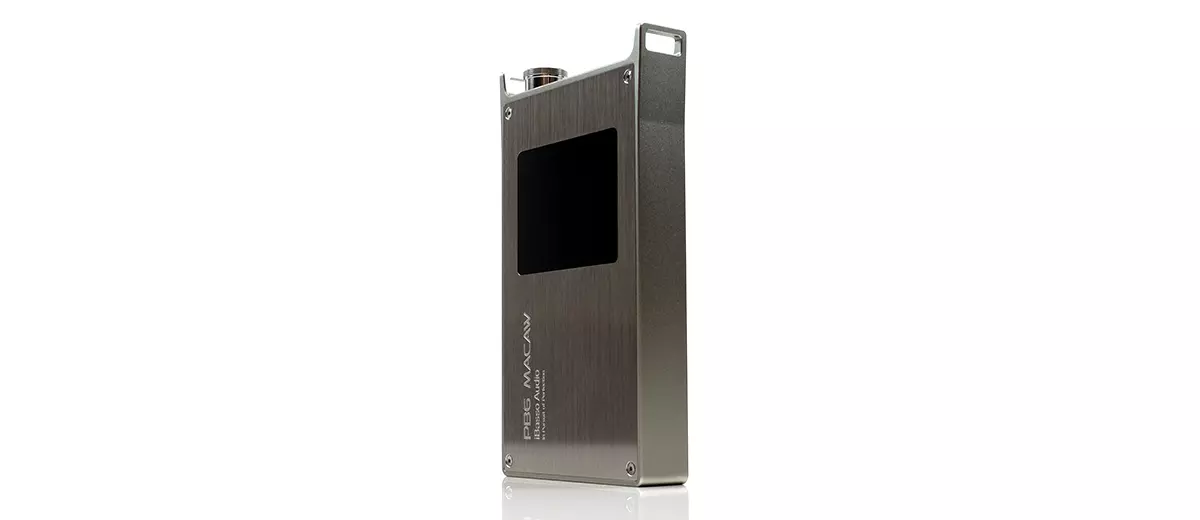
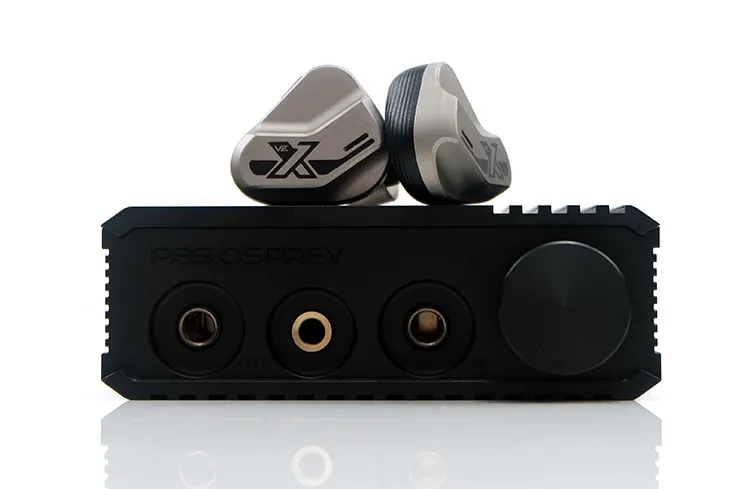
The housing has a darker aesthetic compared to the silver of the PB6 MACAW. Its chassis has a ribbed heat-sink finish on the sides and base, whereas the PB6 MACAW feels a little more refined, with a rear glass panel and no heat sinks. Both amps have portals to let their tubes glow.
The PB6 MACAW lacks the PB5’s large stepped attenuator, though some might prefer the digital volume dials’ more granular level of control for sensitive gear. The inclusion of an SE line-level input is a benefit over the PB5, which only had a balanced input.
There are no DC input, BW, or operational mode switches on the rear of the PB5. If you want choices, the PB6 MACAW is the way to go.
I do wish iBasso had included a wrapper case for the PB6 MACAW. The PB5 has a nice green leather option, which makes it a little easier to set on a desk or stack without worrying about knocks and scrapes. You will have to baby the PB5 a bit more to keep its exterior pristine.
Tube Performance
For this comparison, I compared the PB6 MACAW tube’s performance to that of the PB5, since the PB5 does not have a dual operational mode.
I felt the PB5 Osprey was technically superior to the PB6 MACAW, particularly in staging depth and immersion. Then again, the PB5 is a far more expensive amplifier, so this should not be a surprise.
Where the PB6 MACAW will appeal is to its smoother, more relaxed sound signature (and don’t forget the price).
With both the VE PRO and the ABYSS JOAL, the PB6 MACAW sounded more centered, thicker in note weight, and exhibiting more bass bloom. However, it did not offer quite the same level of separation and articulation compared to the PB5.
With the PB5 pairing, both the JOAL and VE PRO delivered more height and air, and a little more treble sparkle, helping create a slightly sweeter timbre.
You can improve the PB6 MACAW’s staging performance by switching to high-bandwidth mode. This will open up the highs a bit more and tighten up the note definition through the mids and lows, but it’s still not quite as immersive as the PB5.
In low-bandwidth mode, it sounded more relaxed, with a slightly softer attack and a warmer bass tone.
Overall, the PB5 shows its NuTube pedigree with a more detailed, revealing sound signature and a more holographic soundstage.
The PB6 MACAW has a more intimate, centered tuning, not quite as textured-sounding as the PB5, but it still delivers very good depth and excellent power for headphones.
Cayin RU9
The Cayin RU9 was released in mid-2025 and also won our Bang For Buck Editor’s Choice award in that same year.
Technical
Like the PB6 MACAW, the RU9 offers solid-state and tube amplification options. On that basis, I will compare these two.
Though the RU9 DAC will color the amp and is a tangible benefit for those on a budget, I will place the delta-sigma dual AK4493SEQ DAC and its wireless features to one side since the PB6 MACAW has no DAC or Bluetooth.
The RU9 has a 3-stage amplification circuit instead of the PB6 MACAW’s two. Both have tube modes; however, the RU9 uses a Korg Nutube 6P1 voltage stage instead of JAN6418 tubes, and it splits the tube output between a Classic and Modern Tube timbre
It also allows the user to switch to a transistor mode output, similar to the PB6 MACAW’s Class AB mode. Arguably, the RU9 offers more amplification modes.
Both have independent power supplies, which can enhance the output. The RU9 uses a USB-C port with a switch that lets the user choose between battery and DC power. The PB6 MACAW has no switch and will prioritize the DC input from its external PSU over the battery when plugged in.
Where the RU9 trails the PB6 MACAW is in battery life and power. The RU9’s built-in 2000mAh Li-Poly battery delivers just under 5 hours of battery life, about half that of the PB6 MACAW’s.
In DC mode, the RU9 maxes out at 1W in Hyper Mode (32 Ω load), which is quite decent. However, it pales in comparison to the PB6 MACAW’s 2.5W output (same 32 Ω load).
Its superior PB6 MACAW performance is even more evident at 1.5W on battery, compared to just 620mW from the RU9.
Design
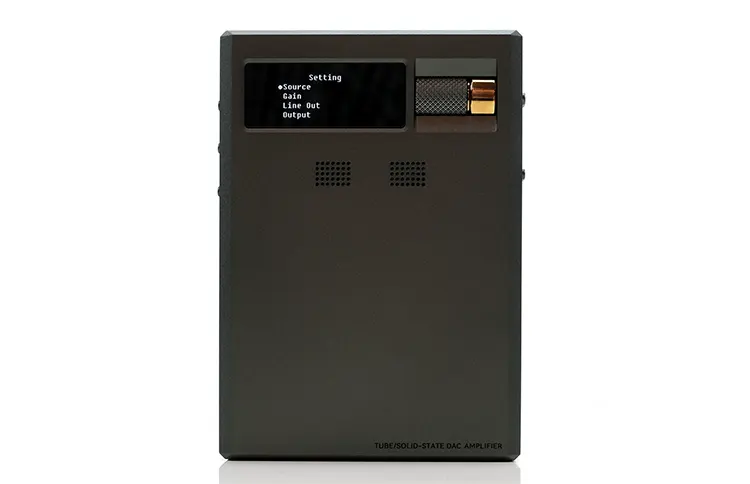
The RU9 is about two-thirds the size of the PB6 MACAW and weighs slightly less.
And whilst both look a little utilitarian, as many portable amps do, the RU9 has a more refined chassis with additional chamfering along the sides for a softer feel.
The PB6 MACAW actually has more visual pop with its silver aluminum housing and glass panel, but for many, the intricate metal patterning on the magnetized back of the RU9 will also appeal.
Cayin seems to have given size some serious consideration, which is understandable if they want it to be a natural stack with mobile phones. The integrated knurled volume wheel will shave off a few mm from the top panel, keeping it quite compact.
However, the benefit of a larger size is that you can stick in a nice dial. I prefer the smoother, even actuation of the larger, more traditional-looking PB6 MACAW volume dial.
Both have tube displays. The RU9’s green glow behind its two front grills is perhaps a little more subdued than the always-on classic tube glow under the PB6 MACAW top glass panel.
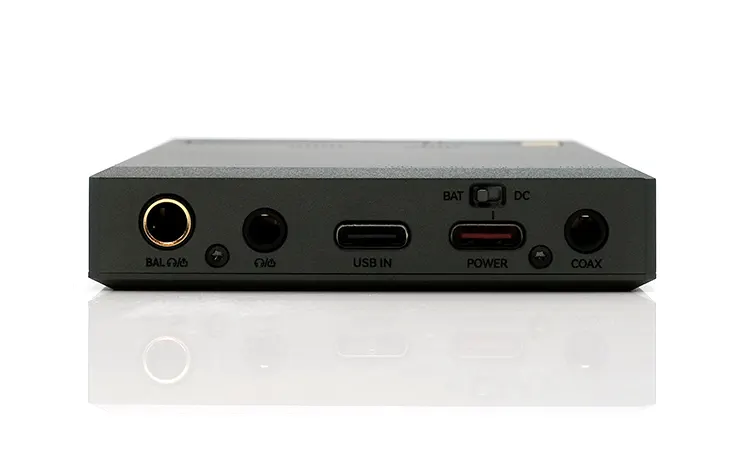
I/O differs, but keep in mind that the RU9 also includes a DAC. You will not find any digital outputs, LCD panels, or USB-C data interfaces on the PB6 MACAW.
But equally, there is no BW control on the RU9, and gain levels are hidden deeper in the RU9’s onboard menu system than in a simple switch at the back of the PB6.
The RU9 has line-out capability, both balanced and SE, whereas the PB6 MACAW has a balanced/SE line-input option. The RU9’s signal is fed entirely through its USB-C digital interface to its DAC and then to the amplifier; you cannot use another DAC.
Setup Advantages
Because the PB6 MACAW is not tied to any one DAC, you can create a system that gives the PB6 a performance edge over the RU9.
For example, the DX340/AMP17/PB6 Class AB pairing delivered a more neutral tone, with superior definition, stronger dynamic range, and enhanced micro-detail than the softer, warmer sound of the RU9 in solid-state mode.
However, that is a far more expensive system, so that is not a difference that would surprise me. Once you drop down to the mid-tier DX180 source line-out, things even out a bit more in dynamic range and detail, leaving you freer to focus on a like-for-like comparison when using IEMs.
Solid-State Performance
In solid-state mode, the RU9 sounds thicker and warmer on the low end, whereas the PB6 MACAW has a more neutral, cleaner tone in Class AB.
There is more midrange emphasis, staging height, and width from the PB6 combo, whereas the RU9 SS mode is more about depth and lower-mids saturation with a slight comparative fade in vocal forwardness.
Of the two transistor modes, the RU9 is the more ‘seductive’ with the VE10, and the PB6 is the more dynamic and sparkling pairing.
Tube Performance
Of the two tube timbre modes, the RU9’s Modern is a little closer in tone and emphasis to the PB6 tube mode than Classic, which is quite heavily colored.
Both RU9 tube timbre modes are fleshier-sounding than the PB6’s more neutral tuning. The RU9’s low end sounds thicker and a tad slower than the PB6’s punchier bass response.
Vocal weight favors the RU9, but it is more intimate in Modern Mode, whereas the PB6 maintains a neutral image, creating comparatively more air and height.
Classic Tube mode masks the vocals a little in favor of lower-mids bloom, but its staging size and depth are competitive.
Where it loses out to the PB6 with the VE10 and the Shogun is a slight attenuation in treble presence, creating a marginally darker sound compared to the sweeter overtones from the iBasso unit.
I prefer a more balanced sound from these two bass-heavy IEMs, and the PB6 delivers it. However, if you want the thicker, richer tuning with weightier lows, the RU9 tube modes will deliver.
My Verdict
The iBasso PB6 MACAW portable headphone tube amplifier is the ‘power pack’ of amps at this price point.
It has excellent synergy with a wide range of sources and plenty of power to drive demanding headphones. It also provides a very black background with excellent volume control for sensitive IEMs.
The PB6 MACAW’s dual operational Class AB and Tube modes give users the flexibility to switch between neutral and lush, expansive sound, depending on what they want to hear.
The additional DC input power increase and enhanced dynamics are ideal for heavier-hitting headphone drivers.
And all this for $499, almost a grand less than the excellent PB5 Osprey. I can see why, though. The D17 Atheris has a high degree of functional overlap, and IEM users might not need much more.
I would recommend the PB6 MACAW if you are a headphone user with the D17 or an IEM owner on a tighter budget with a decent source and want some of that beautiful tube flavor.
iBasso PB6 MACAW Technical Specifications
- Amplifier Topology Modes TUBE: JAN6418 ×4 + BUF634A ×4; Class AB: OP+BUF
- Power Internal 8.4V high-voltage battery pack; 12V DC-IN external power supported
- Bandwidth Modes: High Bandwidth / Low Bandwidth switchable
- Volume Control NJW1195A 4-channel hardware volume, 0.5 dB steps; ultra-low noise
- Inputs / Outputs 3.5 mm SE input/output; 4.4 mm balanced input/output (full bidirectional I/O)
- Gain (4.4-in → 4.4-out) Class AB: Low +6 dB / High +12 dB; TUBE: Low +8 dB / High +14 dB
- Note: 3.5-in → 4.4-out adds an extra +6 dB gain.
- Gain (3.5-in → 3.5-out) Class AB: Low +6 dB / High +12 dB; TUBE: Low +9 dB / High +15 dB
- Max Output Level (Balanced) 9.5 Vrms (DC-IN); 8.5 Vrms (Battery)
- Max Output Power (Balanced) 2300 mW + 2300 mW @ 32 Ω (THD < 1%, DC-IN)
- 1600 mW + 1600 mW @ 32 Ω (THD < 1%, Battery)
- Max Output Level (Single-Ended) 4.6 Vrms (DC-IN); 4.5 Vrms (Battery)
- Max Output Power (Single-Ended) 660 mW + 660 mW @ 32 Ω (THD < 1%, DC-IN / Battery)
- Frequency Response Class AB: 10 Hz–80 kHz (-0.1 dB); TUBE: 15 Hz–80 kHz (-0.5 dB)
- THD+N (typical) Balanced: -112 dB (2 V in, 300 Ω load, Class AB)
- Single-Ended: -110 dB (1 V in, 300 Ω load, Class AB)
- Dynamic Range Class AB: 125 dB; TUBE: Balanced 116 dB / SE 110 dB
- Channel Separation Class AB: Balanced 135 dB / SE 121 dB; TUBE: 100 dB
- Output Impedance Balanced 1.2 Ω; Single-Ended 0.5 Ω
- Noise Floor (A-wt, High Gain) Balanced 2.3 μV; Single-Ended 1.8 μV
