

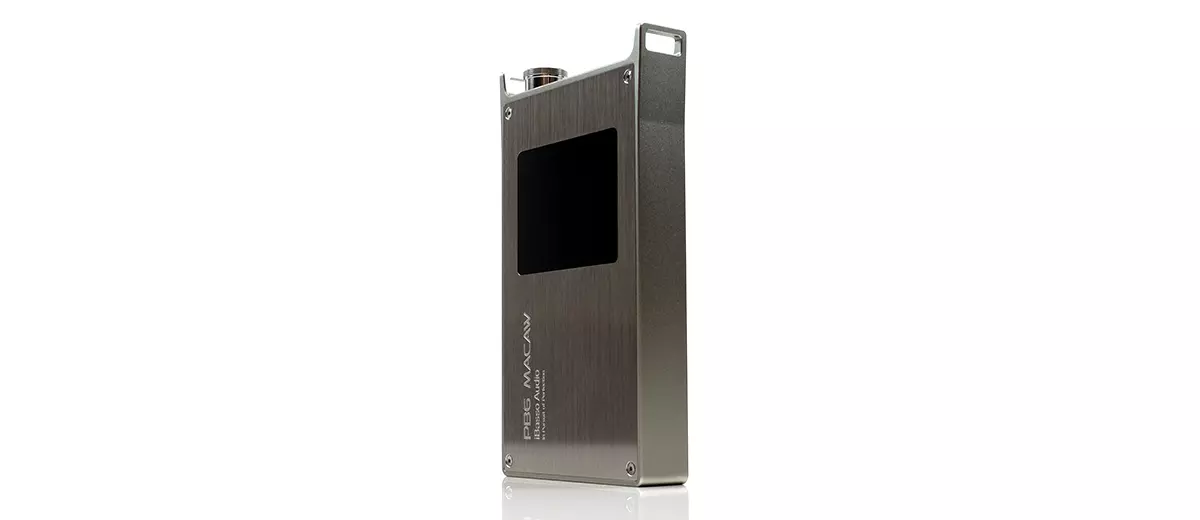
Marcus reviews the iBasso PB6 MACAW, a quad-Raytheon JAN6418 tube portable headphone amplifier delivering up to 2.3W of output power. It is currently priced at $499.00.
Disclaimer: I received this sample in exchange for my honest opinion. Headfonics is an independent website with no affiliate links or status. I thank iBasso for this opportunity.
Click here to read more about the iBasso products previously reviewed on Headfonics.
This article follows our current scoring guidelines, which you can read in more detail here.
The iBasso PB6 MACAW portable headphone amplifier feels like it should be the successor to 2024’s PB5 Osprey. The nomenclature is logical; the concept of a standalone portable tube headphone amplifier is continued.
And yet, the new PB6 MACAW is $1000 cheaper than the older PB5. It almost feels like a course correction. However, when you include the new D17 Atheris, the PB6 MACAW suddenly makes sense.
The D16 Taipan‘s 1-bit DAC and a solid-state Class A amplifier were replaced by the D17’s dual-mode R2R/1-bit DAC and a Korg NuTube amplifier. It almost felt as if the need for a PB5 or PB6 MACAW was redundant, except for one key area: power.
And that is what the PB6 brings to the table: power and plenty of it, with a smattering of tubes to keep the tone more analog than digital and at an affordable price point.
Still, even at this new, lower price, you have some competition, at least if heavy power is not your be-all and end-all. Integrated units such as the Cayin RU9 also offer a tube option and a delta-sigma DAC at a similar cost.
How does the PB6 MACAW differ from the PB5 Osprey performance, and how does it compare to similar-priced units such as the Cayin RU9? I found out in my full review below.
Features
The iBasso PB6 MACAW is a balanced, dual operational mode portable analog headphone amplifier.
There is no DAC inside, and it does not strictly operate as a preamp; you will need a line-level input from a source such as a DAP or a DAC to drive IEMs and headphones.
Its dual-mode operation is split between a solid-state op-amp/BUF headphone amplifier circuit with four BUF634As for current amplification operating in Class AB, and four JAN6418 tubes that feed the BUF amplifier stage (Tube Mode).
Like the recent AMP cards and the DX340, the PB6 MACAW uses a 12V DC input, which enhances the output power to a maximum of 9.5Vrms, beyond the 8.5Vrms limit of the battery mode alone.
The maximum output power of the PB6 MACAW does not vary with the selected operational mode. In balanced mode, you get up to 2.5W in DC mode, dropping to 1.6W into a 32Ω load. In SE mode, the output level is the same for both battery and DC at 660 mW into a 32 Ω load.
Design
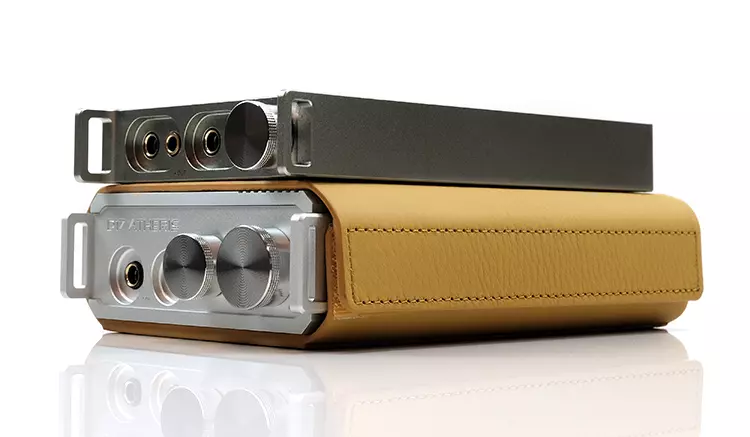
The PB6 MACAW has a much smaller form factor and is slightly lighter than the PB5 Osprey, which feels more at home with the D16 and D17 portable DAC/Amps.
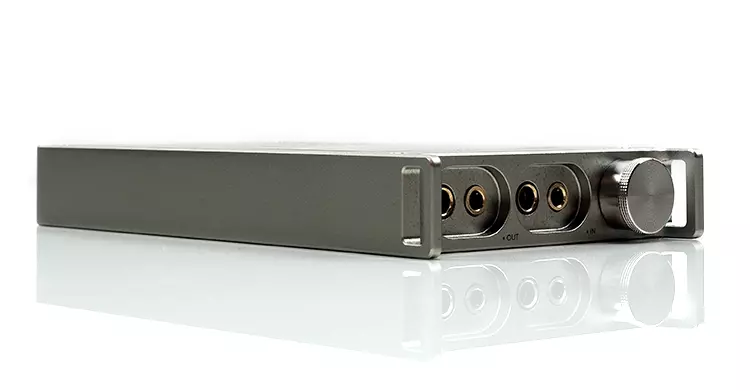
Instead of the dark, somehow hollow feel of the PB5 Osprey chassis, the PB6 MACAW’s silvery aluminum housing with a dark glass panel finish is more reminiscent of the shape and feel of their DAP line.
It still has a slight DIY feel, with visible screws on top and rack-mount hinges to protect the dials. However, I find the classic portal-window orange-tube glow from the top panel and the subtle etched branding more refined than the PB5’s black-and-green glow.
Considering how much cheaper the PB6 MACAW costs compared to the PB5, it actually turned out quite well, with the only drawback being the lack of symmetry with the far bulkier D17 Atheris compared to the D16/PB5 stack.
One thing that is missing is some protection: either a case or 3M sticky feet would be ideal to prevent scraps on the PB6 MACAW or the amp accidentally scraping whatever you are stacking it with.
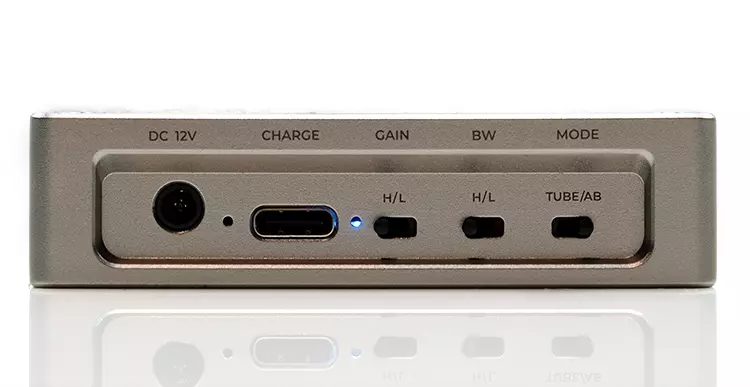
It feels robust, though, with the rack-mount handles providing plenty of protection for the dial and connectors, and a slight recess on the rear panel for the various switches and ports.
I/O
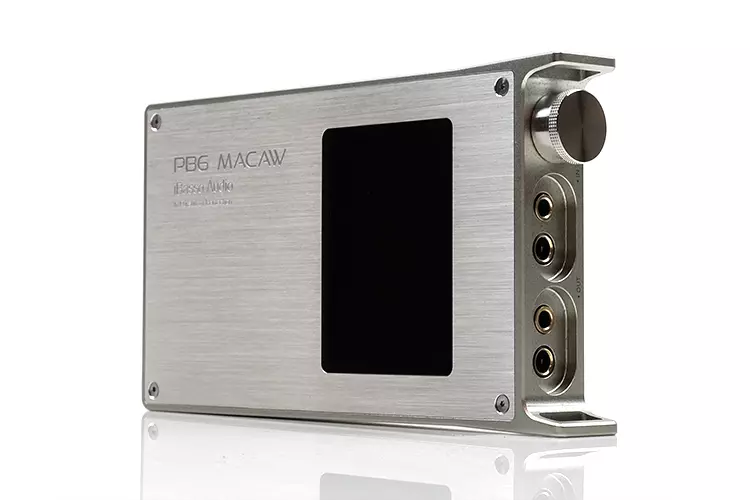
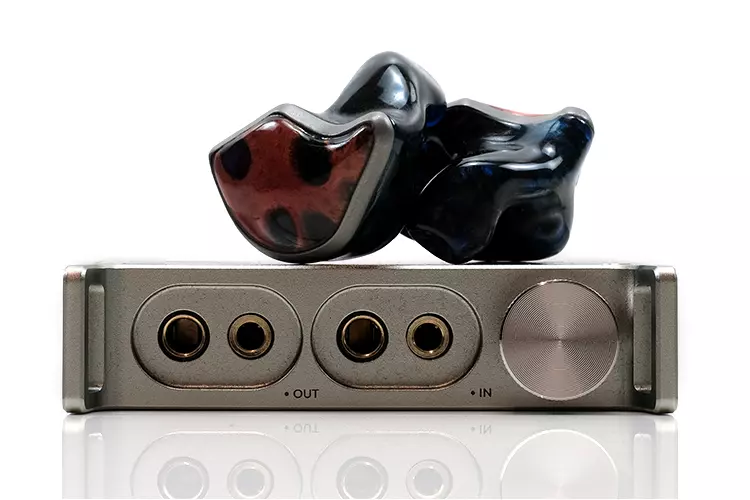
The front panel is simple enough, with balanced and SE LO/PO options; however, iBasso has swapped out the PB5’s 4-wiper stepped attenuator for a 4-channel digital volume control that also doubles as a power-on/off selector.
I am not wholly convinced that it is a bad thing. Many sensitive gear or IEM users felt the 24-step volume control was a little too aggressive.
Whereas a non-stepped version might give them more granular control without having to balance it out with something like the D17 digital volume to get their preferred listening level.
Also, since the PB5 Osprey lacks a 3.5mm SE line input, there is further scope to pair the PB6 MACAW with more sources that only have SE line outputs.
On the rear panel, you have the DC 12V input, which uses the same charger that came with the DX340 and is compatible with the DC socket on the AMP15/16/17/18 cards.
With DC mode activated, you bypass the PB6 MACAW’s battery, giving you endless ‘juice’ and helping preserve its long-term health.
The PB6 MACAW is charged via a USB-C port on the rear panel. Inside is an 8.4V high-voltage polymer battery, significantly higher than a standard 3.7V battery. Peak cycles are up to 13.5 hours in Class AB mode, dropping to 9.5 hours in Tube mode.
Beyond the power supply, the PB6 MACAW has a two-gain-stage switch (high and low) and an amplification mode that lets you choose between tube and SS.
The BW or ‘Bandwidth Mode’ selector is something new, and I will explain this in more detail in the sound section because it colors the output.
In short, the low-bandwidth mode delivers a softer, warmer tone, and the high-bandwidth mode creates a cleaner, more resolving presentation.
Packaging & Accessories
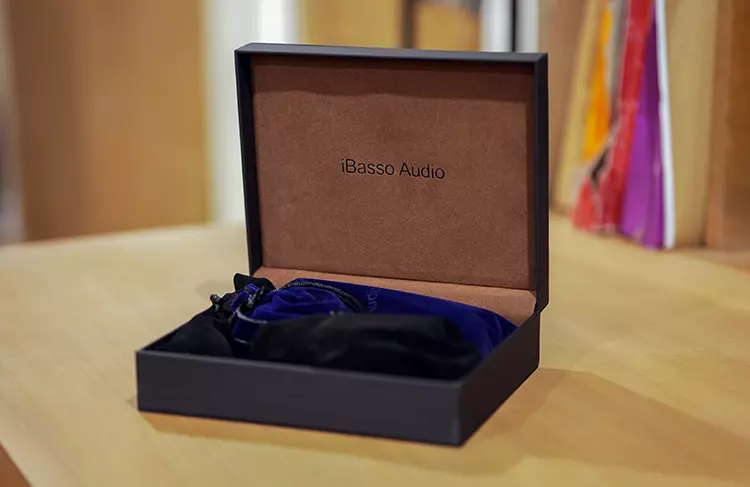
The PB6 MACAW uses packaging similar to that of the D17 Atheris and the PB5 Osprey. Again, at this price point, the white outer and leather box interior with velvet pouches is a very attractive ensemble, and you get a decent number of accessories.
Apart from the mandatory DC wall wart, you also get 2 braided IC cables, terminated in 3.5mm SE and balanced 4.4mm, as well as a 1m USB-C-to-USB-A charging cable. The rest are warranty and use guideline cards.
Sound Impressions
The following sound impressions of the iBasso PB6 MACAW were completed using a mix of the PLUSSOUND Allegro II, the Noble Audio Shogun, the Unique Melody Multiverse Mentor, the ABYSS JOAL, and the Austrian Audio The Composer.
Sources included the iBasso DX340/AMP17 balanced line-out and the DX340/D17 Atheris USB digital audio and balanced line-out, both using balanced PO connections.
Summary
The PB6 MACAW sound signature ranges from neutral and punchy, with excellent separation, to lush and expansive, featuring smooth vocals and sparkling highs.
In Class AB mode, the PB6 sounds linear with controlled but precise imaging, virtually no bloom, and excellent articulation and detail retrieval.
With high-bandwidth mode, you can inject more air and height into the performance, or calm it down and soften it a little with low-bandwidth mode.
I prefer the Class AB/low-bandwidth mode for brighter headgear or for a forceful upper-mids range, an area that the tube mode emphasizes more.
Headphones such as the Composer, which can sound edgy in the upper mids and highs when paired poorly, sound excellent with this setup, especially with the D17’s OS Mode output.
I also notice a slight volume reduction when using Class AB compared to tube mode, though that could be due to how tube mode shapes the midrange, which sounds fuller and more forward to my ear.
The PB6 Macaw Tube mode is where I tend to do about 90% of my listening. It sounds more expansive, textured, and expressive than the more conservative, controlled AB mode.
It’s a fuller, warmer performance, and one that I enjoy with gear that can replicate that grandiose delivery, such as the UM Multiverse Mentor.
On the technical side, the background is very ‘black’, even with sensitive IEMs in tube mode. iBasso has done a great job here, reducing analog noise floors to an absolute minimum with the digital volume, ensuring channel imbalance is nonexistent at low volume levels.
The dynamic range is also excellent, particularly with less efficient headphones such as the ABYSS JOAL. Using the DC input enhances the low-end dynamics, with a tighter, more ‘pointed’ impact than the equivalent battery mode performance.
Source Differences
Despite packing four tubes, the iBasso PB6 MACAW is fairly transparent, i.e., your source will affect the final coloration of your pairings.
I tested the PB6 with the ABYSS JOAL at a high-gain, high-bandwidth setting. The line input was from the D17 Atheris, the D16 Taipan, the DX340/AMP17, the DX180, and HiBy’s RS8 II.
The most dynamic pairings were the D17 and the D16; they felt made for the PB6. Out of these two pairings, I preferred the D17’s lineout. It sounded a little firmer and more defined, with a smoother, weightier midrange.
The D16 output has shorter decay and a more urgent, etched note delivery, with stronger treble contrast.
The DX340/AMP17 lineout sounded a little more neutral via the PB6 than via the D17 and D16, which is understandable given that it uses a delta-sigma DAC rather than a 1-bit or R2R DAC.
The PB6/JOAL pairing had excellent dynamics, a slightly cleaner but punchier sound, with more upper-order harmonic influence in the mids-timbre of the JOAL.
Vocal imaging is not as forward or lush as the D17 in R2R/NOS mode; it’s more comparable to 1-Bit imaging, but it’s still slightly more clinical-sounding.
The RS8 II lineout doesn’t quite convey the same sense of power and dynamism as the D17 and D16, but has a sweeter overtone, slightly more bass bias, and a more laid-back vocal delivery.
You need to compensate the PB6 MACAW volume a little more; the Vrms output feels slightly lower than that of iBasso’s DAC/Amps.
The DX180 pairing was commendable, but if you are rocking a DX340, you will notice a slight loss in staging depth and micro-detail. The PB6/ABYSS output has a more rounded, flatter tone, with slightly less air but still quite neutral and refined-sounding.
Click on page 2 below for my recommended pairings and selected comparisons.
