

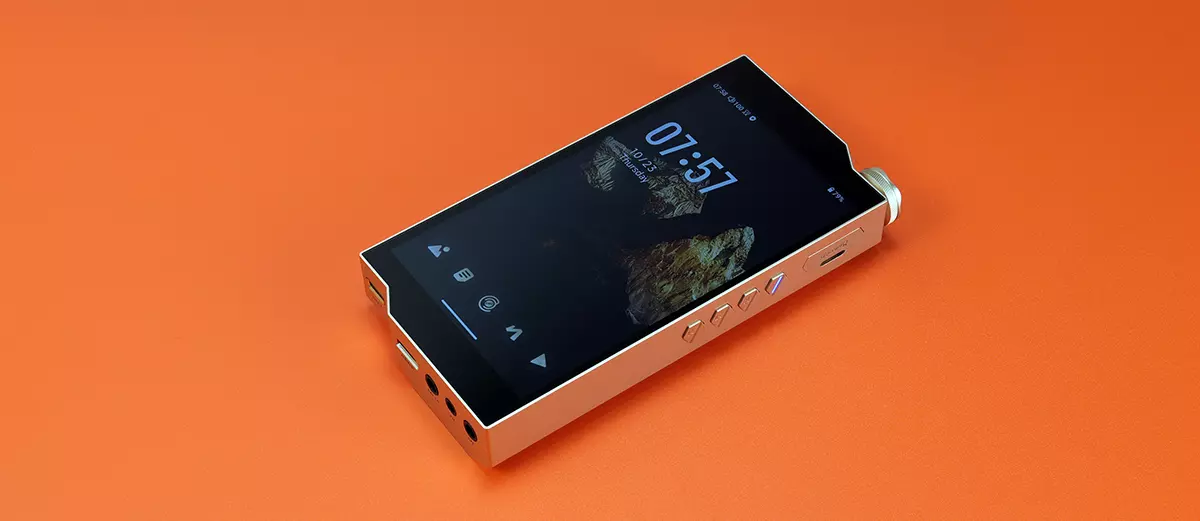
Sound Impressions
The following sound impressions of the HiBy RS8 II were completed using a mix of the PMG Audio Apx, the Volk Audio ÉTOILE, Vision Ears VE ZEN, Noble Audio’s Shogun, and the Austrian Audio The Composer.
Summary
The RS8 II stock tuning is excellent, but its myriad of sound shaping options push it into the world-class category for me.
In its stock format, this is a very cohesive, natural-sounding DAP with an excellent balance throughout, and supported by a very black background.
It’s so immersive that it almost creates a 3-blob soundstage impression of the older RS8 and R8 II, which surprised me greatly since I use the R8 II a lot these days and consider it an excellent vocalist and bass DAP.
Compared to these older DAPs, the RS8 II has retained a lively low-end response from my tested gear but taken a little weight off the sub-bass lows and injected more warmth and bloom into the lower-mids.
It has also relaxed the vocal imaging relative to the R8 II, thereby improving the sense of space and performance immersion, and at the same time, enhanced the note weight and harmonic balance compared to the flatter RS8 mids.
The treble is beautiful, sounding extended and refined without a lick of harshness, especially when using the I²S output or shifting into pure Class A in its PO adaptive amplification slide.
There is enough influence on the mids to ensure upper-register vocals veer slightly sweet without going overly ‘contrasty’ in their delivery.
Switching on Turbo Mode is a must for those who want more authority from the RS8 II lows and induce more vibrancy from the mids and highs. It can be a bit ‘full-on’ for some, but for EDM and rock lovers, it enhances the fundamental frequency in lower-register instruments to a satisfying level.
Overall, the RS8 II stock tuning is the most natural and balanced I have heard from a HiBy DAP.
Adaptive Amplification
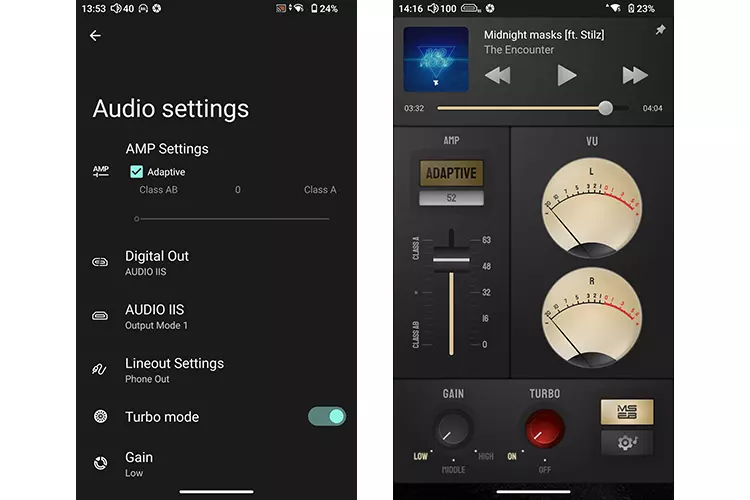
Since the RS8 II’s amplification is adaptive rather than binary, you can control and mix the quantity of Class AB and Class A with a slider in the Audio settings menu.
There are a total of 64 steps, ranging from 0 for pure Class AB to 64 for pure Class A, with a setting of 32 for a blended approach. Alternatively, you can just tick the Adaptive Amp check box and let the RS8 II calculate when to apply each Class during any playback.
The tonal differences are not as huge as Sankofa AI or MSEB, but you will hear the changes if you are used to dual operational mode amplification.
Class AB is a bit more ‘upright’, slightly more neutral and punchy with shorter decay, though by no means sterile or neutral sounding.
I found there was a little bit more treble influence in the harmonic order of fast, striking upper-register notes, particularly hi-hat and cymbal strikes, compared to the smoother Class A response.
Class A is a little warmer, perhaps a slightly slower pace with more bloom in the lower-mids and an even-harmonic emphasis in the mids and highs. Percussion strikes are more deliberate in their pace and with more body than Class AB.
Adaptive is likely to be the one most will use. It sounds dynamic, lively, yet refined at the same time. It can change the Class mode from note to note depending on how the RS8 II’s ‘brain’ sees what is coming.
For example, for hard-hitting EDM using the PMG Audio Apx, I heard a deeper, heavier sub-bass presence compared to Class AB, whose low-end sounded faster but a bit lighter sub-50Hz.
Sankofa AI Tonality Simulation
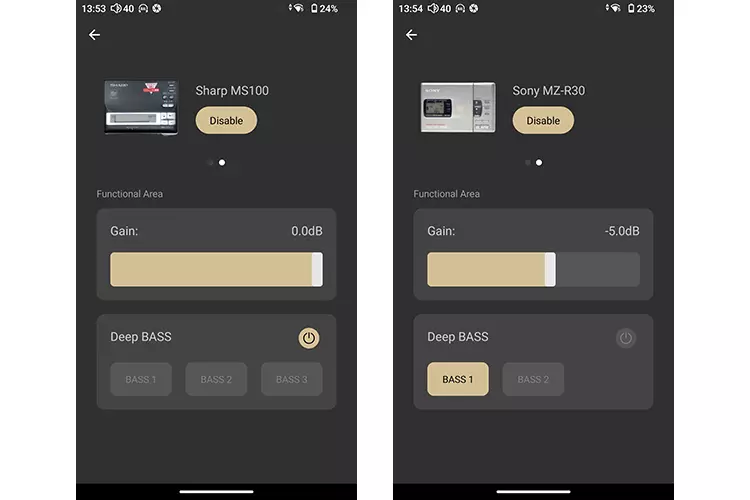
Currently, firmware v.15 only has a set of Mini Disc tonal profiles. You get 8 profiles, each with tuning that can be quite extreme and fun to experiment with.
Especially the additional Bass options, which, I feel, are better suited to headphones, though a few IEMs do well with them if you lower the gain level to prevent distortion.
The two brands that have additional bass options are the Sharp and Sony series. Of the two, I would pick the Sony bass profiles for IEMs such as the Apx and the VE ZEN as they seem the most refined and cohesive, and still add a lot of weight.
The standard Sony MZ-RH50 and MZ-RH30 presentations deliver a smooth but slightly leaner sound with reduced vibrancy compared to the stock RS8 II tuning.
The Sharp version’s bass boost is far denser and warmer-sounding and can dominate the sound signature if you are not careful. I found an excellent match for the Sharp MS100 Bass 1 profile with the DCA NOIRE XO, which can handle the additional thickness without distortion.
Of the three stock Sharp profiles, I preferred the MS100’s richer timbre and more relaxed delivery. The MT831 is leaner, more pristine-sounding, and good for detail freaks, but lacks a bit of weight and substance. The DR7 sounded walled-in and a bit flat or 2-dimensional for my tastes.
Out of the Sony range, the MZ-R30 got my vote with its slightly richer sound compared to the R50 and more prominent vocal imaging. The NH1 and E730 project a more neutral sound quality with a stronger emphasis on tonal accuracy.
The Panasonic SJ-MJ10o sounds closer to the typical “Asian” or J-Pop sound, leaning a bit brighter with more sparkle in the highs and a reduced level of bass.
Synergy
Digital Out Performance
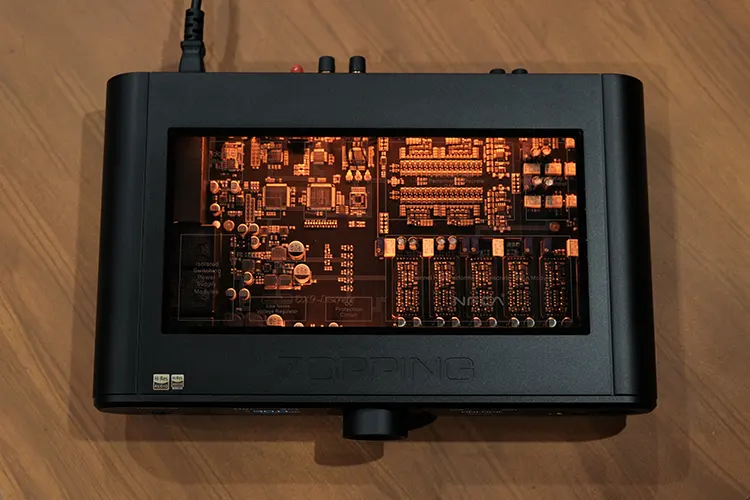
I tested the RS8 II’s USB (Digital audio out), coaxial, and I²S performances connected to a Topping DX9 Discrete/Austrian Audio Composer pairing, and there are some nuanced differences in the quality of each.
Of the three, I preferred the more effortless presentation and better timing of the I²S connection. It sounded true to how I hear the RS8 II performance, direct from an IEM or headphone.
The imaging was very coherent, the bass was not too heavy or sluggish, with a light bloom in the lower-mids and excellent, liquid-rich timbre in the mids and highs. Nothing felt out of place, no harmonic dissonance in percussion and upper-register vocal performances.
The Coaxial performance felt more reference-like with less of an airy, wide soundstage, a bit more bass heft, and vocal focus above all else. The overall tonal coloration was a little drier, though still quite analog-sounding.
The USB digital output (using a USB-C to USB-B converter) was the least pleasing to my ear. The energy and PRaT are very good, but there is some rawness in the upper-mids timbre with a bit of treble emphasis that is not present in the I²S performance.
Analog Out Performance
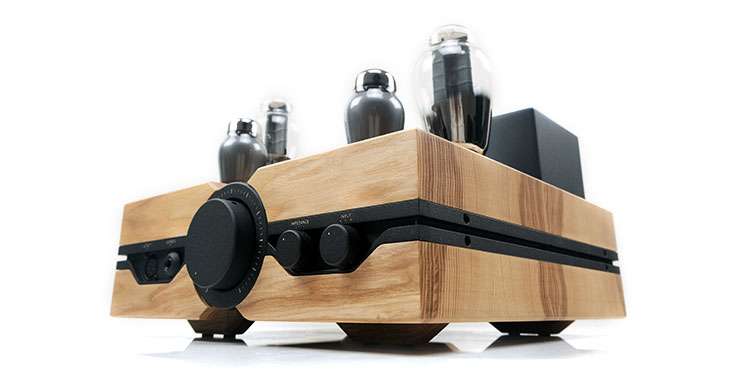
I used the Feliks Audio Envy and Audeze’s LCD-5 as my test rig for the RS8 II’s balanced and single-ended LO output performance. For context, I compared it to the R8 II LO performance.
I have to say, using the lineout from an R2R DAP into a tube amplifier (solid-state rectifier) is highly recommended. Both DAP’s balanced outputs stayed true to their core signature, but it was the RS8 II that sounded ‘freer’, more natural in its performance, with a grander soundstage and balanced vocal imaging.
The R8 II balanced line out suits the Envy’s strong low-end response, sounding weightier and deeper, but it can feel narrower and more intimate compared to the RS8 II and not quite as resolving.
The single-ended LO differences were more stark. The RS8 II sounded alive and vibrant, whereas the R8 II LO was staid and to the point. That is not a criticism; it blends well, but it’s missing the bloom and airy, immersive sound of the RS8 II/Envy pairing.
IEM Pairings
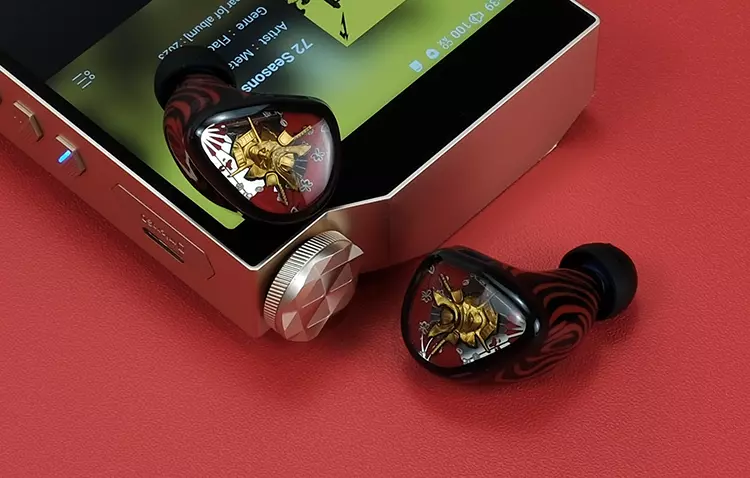
I tested the RS8 II with the Noble Audio Shogun, PMG Audio’s Apx, the Volk Audio ÉTOILE, and the JH Audio’s Jolene.
Honestly, there isn’t an IEM that the RS8 II cannot pair well with. There is so much sound shaping with the RS8 II that you can get lost in mixing the performances with Turbo Mode, PEQ, Sankofa AI, and MSEB plugins.
My advice is to tread slowly and introduce each aspect one at a time to see how it affects your chosen pairing.
For example, I used Turbo Mode most of the time, which works really well with the huge airy sound of the PMG Audio Apx. It sounds deep, authoritative, and with a vivid and engaging midrange presence.
However, with the Shogun, I tended to keep Turbo Mode turned off, as the dynamic driver inside the Shogun has a more elevated and longer bass shelf that can easily dominate if given too much voltage.
Keeping Turbo Mode off also provides more flexibility to dip into Sankofa AI and use the Sharp MS100 and MT381 bass option profiles without invoking heavy distortion.
The ETOILE sounded excellent in stock mode without any additional sound shaping. The pinna gain region on the ÉTOILE is lifted, providing a stronger vocal presence. The RS8 II’s tuning doesn’t overly emphasize this region, a trait found in the R8 II, so it sounds more cohesive to my ear.
Relaxed vocals do not work well with the darker Jolene. However, I would taper back Jolene’s in-line Bass Boost to 2 pm, and use a peaking filter in the RS8 II’s PEQ to give the 1-3k region more of a lift for the vocals.

Headphone Pairings
I tested the Dan Clark Audio NOIRE XO, the ABYSS JOAL, Austrian Audio’s The Composer, and the Audeze LCD-5 with the RS8 II. This time, I kept Turbo Mode on for the additional voltage swing and switched to a high-gain balanced output.
Some of these headphones took to the various tuning profiles and DSP like a duck to water, and some sounded just right with Turbo Mode high gain and nothing else.
The Composer and the LCD-5 with Turbo Mode come closest to my preferences using the stock sound profile of the RS8 II.
The smooth and slightly relaxed mids, unforced vocal imaging, and refined highs took any potential sting out of two headphones that can often sound shouty or edgy when paired poorly. Turbo Mode provides the necessary weight in the lows, especially for the LCD-5, which sounded too shallow without.
Sankofa AI and the Sharp Mini Disc profiles with Bass 1 or 2 were exciting mixes with the NOIRE XO. Without AI, it’s lively and nicely balanced, but if you are going for EDM or basshead music, the Sankofa AI tuning profiles make a fun, albeit very colored difference.
With the MS100 Bass Stage 1, the NOIRE XO sounded rich and punchy with solid sub-bass extension. With Stage 2, the bass shelf sounded more amplified, particularly sub-80Hz, turning the NOIRE XO into a bass monster.
I quite enjoyed the Soundstage plugin with the JOAL. With the RS8 II in stock mode, it’s smooth, albeit slightly dark-sounding in the mids.
Pushing the plugin slider to around 1.0 delivered a bit of a lift in the midrange brightness, creating some additional width. Without, the vocals are more in focus but the sound signature is a little bit darker, and the staging is narrower.
