

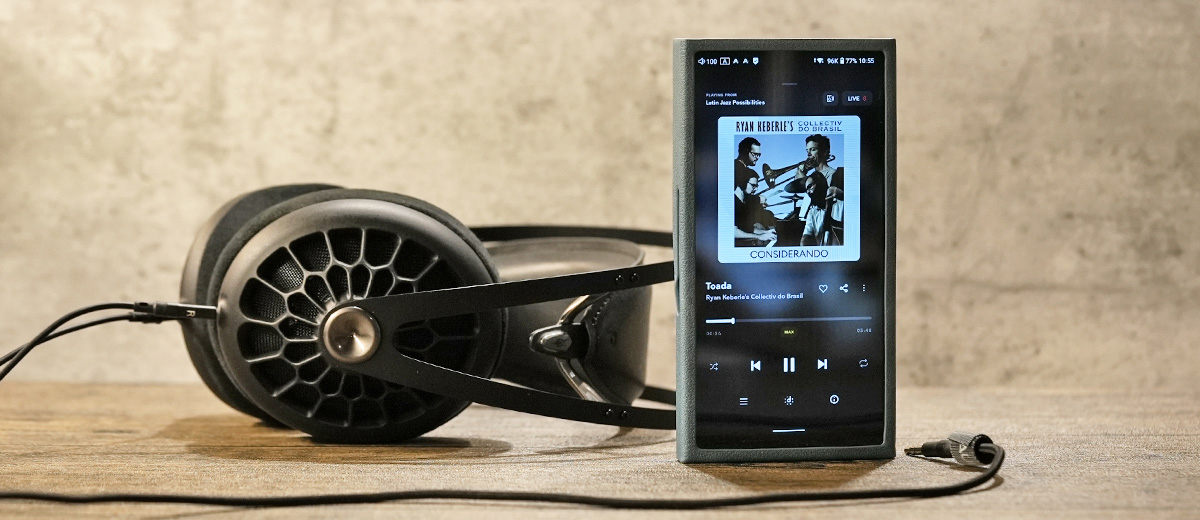
James reviews the HiBy R6Pro II 2025, a 2nd-gen Android 12 DAP with a dual CS4308P DAC and up to 632mW of Class A/AB amplification. It is currently priced at $699.00.
Disclaimer: This sample was sent to me in exchange for my honest opinion. Headfonics is an independent website with no affiliate links. I thank HiBy for their support.
You can click here to read more about the HiBy products we have previously featured on our website.
This article follows our latest scoring guidelines, which you can read in more detail here.

The new HiBy R6Pro II 2025 version builds on the original R6 Pro II from 2023 by enhancing the output power, replacing the older AKM decoding section with two new flagship CS4308P DACs from Cirrus Logic, and upgrading the system performance with 6GB of RAM and 128GB of ROM.
The original model earned praise for its distinctive design and its focus on superior decoding capabilities, precision, and control, rather than just high output power.
With its increased output power and improved measurement figures, does the R6Pro II 2025 maintain the finesse and control of the original, or outperform the R6Pro MAX, particularly when used with sensitive audio equipment?
Priced at $699, let’s explore what this new digital audio player has to offer in my full review below.
Features
DAC
The HiBy R6Pro II 2025 is a modern digital audio player that builds on the foundations of the successful R6 Pro II.
At first glance, changes may seem minimal, but the switch to a new decoding solution introduces significant differences, as the design approaches of DAC manufacturers vary.
Additionally, the more power-efficient decoding solution extends battery life to over 10 hours on balanced output, even with the increased output power.
This is the first instance I’ve encountered of the new 8-channel Cirrus Logic flagship chipset, the CS4308P, where the “P” denotes the PRO version.
Compared to the AK4499EX and AK4191 combination in the original R6 Pro II, the CS4308P has lower power requirements, making it more suitable for portable audio applications than the arguably higher-grade but more power-demanding AK4499EX combo.
Similar to the previous generation, two NDK femtosecond oscillators, clocked at 45.1584 MHz and 49.152 MHz, are positioned near the DACs to improve jitter control.
The R6Pro II 2025 edition employs the same power regulation architecture as the R6 Pro II, providing discrete power supplies for the DAC, I/V stage, low-pass filter, and amplification sections.
Decoding
The HiBy R6Pro II 2025 features a brand new decoding solution, utilizing Cirrus Logic chips that support native DSD512 and PCM 32-bit/768kHz decoding capabilities, which are slightly lower than the maximum rates offered by the original version.
Running on Android 12 OS with global SRC bypass, the R6Pro II 2025 is powered by the Qualcomm Snapdragon 665 SoC.
A notable upgrade comes in the form of increased memory, now at 6GB of RAM and 128GB of internal storage, despite the original version already delivering smooth performance.
Amplification
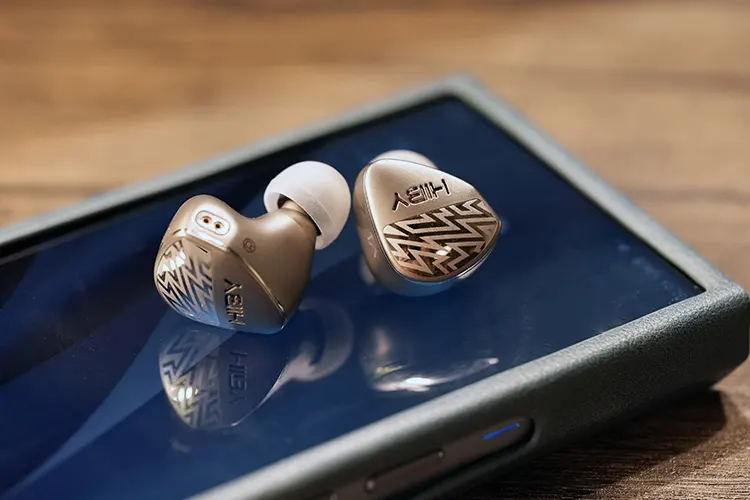
The Class A/AB switch remains, allowing users to choose between optimized sound quality and extended battery life.
Switching to Class AB mode provides approximately two additional hours of playback time, though it sacrifices some dynamics and fullness. This option is useful when you need an extra hour or two before recharging the device.
Compared to the original, the R6Pro II 2025’s balanced output delivers nearly double the power, increasing from 383mW to 632mW into a 32Ω load that is close to what the R6Pro MAX offers.
Measurement performance has also improved. Rather than focusing on specific figures, it’s worth noting that the original R6Pro II already performed well in measurements, and a sound comparison between the two versions will be provided in the sound section below.
However, when compared to other players in the market, some of which exceed 1000mW per channel, it’s clear that HiBy maintains its approach with the R6Pro II 2025, just like the original design, as they believe what is offered is already sufficient for most IEMs.
Design
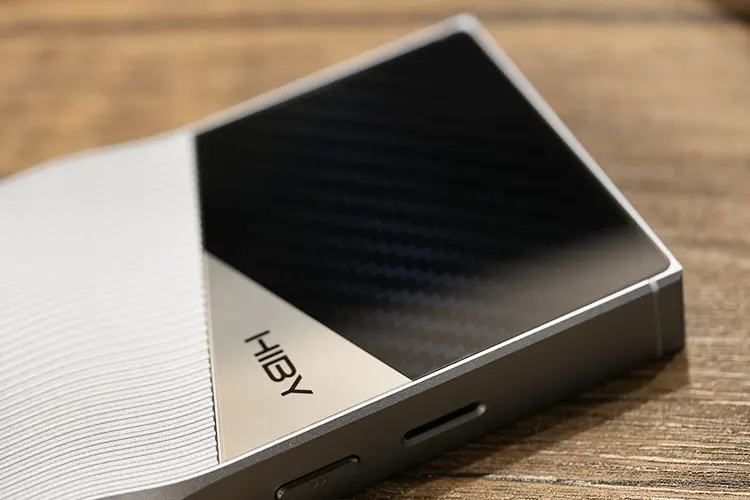
When placed side by side with the original version, the new R6Pro II 2025 appears nearly identical, featuring the same 6-inch screen and almost every design element.
It also closely resembles the R6Pro Max, which shares a similar aesthetic but is thicker to accommodate a larger battery and additional components.
The R6Pro II stands out as one of last year’s most distinctive designs, skillfully combining curves, varied materials, and colors for a cohesive look.
Even with the leather case, the recessed corner at the back enhances grip, making the device feel slimmer than its actual dimensions.
At just 283 grams, the weight is reasonable for a device with a fully metallic body and a large screen-to-body ratio.
The horizontal arrangement of the I/O jacks is clean and practical, and the design cleverly protects the micro-SD card slot by covering it with the leather case. Overall, the build quality and layout are exceptional for its price range.
I/O
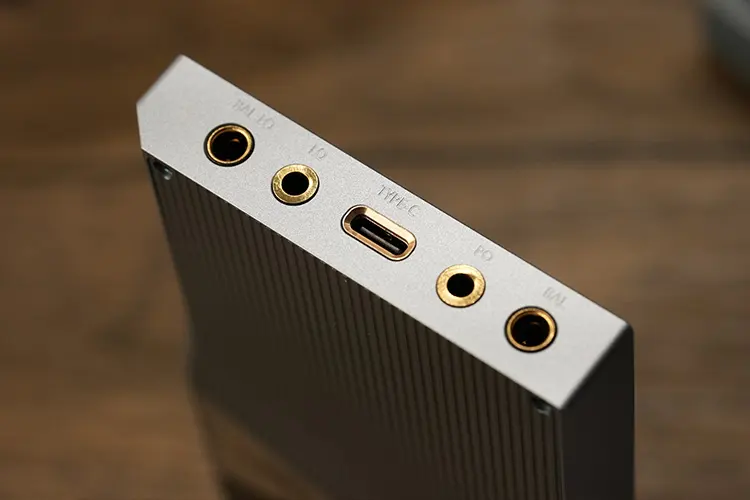
HiBy positions all output ports on the bottom of the R6Pro II 2025, and it remains one of the few devices to include a dedicated output port for amplifier connectivity.
This feature is particularly valuable since the player is not optimized for high power output, and you might have other desktop amplifiers that can do a better job.
For users who wish to drive larger headphones, pairing the device with a stacked amplifier is a straightforward solution.
Consistent with the previous generation, the USB-C port supports coaxial digital output, connectivity to external USB storage devices, and PD2.0 18W fast charging. This allows the device to recharge to over 50% capacity in just over an hour.
Controls
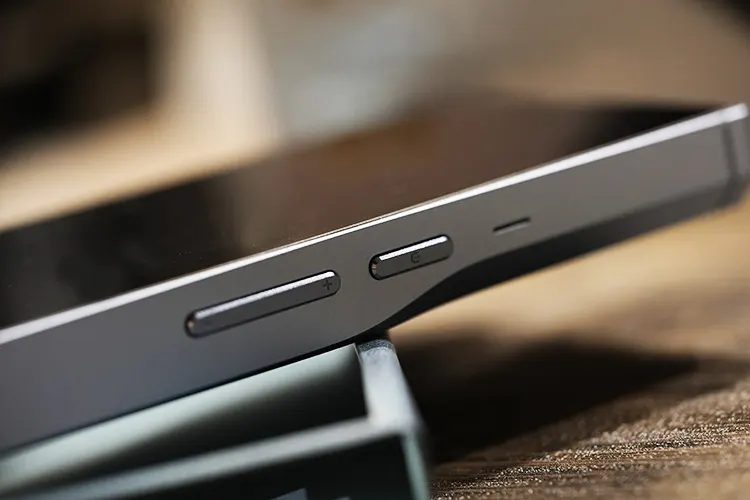
In addition to the remote app control, the physical buttons on the R6Pro II 2025 are intuitively arranged, with playback navigation buttons on the left and volume buttons on the right.
The volume adjustment offers numerous steps, ensuring smooth control without abrupt changes, even when using highly sensitive IEMs.
The included leather case is thoughtfully designed to prevent accidental button presses when the device is stored in a pocket.
The overall performance is responsive, particularly with the upgraded 6GB of RAM, which brings it closer to the capabilities of gaming phones. This allows multiple applications to run in the background without slowing down the device.
Packaging & Accessories
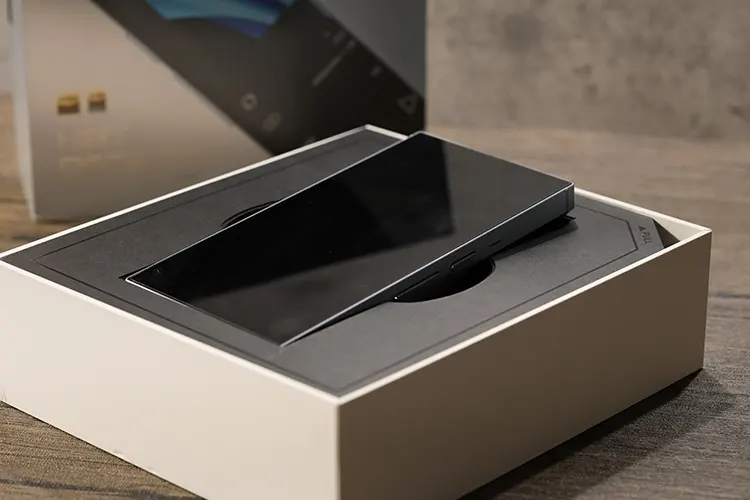
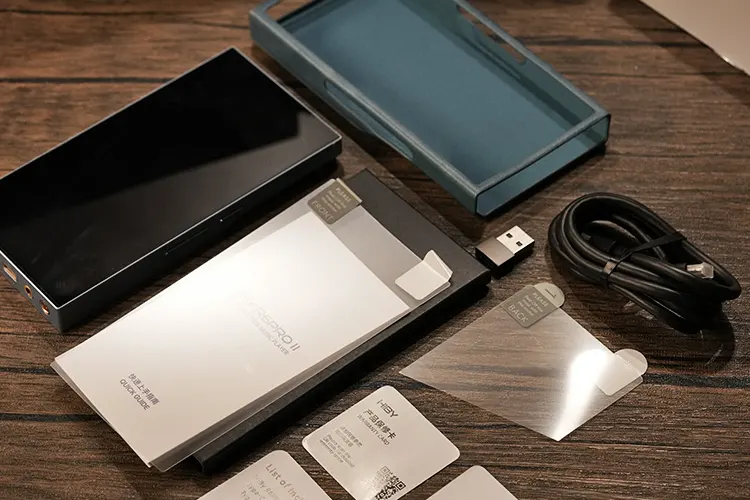
The unboxing experience for the R6Pro II 2025 is consistent with the previous generation, featuring clean and tidy packaging with the player’s image displayed on the top.
Inside the box, you’ll find a USB cable, a cable binder, USB-C to USB-A adapters, extra screen protectors, and user manuals.
Software Impressions
The R6Pro II 2025 retains the Snapdragon 665 SoC, featuring an 8-core processor clocked at 1.8GHz.
This SoC supports Bluetooth 5.0, and HiBy has upgraded the device to include 6GB of RAM and 128GB of internal storage, providing ample capacity for running small games and handling multitasking efficiently.
OS
HiBy utilizes a highly customized Android 12 operating system that globally bypasses Sample Rate Conversion (SRC), enabling bit-perfect decoding for any apps running on the device.
The icons and drop-down menu are tailored specifically for audio playback optimization, while the overall interface remains familiar to users of Android phones.
Although Android 12 is not the latest version, it is more than adequate for an audio-focused device, as many advanced system features are irrelevant for this use case, and it is not designed for graphics-intensive gaming.
The fast CPU ensures smooth processing of DSP enhancements, and users can easily adjust the output tonality using the built-in MSEB panel on HiBy’s device.
Performance Numbers
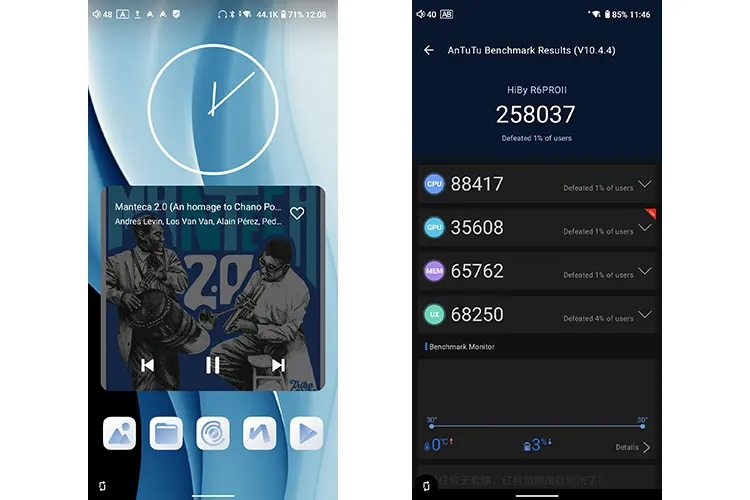
The R6Pro II 2025 employs the same Snapdragon 665 SoC as the RS8 and the original R6Pro II, resulting in similar performance scores. It achieves a performance score of approximately 258037, similar to the R6Pro MAX score of 260383 on AnTuTu Benchmark v10.4.4.
In our previous review of the original R6Pro II, the RAM performance was noticeably lower than that of the RS8.
However, with the 2025 model’s 50% increase in RAM (now 6GB), its performance is nearly identical to the RS8 and, in most cases, more than satisfactory in terms of smooth operation for its intended use.
Features
Plugins
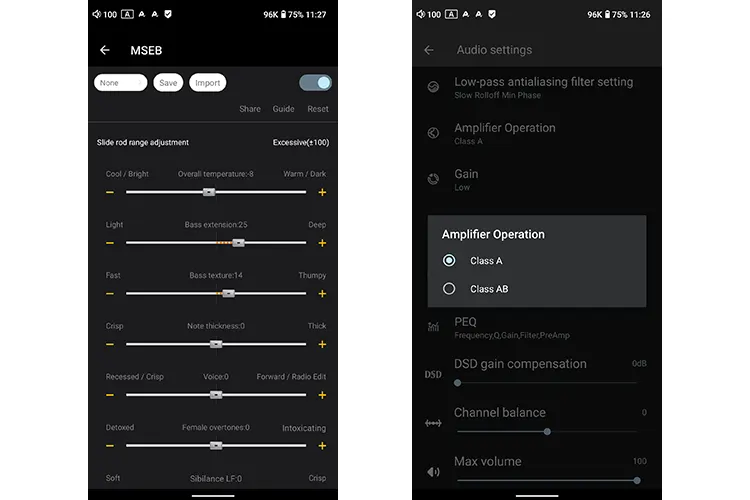
The MSEB panel is frequently highlighted as one of the most practical features of the HiBy DAP series. It allows users to address minor audio issues, such as treble harshness or muddy lows, through intuitive sliders labeled in user-friendly terms.
These adjustments apply globally across all applications, ensuring consistent sound quality whether using Qobuz, Tidal, YouTube, or even playing mini games.
For more advanced users, the device offers additional features like Convolution, Fixed Sample Rate, and Sound Field adjustments.
HiBy is a leader in this area, and experimenting with various DSP options or exploring presets shared by other users online can be both enjoyable and rewarding.
Class A/AB Switch
As with the original, the Class A/AB mode switch allows for sound customization. In Class A mode, the mid-bass feels fuller and denser, with smoother treble.
This is particularly noticeable with dynamic drivers, higher-impedance gear, or larger ensembles with fast basslines, where Class A mode provides greater agility and power in the lower frequencies.
In Class AB mode, the sound is cleaner and cooler, making it well-suited for instrumental tracks and background music for work.
Media Management
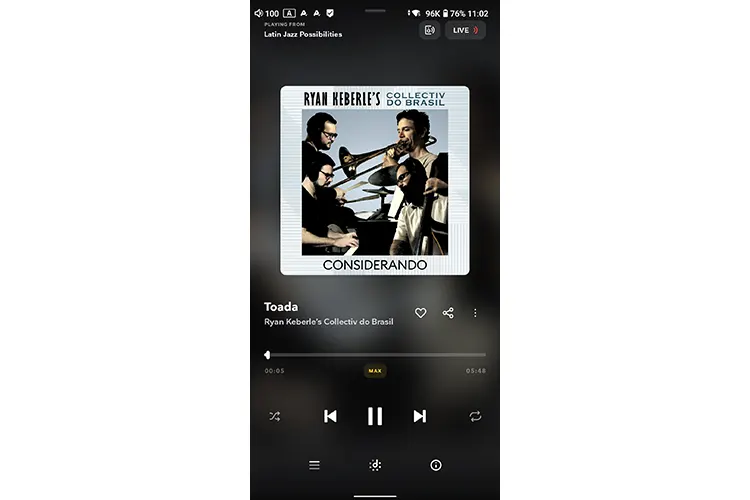
Scanning a 512GB music library is seamless on the R6Pro II 2025, with the 6GB of RAM ensuring smooth scrolling and instant loading of cover art.
The player app may be familiar to Android users, as it’s also available on that platform, and it includes numerous features to enhance the playback experience.
These include retrieving lyrics online, changing interface skins, and connecting to other devices on a local network. And of course, you can download other player apps as the R6Pro II 2025 runs on open Android 12 OS.
Wireless Connectivity
Bluetooth 5.0
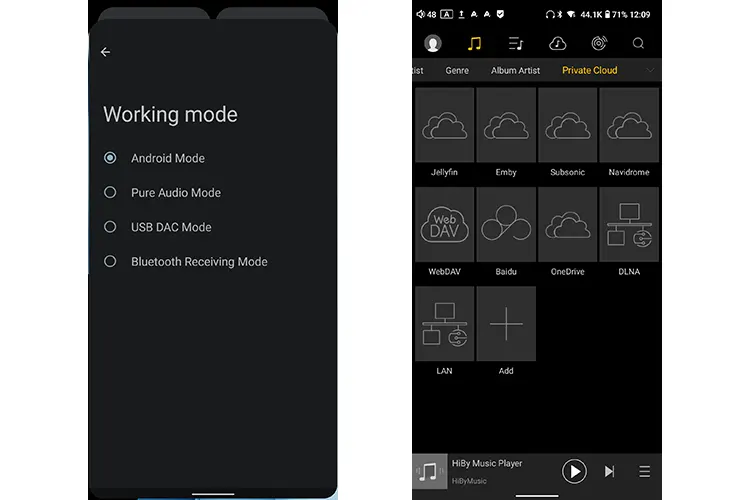
The Bluetooth functionality of the R6Pro II 2025 is largely identical to that of the original R6Pro II, allowing it to serve as either a transmitter or receiver for devices like the Steam Deck.
It supports mainstream codecs, including SBC, aptX-HD, and LDAC, with the flexibility to switch between them to prioritize latency, range, or audio quality.
In a brief test, the connection stability performed as expected, matching the reliability of the previous generation. It remained consistent in both a living room setting and on a moving train.
WiFi
An increasing number of users are turning to streaming, and in addition to AirPlay, the R6Pro II 2025 supports DLNA. It also offers HiByLink for control via smartphones and the HiByCast application for remote operation from phones and tablets.
These features are particularly valuable for those who use their DAP as the central hub for their home music system.
The Wi-Fi signal strength is comparable to the previous generation, performing reliably. In a living room setting, the signal strength is excellent, and even when moving the device into a room separated by walls and doors, the connection remains stable.
Browsing the internet and using online services on the R6Pro II 2025 is quick and efficient. The high-resolution display also makes it suitable for tasks like watching Netflix.
Wired Connectivity
USB-DAC
The R6Pro II 2025 can be connected to laptops and PCs to function as a sound card. The decoding quality via USB connection significantly surpasses the typical audio output of a laptop.
However, it would be beneficial if HiBy included a toggle to enable or disable charging from the USB source, as well as quick access to DSP features when operating in USB-DAC mode.
USB-OTG
The R6Pro II 2025 supports connections to various storage devices, card readers, and other USB-compatible peripherals.
A convenient feature is the ability to transfer files between the device and external storage, such as a card reader or a USB thumb drive connected directly to the player.
Additionally, the R6Pro II 2025 can function as a photo storage and viewing device, providing a practical solution for freeing up space on a camera’s memory card.
Click on page 2 below for my sound impressions and selected comparisons.
