

Synergy
Efficiency
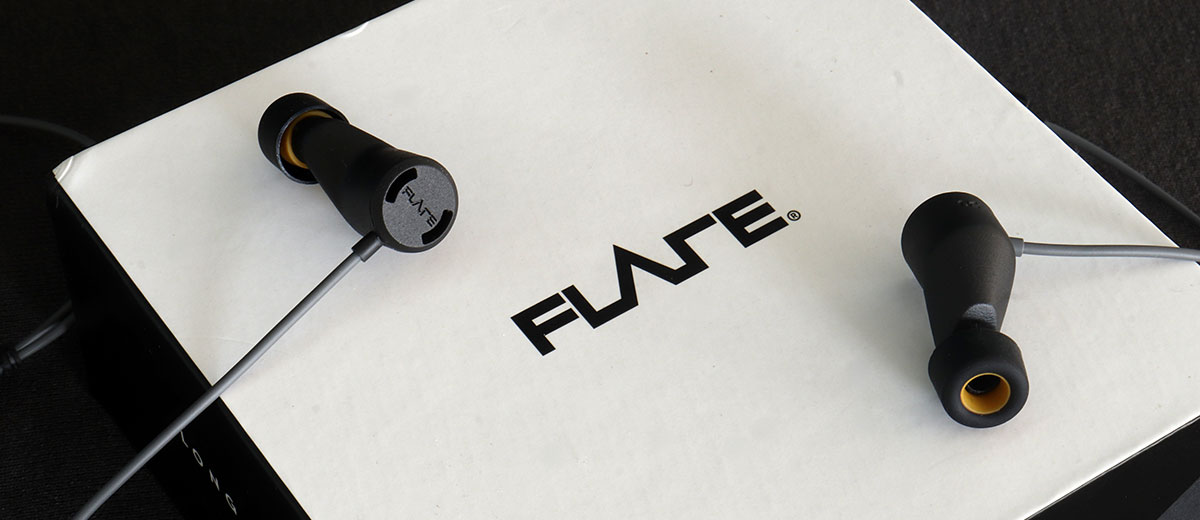
Efficiency levels of the Flare Studio IEMs can only be described as extreme. It happens to be one of the most efficient IEMs I’ve tested.
I also detected that the Flare Studio IEMs can be used to monitor a higher noise floor from amplifiers. I’m hearing hiss where I haven’t heard it before, and they’re revealing what piece of gear is prone to hiss.
I heard hiss on gear like the iFi audio xDSD Gryphon, his that I haven’t heard on that unit beforehand.
The funny thing is that if you decide to use this set with a high power amplifier like the Rose Technics RT-5000, or even something like the iFi audio NEO iDSD 2, which can output almost 3 watts on the unbalanced side, 2832mW to be exact, it handles it well, if you moderate the volume.
There’s a point where you use high power, at which the driver becomes overwhelmed with volume. I also noted a sensitivity to volume in that they play very loudly early on in the volume adjustment.
Pairings
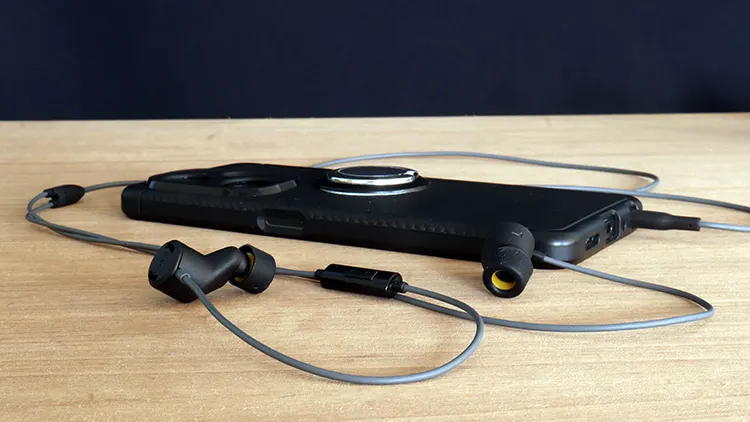
Okay, I don’t think the hardest issue would be pairing the Flare Studio IEMs to a music genre, because they tend to do well with most. But more important is their ability to render the feeding gear’s true tonality.
For example, I immediately heard the difference when I switched between a dongle like the Shanling UA1 Plus to the iFi audio xDSD Gryphon. I immediately felt the warmth of the Op-amps and Burr-Brown DAC section that contrasted with the brighter, albeit neutral sonic signature of the UA1.
So I would consider the source more important here and choose known components that cater to what you’re looking for. The Flare Studio IEMs seem to reveal subtle differences between DACs and amplification, surprisingly so for a budget IEM.
Select Comparisons
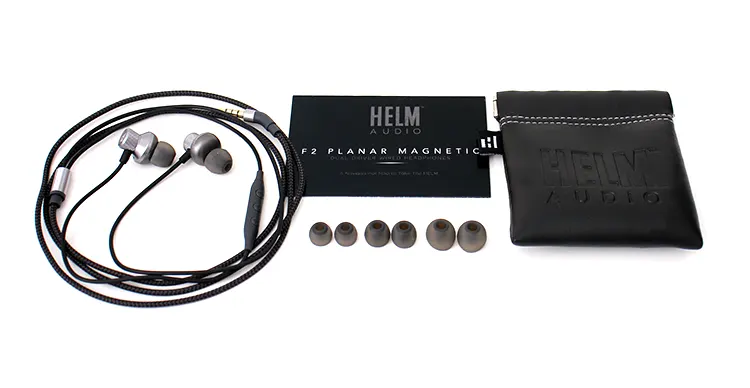
HELM Audio F2
Technical
Although the HELM Audio F2 sits at a higher price point, it’s often reduced to fly out the door. For example, at the time of this writing, they were being offered at a price below the Flare Studio IEMs’ retail price.
Both these models share similarities but take different routes to obtain a similar result. Construction-wise, they’re very different, and they also differ in that the F2 uses a two-driver array.
The HELM Audio’s niche point is that it employs a 6mm planar magnetic driver alongside a 10mm dynamic driver. It takes advantage of the different driver design benefits, similar to the new HIFIMAN ISVARNA reviewed back in January.
Design
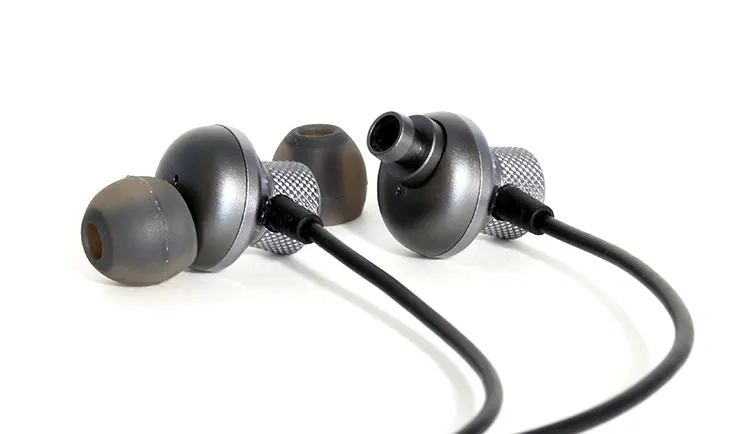
There’s a lot to like about the construction aspect of the HELM Audio F2, including the all-metal composite shells that display the HELM Audio logo on the backplate with knurling on the back piece.
Just the same, the F2 also has a microphone, a pause, and a play button. But the cable is also a non-removable type, but at least part of the cable is cloth-wrapped, making it seem more durable.
The F2 has an output nozzle that also accepts aftermarket tips but is less sensitive to tip selection. The Flare Studio goes even further by being sensitive to in-ear rotation. They go in one way, but the little amount of rotation changes the sonic signature drastically, not so much with the F2.
Performance
If you’re tired of the average, flat-sounding IEMs, then you’ll enjoy either one of these IEMs for the spicy amount of bass each set provides. They have a similar tonality in that they have prominent bass, but also a mid-section that is pleasing and revealing.
I do feel that the bass response is tighter and better defined as far as note distinction on the Flare Studio IEMs. But the F2 outperforms in the midsection due to its use of a separate planar magnetic driver.
It has a silky aspect to it that is more common in the planar drivers and pleasing to my ears. It’s also the warmer set of the two.
ORIVETI bleqk Dynabird
Technical
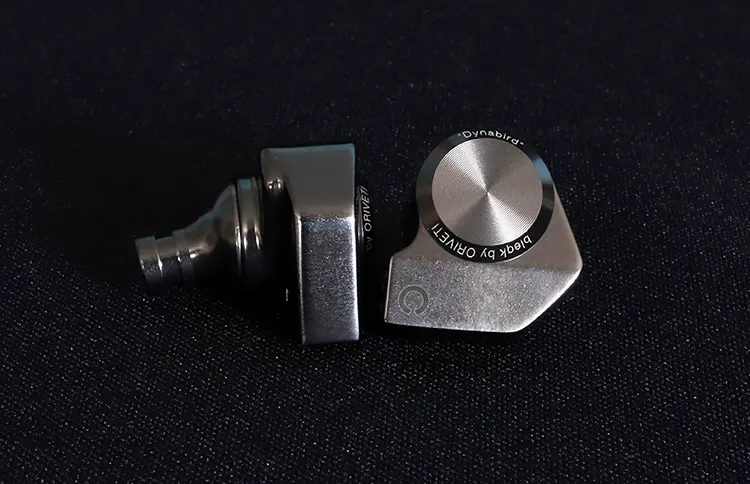
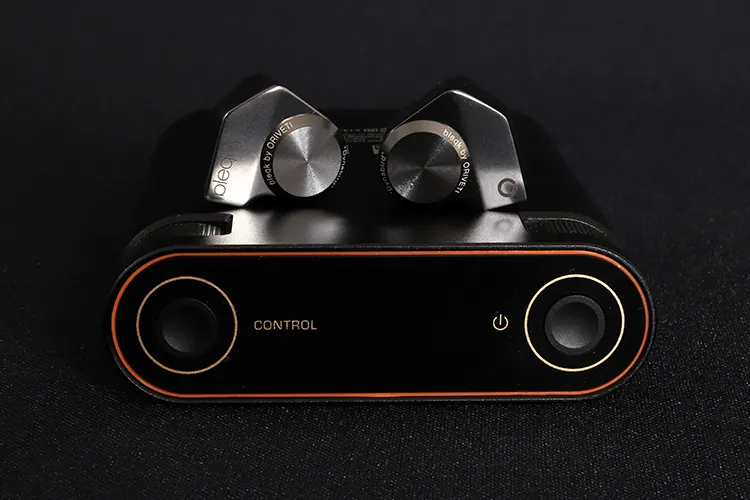
The bleqk Dynabird from ORIVETI is another budget dynamic driver IEM that has a couple of things going for it above the Flare Studio IEM.
First off, it employs a removable cable that uses dual-pin 0.78mm connectors, which I prefer over MMCX connectors. Both types of connectors have their pros and cons. However, you do pay a price in that the cable does not come with a built-in microphone.
The Dynabird counts on a single dynamic driver, which is a custom 9.8mm driver with a coating of Beryllium and is also a 16Ω driver. However, it carries a higher efficiency rating of 105 dB SPL, which is only higher on paper, and not in the real world.
Design
The Dynabird has a contrasting design, but not a new one since it employs cues from the likes of the old TinHiFi T2 and T4. It’s a metal cylinder with a backplate and a front piece that includes an angled output nozzle that accepts all types of aftermarket tips.
But now that I look at the design closely, its design is complex and it’s not just a cylinder shape with a driver stuffed inside. There’s also etching work done that takes the build quality to another level at this price bracket.
I do have to admit, I feel more at ease with the Dynabird construction on durability merits. Plus, the fact that you can cable swap makes it a tempting deal. Plus, you get a decent cable to boot.
Performance
If visceral energy is what is on your top priority list, get the Flare Studio, because the Dynabird is neutrally tuned in the bass region. They cater to people who want deep bass but are also looking for balance within that region with the rest of the frequency response.
But here we find similar characteristics sonically in that the high frequencies are produced as if they were coming from a horn-loaded home speaker.
There’s high-frequency energy, but not much shimmer and sparkle. To my ears, the Flare Studio has slightly better highs with more bite.
The more intimate of the two sets is the Dynabird set, while the Flare Studio has better lateral staging with better precision. There is a lack of height on both sets.
The Dynabird, perhaps, can edge out the Flare Studio in height with its spherical stage, but the more natural of the two seems to be the Flare Studio, and the best choice for critical listening.
My Verdict
The Flare Audio Flare Studio IEM is a good choice at this price point because of its uniqueness and revealing characteristics. It’s a clinically sounding IEM with an extra dose of bass, and that makes them interesting.
The only matter of concern is that non-removable cable, but you could always get the Studio Pro, your choice.
Otherwise, this is a competitively-priced IEM with an urban coloration that is bass-stout, but revealing enough, and with decent technical prowess to supply the listener with an accurate lateral soundstage.
Flare Audio Flare Studio Specifications
- Connector: 3.5mm self-cleaning jack
- Microphone: Electret Passive Noise Cancelling
- Driver size: 10mm
- Type: Dynamic Neodymium magnet
- Frequency range: 20Hz to 20kHz
- Sensitivity: 93 dB SPL
- Impedance 16Ω
