

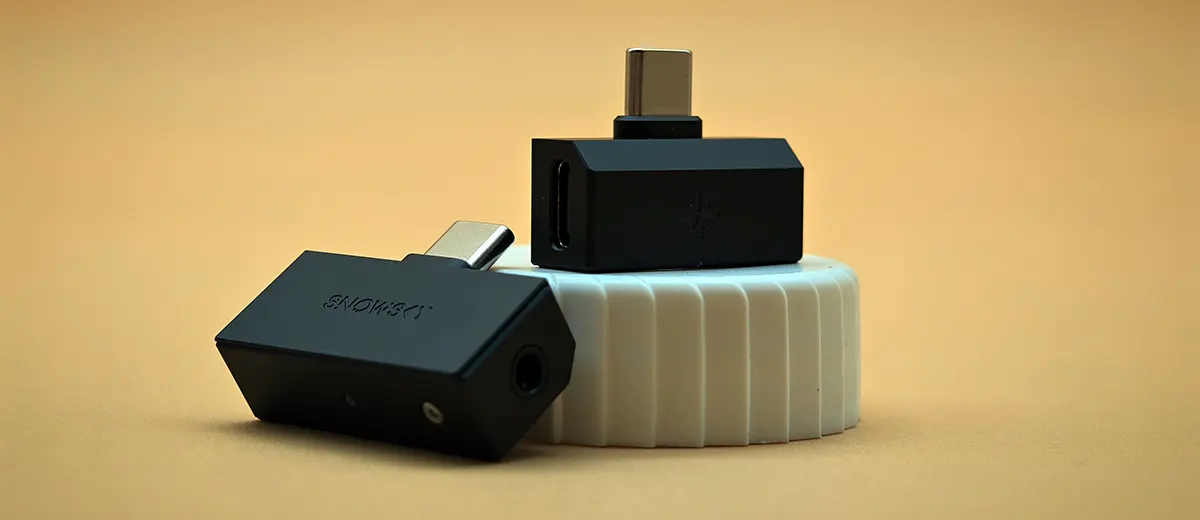
Kurt reviews the FiiO SNOWSKY Tiny, an affordable dongle DAC supporting up to PCM 384kHz and DSD256 with 10-band PEQ integration. It is currently priced at $21.99.
Disclaimer: I received this sample in exchange for my honest opinion. Headfonics is an independent website with no affiliate links or services. I want to thank FiiO for their support.
You can click here to learn more about the FiiO audio products previously reviewed on Headfonics.
This post follows our current scoring guidelines, which you can read in more detail here.
FiiO needs no introduction, as they consistently produce high-quality desktop and portable audio gear with a strong emphasis on price-to-performance.
Their track record with popular products like the KA series dongles and M-series players means you can generally expect a quality product when FiiO makes it.
Their SNOWSKY brand aims to carve out a new, more youth-oriented or casual consumer profile for those interested in portable audio but maybe less of a hardcore audiophile.
Launches such as the Wind and ECHO MINI were two fine examples, though to be honest, I think they were gobbled up by retro-loving audiophiles anyway.
The Tiny A and Tiny B are the latest products in their SNOWSKY product lineup, a new series of ultra-portable dongle DACs priced at just at a very affordable $21.99.
With the Tiny A offering 3.5mm and USB-C passthrough and the larger Tiny B providing 3.5mm and 4.4mm outputs, will this new series deliver the bang-for-buck performance FiiO is known for?
And how do they compare to FiiO’s own JadeAudio budget offering, the JA11, and competitors like the Hidizs SD2? I found out in my full review below.
Features
The FiiO SNOWSKY Tiny A and B use the same SpaceTouch SPV4040 DAC chipset, so both support up to PCM 384kHz/32-bit and DSD256 decoding.
This integrated DSP chip also allows both versions of the Tiny to feature a 10-band parametric EQ. This PEQ can be precisely adjusted via the FiiO Control App.
The main difference lies in their ports, with the Tiny A offering a 3.5mm output and a USB-C passthrough connector. This allows the user to charge their device and listen to music at the same time, making it a great choice for gaming.
The Tiny B is more audio-oriented, as it drops the charging port in favor of both 3.5mm and 4.4mm balanced jacks. A unique feature of the Tiny B is its ability to support dual audio output from both ports simultaneously.
Both the Tiny A and the 3.5mm port on the Tiny B also support microphone input. This allows mic-enabled headsets to be used with ease.
Output power rating does not differ between the two versions on a 32Ω load. Both offer up to 34mW regardless of jack connection. However, when dropping down to 16Ω, the B unit can output 68mW from its 3.5mm output compared to just 45mW from Tiny A’s 3.5mm equivalent.
Design
The FiiO SNOWSKY Tiny series features an all-metal body crafted through precise CNC and polishing processes. This gives both dongles a premium, sturdy feel and a smooth, vivid finish.
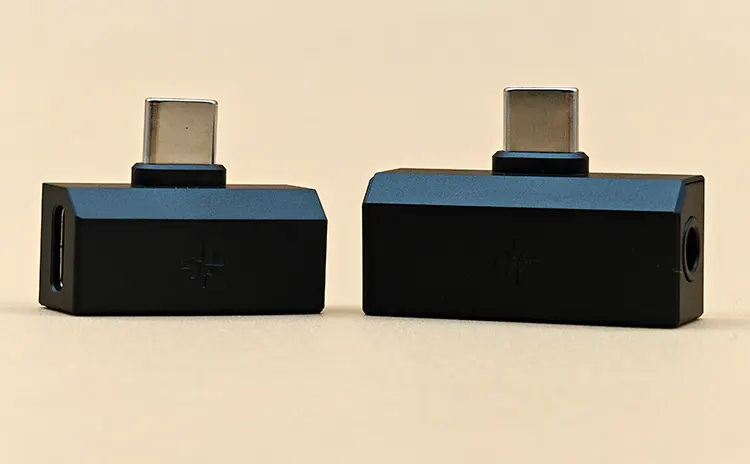
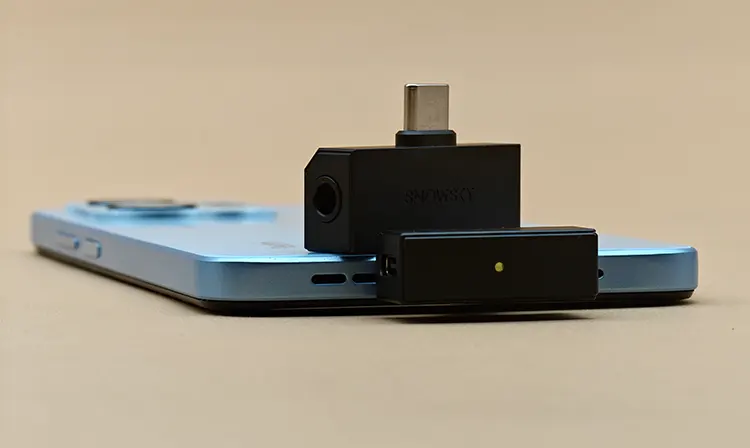
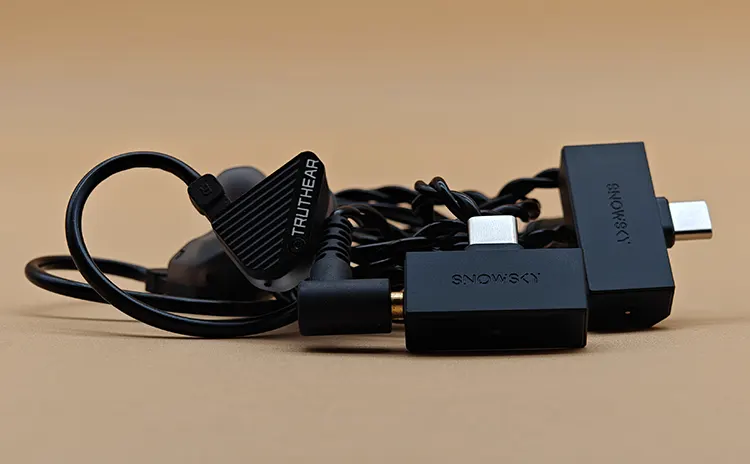
They utilize a “T” shape, with the USB-C plug mounted in the center of the chassis rather than on a flexible cable. This direct plug-in design is compact and prevents damage from frequent plugging and unplugging.
Branding is minimal, with either a star-like SNOWSKY logo or the name printed on the main body. An RGB sampling rate indicator light is also present, changing color to identify the audio quality.
This LED indicates the sampling rate, showing blue for PCM 48kHz or below, yellow for rates above 48kHz, and green for DSD. Both units are very small, but the Tiny B is physically larger to accommodate the 4.4mm port.
I/O
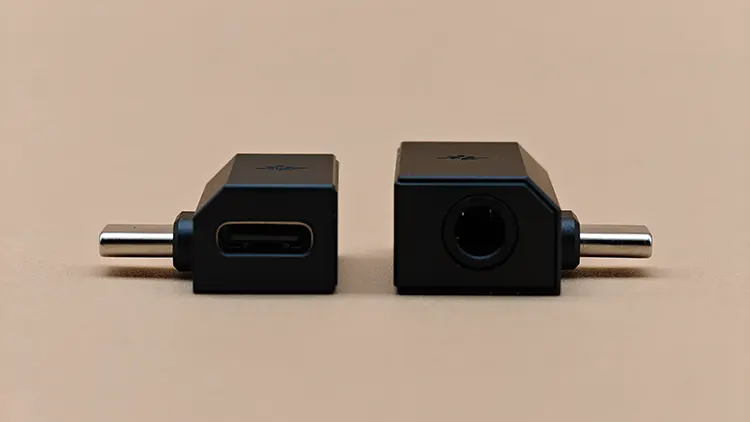
Both the Tiny A and Tiny B use a fixed, non-detachable USB-C plug for their audio input. This plug is mounted in the center, giving the dongles their distinct “T” shape.
The two models differ entirely in their output options. The Tiny A features a 3.5mm single-ended headphone jack and a USB-C passthrough charging port.
The Tiny B is focused purely on audio, as it removes the USB-C charging port. It replaces it with a 4.4mm balanced jack, offering both 3.5mm and 4.4mm audio outputs.
Controls
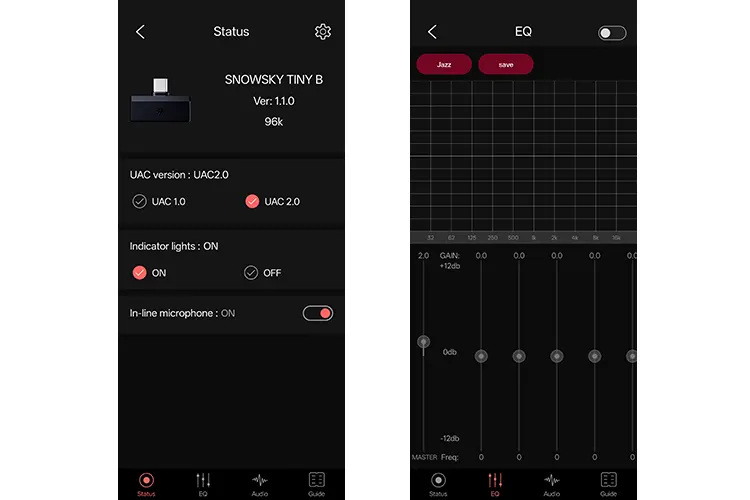
The FiiO SNOWSKY Tiny series features no physical buttons or switches on the device itself. All adjustments and settings are managed exclusively through the FiiO Control app.
Within the app, the Tiny A and Tiny B support a 10-band parametric EQ (PEQ). These custom PEQ settings can be saved directly to the device.
The app also provides toggles for the UAC version, the RGB indicator lights, and the in-line microphone controls. Audio and channel balance are also controllable from this menu.
The FiiO Control app also displays the device’s current status. This includes the active UAC mode and the current sampling rate.
Connectivity
USB-DAC
Using the Tiny on Windows 11, it is a simple plug-and-play experience that requires no additional software. It delivers some coloration by making the sound brighter, which in turn makes the midrange more spotlighted and focused.
While I was unable to get DSD to run correctly on Windows, FLAC files at both 24bit/48kHz and 24bit/96kHz run great. Plugging the device in does cause a low buzz sound, but this noise goes away immediately.
The loudness of the FiiO SNOWSKY Tiny B from its 4.4mm jack is impressive. With app volume at 100%, Windows volume was only at 8%, and it powered even my hungry planars with ease.
USB-OTG
I paired the Tiny A with my USB Audio Pro Player to play DSD files correctly. The LED indicator properly turned green when DSD was being played.
The high-detail playback of both DSD and FLAC is captured by the Tiny A. Like the desktop setup, the power it delivers is a lot.
Battery drain is not noticeable, as I tested the unit with a full DSD album. Using this for travel is great as its T-shape is not tangly and smaller than most dongle DACs.
The Tiny A’s ability to be used while charging is a significant advantage. I was able to easily switch from listening to music, watching videos, and even gaming as my phone was topped up.
It has the same sound coloration as the desktop, making the midrange sound brighter. This really helps push the vocals forward, which is in tune with my preference.
Packaging & Accessories
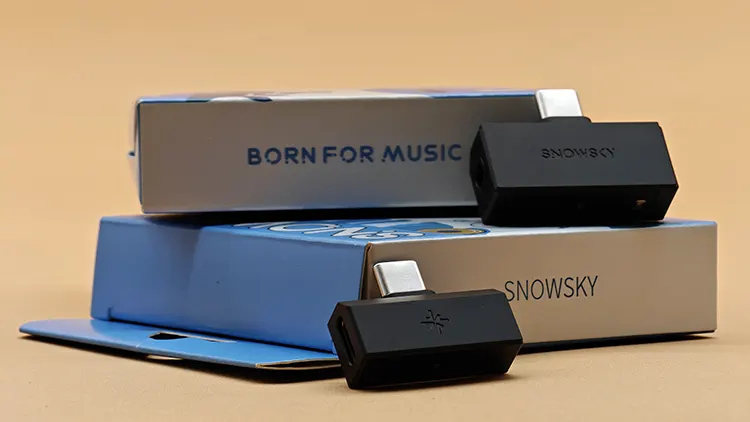
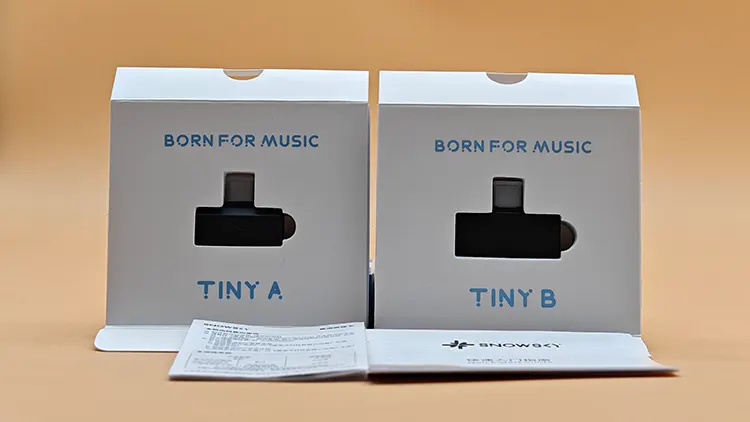
The FiiO SNOWSKY Tiny comes in a simple, hand-sized blue box. The front features artwork and the “SNOWSKY” brand, with clear product labeling, while the back shows general information.
Unboxing the package is easy and reveals the dongle and the guidebooks. The Tiny is held securely in a white cardboard insert, which is cut into a “T” shape to match the dongle’s form.
The USB-C connector on the dongle itself is protected by a small plastic lid out of the box. Aside from the guidebooks, no other accessories are included in the package.
Sound Impressions
The following sound impressions of the FiiO SNOWSKY Tiny were completed using a mix of the MOONDROP RAYS, the Softears Studio 2, and the ZiiGaat Luna.
Summary
My experience with the Tiny is that it’s a bright-leaning portable DAC. It adds more focus on the midrange, which is in tune with my preferences.
Unlike other bright-leaning dongles, it does not weaken the bass or make it sound lean. The bass remains as the IEM intends, with no added coloration to the low end.
The brightness instead gives vocals and instruments more energy, making them sound livelier and adding more bite. This coloration fits my preference well, as it pushes the midrange forward.
Despite this added energy, the treble does not become sharp or fatiguing. Detail and clarity are slightly improved, but it is not a major change to the sound.
Timbre
The FiiO SNOWSKY Tiny has an accurate timbre. Despite the added brightness, it does not make the timbre sound artificial or fake; instead simply gives it more bite.
This makes stringed instruments have more attack in their sound. It helps to elevate and improve any dullness that an IEM may have.
Vocals receive a similar treatment, where they sound livelier rather than overly sharp. There is also a slight boost to clarity, which makes the instrumental timbre sound cleaner.
Staging & Dynamics
To get a proper understanding of how the Tiny affects soundstage, I tested it on both music and gaming. My testing showed that both versions have similar soundstage and imaging capabilities.
They are both good for gaming, especially since the brightness helps amplify sounds that are normally dulled down. For music, the Tiny does not stretch or improve the staging width, remaining neutral with the IEM’s inherent presentation.
Imaging follows a similar suit, as it does not add any coloration and stays true to the source. Dynamics are great; however, they let the midrange shine consistently at all loudness levels.
There are no weird weaknesses or dips in the listening experience. The presentation remains stable and controlled.
Click on page 2 below for my recommended pairings and selected comparisons.
