


Synergy
I never experienced any noise, clicking, or popping sounds with the Melody when used with the IEMs and Headphones in this review, or with others not included in this review.
Without music playing, it remains quiet and radio interference-free when plugged into my phone with data, WiFi, and Bluetooth on.
The Melody drove all my IEMs and Headphones loudly with the volume setting at 50 percent, except for the MOONDROP Harmon and the Horizon, which require slightly more volume than the other IEMs to sound as loud.

IEM Pairings
I observed a good pairing between Hidizs MK12 Turris and the Melody; the sound is warm and bassy with good note weight. This combination results in an analog-like sound quality, where hyper-detail takes a backseat to the warm tonality.
However, when I switched to the Kinera NOTT Phantom, I felt that the potential of the NOTT Phantom’s details, soundstage, and imaging performance was wasted on the Melody.
NOTT Phantom requires a highly technical and cleaner-sounding source for the highest possible sound quality. NOTT Phantom’s revealing sound signature easily exposes the deficiency of the Melody.
With the MOONDROP Harmon, which has below-average actual sensitivity compared to the spec and a difficult load of 19Ω instead of the standard 32Ω, it sounds good, offering a warm and bassy, non-fatiguing tonality at my normal listening volume, which is 50% on my phone and 100% at the Melody.
However, when I go loud at 80% volume, there is audible dynamic compression resulting in added grunge in the bass and congestion in the midrange and treble.

Headphone Pairings
The MOONDROP Horizon is an easy-to-drive open-back headphone with a moderate impedance of 32 Ohms and sensitivity of 109 dB, featuring a 50mm dynamic driver.
Horizon sounds warm, pleasing, and tonally rich with good instrument note-weight as usual. At 50% volume, the sound of this pairing is very composed and easy to listen to. When I raised the volume to 80% the sound quality and composition remained at 50% louder.
Thanks to Horizon’s forgiving sound, this pairing sounds pleasing.
I would conclude that Melody is more suited to pair with easy-to-drive IEMs or headphones that sound on the warm side, which help mask Melody’s deficiencies, rather than highly technical IEMs and headphones that reveal Melody’s faults.
Selected Comparisons
MOONDROP Dawn Pro
Technical & Design
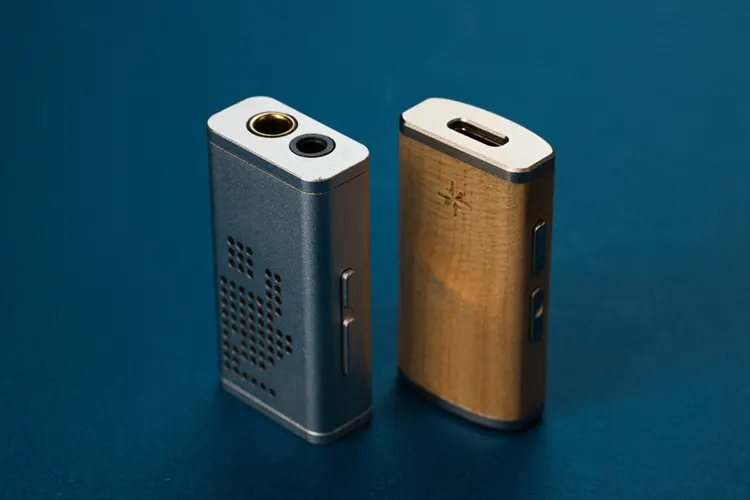
The Dawn Pro utilizes dual CS43131 DAC chips, offering a maximum output of 120mW through its 4.4mm balanced output jack. The device weighs 13g and measures 42 mm x 22.45 mm x 12.39 mm in size.
It also has an all-metal construction and a perforated front, finished in an anodized silver color. The design features a sci-fi, space-age aesthetic, with only two control buttons serving as volume controls on its side.
Performance
Dawn Pro is more neutral with a flatter frequency response and a slightly warm tonality. Melody is V-shaped with boosted bass and treble. Dawn Pro has a smoother sound.
In terms of soundstage, Dawn Pro has a bigger stage and a more even shape. Add to that the neutral presentation of the images, neither too near nor far, plus the more separated and layered instruments, and Dawn Pro has a more holographic imaging.
Dynamics-wise, the Melody is initially more dynamic due to its V-shaped sound signature, but at louder volumes, Dawn Pro sounds cleaner.
Hidizs S9 Pro Plus
Technical & Design
The Hidizs S9 Pro Plus utilizes an ES9038Q2M DAC Chip that supports up to 32-bit/768kHz PCM and Native DSD up to 512.
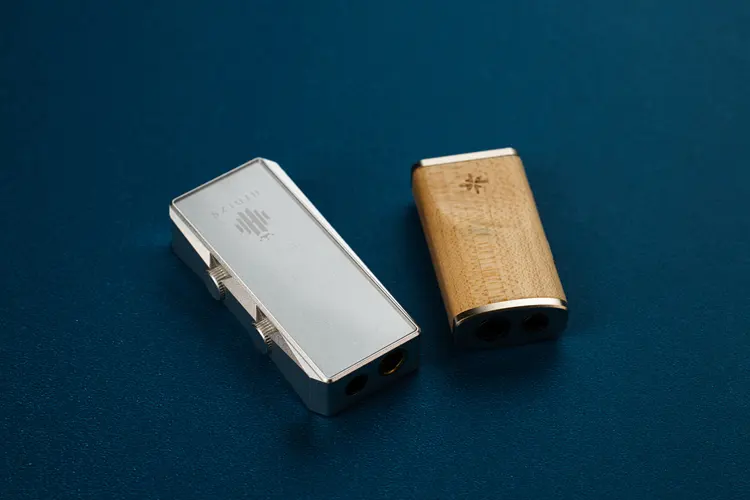
It features an output power of 138mW + 138mW at 32Ω 3.5mm SE and 180mW + 180mW at 32Ω 4.4mm BAL. The device measures 55 × 25 × 11 mm in size and weighs 17 grams.
Its body is CNC-machined from a solid piece of aluminum, sandwiched between tempered glass on the front and back.
Available in black, silver, and blue-colored finishes. It has two buttons on the side, serving as volume control and multifunction control.
Performance
The S9 Pro Plus has an almost ruler-flat perceived frequency response, with a slight hump in the upper midrange and lower treble. In comparison, the Melody is V-shaped, with a boost in the mid-bass and lower treble.
The S9 Pro Plus has a much wider soundstage and overall a bigger soundtrack than the Melody’s narrower and more intimate soundstage.
The S9 Pro Plus offers more instrument separation and higher perceived resolution, resulting in a better image than the Melody.
Both are dynamic initially, but due to the better instrument separation and perceived resolution of the S9 Pro Plus, it sounds cleaner and has a darker background even at loud volumes compared to the grungy and congested sound of the Melody at loud volumes.
FiiO KA11
Technical & Design
The FiiO KA11 is a compact, tail-style DAC/amplifier that features a Cirrus Logic CS43131 DAC and SGM8262 op-amp.
It supports high-resolution audio up to 384kHz/32-bit and DSD256 and offers output power of up to 245 mW at 16Ω, 200 mW at 32Ω, and 22 mW at 300Ω.
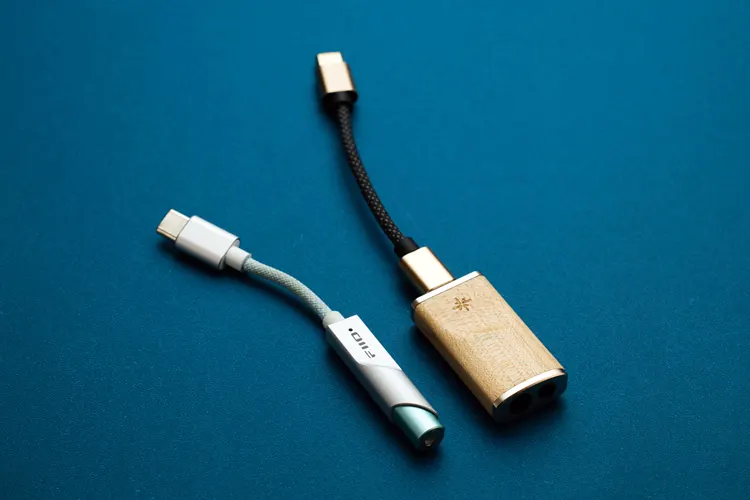
The KA11 features a sturdy and compact aluminum-magnesium body with a clean, sleek curve and flat surfaces, devoid of any control buttons.
The fabric braided cable is made of high-purity oxygen-free palladium-plated copper, designed for low impedance with interference shielding. My sample KA11 is silver, but it is also available in black.
Performance
I used a 3.5mm to 4.4mm adapter as the KA11 only has a 3.5mm output jack.
The KA11 has a slightly U-shaped perceived sound signature, with a slight boost in sub-bass and upper treble, resulting in a flatter and more neutral sound presentation compared to Melody’s V-shaped sound, which features more mid-bass and treble boost.
The KA11 is smoother, slightly more detailed, and has a cleaner background decay, which makes it project a larger soundstage and more defined imaging than the less soft and resolved sound of the Melody.
The Melody sounds more powerful and dynamic, and can go louder with less power compression than the much smaller KA11.
I didn’t expect this type of performance, as their power output rating differences aren’t that big, 200mW for KA11 and 245mW for the Melody.
Perhaps the bigger board and more power reserves on the Melody made the big difference.

My Verdict
It’s refreshing to see a new product that pushes the boundary in terms of design and features. The FiiO SNOWSKY Melody achieves this by virtue of its small size, unique design with a wooden body, and feature richness via its FiiO Control App.
I appreciate the ability to switch between Class AB and Class H amplifier modes, the inclusion of a fully adjustable 10-band parametric equalizer, and other features that remain with the Melody after being programmed with the FiiO Control App.
However, I’m not a fan of the slightly boosted bass and less than stellar transparency in the midrange and treble, which excludes it from being used for critical listening and as a reference neutral and transparent sounding dongle DAC.
I believe the unique wood-themed FiiO SNOWSKY Melody dongle DAC will satisfy listeners who like playing around with EQ or using EQ to tune a specific IEM or headphone. And those who want a non-technical sound signature.
FiiO SNOWSKY Melody Technical Specifications
- Product type: DAC and Headphone Amplifier
- Color: Walnut/Maple
- Weight: about 10g
- USB chip: SPV5048
- DAC chip: CS43131x2
- Input: Type-C USB
- Output: 3.5mm/4.4mm balanced
- Size WxHxD: 22.5mm x 42.5mm x 11.5mm
- Max sampling rate support: PCM 32-bit/384kHz and DSD256
- 3.5mm PO output:
- Output power: 100mW@32Ω
- SNR: 124dB
- THD+N: 0.0006%
- Noise floor: 1uV
- Crosstalk: -76dB
- Output impedance: less thanΩ
- 4mm BAL output:
- Output power: 250mW@32Ω
- SNR: 127dB
- THD+N: 0.0003%
- Noise floor: 1.1uV
- Crosstalk: -121dB
- Output impedance: less than 0.5Ω
