

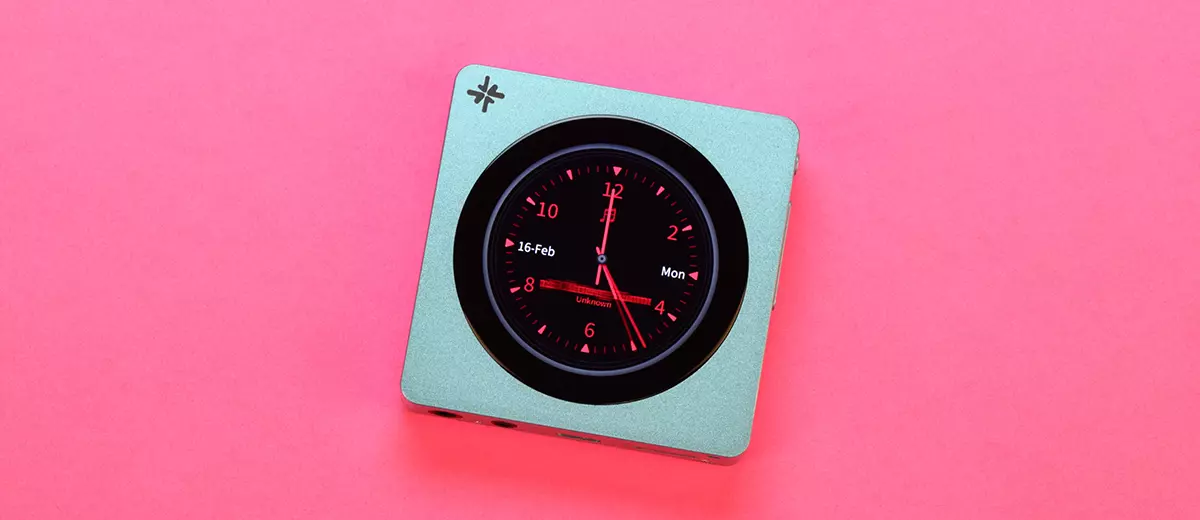
Wireless Connectivity
Bluetooth Transmission
Once the initial pairing setup is complete on my MOONDROP Space Travel 2 and Focal Bathys, subsequent pairing is pretty fast. It only takes seconds for them to connect.
I attribute this to the inclusion of Bluetooth 5.4, which is relatively new and much faster to connect to than older versions.
DISC has good signal strength, allowing me to receive the music without interruption, noise, or signal dropouts, even when I move to the next room, separated by concrete walls.
I have to go far away, more than 25 feet around my house, when the signal finally cuts off.
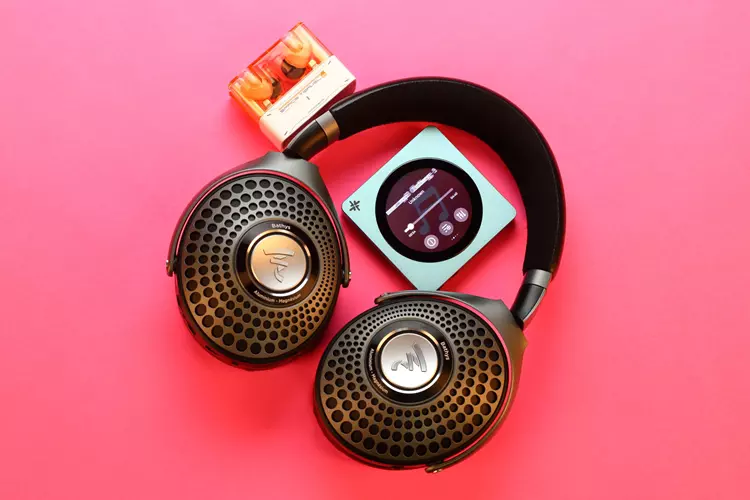
Bluetooth Receiving
I was confused at first when I tried to pair the DISC with my phone and FiiO M15S DAP, because even after the phone or the M15S indicated a connection, the DISC still showed it was searching.
It turns out I have to back track and click the name, the phone, or the M15S to make the connection. I hope FiiO fixes this in the future firmware update.
After the initial pairing is complete, subsequent pairing connections are pretty fast. The signal strength is good. I can walk around the house with the phone in my room without losing the signal. The sound quality is also good, with no additional noise.
WiFi
The initial WiFi connection was straightforward, just like with any other device.
But because of the small, circular screen, I had a hard time entering my WiFi password; I kept making mistakes, and the keyboard layout was rearranged to accommodate the screen’s size and shape. After the initial connection, subsequent connections are pretty quick.
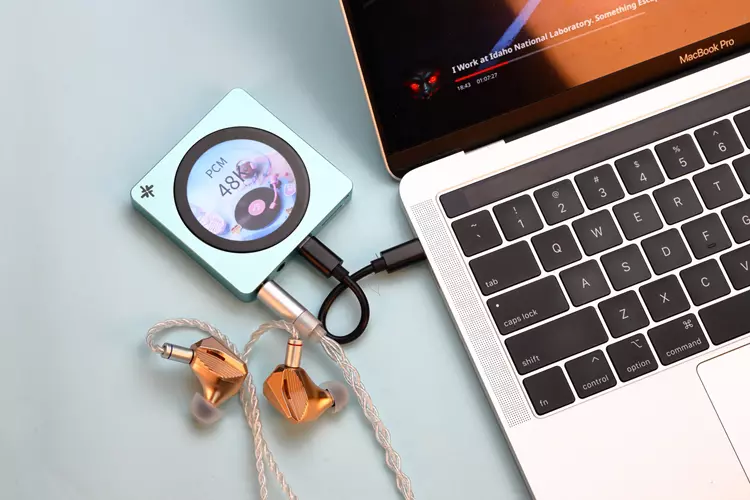
Wired Connectivity
As a Digital Source
The DISC works flawlessly as a digital source for all my DACs, including small tail DACs, medium-sized DACs, battery-powered DACs, and DAPS, such as the iBasso DC-Elite, FiiO SNOWSKY Melody, FiiO JIEZI B, MUSE HiFi M6 Double, and HiBy R3Pro II.
I didn’t experience any noise, popping sounds, or signal dropouts.
As a DAC Amplifier
The DISC works instantly when connected to both my PC and laptop. However, it is more finicky when connecting to other portable devices, as I have to restart it to reconnect when switching between my DAPs and my phone.
This is a common issue with my other battery-powered BT DACs and DAPS, though not with all of them.
I must add that I found another quirk while connecting this way: the USB cable must be connected to the source first, then to the DISC, for this to work. This is the same as some of my DAPs when acting as a DAC Amplifier.
After establishing a connection, I didn’t experience any noise or unusual behavior. The sound is good, and the device operates without any issues.
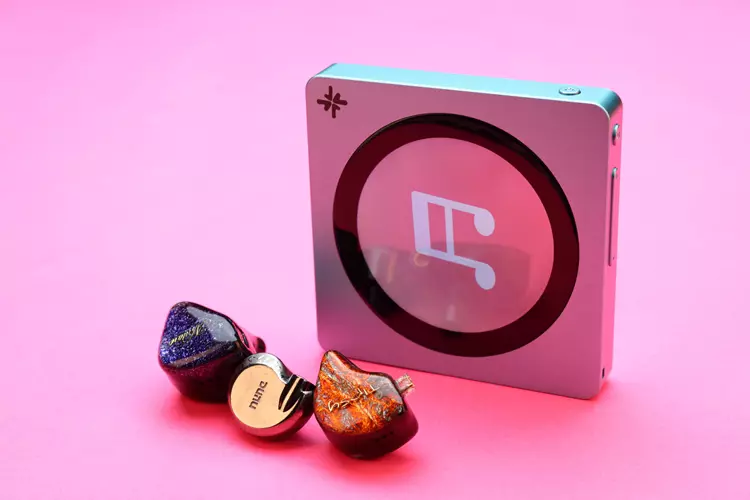
Synergy
I couldn’t hear any noise with the headphones and IEMs I used. There is no hiss, clicking, or popping sound when the device is turned on without music playing. DISC is clean and noise-free.
DISC can drive all my IEMs to deafeningly loud volume, even those with low impedance. It also drives high-impedance headphones, such as my Sennheiser HD 6XX, comfortably without struggling.
IEM Pairings
DISC drives the DUNU Falcon Ultra, QoA Martini, and Tipsy M5 IEMs easily to deafening volumes, without noise, distortion, compression, or any signs of difficulty.
When paired with the low-impedance QoA Martini, which has a 14 Ω load and draws more power from the source due to the addition of a bone-conduction driver, the sound is effortless and cohesive, faithfully following the Martini’s mild V-shaped signature without distorting at high volumes.
With the Tipsy M5, the sound remains neutral and monitoring-like, just like it should. I hear plenty of details across the whole frequency range. The bass is tight, and the frequency response is neutral and revealing.
With the easily driven DUNU Falcon Ultra, the sound dynamics are notably effortless. The tonality is near-neutral, the bass remains tight and controlled, and the highs are extended and detailed, with good energy.
Headphones Pairings
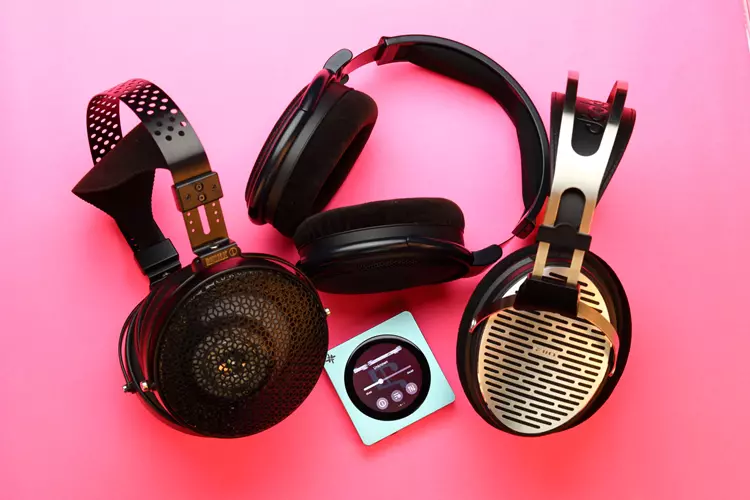
When paired with the sensitive, warm-sounding MOONDROP Horizon headphones, the sound is neutral and slightly warm. The bass is extended, tight, and well-controlled.
The DISC can easily drive the Horizon beyond its excursion limit, even with the 3.5 mm single-ended connection, so I have to be careful with the volume when pairing with the Horizon.
With the FiiO JT3, I get a very energetic V-shaped sound signature, characterized by well-boosted bass and treble with good extension at both ends.
The sound is lively, and I feel that this pairing is well matched as their sounds complement each other. This is also due to the ease of driving and the JT3’s efficiency.
Though I wouldn’t say this is the best pairing for the high-impedance, difficult-to-drive Sennheiser HD 6XX. I must say the sound is good, with the bass having good control and the treble having good energy.
I would have to raise the volume to 100/120 or higher, though, to get to my ideal listening loudness level.
Select Comparisons
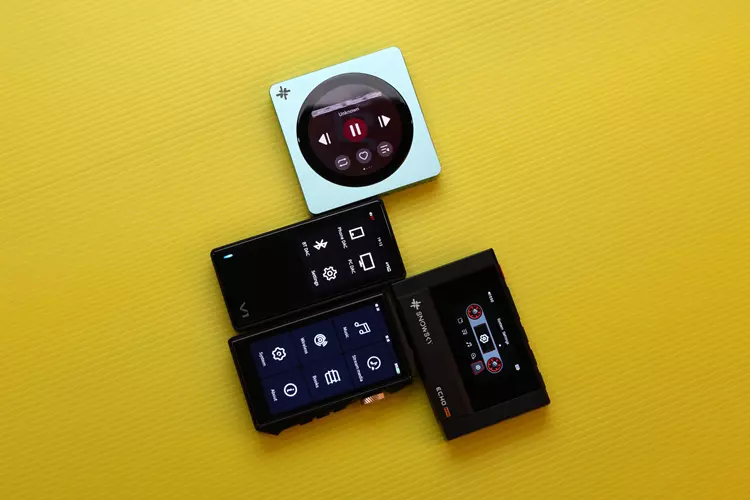
FiiO SNOWSKY ECHO MINI
Technical & Design
The SNOWSKY ECHO MINI features Dual CS43131 DAC chips for audio conversion, with an SNR of 131dB and a THD+N of 0.0004%.
Its output power at the 3.5mm jack is 100 mW into 32 Ω, and at the 4.4mm balanced jack, 250 mW into 32 Ω. Battery capacity is 1100mAh with up to 15 hours of playback. The SNOWSKY ECHO MINI supports DSD/WAV/FLAC/APE/MP3/M4A/OGG.
The display and interface size is 1.99-inch color LCD (170×320), and the physical dimensions are a small 80mm x 54.5mm x 14.5mm.
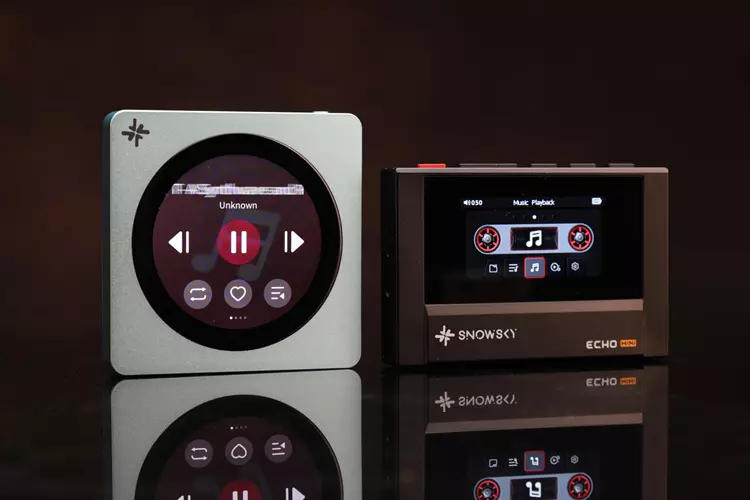
The SNOWSKY ECHO MINI features a retro design that mimics the look of a portable Walkman cassette tape player I used in high school, albeit at a much smaller size.
While playing the music, the front display can show a cassette tape playing, which is nice to look at.
Performance
Unlike the DISC, the MINI has no touchscreen and relies on physical buttons for control. Overall, the Mini feels clunky compared to the DISC’s more sophisticated design and refined feel.
Upon listening, the differences are apparent: the MINI has boomier, less controlled bass, a warmer tonality, less resolved sound, and a more diffuse sound.
In comparison, the DISC has a more powerful sound presentation, with tight, controlled bass, a flatter frequency response, and a more resolved, focused sound.
The DISC has a larger soundstage than the MINI, with more defined, dimensional imaging performance. The DISC also sounds more dynamic and can drive the difficult-to-drive Sennheiser HD 6XX headphones better than the MINI can.
HIDIZS x Linsoul AP80 PRO MAX
Technical & Design
The AP80 PRO MAX features a full-metal chassis and utilizes Ingenic 1600E SOC processors, which are fast when used in a DAP. The DAC chip used is the ESS SABRE ES9219C x 2, which I heard on other devices and liked the sound of.
The AP80 PRO MAX supports up to 2TB of MicroSD card capacity, allowing for direct music playback from local files. Additionally, it can stream music over a 2.4GHz WiFi connection via Tidal and Qobuz.
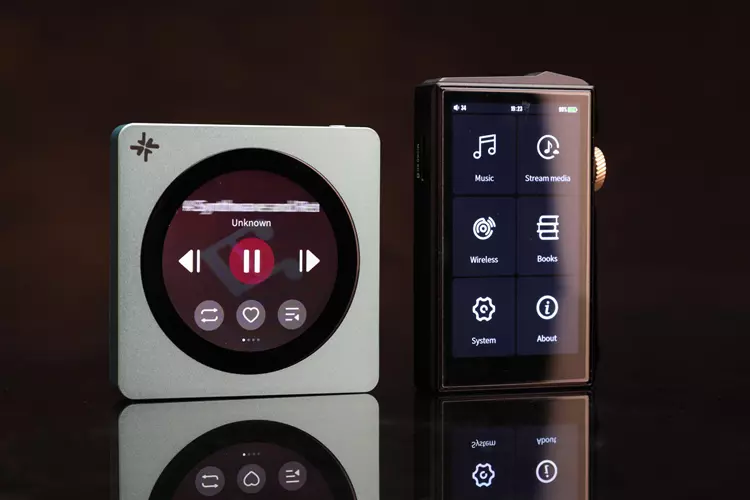
The AP80 PRO MAX appears smaller in real life than it does in photos. I especially like its tempered glass and screen, sandwiched within a full-metal chassis with an asymmetrical, faceted, industrial, sci-fi-looking design, as well as the gold knob on the right side.
Performance
The AP80 PRO MAX is more neutral in terms of sound signature. It has no warmth and has a flat perceived frequency response with an extended treble response. In comparison, the DISC has a warmer, bassier sound with a slightly darker treble presentation.
Both have above-average soundstage size with good depth. However, I find the AP80 PRO MAX has a more spacious soundstage, probably due to its greater upper-treble extension.
I find both to have good dynamics and can easily drive all the IEMs in this review to a deafeningly loud volume without distortion.
I also find that they both drive the difficult-to-drive Sennheiser HD 6XX headphones satisfactorily, in both loudness and sound quality.
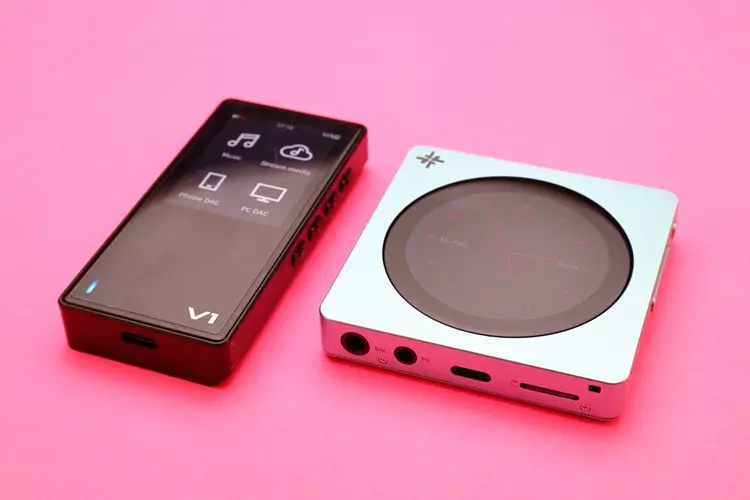
TempoTec V1
Technical & Design
The TempoTec V1 uses two CS43131 DAC and amplifier chips, with a power output of up to 215 mW via its 4.4mm balanced connection. It has a battery capacity of 1400mAh, Bluetooth version 5.1, and a 2″ 240*320 touchscreen.
The TempoTec V1 features a plastic chassis with the touchscreen positioned at the. It is smaller than the AP80 PRO MAX and has a less premium feel. The aesthetic has a nostalgic look, reminiscent of 1980s industrial design.
Performance
Tonally, the V1 has subtly more neutral bass, with a more forward upper midrange and treble, while the DISC has a warmer, darker sound. I find the bass on the DISC to be more powerful and slightly tighter, while the V1 is more forward in presenting detail.
The V1 has a wider soundstage while the DISC has a deeper stage; both have good soundstage size and are certainly above average.
Both are energetic and have good dynamics when driving the IEMS and headphones. However, I find the DISC has better bass control and tighter bass when driving the difficult-to-drive Sennheiser HD 6XX headphones.
My Verdict
I think this latest generation of FiiO DAPs has significantly improved sound quality over the previous generation, both in technical performance and tonal balance. This is based on my experience and on what I’ve gathered.
The FiiO SNOWSKY DISC is surprisingly refined-sounding, more so than I initially expected. The bass is controlled, tight, and powerful-sounding; the midrange is lush and clean; and the treble is free of harshness, with good resolution. The staging and instrument separation are good as well.
My only complaint, though, is the player UI, which separates the Play/Pause and skip forward/backward controls from the progress bar.
I find this challenging, especially when listening to hours-long music mixes where I often have to scrub through the progress bar and then skip to another track.
FiiO could have put them on one page, with the Play/Pause and skip controls smaller beneath the larger progress bar.
Despite these quirks, the FiiO SNOWSKY DISC remains one of the best-looking, simplest, and easiest-to-use touchscreen user interfaces among affordable entry-level DAPs.
Add to that the surprisingly refined sound, design, and build quality, and I would have to say that music lovers today looking for a good-sounding entry-level DAP are lucky to have the FiiO SNOWSKY DISC.
When I started looking for entry-level DAPs years ago, we never had an option as good as the FiiO SNOWSKY DISC.
FiiO SNOWSKY DISC Technical Specifications
- DAC: Dual Cirrus Logic CS43131
- Processor: Ingenic X2000
- Display: 1.8-inch fully laminated LCD, 360 x 360 resolution
- Outputs: 4.4mm Balanced Output/ 3.5mm Single-ended
- Power: 4.4mm, 280 mW per channel into 32 Ω. 3.5mm: 125mW per channel into 32 Ω
- SNR: 129 dB (A weighted)
- Supported Audio Formats: MP3, OGG, WMA, AAC, DSD, WAV, FLAC, ALAC, AIFF, APE up to 384kHz/32-bit
- Storage: MicroSD card slot, supports up to 2TB, no internal memory
- Battery: 1450mAh (up to 12 hours playback)
- Bluetooth: Version 5.4 (supports LDAC, SBC)
- WIFI: AirPlay, OTA updates
- Features: USB DAC mode, USB Audio output, SPDIF output (shared)
- Weight: Approx. 77.2 g
- Dimensions: Approx. 68 x 68 x 12.9 mm
- Colors: Blue, Black, Pink
