


Selected Comparisons
Please note that the EQ I mentioned previously is off. The M33 R2R sound setting was set to default with the personalized sound in flat position, the sampling set to NOS, and all to DSD off is applied in the comparison section.
Shanling M3 Plus
Technical & Design
The Shanling M3 Plus features the Snapdragon 665, 4 GB of memory, 64 GB of built-in storage, and Android 13. It can transmit LDAC and aptX HD using Bluetooth 5.0. It uses a 4.7-inch touchscreen with a 1280 × 720 resolution that looks bright and clear.
4 x Cirrus Logic CS43198 digital-to-analog converter chips handle the signal conversion, followed by the dual SGM8262 amplifiers with output power of 800 mW into 32Ω balanced and 200 mW single-ended.
The M3 Plus has faceted curved sides, a knurled volume knob, and the mocha color shown in my review unit. The back is covered with a body-colored tempered glass panel. The front features a SHARP-branded 4.7-inch touchscreen.
The M3 Plus measures 115 x 70 x 18mm and weighs 205g.

Performance
Speaking of opposites, the M3 Plus and the M33 R2R are the opposite in terms of tonality to me. The M3 Plus has a flat, tight bass, a neutral midrange, and a slightly elevated treble balance, while the M33 R2R has a boosted bass, a neutral-warm midrange, and a relaxed treble balance.
In terms of sound staging, they are opposites too; the M3 Plus has a wide but shallow soundstage with good lateral imaging, making the soundstage feel flat. The M33 R2R offers a deeper soundstage with good lateral and front-to-back imaging and better holography.
Dynamically, both are very powerful DAPs with a lot of headroom to spare. M3 Plus is more energetic in the midrange and treble, but the M33 R2R sounds meatier in the bass.
FiiO M15S
Technical & Design
The FiiO M15s is a high-end DAP featuring an ES9038Pro DAC chip. It runs on Android 10 with a Snapdragon 660 processor, Two-Way Bluetooth, and 3.5mm single-ended, 2.5mm balanced, and 4.4mm balanced headphone outputs. Up to 1,200 mW per channel in desktop mode.
The battery capacity is 6200mAh, with up to 10.5 hours of playback on a full charge. M15S supports QC4.0/PD3.0 fast charging.
The M15s is big and heavy, measuring approximately 140 mm × 80 mm × 18.9 mm and weighing 345 grams.
It has a rounded-corner design, built from a solid piece of aluminum alloy, sandwiched between a tempered glass back and a 5.5-inch IPS touchscreen with a 1440 x 720 resolution.
The M15s includes a physical volume knob with a colored LED indicator, customizable playback buttons, and a slide switch to lock all physical controls.

Performance
The M15S is FiiO’s sub-flagship or second to the flagship DAP from the previous generation.
Right from the get-go, aside from the volume knob on the M15S, which I like so much, I feel the M33 R2R is an upgrade over the M15S in terms of feel, navigation speed, UI, design, weight, and sound.
Tonally, the M15S is closer to neutrality than the warmer M33 R2R; it has a flatter perceived frequency response, with full sound, tight bass, a neutral midrange, and a subtly relaxed upper treble. While the M33 R2R has a warmer overall sound, albeit very slightly so.
My only complaint with the M15S is that it might have a slightly relaxed upper treble and neutral tonality.
The treble has a slight digital glare, which is not apparent when listening to the M15S alone but becomes apparent when compared to other DAPs without it. Particularly when compared to good R2R DAPs like the M33 R2R or this M33 R2R.
Both the M15S and the M33 R2R are very powerful DAPs that were designed to drive headphones with ease. In terms of dynamics, both are very dynamic, with plenty of headroom to spare.
Even though the M15S has a slightly higher output power rating, I couldn’t tell which was more powerful in actual use, as I couldn’t reach loud enough volumes to hear which would clip first.
ONIX Tocata XM2
Technical & Design
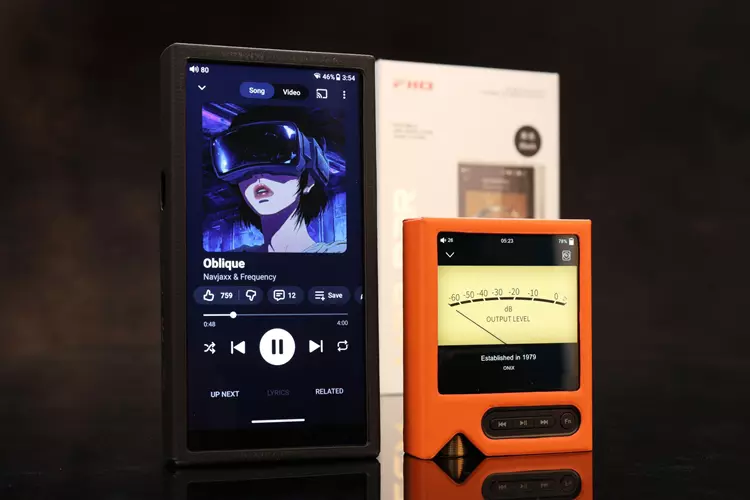
The ONIX XM2 is a compact, non-Android DAP that uses an Ingenic X2000 system platform and an in-house-developed operating system.
The XM2 has the latest flagship DAC decoder chip, CS4308P, which can decode Hi-Res Audio up to PCM 768kHz & DSD512.
After the DAC chips, the signal is converted to voltage using ONIX’s “Brighton” I/V conversion architecture, which is based on two OPA2211s. In the final stage, the signal is routed to two SGM8262-2 op-amps.
The maximum output power is 204 mW at 3.5 mm and 800 mW at 4.4 mm, both with a 32Ω load.
The XM2 is a delightfully compact DAP that fits comfortably in my hand. I like the black, squarish, rectangular, one-piece, full-CNC-machined aluminum alloy body with slightly radiused sides to prevent them from digging into my palm.
It has a glass-metal-glass sandwich design, with a glass back cover and a 3-inch OLED Touch Screen on the front.
Performance
Both the XM2 and the M33 R2R have a similar sound, tuned to be analog-like. The difference is that the XM2 is forward in the upper midrange and treble, making it sound closer to neutrality, while the M33 R2R is warmer.
Another difference is that the M33 R2R has a meatier, thicker bass with complex, bassy music, but the differences are subtle.
In terms of soundstage, the XM2 has a slightly wider soundstage, while the M33 R2R has a deeper soundstage.
Overall, the soundstage size is about equal. They are not far apart in terms of imaging performance either, but I noticed the M33 R2R has a more immersive, holographic, natural sound. Again, the differences are small.
Thanks to their very high-power output rating, 800 mW on the XM2 and 1,100 mW on the M33 R2R. Both have no problem pushing IEMs and headphones to very high-volume levels, with headroom to spare.
Both are energetic, especially in the bass, making them fun to listen to with a V-shaped-sounding IEM or headphones.
My Verdict
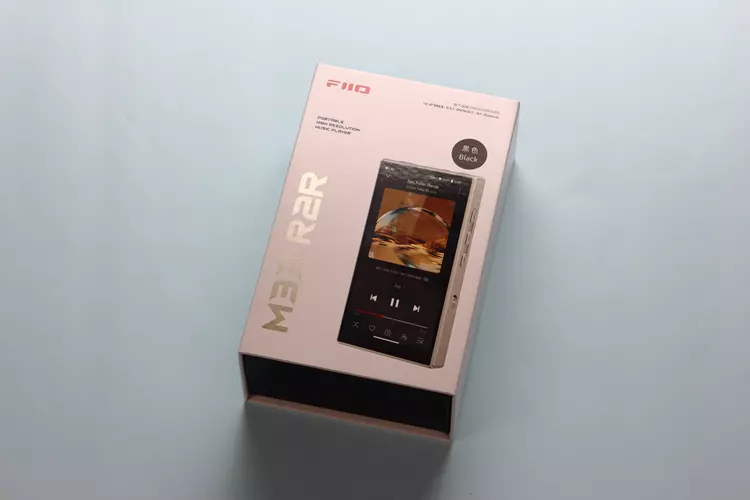
I must say that FiiO has improved its DAPs from previous generations and compared to other brands. The FiiO M33 R2R is the first FiiO DAP to feature a R2R ladder DAC and uses the Snapdragon 680 processor, which makes its navigation feel fast and up to date.
I like the way FiiO made the M33 R2R smaller and lighter. I also like that the M33 R2R is a very complete DAP: the Android operating system, the processor, and the generous 8 GB of memory and large 128 GB of internal storage, which allow one to add plenty of apps without running out of storage space.
What I enjoy most about the M33 R2R is its analog-like sound signature, which is warm, natural, and free of digital glare. Add to that the inclusion of a global EQ, the FiiO EQ, which I talked about in the sound impressions summary section, brings the M33 R2R sound quality to the next level.
What’s not to like? And this is personal. It would be the sound tuning of the M33 R2R, particularly its warmth. I wish that they tuned the M33 R2R with more upper treble by default, so the micro details and air would be more apparent.
The FiiO M33 R2R has a very good balance of features, design, size, and weight. Add to that the R2R DAC section with the magic of R2R sound signature, making the FiiO M33 R2R deserving of a high recommendation.
FiiO M33 R2R Technical Specifications
- DAC architecture: R2R ladder
- Operating system: Android
- Processor: Qualcomm Snapdragon 680
- Memory: 8 GB
- Internal Storage: 128 GB
- Memory card: Micro-SD
- Memory card capacity: Up to 2 TB
- Display: 5.5-inch, 1920 × 1080
- Outputs: 3.5mm PO/LO, 4.4mm PO/LO
- 4mm Balanced Output: 1100mW + 1100mW @ 32 Ohms
- 5mm Single-Ended Output: 470mW + 470mW @ 32 Ohms
- Digital outputs: coaxial, USB audio
- Battery capacity: 4,400mAh
- Battery life: up to 12.5 hours
- Charging: 25W low-temperature fast charging
- Dimensions: Approx. 138.2 71.5 17 mm
- Weight: Approx. 258g
