

Synergy
Efficiency & Sensitivity
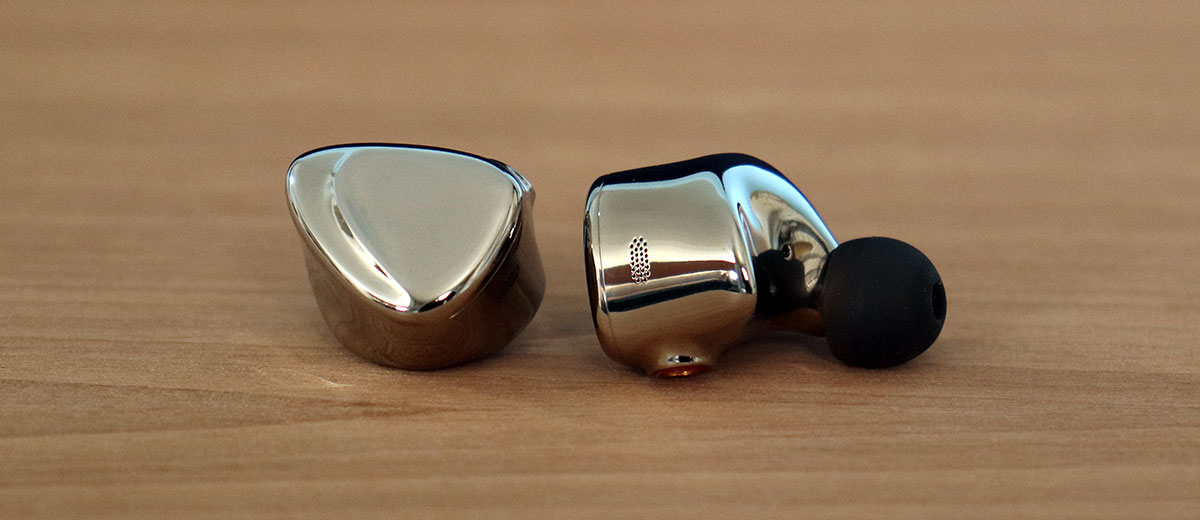
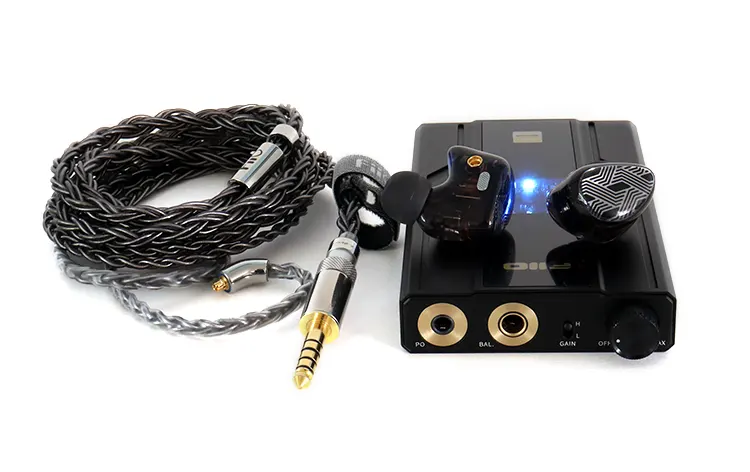
As demonstrated by the included dongle DAC with limited power output, the FiiO FX17 is very efficient at using whatever available power there is from whatever device is feeding it.
The 104 dB/mW, 16Ω rating makes this IEM reasonably sensitive and efficient for an EST IEM. It uses power efficiently, but with high-powered gear, it restrains itself.
The simple rule of thumb here is to use a clean source. The FX17 can work well with weaker sources, but can also work with high-power gear, remain well under control, and not sound overwhelmed.
Pairings
There’s not a device in my arsenal that the FX17s didn’t like. They sound good on their own, and if you adhere to the above statement of feeding them clean sources, they will sound great.
The FX17 handles high power well and does well with low power devices, such as their dongles like the KA17, which coincidentally has the same number within the model number.
The FX17 doesn’t seem to be gear-dependent and has a natural ability to play nicely with other gear. Combine that with an insensitivity to tip selection, and the FX17 becomes a versatile set.
Whatever you have will do, but if you have nothing but a mobile device, pop in the included USB-C dongle and you’re good to go.
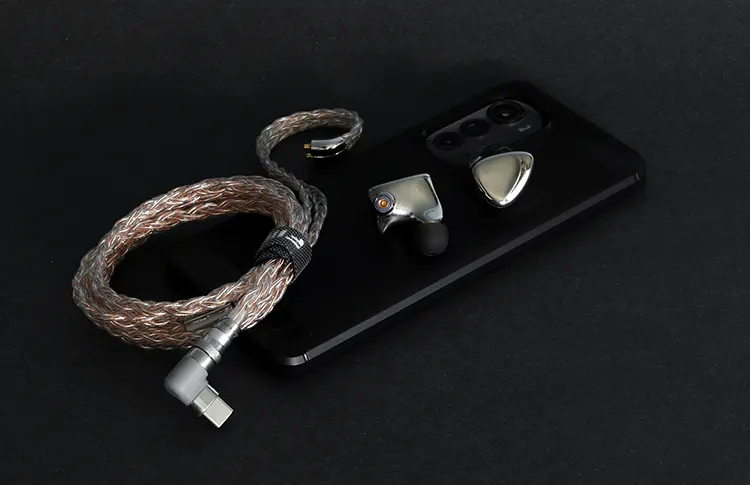
USB Stock Dongle DAC Amplifier
Speaking of the little devil, this piece alone is an incredible feat of engineering, and you’ll never guess how much performance this tiny device can produce from looks alone.
Oh, and before I forget, it works with any IEM equipped with MMCX connectors, including FiiO IEMs.
The device interacts well with FiiO’s control app, and it gives the user a lot of equalization power to play with since it sports a 10-band parametric EQ variant that gives the user an infinite amount of control.
The device seems capable of a little over 30mW of power, which doesn’t seem like much, but it gets the job done and it does so efficiently, believe it or not. It was using 1% battery power for every four average-length songs, which also makes the device categorically efficient.
How does it sound? Besides running out of power on some tracks, evident in the bass region in particular, it has a neutral response with good micro-staging capabilities.
However, any upscaled gear livens the FX17 since the USB-C dongle’s soundstage doesn’t produce the amount of height and expansiveness some of the other test gear was able to produce.
The included dongle does produce a full-range spectrum sound that’s distortion-free and is an accessory that many will use frequently due to its convenience, inconspicuous design, and good enough performance-wise that it rivals more expensive full-sized dongles.
Select Comparisons
FiiO FX15
Technical
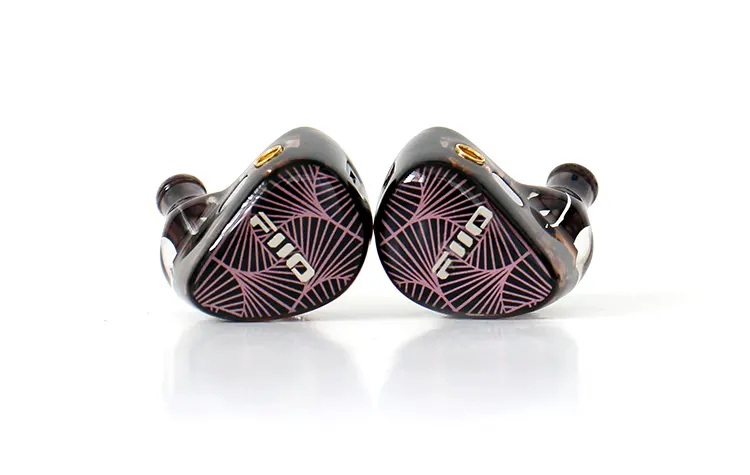
Let’s compare the FX17 to some of FiiO’s best IEMs, starting with the FX15, which was FiiO’s first IEM creation that uses a Sonion tweeter array instead of Balanced armatures for high-frequency production.
The FX15 is a tribrid, just the same as the FX17, but a downscaled version with different construction parameters.
Instead of eight Sonion tweeters, FiiO used four inside the FX15 apart from the 10mm DLC dynamic driver and a Knowles custom composite balanced armature for the midrange production with a three-way crossover to keep it all together and coherent.
One of the features that the FX15 has over the FX17 is the tuning switches that turn on and off the Sonion tweeter array, which I found counterintuitive since the Sonion tweeters are the major highlight of these IEMs.
Design
Construction-wise, there are a lot of differences. First off, the FX15 is an all-resin constructed IEM, and the only similar traits they have are the expanded MMCX connectors, which I consider to be high-quality connectors because FiiO’s MMCX connectors have never failed me yet.
Speaking of that, the stock cables are also different in that the FX15 comes with a 224-strand cable made from a combination of silver and OCC. It’s a nice cable that comes with the swappable tip system, but the FX15 doesn’t come with the dongle.
Both these models are closed-back IEMs with a similar rounded rectangular venting system. Neither of these sets comes with FiiO’s interchangeable output nozzle system.
They’re properly tuned, and no effort for them to sound good is required from the user. I find that to be a good thing, and both these models show confidence in FiiO’s capability to properly tune an IEM.
Performance
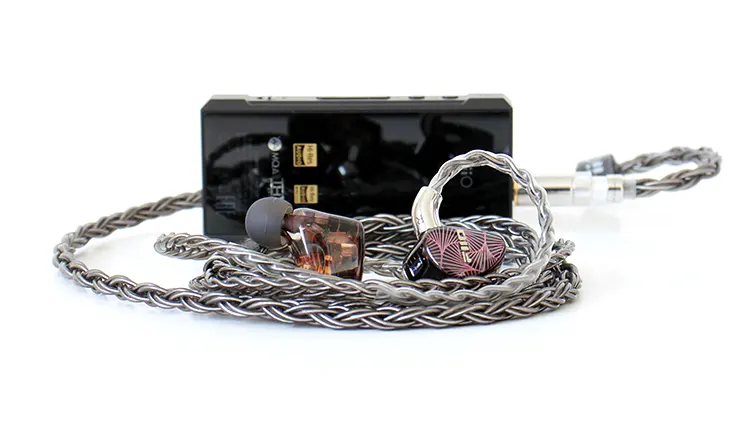
The FX17 adds a layer of refinement in tonality, and the overall presentation is more in line with true tonality. For example, I find the midrange to be smoother and the highs as well.
But the soundstage is what makes one hear major differences between these two sets. Both sets have a similarly sized soundstage, but the FX17 produces a better sense of depth, plus a bit more height.
There’s better vertical definition and horizontal placement, plus the depth seems improved on the FX17.
The FX17 is a lean-sounding IEM that produces sparkle with a wide amount of separation, but the FX17 improves on that by sounding fuller and more natural. They also sound more immersive and bigger in scope.
FiiO FA19
Technical
The 10 drivers, all BA array FA19, surprised me in the way that they produce such a warm-sounding sonic profile from such a generous number of BA drivers that are notoriously bright on other sets with a similar configuration. I was expecting a super bright set, but it’s quite balanced.
FiiO broke the 1K IEM barrier with this IEM, and it’s their first set to punch above that price line.
The driver array consists of Knowles’ customized balanced armature drivers. The FA19 uses four of those BA drivers for bass, two for the midrange, and four for treble production. Again, in a tribrid configuration.
Design
The FA19 is similar to the FX15 construction-wise since it employs an all-resin body that uses the same expanded MMCX connector. All three sets seem to employ a similar venting system and use a similar rounded, rectangular perforated plate.
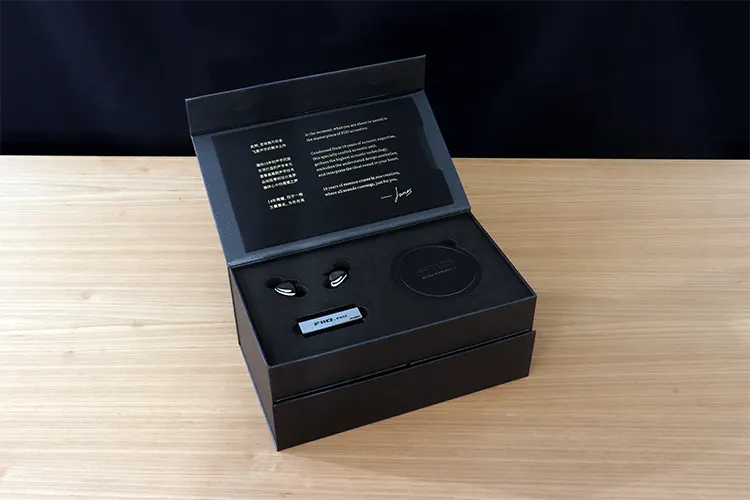
FiiO tends to be very generous with its included accessories. The FA19 and the FX15 come with an almost identical set of accessories, but only the FX17 comes with the dongle DAC amplifier, a cleaning cloth, and a plaque with your set’s serial number.
Both sets are comfortable to wear, and both weigh around 7 grams and only differ in weight by milligrams, even though the FX17 uses an all-metal design.
Performance
If I were to choose the one with a punchier character, that would certainly be the FX17. The bass produced by the FX17 is potent, fast, and energetic. That’s the one characteristic that I would certainly give the win to the FX17 as well.
The midrange section is similar in that both sets produce a lifelike midrange that’s accurate in tone and pleasantly smooth. Most of the improvements that are within the FX17’s signature are in the extra high-frequency definition and more prominent bass.
The FA19 has a softer character and is the more restrained set in this comparison, and is for those who look for smoothness and a side order of detail. The FX17 is more of an all-out assault on the senses, and that’s my preferred characteristic.
My Verdict
The FiiO FX17 is a delightful-sounding tribrid IEM that’s robustly built, well-accessorized, and tuned for those who are looking for high levels of detail but do not want to sacrifice musicality.
I can’t find any bad sonic aspects about the FX17, and it is FiiO’s best yet. I don’t even mind them not having removable output nozzles like some of FiiO’s less expensive IEM models, making them less customizable. I don’t mind that.
The tuning is done well enough for me to say that the porridge is just right as it is. The FX17’s single tuning option is an artful, musical expression of what a good IEM can be and what FiiO is capable of.
FiiO FX17 Technical Specifications
- Headphone type: Dynamic-Balanced armature-electrostatic hybrid in-ear monitor
- Wearing method: Around the ear, in-ear monitor
- Low-frequency driver: 10mm Magnesium alloy diaphragm dynamic
- Mid-high frequency drivers: 4 custom Knowles balanced armature drivers
- High-frequency drivers: 8 Sonion electrostatic drivers
- Frequency response: 8Hz to 40kHz
- Impedance:16Ω @1kHz
- Sensitivity: 104db /mW @ 1kHz
- Headphone cable: 8 strands totaling 360 wires that are a mixture of Gold, Silver, and Copper.
- Cable length: about 1.2m
- Single side unit weight: about 12.2g (excluding cable)
- Headphone connection jack: Expanded MMCX
- Audio plug: Straight, swappable twist lock plugs
