

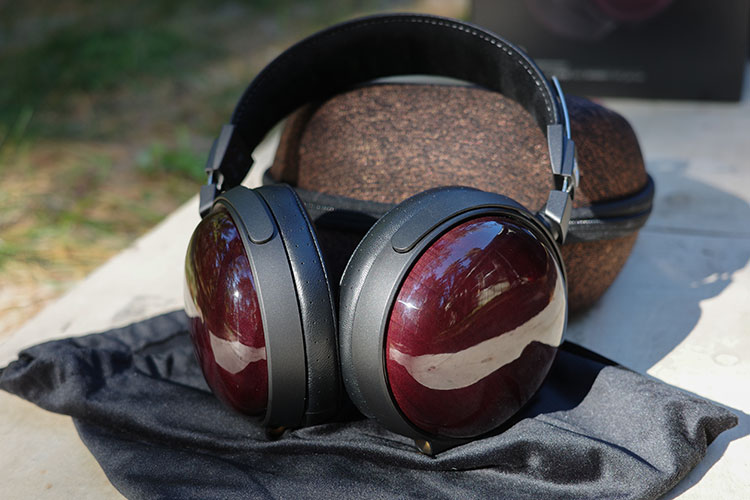
Lynn reviews the FiiO FT13, a new closed-back set of 60mm dynamic driver headphones with eye-catching natural purpleheart wooden earcups. They are currently priced at $299.99.
Disclaimer: I received this sample in exchange for my honest opinion. Headfonics is an independent website with no affiliate links or services. I want to thank FiiO for their support.
You can click here to learn more about the FiiO audio products previously reviewed on Headfonics.
This post follows our current scoring guidelines, which you can read in more detail here.
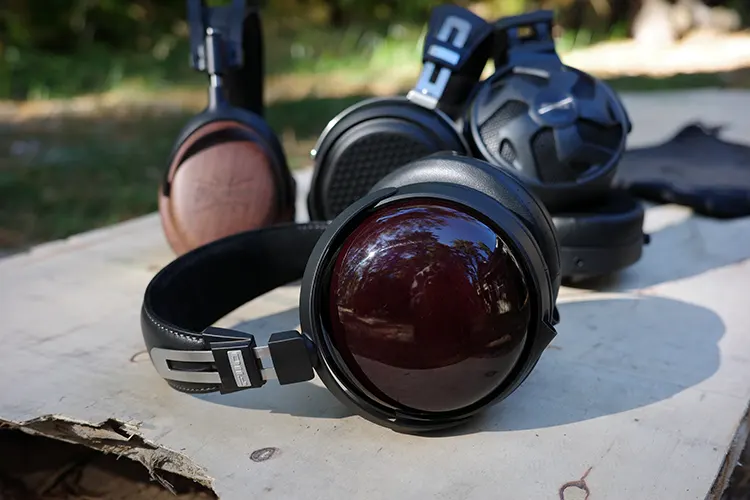
The FiiO FT13 is the latest headphone from the company, featuring gorgeous purpleheart wood cups for this closed-back design.
There has been some debate about which model the FT13 “replaces” or “upgrades” on the FT1, but I will treat it as a model that stands on its own.
Recently, I reviewed the newest powered bookshelf speakers, the SP5, and I came away very impressed with their performance, knowing they had moved upmarket into another tier.
The FT13 takes a slightly different approach, staying in the lower-end of mid-tier, but with a build quality and look about it that can turn heads.
As for the performance? That is yet to be decided until the end of this testing period. As per usual guidelines, the unit was allowed a proper burn-in time of at minimum 75 hours before critical listening took place.

Features
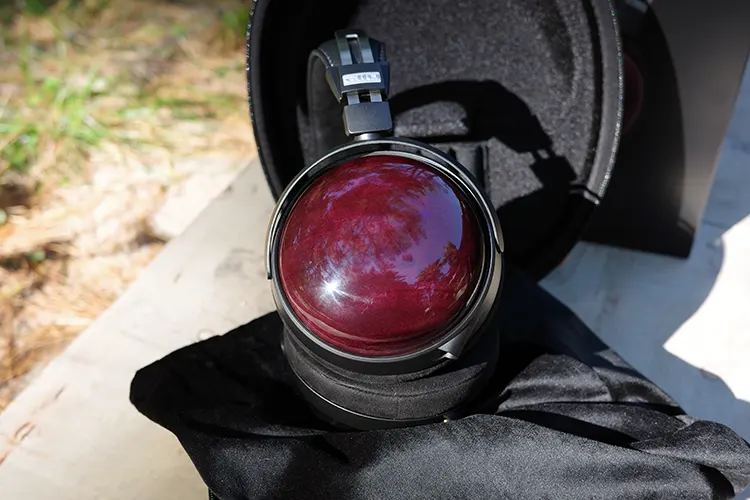
You cannot deny that your eyes are first drawn to the polished purpleheart wood cups, and for good reason. They have a superb look about them, conveying an upscale nature, guiding one into the mechanics of the internal design.
The larger 60mm dynamic driver contains a wool-composite nano-wood fiber diaphragm (birch from northern colder climates), which controls excess noise feedback by dampening potential feedback.
The large CCAW voice coil helps to keep pace with the music, furthering control of the sonic characteristics.
The w-shaped diaphragm helps increase the vibrational area (+/-26%), which can increase sonic qualities while reducing potential internal loss of sonic qualities.
The U-shaped damping tube, along with the closed-back design, helps to focus sound towards the user’s ears, allowing for a more controlled aspect to the music. This helps lower the cavity’s natural resonant frequency, reportedly increasing bass depth.
Two sets of earpads, lambskin and suede, allow for user-controlled options to the sound.
The easy-to-drive 32Ω headphone, along with a sensitivity of 98dB/1mW @ 1 kHz, allows the FT13 to be driven by pretty much anything.
So one need not worry about having to use a powerful amplifier. While using a powerful amplifier, the FT13 was able to promote good sound qualities without punishing the user.
The Furukawa monocrystalline copper + silver-plated oxygen-free copper cable looks the part too, while having no microphonics at all. While slightly stiff, the ability to lie without issue was much appreciated. I would have appreciated another 6-9” in length, though.
The closed-back design purportedly reduces external noises by up to -26dB. I did find that there was seemingly a good amount of external noise, but it was reduced when the music was playing.
Design
I cannot complain about the looks of the FT13. From the ear cups to the yoke/stanchion/headband design, the FiiO looks the part, with quality. Some might complain that the sliders look a bit below level, but they function without issue and stay put once adjusted.
The single headband fits well, allowing good pressure, but not too much, to hold the headphones in place, without bother. A sub-band might give a little better angular adjustment to the headphones, but careful bending can alleviate any potential problem.
I will add that there was a peculiar creak from the left yoke as the earcup rotated from top to bottom. This was not present with the headphone on, only when moving to adjust it.
The fit of the larger earcup opening allowed for a comfortable fit with the two types of earpads. The perforated Lambskin pads allowed for long listening sessions, even in warmer temperatures, promoting good treble response, a cleaner midrange and bass, which was on the quicker side.
The Suede pads felt luxurious while presenting richness and added bass note quality to the sound. Of note, some have stated that the suede pads “overdid” the bass response.
I did like the way the pads attach, using clips instead of the “lip” that goes into a slot. I would caution the user to be careful when removing the pads, as it does take a fair amount of effort.
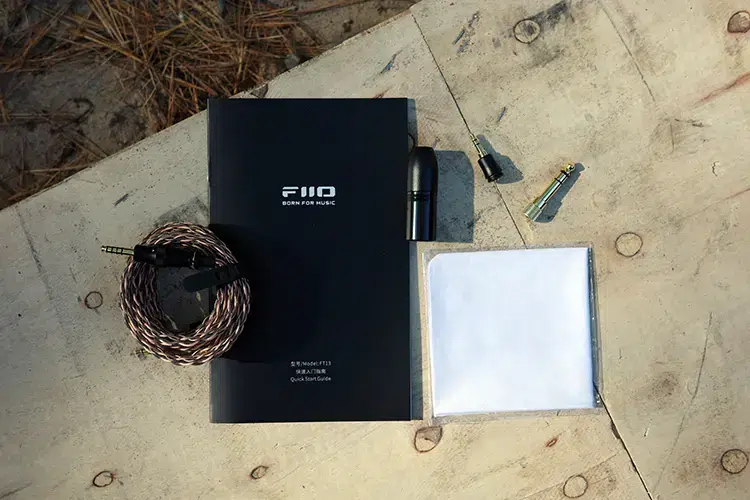
In addition, the inclusion of three adaptors means you can change the jack to 6.35mm SE, 4-pin XLR bal, and 3.5mm SE. Of note is that the 4-pin XLR uses the 4.4mm plug inserted into one end.
I found connectivity issues when using the combination and resorted to an aftermarket XLR adaptor.

Comfort & Isolation
As mentioned above, the single headband can be formed a bit to help fine-tune fit, but I did not need to bend the magnesium alloy for fit. The tight fit was snug, but not constricting, and I could wear the FT13 for long sessions without bother.
Isolation was different with the two choices of pads, as expected. The suede actually isolated a bit better than the perforated lambskin pads.
Both were equally comfortable. While music was playing, the isolation was a bit better at blocking out the sound, while using the suede to me.
The lambskin pads did compress a bit more, which should have helped isolate external noises out better, but the fabric pattern of the suede evened (bettered?) this out.
Packaging & Accessories
The FiiO FT13 comes in a now-familiar slide-off top, complete with near-life-size images of the headphone and pertinent information laden on the box.
Inside is a paperboard cut insertion, which houses the headphone case, and a pop-up pocket where the extra pads and cleaning cloth reside. I have long liked the newer FiiO cases, and this is no different, with good tactility to it.
A user guide rounds out the accessories besides the adaptor jacks mentioned above.
Case
I do like the latest FiiO cases, with one exception: on some models, the angle coming towards the handle is too much, and can result in a less-than-confident grip. The FT13 case thankfully does not have that and can be easily held by the handle or the case itself.
Plus, the mesh fabric used adds to the tactility. The brown color with tinges of purple looks smart, too.

Sound Impressions
The FT13 was allowed 75 hours of burn-in time before critical listening was conducted, with the obligatory occasional check during that time period.
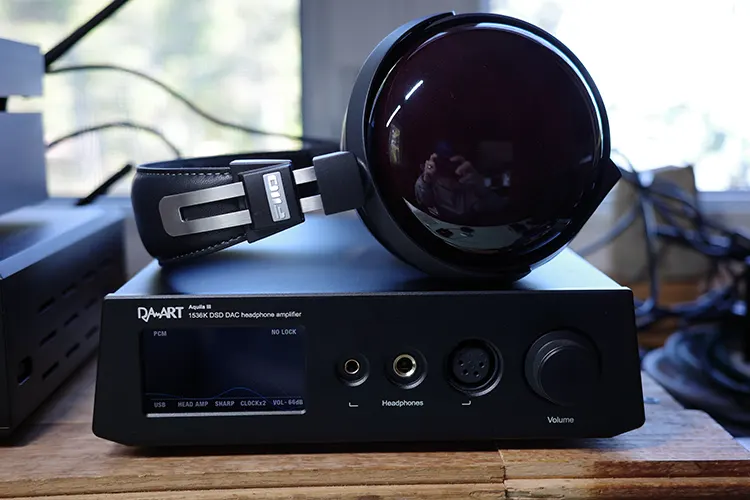
Items used in the testing included the YULONG DA-ART Aquila III, EarMen CH-Amp Signature, driven by the HiBy R4 and FiiO JM21, and iPhone 16 Pro Max tethered to the EarMen L-Amp.
Summary
The FT13 presents a slight mismatch of signatory sonics. Darker midrange sound pervades, while an almost overly bright treble region causes a bit of disjunction.
Bass is largely dependent upon the choice of pads, with the suede presenting a bit more depth, but with less control.
Those who prefer a tight bass region will lean towards the eminently comfortable lambskin pads but lament a loss in true depth.
The midrange darkness suits itself well to certain genres that rely upon a “darker setting,” while those who might want a more solid foundation of control and detail may be left wanting.
The FT13 is nonetheless a pleasant listening experience when paired with the proper amplification and genres.
Bass
The FT13 is one of the more fit-dependent headphones I have tried of late. And while the earpads give an excellent fit, sound does tend to leak in, especially with the lambskin pads for some odd reason.
This plays into the bass response, with the suede reaching deeper, but with less control. I do think the mixed fabric of the suede plays into this lack of control down low, but I also feel that under certain circumstances, this is to be desired, adding to the low-end “flair” of music one hears.
When control is not of the utmost importance, this can be beneficial. But using the suede will not be mistaken for giving the best detailed response.
Clarity suffers, but there is a certain fun factor involved with the looser control. We all most likely have headphones that provide us with the utmost control of clarity and accuracy, so the FT13 could be thought of as a counter to this.
Mids
I am drawn to the midrange under certain genres, where the basement club sound relishes the low lights and sultry sound.
In that regard, the FT13 flourishes. But when it comes to a detailed sound, that darkness fails to provide the necessary control, becoming too loose.
Using the lambskin pads overproduces the midrange where it goes into the treble notes, becoming a bit too harsh, even for my tolerances.
However, when combined with the proper genre, such as one that plays into the upper reaches (and those that lead into those frequencies), the FT13 can provide a dark airiness to the sound.
Here is where that somewhat jumbled treatment of the mids can benefit from the suede, keeping the harshness in check nicely, while experiencing the sound of choice to that basement-dwelling club sound.
Treble
The lambskin pads feel phenomenal, providing excellent comfort that can somewhat hide the harsh tendencies of the upper reaches. Extension is very good, but a lack of control hinders the airiness of the note, making for a thinning to it that comes across as nearly sibilant and overextended.
For those who prefer music that tends to this end, the suede will help to quell these fears, but you will lose the clarity of control. A trade-off the listener will be asked to make for themselves.
I found the extension was tolerable using the suede, and even the lambskin, but in longer sessions, I leaned towards the suede pads, even with the loss of detail retrieval wrought from the choice.
Staging
When one combines the impression above, one might think that the mismatch leads one towards an off-putting soundstage. That would not be the case.
The extension up top allows for the expansion upward, giving the darker midrange room to expand up as well. This lightens the sound a bit but does not completely cover the darkness that pervades.
The width comes across as slightly out of ear, with good proportions to the other two dimensions. There is no cubic effect, but one that tends to tie all together in a more rectangular 3D objective.
The depth tends to follow the width, with good fore/aft reach, which allows for good placing from the front to the back of the stage.
Layering, while good, does suffer from the lack of midrange control, but there is a distinct sound where one can mostly separate instruments, and the imaging is aided by the expanded width.
It seems that the soundstage is trying to counter the mismatches from above, and mostly, it succeeds.
Click on page 2 below for my recommended pairings and selected comparisons.
