

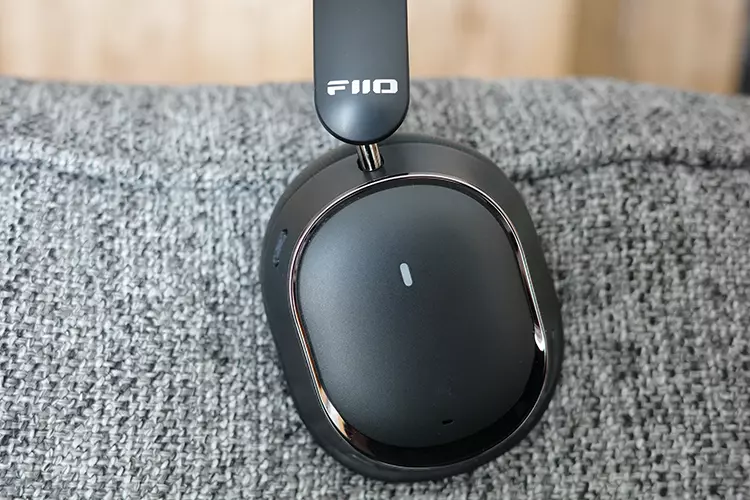
Wireless Performance
Pairing was straightforward for each device tested, from the iPhone 16 Pro Max to the HiBy R4.
I did find that the latency while using the R4 on YouTube videos was roughly ¼ second behind. After restarting the R4, I found the latency to be roughly the same as before.
Switching to FiiO’s own JM21, connecting was as easy as before, and the latency while using the same YouTube videos was still very slightly behind, but much better than the HiBy.
I am not sure what caused this, but since it was across multiple devices, it may have been the YouTube app on the Android devices.
I was able to go through several walls to a distance of about 30 meters before the signal dropped out. Consequently, the JM21 was used for the rest of the testing along with my iPhone.
Wired Connectivity
USB-C connectivity is for charging only. When using the 3.5mm AUX connection, latency was still present, but very slight. You are also at the mercy of the source at hand for power, cutting out the internal DAC and amplifier of the EH13.
This was a somewhat rare time that I preferred the BT connection, instead of wired. As we know, the gap between the two is shrinking, and this may be the first time I preferred the BT connectivity over wired.
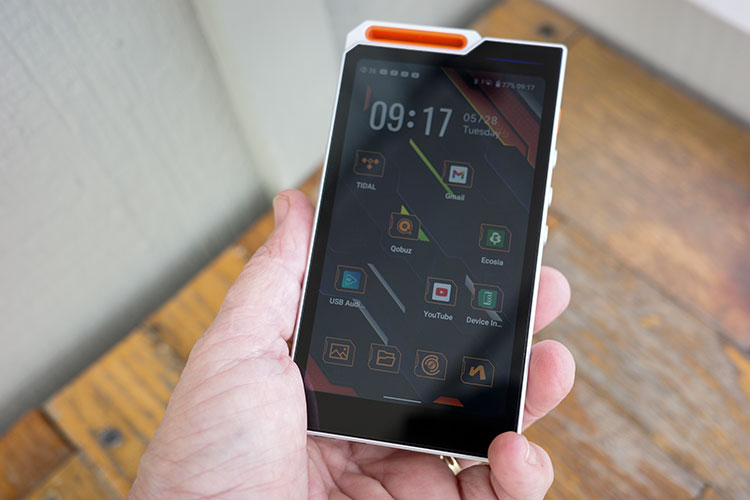
Synergy
Efficiency
When in BT mode, the EH13s utilizes the internal power and source DAC to present sound quality that is neck-and-neck with some of the top in this category. These are easy to drive headphones when in BT mode.
When using the AUX cable, though, you will need more power, since you have taken the internal amplifier out of the equation.
Power
Tied to the above, the EH13 never lacked for power when in BT mode. In fact, I had to keep the volume on all sources more towards the lower ⅓ of each device’s capability.
This showed that the internal amplifier and source amplifier could work together to make the EH13s volume quite loud.
When using the 3.5mm AUX connection, though, you are at the mercy of the source device. And you will need more power than you might think.
Pairings
Since the R4 has latency issues, I cut back and only used the JM21 and my iPhone 16 Pro Max for sources. I did briefly connect the EH13 to the FiiO M21 without issue, and the results mirrored the JM21. In other words, it was a success and could have been added to the list.
When using my iPhone, the EH13 never lacked for power, limited only by Apple’s AAC codec. Yes, LDAC can be used now, but the lack of such music across iPhones is still present.
I found the sound and pairing to be quite adequate, and the ease with which the EH13 connects automatically to two devices after pairing made it easy going between a DAP (or computer) and the iPhone.
The JM21 saw the lion’s share of usage, with roughly two-thirds of my listening occurring with this duo. Other than the early latency issue, I had no problem with videos or Tidal & Qobuz music.
It was almost like the two FiiO devices were meant to be a pair. I also found this pairing to be lighter in signature. Not thinner, but better clarity than the pairing with my iPhone, which was a positive in my book.
Select Comparisons
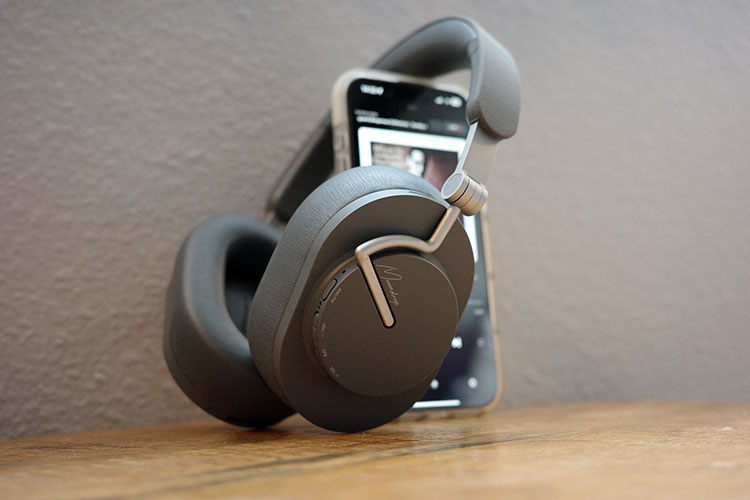
MOONDROP Edge
Technical
The Edge comes with a 40mm low-distortion dynamic driver, high-resolution beryllium-plated dome, and flexible surround composite diaphragm that gives the sound capabilities. The EH13 shares the same size driver and sapphire dome.
Both share ANC capabilities that are on par for the range, but the EH13s’ sharper drop beats out the Edge with a -42dB decrease.
The onboard long antenna provides for long-distance separation up to a purported 50+ meters, when called upon, and the long 48-hour battery life (ANC off) gives good listening for a long period. The EH13 came in at about 30 meters.
A five-minute charge will give up to 4 hours for that commute home when you forget to charge the Edge completely. A five-minute charge on the EH13 yielded about 3 hours for me.
Dual microphones handle call duties, but I will note the bottom two are near the controls, and I did bump them until I acclimated myself to the controls. The EH13 uses placement of the five microphones in a bit more efficient manner, with two set on the bottom of the ear cup.
Capable of handling SBC, AAC, and LDAC codecs, the Edge also promotes several of the latest sound capabilities. Dual device connectivity, which is now commonplace, of course, comes along for the ride, too. The EH13 handles SBC and LDAC along with AAC.
Design
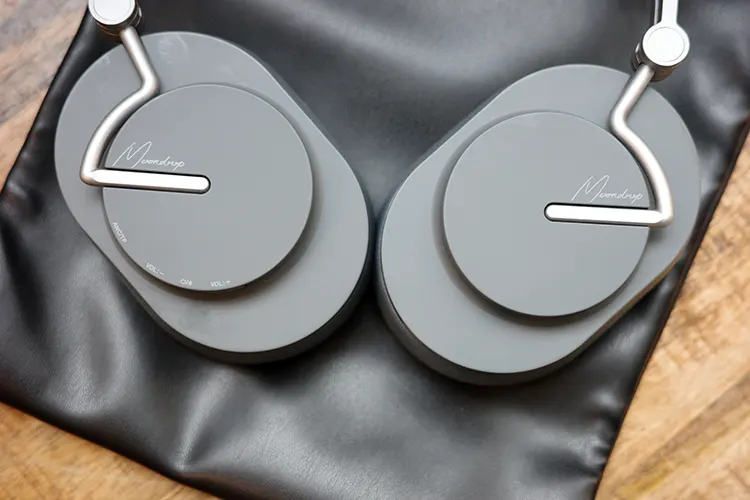
The medium gray color is accented by silver stanchions and swivels, with the same gray color highlighted on the headband and pad.
The top of the headband carries a grippy fabric cover, enhancing the user’s ability to hang onto the Edge. The EH13 shows a more elegant side, especially with the subtle chrome ring around the outside of the ear cup.
The ear cups only swivel 90 degrees, but do fold into the headband for a smaller, more portable stature.
Those rectangular ear pads are soft and pliable as well as deep enough to provide a good listening cavity. The EH13 folds in much the same manner, so purchasing a case to fit is an easy proposition.
All controls are on the right ear cup, with lighter gray lettering denoting each control. The lettering is hard to read, and the buttons are nearly flush with the side, making them hard to not only decipher, but also use. The EH13, on the other hand, is easy to learn, with intuition happening with my second use.
The fit is good, with only minimal pressure on my head below my ears. Adjusting the straps is straightforward but requires effort.
I did find the fit of the EH13 to be less than comfortable for the long haul, with runs of more than 2 hours putting pressure on my ears.
There are minimal detents for three spots, so getting the legs even with each other is an exercise in eyeballing.
The angle of the cups’ slight forward bend makes for a good fit without too much pressure on my ears. I do like the numbered system on the EH13, which gives precise placement of each band.
Performance
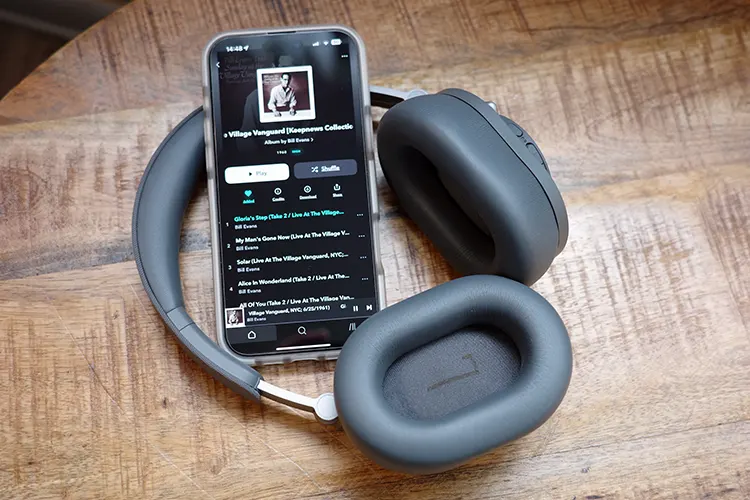
The MOONDROP Edge presents a vibrant signature across the board. With decent reach down low (more so with the R10 EQ) and a more neutral than not signature, the Edge carries a tune across many genres.
The bass reaches lower than the EH13 and is less dependent on the source music for the lows, like the EH13 is.
Treble reach does not become strident or stretched due to the neutrality, but neither does it carry much verve and energy without EQ’ing.
The EH13 extends a bit more and never became grating or bothersome. That extension exceeds the Edge without becoming strident.
Where the Edge goes vibrant with good lows, the EH13 presents a somewhat more even sound, with better top-end extension.
Kiwi Ears Aventus
Technical
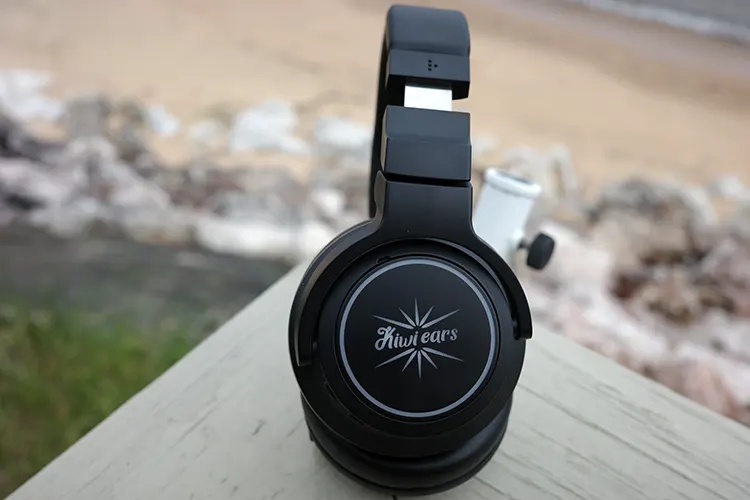
Designed with gamers and DJs in mind, the Aventus comes with two drivers (hybrid), a 40mm dynamic driver for the low-end and mids, and a smaller 10mm dynamic driver to help fill the holes, adding depth and space in the soundstage.
The EH13 presents a more upscale build quality, and it shows. Where the EH13 looks more elegant, the Aventus looks durable, like a gaming headphone might.
While having multiple drivers may not be unique, the use of affordable BT headphones is a positive contribution to the Kiwi Ears’ stable. The 40mm dynamic driver of the EH13 provides the whole spectrum, comparatively.
Tuned with what Kiwi Ears call “mild Harmon tuning for strong bass,” the Aventus follows the latest family footsteps with good grunt down low. The EH13 cannot match the lows, but presents a more detailed, vibrant signature.
Two sets of foam inserts (one mounted already) come with the Aventus, allowing for somewhat of a custom tuning option. There are no extras for the EH13.
The hybrid ANC technology (reducing outside noise up to 35 dB) uses five microphones for precise noise detection and has three settings: on, off, and transparent. The EH13 provides -42dB with four microphones.
While not dead silent when engaged, once the music starts, the main focus is right there inside your head, without distraction.
Transparent is not quite as open as I would like, but I rarely use that setting on any of my ANC-enabled units. I did find the Aventus isolates outside sound a bit more than the EH13, which could be due to the ear pad configuration.
Design
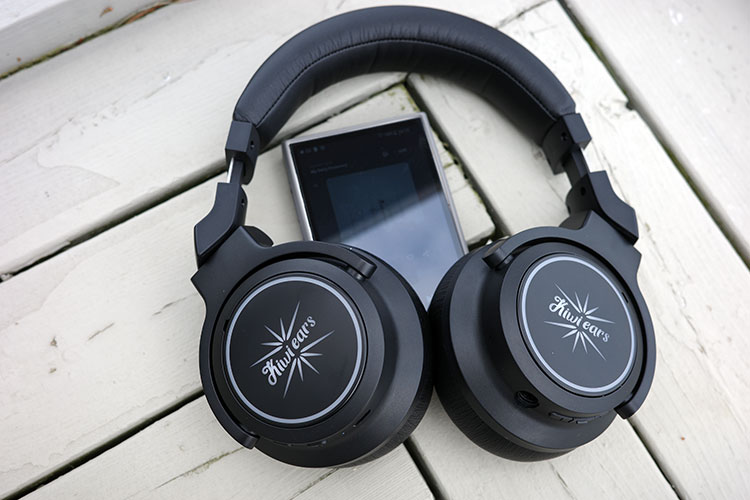
Made mostly of plastic, except the adjusting straps, the design is tasteful and durable, which are two highly regarded traits for wireless headphones as well.
The thicker headband and swiveling yoke parts make for added durability. The EH13s upscale design and feel cannot be denied, even with the plastic backside of the ear cups.
When not in use, the Aventus can fold flat, so you do not mar the cups. Also, when folded for storage, any potential part that may mar a finish touches the extra foam under the headband, a nice touch.
You will need a cloth bag or purchase a case for the EH13 to match the Aventus portability.
It always takes me a fair bit of time to acclimate to the unit’s controls, and the Aventus is no different. But, since the controls on both cups are on the smaller ear cup part and stick above the flush surface, I found I had less trouble in manipulating those controls.
I had no “brain burn-in” time with the EH13 and found the controls to be intuitive from the off.
The ear pads are quite cushy, without losing the ability to help keep the Aventus in place, much like a DJ would need when spinning.
The pads rotate, coming off with a twist, should you desire others. I could wear the Aventus for hours without bother, whereas the EH13 started to bother me after about two hours.
A nice-sounding “click” accompanies the stanchion when locking the pads back in place. The earpads are excellent at cushioning and holding the Aventus in place, but do become quite warm, even with the vegan pleather covers. The EH13 functions adequately.
Performance
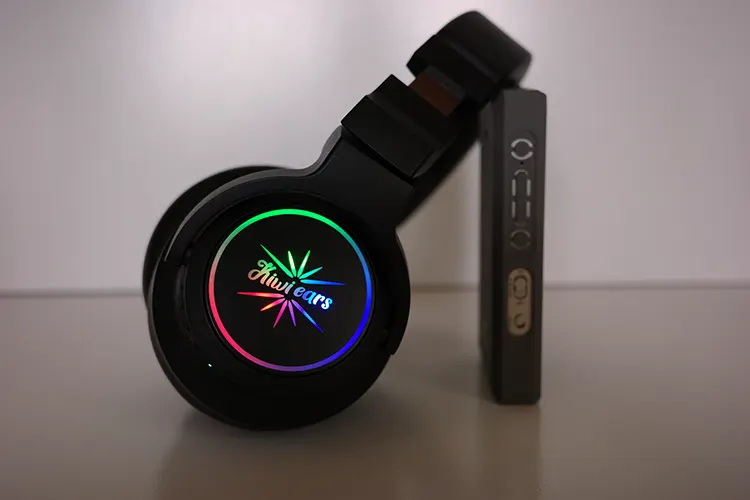
A preponderance of low-end grunt comes through with the Aventus, but with less of an authoritative punch than its brethren, the Atheia.
There is still that guttural feel, but with a little less authority and a bit tighter control. The EH13 cannot go that low without input from the parametric EQ.
The lower mids tend to dominate the signature, with help from that punch down low, by powering it forward. There is a looseness to this area that leans towards a fun-sounding signature, though.
The EH13 pushes those mids straight out slightly, but not in a detrimental manner, adding to the overall sound quality positively.
The Aventus mids are not pushed upward, nor forward as much as a result, but the preponderance of lower mids lends to that fun sound. The EH13 comes across as more controlled.
The upper-end shows forth with a small bit of sparkle, but not enough to give the signature the needed detail retrieval or clarity you often associate with the treble region.
The treble extension is further on the EH13, and again, without sibilance. This is where the EH13 separates itself from the Aventus.
The soundstage counters this by being expansive and high, much like a disco would be on a jumping Saturday night. The depth of the EH13’s soundstage counters what the Aventus provides.
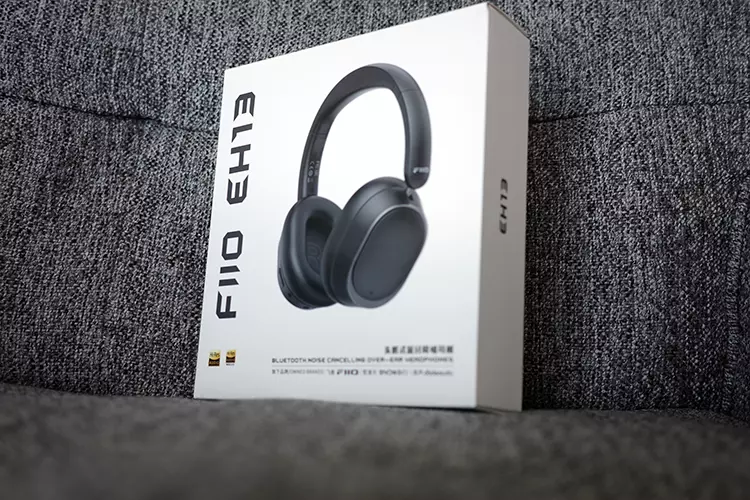
My Verdict
The closed-back FiiO EH13 wireless ANC-equipped headphone dabbles back into the portable BT headphone space that most users are now familiar with and may already own several.
Based on that, the EH13 should be sufficiently competent to muscle into an already crowded market.
It does this somewhat, but without breaking any new ground. Having a parametric EQ is a definite positive, allowing the user to tailor the sound to their personality.
Add in that this personal EQ can be carried across devices, and you have that FiiO ability to tailor the old with the new.
The comfort needs to be addressed. I could not go longer than two hours with or without my reading glasses on due to the fit and pressure.
If FiiO could address this aspect, and I may indeed be an outlier, the EH13 is a competent entry into the wireless headphone market.
Sound-wise, the EH13 presents a competent signature, with a better top end countering the lack of sheer grunt down low. A somewhat expansive soundstage helps to keep the music lively and presentable without becoming boring or grating if you go the other way.
FiiO EH13 Technical Specifications
- Headphone Type: Bluetooth noise-cancelling over-ear headphones
- Driver: 40mm dynamic driver
- Diaphragm Material: Sapphire-coated composite diaphragm (sapphire dome + PEEK+PU surround)
- Frequency Response: 20Hz – 40kHz
- Impedance: 16Ω
- Active Noise Cancellation: Hybrid ANC, up to -42dB
- ANC Levels: High / Medium / Low
- Microphones: 5 built-in microphones (feedforward + feedback + ENC)
- Bluetooth Version: 6.0
- Bluetooth Codecs: SBC/LDAC
- LDAC Transmission Rate: Up to 990 kbps
- Certifications: Hi-Res Audio, Hi-Res Audio Wireless
- Battery Life: Up to 75 hours (ANC off)/Up to 45 hours (ANC on)
- Charging Time: Approx. 2 hours
- Charging Port: USB Type-C
- Wired Connection: 3.5mm TRS audio input
- Dual-Device Connectivity: Yes (simultaneous connection to 2 devices)
- App Support: FiiO Control App (EQ, ANC control, presets)
- Sound Modes: Gaming Mode, Cinema Mode
- Earcup Pressure: 4.2N ± 0.3N
- Foldable Design: Yes
- Weight: Approx. 278g
- Color: Black / Beige
