

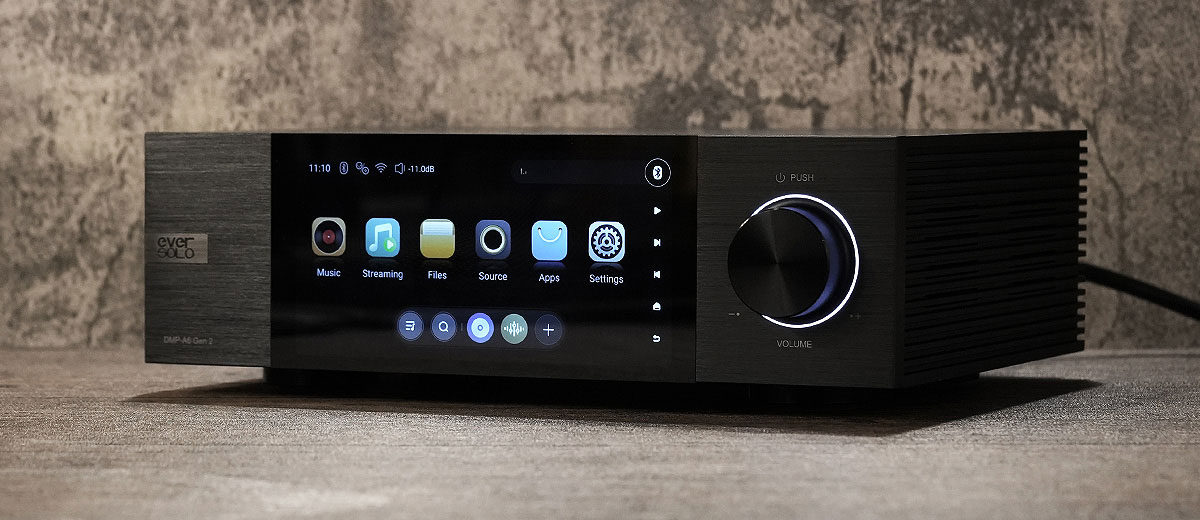
Sound Impressions
I tested the DMP-A6 Gen 2’s analogue and digital output with various amplifiers such as FiiO’s K17. Since I think most will be using it as a pre-amp or a digital source, I will be mainly commenting on these two areas.
I found the tuning slightly V-shaped, with the lower bass and treble boosted for clarity, and the mids smooth-sounding. On its RCA connection, the DMP-A6 Gen 2 is more mid-centric and does not sound as open.
Overall, it is on the neutral-warm side with good clarity and openness. A little bit of equalizing will help it gain better bite in the vocals as well as stronger dynamics. It is also recommended to use higher resolution audio files for the output to sound more defined.
While there are higher-end models with stronger decoding and amplifying capacities, I found the DMP-A6 Gen 2 a decent digital output source with powerful software features.
When connected to other DACs and amplifiers such as the K17, the result is very pleasant. Below, I will compare them to other streamers, including the FiiO R7 and S15, which all have their own merits.
Timbre
Generally, the XLR output on the DMP-A6 Gen 2 is satisfactorily resolving and is slightly tilted to the lows, which sounds elaborated and fairly extended.
Testing with local 16-bit WAV files, there is a bump in the lower bass, adding more intensity for a stronger presence. There is also a bump around the 10kHz area that enhances the treble clarity, and makes cymbals and hi-hats stand out more.
The bass punches with sufficient air but doesn’t kick very deep, with layering on the limited side, sounding quite relaxed with good warmth and an elaborate decay. This tuning works better with more defined high-res audio DSD files, sounding relaxed and textured in the bass with tight transients.
The DMP-A6 Gen 2 mids are smooth, though I prefer lifting the upper mids for better clarity and penetration when using streamed media, which often has boosted bass and upper vocal frequencies for stronger dynamics. This tweak compensates for the tuning, sounding more engaging.
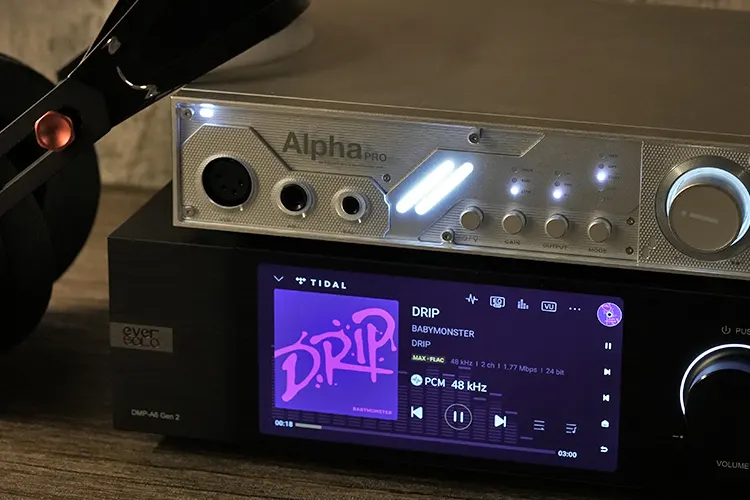
Nevertheless, the stock tuning is unintrusive and friendly with lossy recordings listening through the D&A Alpha Pro amplifier (review soon). It sounds best with gears that are more elaborate in the mid-lows and with stronger technicalities, such as the MOONDROP VENUS and the FiiO FT7.
I prefer the XLR over RCA, which sounds more muffled and rolled-off, probably because of the lower output power on the single-end configuration.
I also tested the coaxial output on the D&A Alpha PRO, and it works great to deliver a textured and detail-rich output with satisfactory openness.
Staging & Dynamics
Using the XLR Pre-out and playing back local Hi-Res files and streaming through Tidal, the DMP-A6 Gen 2 displays a fairly expanded headroom, and can deliver an open bass and decent vocal presence.
The treble is nicely polished with no audible spikes in the upper vocal frequencies, but with some elevation in the upper treble range for clarity and stronger positioning. The mids are smoothly rendered, so details on both ends of the spectrum are more clearly heard.
Cleaner, sharper voices are properly separated from the backing instruments and sound fuller, while darker, weaker voices are not imaged as distinctly.
The stage rendered resembles a small hall with the vocalists spaced out nicely from the audience. Bass instruments are slightly more intense with elaborated decay, which helps render a more engaging vibe.
I find the bass image thickened and slightly soft, so it would be nicer if that were tighter and more precise. When it comes to fast percussion passages, it can sound slightly congested with the position of each element sounding dispersed, especially when using the device as a Bluetooth receiver.
Despite this, it works nicely with darker voices and thinner instruments by giving them more body when streaming higher-resolution files.
The staging performance, clarity of positioning, and resolution are satisfactory, while the tuning can be further enhanced with PMEQ.
Synergy
Power
The DMP-A6 Gen 2 can output up to 5.2V max on its XLR output and 50% the power on RCA, which is sufficient for most amplifiers’ analog inputs. The lower power on the RCA also explains why connecting this way doesn’t feel as punchy and resolving as the XLR balanced output.
The output volume can be adjusted when connected as a preamp for XLR, RCA, and the digital outputs.
Pairings
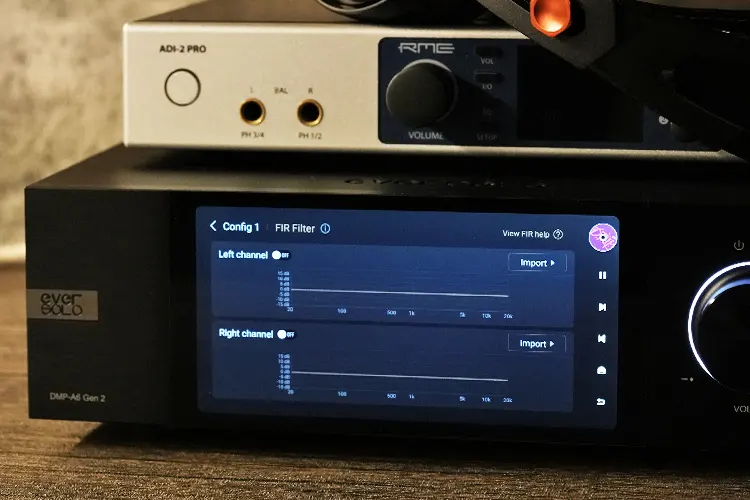
I have tried connecting the DMP-A6 Gen 2 to various devices, including my speakers over XLR, the D&A Alpha Pro amplifier, and the RME ADI-2 Pro, to hear how different it sounds compared to their onboard decoding, and how the tone is shaped for matching headphones.
I find it pairs best with amplifiers and headphones that are fast and with stronger technicalities, which helps tighten up the bass.
The RME ADI-2 Pro is a good example that sounds controlled and balanced with satisfactory details. In a similar manner, pairing with Genelec speakers, which I also have tested, sounds tight in the bass and satisfactorily dynamic.
A little bit of equalizing helps it to get even more engaging, and I would recommend not pairing with amplifiers that are too fat in the bass or rolling off the treble too obviously.
The digital output from the DMP-A6 Gen 2 will be useful if your headphone amplifier also has an integrated DAC, which would allow an alternative sound profile and become less cable-dependent.
I have tried connecting the Coaxial output to the RME ADI-2 Pro as well as the D&A Alpha PRO, and it gives a fuller, more detailed, and airier response than when I connected the DMP-A6 Gen 2 directly via its analog outputs.
Select Comparisons
FiiO R7
Technical
The FiiO R7 is equipped with the ESS ES9068AS DAC chips and dual THX AAA 788+ amplification modules for its headphone amping circuitry.
The DAC chips used on the R7 and the DMP-A6 Gen 2 are similarly graded, with the ES9068AS being newer and able to output higher swings.
While the DMP-A6 Gen 2 has a higher output swing at 5.2V compared to R7’s 4.5V on XLR output, the R7’s SNR reaches >125dB, and THD+N performance is <0.0005% THD+N, which is decent. The DMP-A6 Gen 2 scores even better in measurements at >128 dB for SNR and <0.00009% for THD+N.
Design
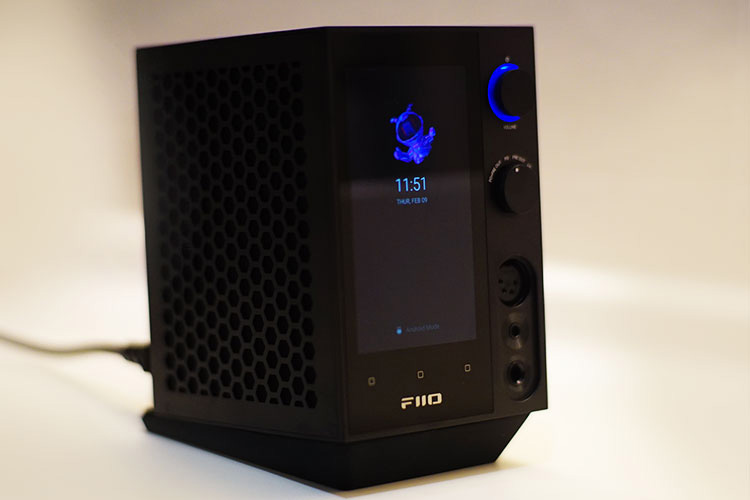
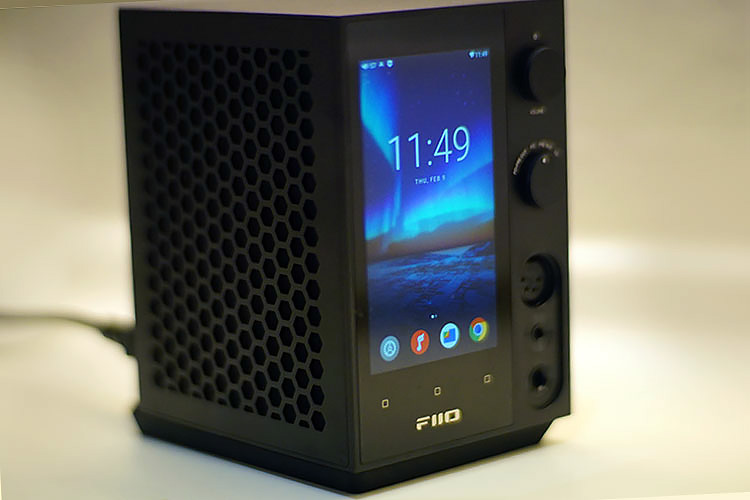
The R7 is designed as a desktop streamer running on a customized Android OS, just like a DAP. The orientation is different from most streamers with a landscape screen design, so you may find it as easy to use as an Android phone or just like FiiO’s Android players, such as the M17.
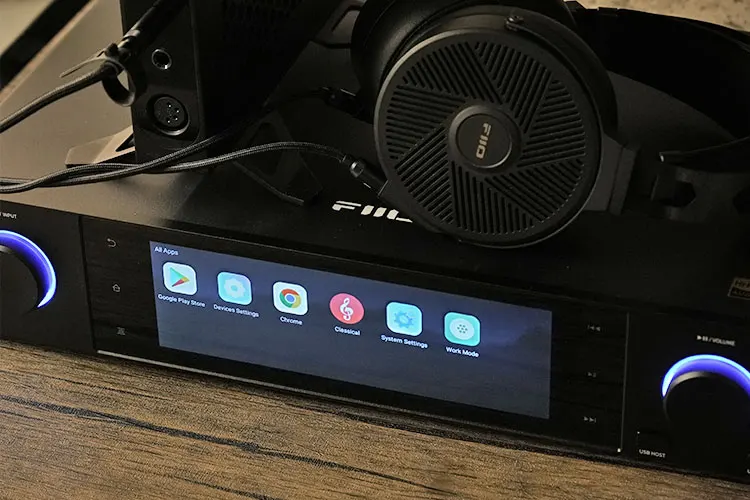
When compared to the DMP-A6 Gen 2, which is a dedicated streamer, the customized menu is more straightforward.
Instead of Android applications, it comes with customized apps and cooler visualizers. You can also sit back on the sofa and control it over distance. With the R7, you will need an external screen mirroring app to control it, which is slower and clumsier.
Performance
I compared the XLR output on the two devices connected to headphone amplifiers and listening via various headphones.
In general, the DMP-A6 Gen 2 delivers a sharper, more contrasty output with instruments positioned clearly and sounds more airily extended. The perceived depth and resolution are superior on the DMP-A6 Gen 2, and there is better separation in the mids.
The R7 leans more to the lows in comparison, not necessarily warmer but just not as extended, and the focus is more on the bass, which sounds quite punchy and agile.
It stresses a bit on the vocal transients and is sibilance-free and rounded in the upper end. As such, vocals on the R7 are pushed more forward, whereas the DMP-A6 Gen 2 feels more naturally extended and renders the mids more smoothly.
Comparing the XLR output only, it feels more analytical on the R7, and I would rate the DMP-A6 Gen 2 marginally superior for its more organic tonality and perceived resolution.
FiiO S15
Technical
The FiiO S15 is a full-sized streamer, unlike the K17, as it doesn’t have any headphone PO outputs. The S15 is also an Android player with Android 12 OS onboard and has a more powerful Snapdragon 660 MCU inside, alongside the AKM AK4499 & AK4191EQ chipsets for decoding.
It also uses Accusilicon AS318-B femtosecond oscillators, which are superior to the AMP-6 Gen 2 variants. The S15 decodes up to native DSD256 and PCM 32-bit/384kHz and can deliver up to 8.9Vrms via its analog output.
Design
While both devices are Android-based, the S15 is nearly twice the size of the DMP-A6 Gen 2 and fits better on racks than on the desktop.
The S15 also features AES output, so aside from options like Coaxial and Optical, you can connect to speakers or other devices that support AES signal over longer cables. This will offer more flexibility for speakers who are spaced further apart from the device.
The S15 also comes with a remote, which is handy, but I don’t feel like it is lacking with the DMP-A6 Gen 2, as you can very easily control everything on the phone, and the application works more swiftly.
The S15 also has a USB port on the front, which is useful, and a removable M.2 case just like an external hard disk design for you to fit M.2 SSDs, which is a thoughtful feature.
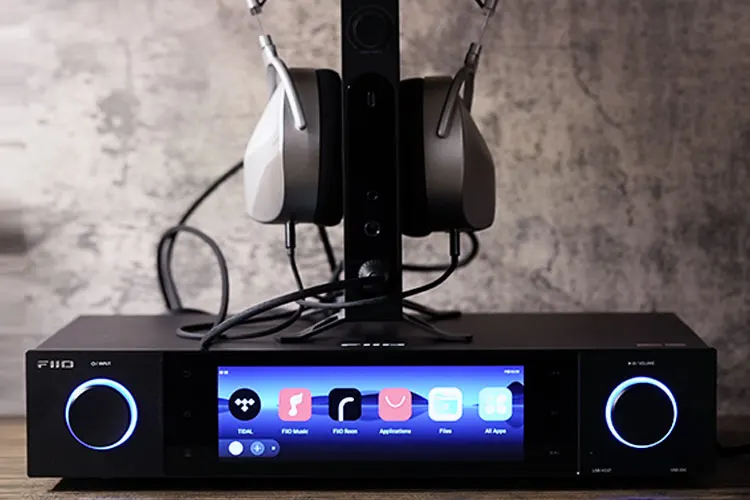
On the DMP-A6 Gen 2, streaming app coverage is more comprehensive, and the in-built applications are better customized with more functions supported, and it doesn’t feel overly simplified.
The UI experience is a step up, with more on-screen notes and prompts to guide new users through each function.
The overall build quality is also nicer on the DMP-A6 Gen 2. In practice, the DMP-A6 Gen 2 doesn’t feel noticeably slower, and in terms of user experience, it stands out from the two.
Performance
The S15 is a more legitimate rival, regardless of the size, with a similar concept and features on board. It comes with AKM AK4499 & AK4191EQ DACs, which are considered a step up compared to the DMP-A5 Gen 2.
Comparing the XLR output that links to the D&A Alpha PRO as a headphone amplifier, the S15 kicks firmer with superior technicalities presented in the mid-lows, which allows it to render better depth and layers in the lows.
The DMP-A6 Gen 2 is cleaner and softer, comparatively more relaxed, though when complex passages of music come in, the positioning may not be as discernible as on the S15.
Instruments across the mids and vocals are more smoothly presented on the DMP-A6 Gen 2, while the S15 offers stronger bite and definitive power for vocals to penetrate through the mix.
The DMP-A6 Gen 2 sounds relaxing with radio streaming apps, and the unaltered sound profile works better with expressive, darker, and fuller voices, slowly paced Jazz, and classical music with a slower tempo
The stronger technicalities of the S15 allow it to handle more instruments in the mix and handle transients more responsively.
The perceived background is also darker on the S15, and it sounds slightly more contrasty than the calmer, smoother, more swiftly articulated tuning on the DMP-A6 Gen 2.
When testing the digital outputs, the difference is less noticeable, and the S15 is more flexible with AES output if your speaker system supports this. If you are relying on an external decoder, the DMP-A6 Gen 2 would perform well while providing a much more delightful UI experience.
My Verdict
The Eversolo DMP-A6 Gen 2 has an impressive design, excellent software, and a satisfactory analog output, though I found it at its best when used as a digital source.
Its compact size is ideal for connecting to other desktop headphone amplifiers or decoders, and it features a highly versatile array of functionalities, including built-in features and a mature, customizable UI design.
There are some more affordable streamers out there, but the maturity of the software, as well as applications support is not as convincing.
For those who prioritize XLR output performance, you can top up a little for the Master Edition, which includes femto clocks and higher-grade op-amps in the amplification circuitry.
However, if you plan to pair it with another DAC and simply need the system features, the DMP-A6 Gen 2 works like a champ.
Overall, the DMP-A6 Gen 2 is very professionally designed and delivers the best UI and mirror-control experience I have tried.
Its rich streaming features, along with highly developed applications and local playback capabilities, are outstanding and would be a good fit for anyone looking to build a streaming media center or a music library for their desktop system or small hi-fi setups.
Eversolo DMP-A6 Gen 2 Technical Specifications
- Display: 6″ LCD touchscreen
- Internal Memory: 4 GDDR4 +32 GeMMC
- DAC: (x2) ES 9038Q2M
Op-amp Chip: OPA1642
USB: USB-A (3.0) Out | USB-C: Windows, Mac, Android, IOS, Supports DSD512, PCM 768KHz 32Bit, MQA - WiFi: 2.4G+5G dual band
- Bluetooth: BT 5.0, supports SBC/AAC/aptX/aptX LL/aptX HD/LDAC
- Music Service: Tidal, Qobuz, HIGHRESAUDIO, Amazon, WebDAV, UPnP
- Streaming: Roon Ready, AirPlay, DLNA, Spotify, Tidal Connect, Qobuz Connect
- Optical/Coaxial In/Out: Supports PCM 192KHz 24Bit, DSD64 DoP, MQA
- HDMI Audio Output: DSD64 Native multi-channel/PCM192KHz multichannel raw output (up to 5.1)
- Control Method: Mobile App, Touch screen control, Trigger Out, WOL
- XLR Output level: 5.2V
- Frequency response: 20Hz~20KHz (±0.15dB)
- Dynamic range: >128dB
- SNR: >128dB
- THD+N: <0.00009% (-120dB) @A-wt
- Crosstalk: >-125dB
- Dimensions: 10.6″ x 7.4″ x 3.5″
