

Synergy
Efficiency
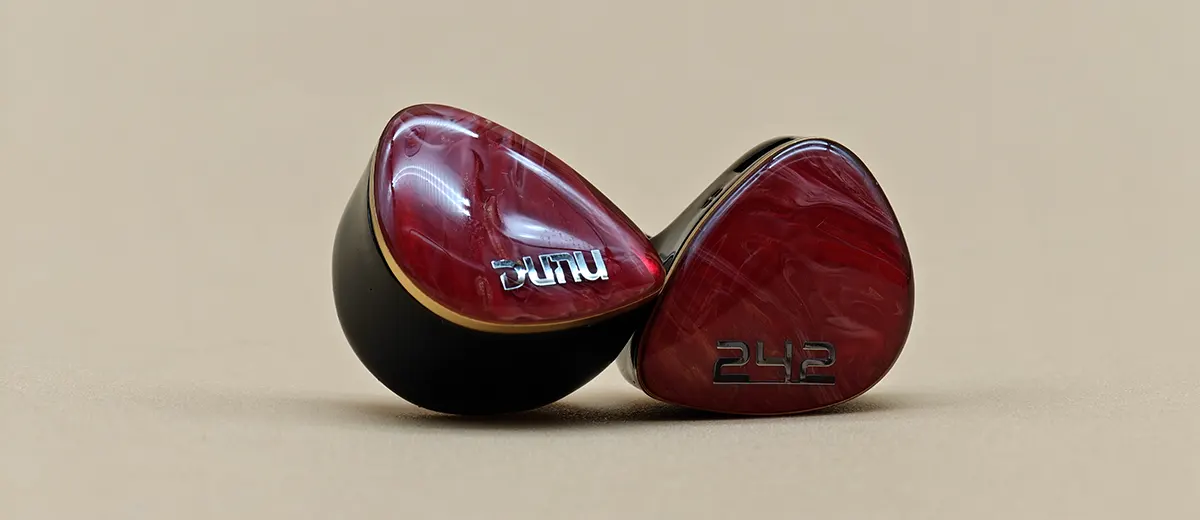
The DUNU DN242 has an impedance of 35Ω and a high sensitivity of 125 dB/Vrms at 1kHz. This impedance and sensitivity combo make it easy to drive, and it does not require a powerful source to perform well.
The stock cable features the modular Q-Lock Mini system, providing both 3.5mm and 4.4mm terminations to fit all setups. A 6.5mm adapter is also included, making the DN242 compatible with desktop amplifiers.
Due to the DN242’s great dynamics, the listening experience remains consistent. The sound stays balanced and engaging at both lower and higher volumes.
Pairings
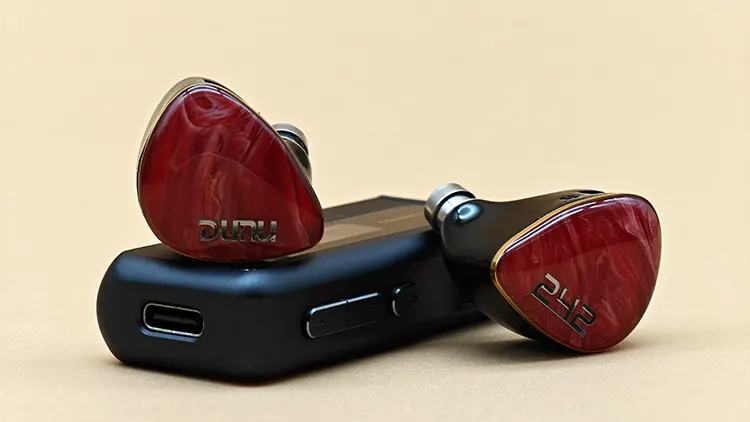
Using the DUNU DN242 with a smartphone’s 3.5mm jack provides a baseline experience. The presentation is serviceable, but it lacks the control and refinement that the IEM is capable of.
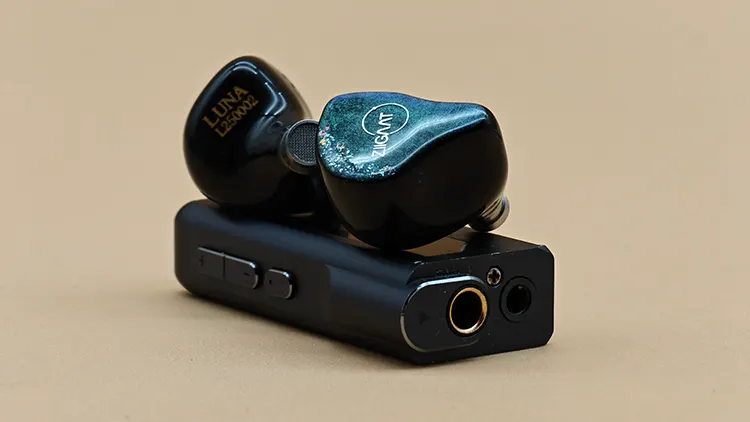
Pairing it with the FiiO JA11 offers a clean, neutral sound with no added coloration. The DN242’s bright vocals are maintained, with a slight improvement in clarity and nuance.
The Colorfly CDA-M2 delivers a more analytical and transparent presentation. It tightens the bass and enhances detail retrieval, making the DN242 sound more open and precise.
Using the Heartfield R1 introduces a noticeable change due to its R2R nature. It adds warmth and body to the midrange, giving the DN242’s vocals a fuller, more analog-like feel.
Select Comparisons
Xenns Mangird Tea Pro
Technical
The XENNS Mangird Tea Pro features a hybrid setup of two dynamic drivers and six balanced armatures. Its dual 8mm dynamic drivers use a reinforced bio-composite diaphragm designed to deliver a cleaner and stronger sub-bass.
The six balanced armatures are an updated mix of Knowles, RAF, and RDB composite drivers, which were selected to improve the natural timbre. This custom driver configuration was tuned based on feedback from the previous Tea and Tea 2 models.
Design
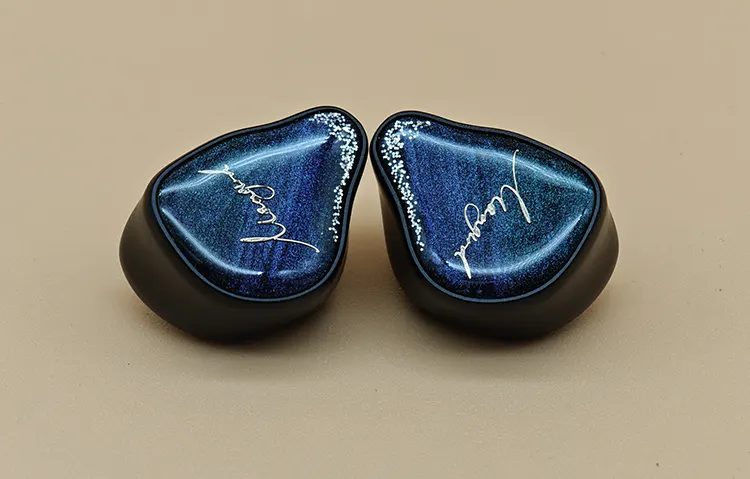
The Tea Pro faceplate uses a two-tone “Northern Lights” design that shifts between green and violet colors depending on the lighting. Tiny golden dots are scattered across the surface, and the “Mangird” name is printed in gold at the center.
In contrast to the vibrant faceplate, the shell is crafted from a simple opaque black resin. The “Tea Pro” name and left/right indicators are printed directly on the hump of the shell.
Performance
The XENNS Mangird Tea Pro wins in the bass, delivering basshead-level subbass and midbass compared to the DUNU DN242. While the bass quality and control are identical, the Tea Pro sounds more enjoyable due to its strength, while the DN242 is more controlled.
The mids are simply better on the DN242. Its leaner bass allows vocals to sound rich with great clarity, and they are more forward, which lets them be the focus of any track.
Timbre is more lifelike with the DN242, as the Tea Pro can make stringed instruments sound less lively and more monotonous. This vocal-forward brightness may not be a good match for some and makes the Tea Pro sound darker by comparison.
Treble is a clear win for the DN242, as its detail retrieval and airiness are a step up from the Tea Pro. It reveals nuances that the Tea Pro smoothens out, though neither of them is sibilant nor sharp.
Staging is quite similar, as they share the same soundstage experience and are not fully immersive. The DN242 has more accurate imaging, and while the Tea Pro is not cramped, the DN242’s presentation sounds freer and more open.
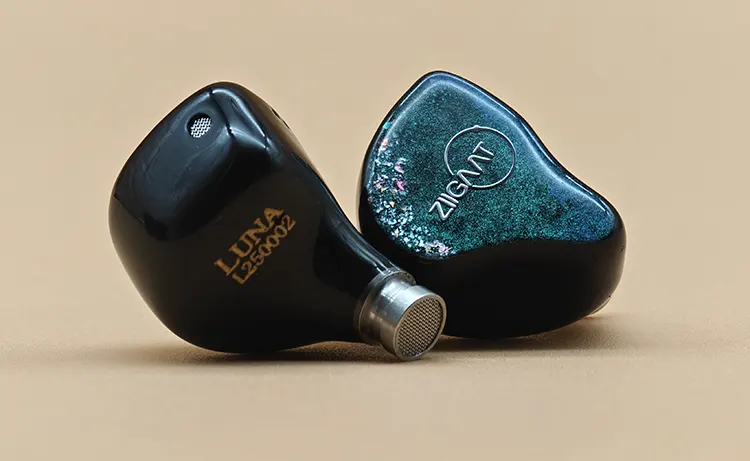
ZiiGaat Luna
Technical
The ZiiGaat Luna is the brand’s first all-balanced armature IEM, utilizing six drivers per side. The low end is managed by a pair of Sonion 39AY008 woofers, which are full-sized drivers designed for stronger physical output.
Two Knowles 32873 units handle the midrange, while two Knowles 33518 tweeters cover the highs. While crossover details were not disclosed, the arrangement suggests a standard three-way split.
Design
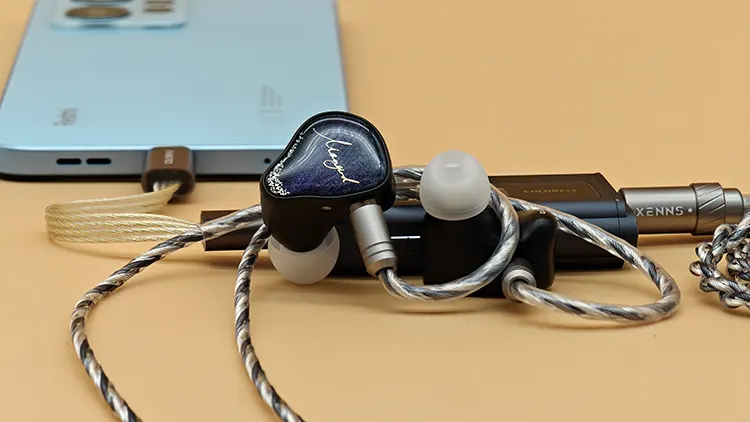
The faceplate of the Luna features a unique, hand-poured finish with swirls and flecks that resemble a field of flowers. The shell is a fully opaque black medical-grade resin that contrasts with the colorful faceplate.
Markings for the model’s name, serial number, and channel indicators are printed in gold on the inner shell. The build is completed by recessed 0.78mm 2-pin sockets and a short stainless-steel nozzle with a mesh filter.
Performance
Both the DUNU DN242 and ZiiGaat Luna share similar strengths in technical performance, offering a clean and capable presentation. They both deliver a highly resolving sound but achieve this through different tuning philosophies.
Bass quality is surprisingly identical, with subbass on both being convincing and controlled rather than overly strong. The Luna’s All-BA bass is notably speedy, but the DN242’s dynamic drivers deliver a much stronger midbass punch.
The midrange is defined by their different approaches, as the DN242 is bright, energetic, and vocal-forward. The Luna is smoother and more natural, but the DN242’s mids sound more lifelike and engaging.
Treble on the DN242 shows more energy, sparkle, and airiness. The Luna’s treble is exceptionally smooth and controlled, but the DN242’s excellent detail retrieval pulls ahead in performance.
Staging width is similar on both, but the DN242’s presentation feels more open and immersive. Imaging is also more accurate on the DN242, giving it a clear advantage.
My Verdict
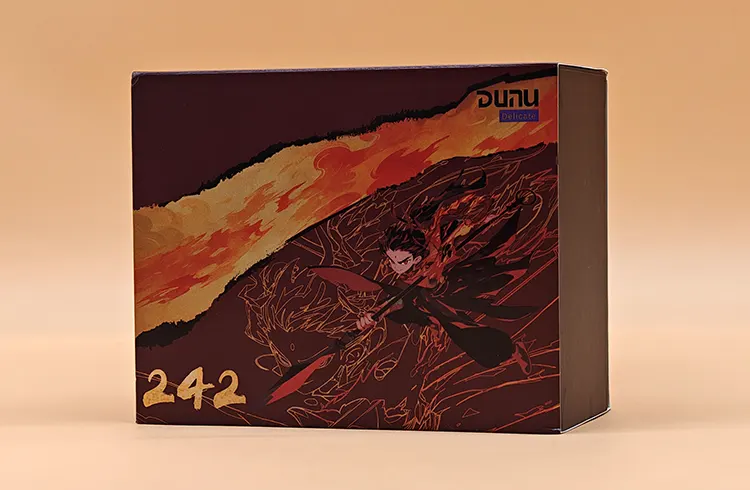
The new hybrid multi-driver DUNU DN242 IEM delivers a wonderfully vocal-forward sound with realistic timbre. It also excels in technical performance, offering competitive levels of detail retrieval and treble extension with plenty of air.
Although the bass isn’t the most potent, the DN242 still carries itself well as a complete and well-thought-out package.
It proves itself as an engaging and technically proficient IEM that’s bright, detailed, and properly balanced with very few faults.
DUNU DN242 Technical Specifications
- Driver Type: Two (2x) dynamic drivers (10mm + 8mm), four (4x) balanced armatures, and two (2x) micro planars
- Plug: 0.78mm 2-pin modular cable with 3.5mm and 4.4mm termination plus 6.5mm plug
- Frequency Response: 6hZ – 40kHz
- Impedance: 35Ω
- Sensitivity: 125 dB/Vrms @ 1kHz
