

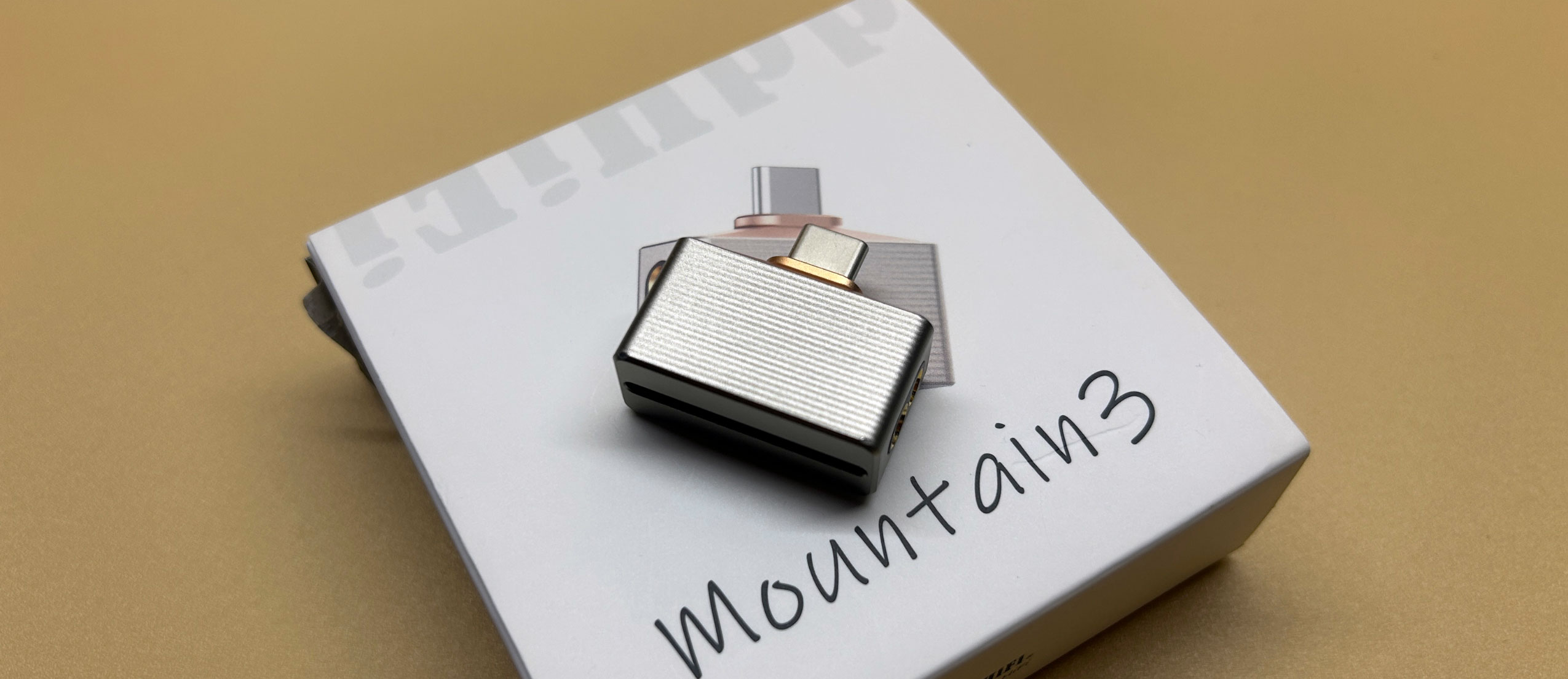
Meldrick reviews the ddHiFi TC44Pro M3, a 3rd-gen dual CS43198 dongle DAC supporting up to 120mW balanced output and DSD256 decoding. It is currently priced at $89.99.
Disclaimer: This sample was sent to me in exchange for my honest opinion. Headfonics is an independent website with no affiliate links. I thank ddHiFi for their support.
You can read about previous ddHiFi products we have previously reviewed on Headfonics here.
This article follows our latest scoring guidelines, which you can read here
While being more known for their high-quality cables and adapters, ddHiFi has also been steadily releasing a series of portable dongle DACs such as the TC35Pro M2 and TC44Pro E2.
With their excellent build quality and clean sound signature, ddHiFi dongles have long been part of my audiophile carry
Now, ddHiFi is releasing their latest dongle, the TC44Pro M3. Coming in the middle of their lineup at $89.99, this dongle combines a sturdy build quality with a balanced dual DAC configuration.
To see if the TC44Pro M3 has what it takes to go against the sea of sub-$100 dongles, read my full thoughts below.
Features
The ddHiFi TC44Pro M3 features dual CS43198 DACs with support for native DSD256 and PCM up to 32-bit/384kHz decoding.
With its compact size, it significantly widens the accessibility of high-quality, lossless audio playback on the go, making it easy to enjoy full-resolution music straight from a phone, tablet, or any USB-C device
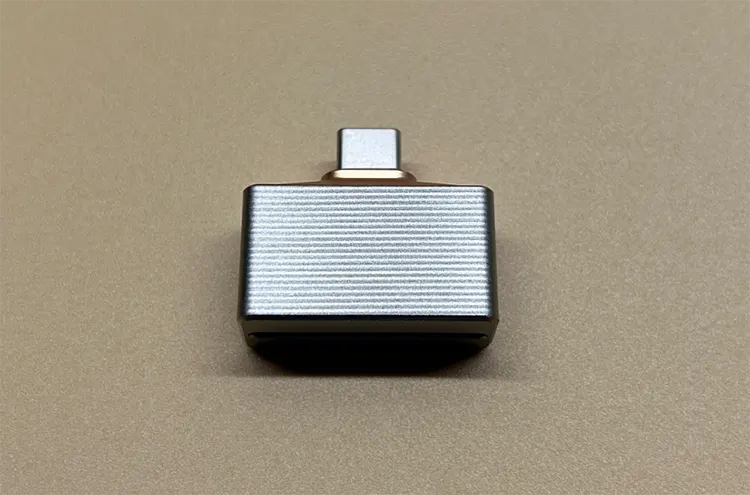
Unlike previous ddHiFi dongles, which limited output either balanced or single-ended exclusively, the M3 sports both 4.4mm balanced and 3.5mm single-ended outputs integrated into a single T-shaped aluminum body.
This makes it a more convenient all-in-one dongle for listeners with different cables for their multiple IEMs or headphones.
This DAC and output configuration results in an impressive power output on both SE and balanced ports.
With up to 120mW and 90mW on its balanced and SE output, respectively, the TC44Pro M3 makes it easy to power even harder-to-drive IEMs or more efficient headphones without needing to lug around large portable DAC/AMPs.
Design
In true ddHiFi fashion, the TC44Pro M3 carries forward its signature minimalist, all-design.
Its aluminum construction, precise machining, and refined surface finish make this one of the best-built dongles I’ve ever used. And that means a lot coming from someone who uses multiple ddHiFi dongles daily.
The TC44Pro M3’s micro-grooved “Surface” texture is more than just cosmetic. It genuinely helps improve grip and offers solid resistance to scratches and smudges.
Throughout testing, the unit showed minimal signs of wear. Fingerprints were practically invisible, and unlike polished or glossy dongles, micro-scratches never became a concern.
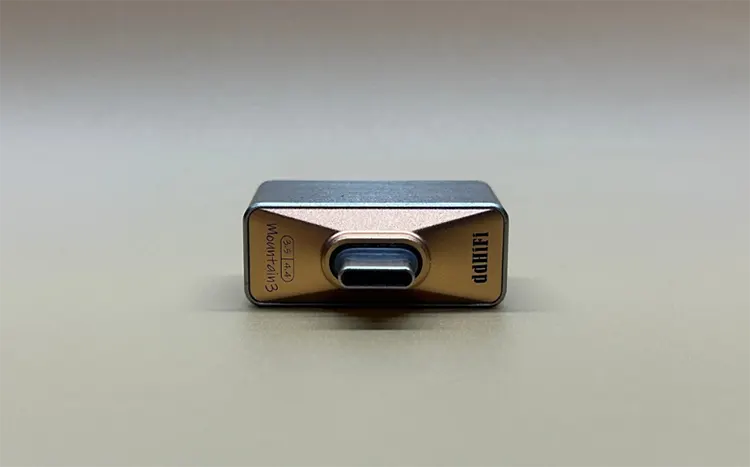
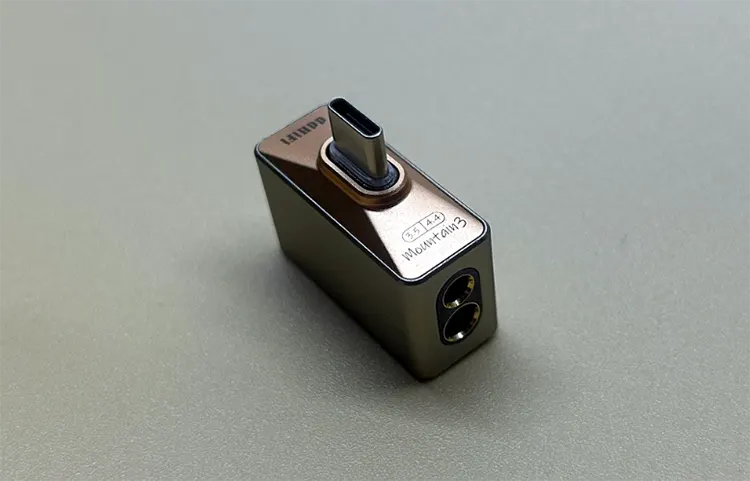
The T-style design is compact and cable-free, cramming in both 4.4mm balanced and 3.5mm single-ended outputs within a single USB-C stick.
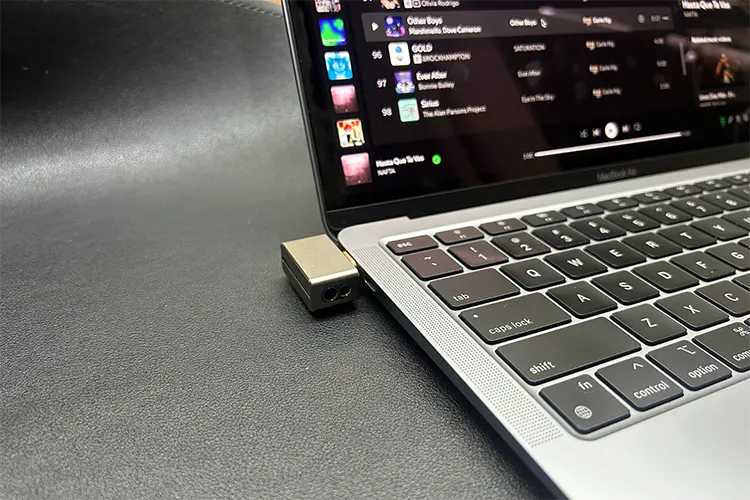
However, the M3’s width can be a double-edged sword. When plugged into a laptop, the wide T-shape can block adjacent USB-C ports.
This wasn’t an issue with mobile use, but on modern thin-and-light laptops where USB-C ports are sparse, having the M3 effectively occupy two ports felt surprisingly frustrating.
The build is rounded out with thoughtful details such as a bi-color LED that shines blue for PCM, and green for DSD content. The M3’s shell also has a lanyard hook that pairs well with the included stitched leather strap for easy transport and usage.
I/O
The ddHiFi TC44Pro M3 has a simple control scheme with no physical buttons, dials, or toggles. It offers straightforward plug-and-play functionality without the need for drivers or companion apps.
That simplicity also means there is no onboard volume or gain control. All volume adjustments must be made directly on the source device, whether that is a phone, tablet, or computer.
The single USB-C connector up top handles input, while output is provided through either 3.5mm single-ended or 4.4mm balanced jacks, covering a wide range of IEM and headphone pairings.
While the I/O options are modest, they are well-suited for listeners with compatible gear who want a quick and easy way to start listening right away
Packaging & Accessories
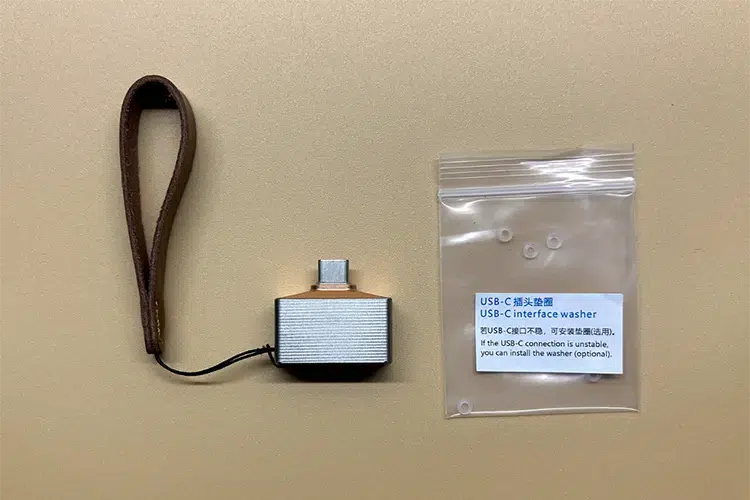
The TC44Pro M3 comes in a simple white box that includes the dongle, a leather lanyard, and USB-C interference washers
This is the bare essentials needed for usage out of the box; however, I would have appreciated the inclusion of a USB-C to Lightning or USB-C to USB-A adapter to widen its compatibility out of the box with older iPhones or computers
The included leather lanyard is a welcome touch that makes the dongle easier to carry or attach to a bag, while the bag’s USB-C interference washers are a thoughtful inclusion that ensures loose-fitting USB-C ports are still able to function with the TC44Pro M3
Sound Impressions
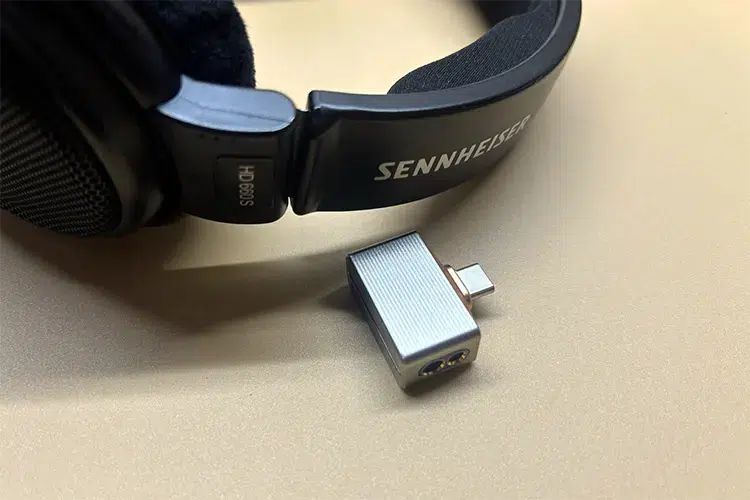
All testing and comparisons were done through 3 pairs of IEMS, namely the MOONDROP Blessing 3, Yanyin Canon II, and LETSHUOER’s S08, as well as two full-sized headphones: the Sennheiser HD 660s and HarmonicDyne Baroque.
Bass
The TC44Pro M3 has a neutral sound signature that sprinkles in a bit of warmth and richness, giving it an articulate sounding bass with strong texture and realistic feeling impact.
While not having the strongest impact or most bass quantity, kick drums and other instruments in the sub-bass region are presented with enough detail to make individual hits easily distinguishable from one another.
On acoustic tracks, kick drum hits never drown out the rest of the instrument, but they are played back with enough tactility to drive the rhythm of the mix confidently.
In bass-heavy genres like modern hip-hop, the TC44Pro M3 manages to articulate a fair amount of texture in the sub-bass.
However, it falls short in delivering the dynamics and bass quantity needed for a truly satisfying listening experience, especially when paired with neutral-sounding IEMs.
The M3 shines in the mid-bass as well, giving bass guitar riffs and deep synths an atmospheric quality that wraps around the listener.
This mid-bass emphasis gives R&B and disco tracks a lush-sounding signature, while also remaining clean enough as not to bleed into the mid-range.
Mids
The midrange of the TC44Pro M3 strikes a clean and natural tone, handling strings and keys with clarity and detail but without sounding artificially pushed forward.
In acoustic tracks, string instruments come through with very strong dynamics and texture, never sounding too clinical while also being competent enough to highlight the sound of the guitar in the specific recording environment.
Thanks to its mid-bass warmth, the lower mids carry a touch of added weight, giving male vocals a rich, full-bodied presentation that works especially well in ballads and jazz.
Female vocals are rendered with good clarity and emotional nuance, showing subtle tonal shifts, though they don’t carry quite the same body as their male counterparts.
This well-balanced midrange, with its slight emphasis in the lower mids, contributes to articulate instrument playback and sets the foundation for the M3’s clean treble delivery.
Treble
The ddHiFi TC44Pro M3 delivers a lively and articulate treble response that adds energy and sparkle without becoming fatiguing. Hi-hats, cymbals, and chimes come through with crisp definition, lending an airy openness to tracks and enhancing overall clarity.
On pop and electronic tracks, this treble character injects a sense of excitement, helping higher-pitched vocals shimmer with a smooth, pleasing tone.
Snare hits and other high-frequency percussive elements are rendered with a slight forwardness and fine detail.
Despite its lively character, the treble remains smooth and well-controlled, even when paired with neutral or brighter IEMs. There’s a good sense of sparkle and openness that contributes to the overall energy of the sound.
That said, in direct comparison, some of ddHiFi’s other dongles offer a slightly more refined top-end with greater micro detail and shimmer.
Staging & Dynamics
The ddHiFi TC44Pro M3 offers solid staging for a dongle of its size, with a commendable ability to place string instruments naturally within the soundscape.
Acoustic elements, in particular, come through with convincing texture and body, especially in more stripped-down or intimate recordings.
However, in denser pop or electronic tracks, the M3 can occasionally blur the layering of high-pitched synths that occupy similar frequencies, resulting in a slight loss of separation.
Dynamics are handled well overall. The sound never feels overly compressed, and each instrument has enough space to breathe and maintain its presence in the mix.
Click on page 2 below for my recommended pairings and selected comparisons.
