

Synergy
Power
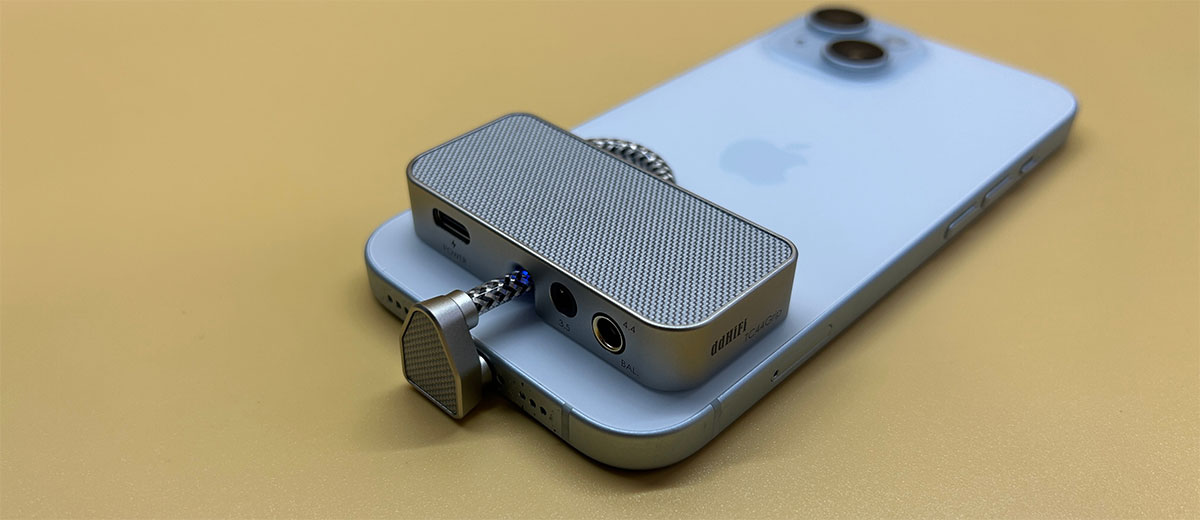
The ddHiFi TC44Grip delivers a respectable 330mW into 32Ω from its 4.4 mm balanced output and 80mW into 32Ω from its 3.5 mm single-ended jack.
Even on the SE side, the TC44Grip had no trouble powering the Yanyin Canon II, MOONDROP Blessing 3, and Kiwi Ears KE4 with ample headroom to spare.
On my laptop, the Blessing 3 reached comfortable listening levels at around 20% of the available volume. Switching over to the 4.4 mm balanced jack, the Grip managed to drive my HarmonicDyne BAROQUE headphones to a listenable volume at just under half of its maximum output.
Since the BAROQUE is an efficient pair of headphones, I observed only a very minimal decrease in staging and dynamic performance
Trying the TC44Grip with my Sennheiser HD 600 had different results; while staging and separation held up well, I did notice that the upper mids and highs became somewhat lean and lacking in note weight.
For portable use with IEMs, the TC44Grip provides more than enough clean power.
Pairings
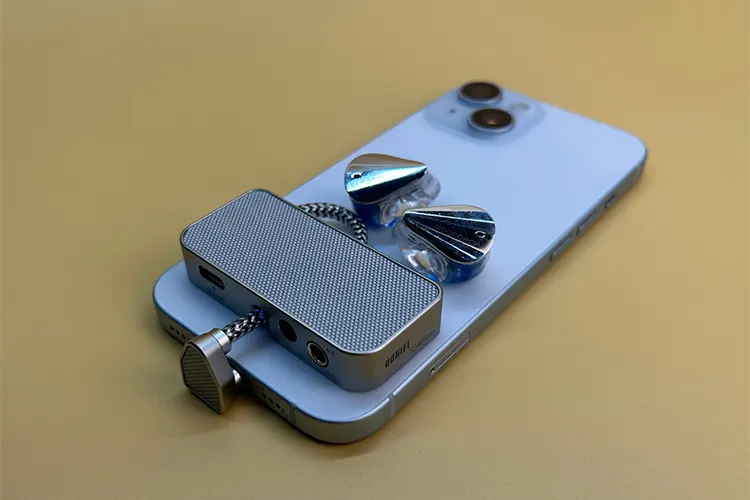
In practice, the TC44Grip pairs best with warmer-leaning IEMs and headphones, which balance its brighter signature. Among the IEMs I tested, the Kiwi Ears KE4 stood out.
Typically, I prefer the KE4 with neutral sources to lift its slightly subdued treble, but with the Grip, the leaner mid-bass added texture rather than thinning the sound, helping to bring out finer details.
I was also impressed with how the Grip handled the HarmonicDyne BAROQUE, a full-sized headphone with efficient drivers.
It drove them comfortably while maintaining a sense of dynamics, and the Baroque’s natural warmth meshed nicely with the Grip’s tuning for a portable-friendly listening experience.
Neutral headphones like the Blessing 3 IEMs and the Sennheiser HD 600 were still enjoyable, retaining solid extension and dynamic range.
For my personal taste, though, I prefer adding a bit more mid-bass with these models for longer listening sessions, as it often gives tracks a more relaxing presentation.
Select Comparisons
ddHiFi TC44Pro E3
Technical
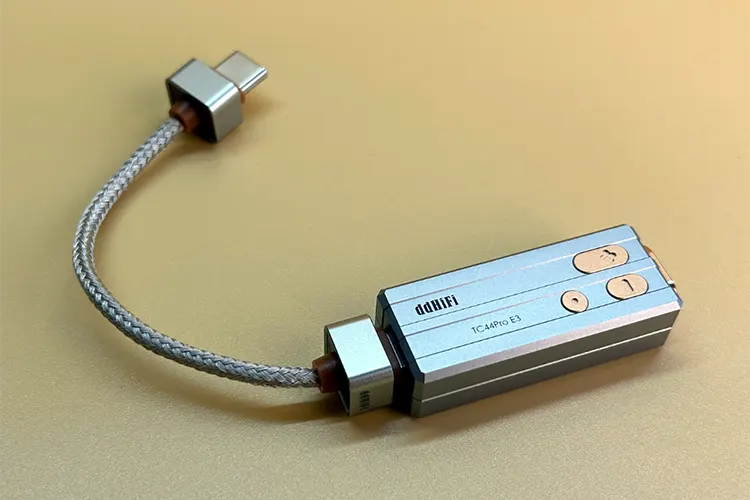
The ddHiFi TC44Pro E3 uses dual Cirrus Logic CS43198 DAC chips paired with dual SGM8262-2 amplifier chips, supporting PCM up to 32-bit/384 kHz and native DSD256.
It offers both 3.5 mm SE and 4.4 mm balanced outputs, delivering approximately 175 mW into 32 Ω via SE and 510 mW via balanced, with a gain switch and 60-step volume control.
The TC44Grip shares the same dual CS43198 DAC and SGM8262-2 amp configuration but supports PCM up to 32-bit/768 kHz and native DSD256. It also provides 3.5 mm SE and 4.4 mm balanced outputs, rated at 80mW and 330mW, respectively.
The Grip adds USB-C PD pass-through charging up to 60 W and a magnetic attachment system for secure phone mounting, making it more focused on portable smartphone use than the E3.
In practice, I found that the TC44Pro E3 was considerably more powerful than the Grip in both SE and BAL outputs, making it compatible with a wider range of headphones
Design
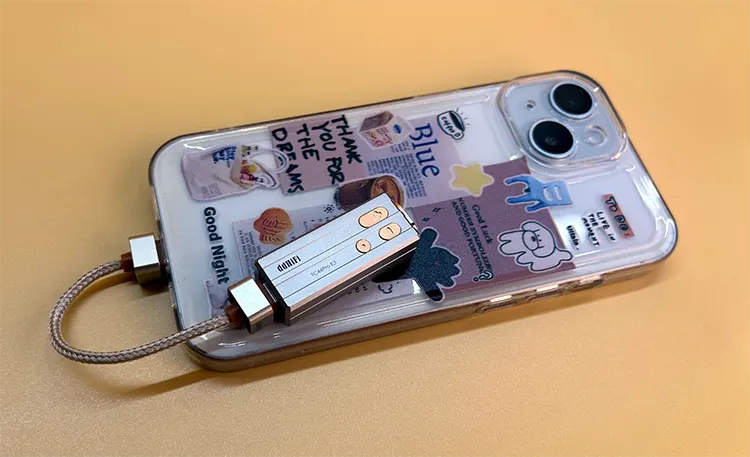
The TC44Grip and TC44Pro E3 both adhere to ddHiFi’s minimalist industrial aesthetic with precision-machined aluminum housings, but their approaches to form and usability differ.
The Grip uses a permanently attached high-quality USB-C cable routed through a recessed channel, whereas the E3 features a detachable TC03SS USB-C cable for more flexible connectivity.
The TC44Grip is slightly larger and bulkier than the E3, but its magnetic attachment system makes it feel more stable when connected to a smartphone.
This transforms the Grip into an almost integrated extension of the phone, while the E3 remains a more traditional, pocket-friendly dongle.
Both units feel solid in hand, though they highlight different design details. The Grip emphasizes functional elegance, with a subtly textured front panel, engraved logos, and a rear LED underglow, whereas the E3 features decorative machined lines and gold-accented outputs for visual flair.
Performance
When compared to the TC44Pro E3, the TC44Grip takes a leaner approach to its sound signature.
Midrange dynamics are less pronounced on the Grip, making string instruments feel lighter and less impactful, while the E3 delivers noticeably better note weight and a fuller, more textured presentation across the midrange.
Vocal clarity and emphasis, however, remain comparable between the two, with both dongles presenting detailed and forward-sounding vocals.
Bass performance is where the differences become more pronounced. The E3 delivers significantly more sub-bass impact and texture, giving basslines and kick drums greater presence and body, whereas the Grip’s sub-bass is leaner and more restrained.
Treble and upper-mid emphasis is elevated on the Grip, giving high-pitched synths more energy and air. This contributes to a brighter, more delicate overall tonality, which contrasts with the E3’s more balanced and fuller-bodied approach.
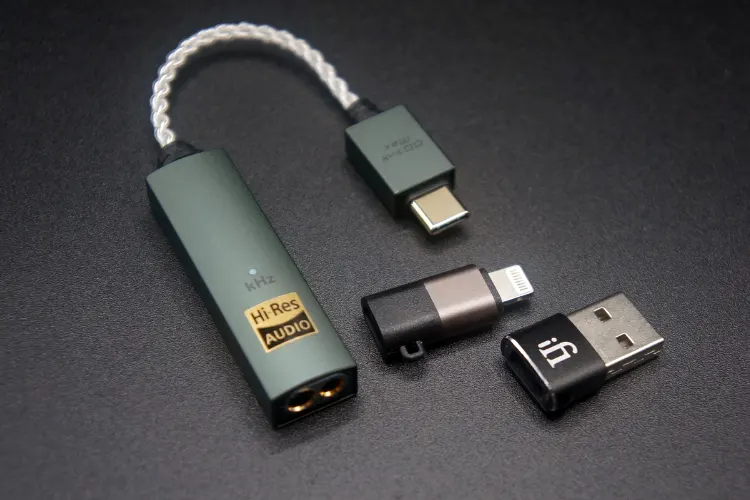
iFi audio GO Link Max
Technical
The ddHiFi TC44Grip and iFi audio GO Link Max both offer high-resolution audio playback but differ in design and power output.
The TC44Grip features dual Cirrus Logic CS43198 DAC chips paired with dual SGM8262-2 amplifier chips, supporting PCM decoding up to 32-bit/768 kHz and native DSD256.
It provides both 3.5 mm single-ended and 4.4 mm balanced outputs, delivering at least 80 mW and 330 mW into 32Ω, respectively.
Additionally, it supports USB-C PD charging up to 60W, allowing for simultaneous music playback and device charging.
The iFi GO Link Max utilizes dual ESS Sabre ES9219 DACs, supporting PCM up to 32-bit/384 kHz and DSD256. It offers a 4.4 mm balanced output delivering 241mW and a 3.5mm single-ended output delivering 100mW into 32Ω.
In practice, I also found the TC44Grip to be significantly more powerful than the iFi on BAl output, and quite similar on their SE outputs.
Design
The TC44Grip and iFi GO Link Max take very different approaches to portable DAC design. The Grip emphasizes functional solidity with an all-aluminum chassis, precision-machined raw anodized finish, and subtle engraved branding.
Its slightly larger body is balanced by a magnetic attachment system that secures the dongle to a smartphone, and the permanently attached USB-C cable is neatly routed through a recessed channel, giving it a clean, integrated appearance.
A subtle LED underglow indicates playback without being distracting, and the rear panel lists key specifications for quick reference.
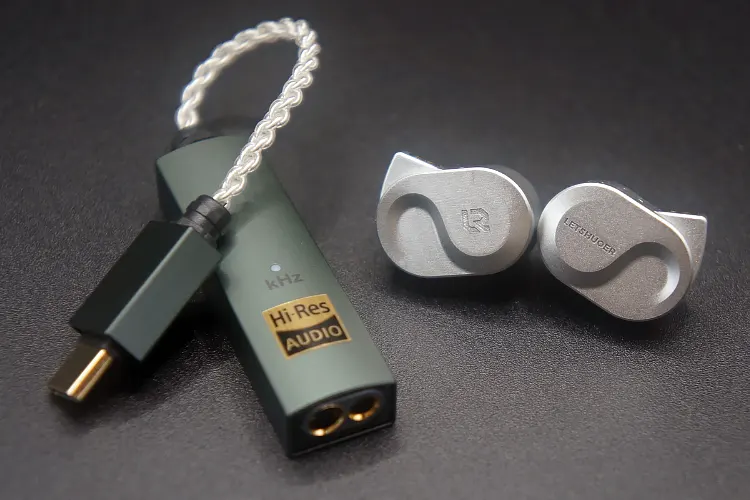
The GO Link Max prioritizes ultra-compact portability. It is longer but narrower than the Grip, making it easier to store in IEM cases.
Its lightweight alloy body features a dark green matte finish, and the two-piece design uses a flexible anti-tangle cable, keeping the form factor sleek and unobtrusive.
Performance
Compared to the iFi GO Link Max, the TC44Grip trades some low-end grunt for improved clarity.
The GO Link Max retains more sub-bass impact and texture, giving basslines a fuller, more visceral feel, and its midrange has stronger emphasis, making instruments feel weightier and more forward.
The TC44Grip, on the other hand, excels in upper-mid delicacy and micro detail. Higher-pitched vocals are rendered with more finesse, and electric midrange instruments, such as guitars and synths, reveal richer harmonics and greater resolution.
Overall, the Grip offers a more refined vocal presentation and enhanced micro detail, highlighting subtle textures that the GO Link Max can gloss over.
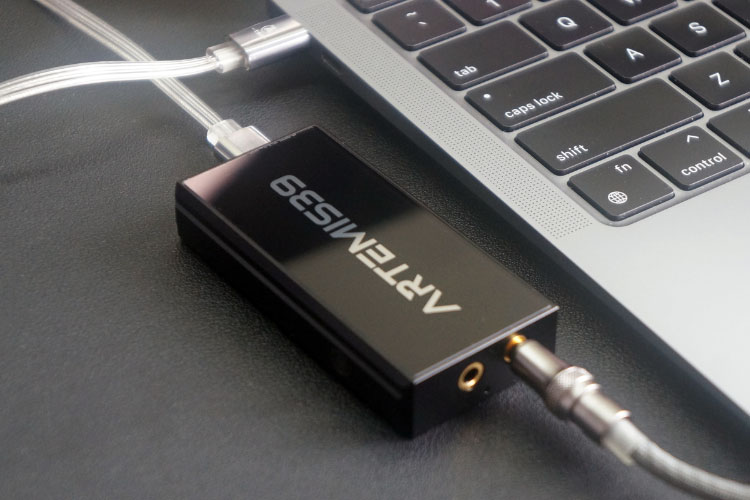
7Hz Artemis39
Technical
The TC44Grip features dual Cirrus Logic CS43198 DAC chips paired with dual SGM8262-2 amplifier chips, supporting PCM decoding up to 32-bit/768 kHz and native DSD256.
It provides both 3.5mm single-ended and 4.4 mm balanced outputs, delivering at least 80mW and 33mW into 32Ω, respectively. Additionally, it supports USB-C PD charging up to 60W, allowing for simultaneous music playback and device charging.
The 7Hz Artemis39 utilizes an ES9039Q2M DAC paired with an ESS9603Q amplifier, supporting PCM up to 32-bit/384 kHz and DSD256. It offers both 3.5 mm single-ended and 4.4 mm balanced outputs, delivering 320mW and 405mW into 32Ω.
The Artemis39 also features Bluetooth connectivity with support for LDAC, aptX-HD, aptX-LL, aptX, AAC, and SBC codecs, making it versatile for wireless audio playback. Additionally, it includes a built-in microphone for calls and boasts a 1100mAh battery.
Design
The TC44Grip and 7Hz Artemis39 take very different approaches to portable DAC design. The Grip continues ddHiFi’s industrial aesthetic with an all-aluminum, precision-machined chassis finished in raw anodization.
Functional design elements dominate, including a permanently attached USB-C cable routed through a recessed channel, and a magnetic attachment system that secures the dongle to a smartphone.
While slightly larger than some of ddHiFi’s more pocketable dongles, the Grip feels stable and integrated with a phone, making it highly practical for portable use.
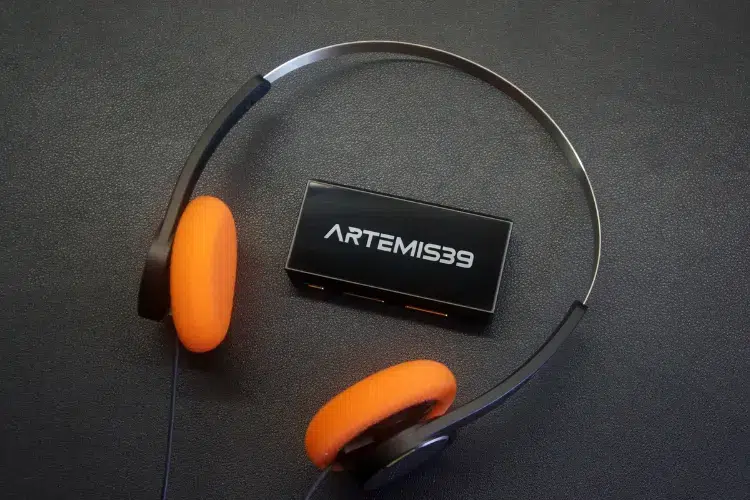
The Artemis39, by contrast, leans into sleek modern styling. Its anodized frame is sandwiched between glass panels, giving it a premium look and feel, but the glass attracts fingerprints and scratches quickly.
Its larger footprint makes it less pocket-friendly, and while visually striking, it prioritizes aesthetics over the functional ergonomics emphasized by the Grip.
Control schemes also differ: the Grip keeps things minimal with no onboard volume or gain buttons, whereas the Artemis39 incorporates small tactile controls for both wireless and wired use.
Performance
Compared to the 7Hz Artemis39, the TC44Grip favors clarity note weight. Its midrange is detailed, giving electric guitars, string instruments, and higher-pitched vocals more energy, micro detail, and upper-mid emphasis.
Instrument separation and soundstage are slightly more precise, making complex arrangements easier to follow.
The Grip’s bass and lower mids, however, are leaner. Sub-bass hits and percussive instruments lack texture and note weight, often feeling one-dimensional compared to Artemis39’s fuller, more visceral presentation.
This gives the Grip a lighter, airier overall tonality, but at the cost of some low-end impact. Treble and upper-mids are slightly bright, with cymbals and hi-hats rendered cleanly and with good definition.
Overall, the TC44Grip delivers a delicate, articulate, and airy presentation with excellent midrange clarity, while the Artemis39 provides more body and weight, particularly in bass-heavy or percussive tracks.
My Verdict
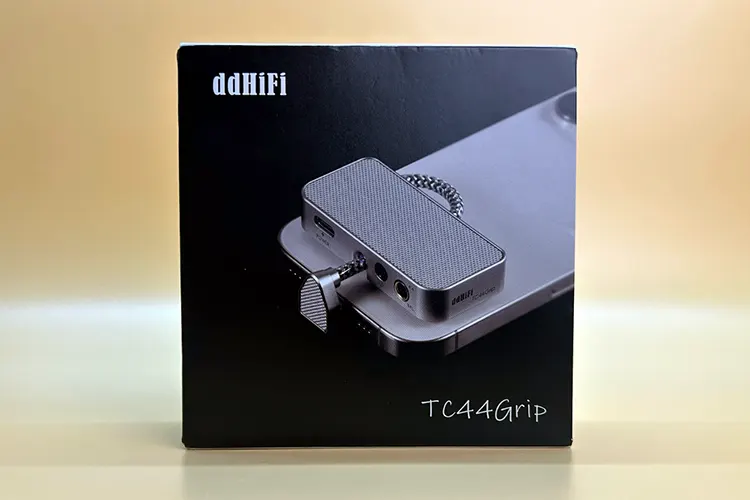
The ddHiFi TC44Grip is a thoughtfully designed dongle DAC that leans into practicality with its magnetic phone attachment system, precision-machined aluminum chassis, and recessed cable channel.
Sound-wise, the Grip emphasizes upper-mid clarity and treble detail, delivering airy, articulate vocals, finely resolved string instruments, and energetic electric guitars.
It is by no means a bass-heavy dongle; sub-bass and lower mids are leaner, with reduced note weight and impact. But this restraint helps keep the midrange and upper mids clean and airy.
For smartphone listeners who prioritize a bright, clear, and portable-friendly form-factor, the TC44Grip is an impressive and practical choice that stands out in ddHiFi’s lineup.
ddHiFi TC44Grip Technical Specifications
- DAC Chips: Dual CS 43198 DACs
- Amp Chips: Dual SGM8262-2
- Output(s): 3.5mm Single-Ended and 4.4mm Balanced
- Output Power: 80mW @32 Ohms (SE) and 330mW@32 Ohms (BAL)
