

Selected Comparisons
ddHiFi Nyx Net
Technical
The Nyx Net from ddHiFi is a 25.4AWG high-purity single-crystal copper cable. Structurally, it features a 1:8 ratio, with seven larger-diameter single-crystal copper conductors arranged in a circular array.
The Nyx Net incorporates two insulation layers along with a shielding layer. The first inner layer is made of High-Density Polyethylene (HDPE) foam, and the second layer consists of a high-transparency SoftFlex PVC material.
As with the Eryx, the Nyx Net includes an interchangeable pin system with a wide variety of 0.78mm pins, ensuring compatibility with various IEMs.
Design
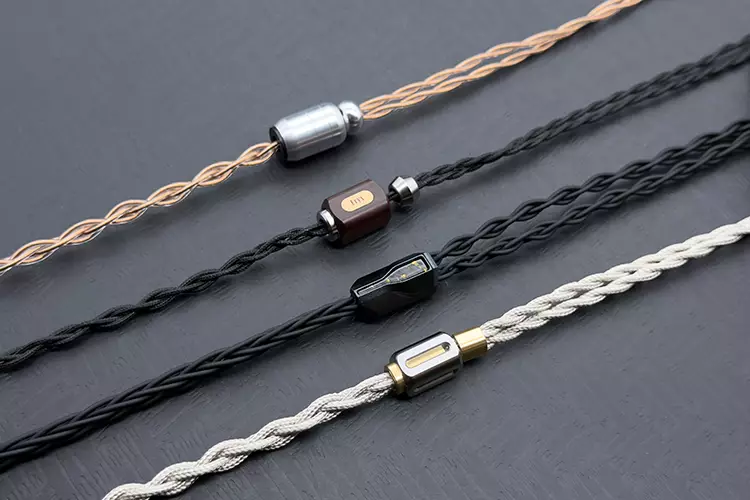
The Nyx Net cable has a very sophisticated design and color scheme. The cable is configured in a 4-wire setup. The outer sleeve is made of fiber mesh, and the braiding is nicely done without any visible gaps. The fiber mesh braiding gives it an elegant look.
The Nyx Net cable has a slightly firmer and thicker build and, for me, carries a more premium vibe. The Eryx cable’s hardware pieces surely stand out more, but its overall thinness and very supple build do not give the cable a nice, distinct character.
Both cables come stocked with a similar set of accessories.
Performance
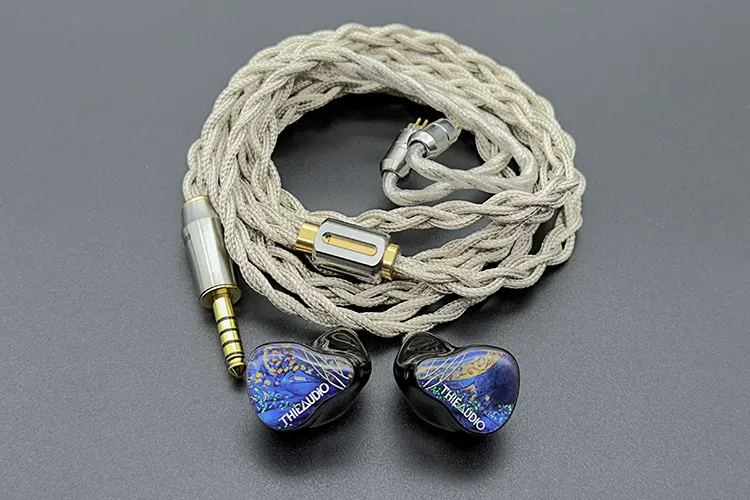
For this comparison, I tried both cables on the AFUL DAWN-X and the Monarch MKIV for a good amount of time.
Both cables bring along a different flavor. In the low end, the Eryx brings a more noticeable change. The details and texture feel superior with the Eryx. The Nyx Net does not offer a similar foundation.
The Monarch MKIV, which already has a good mid-bass presence, feels a bit tighter and more textured. It can take off extra warmth if the bass floor is heavy or thick; it sorts the low end out that way. The Nyx Net does not pair as well with an IEM that has a bass-heavy profile.
In the midrange, Eryx adds a darker background, which helps you appreciate the details more. It adds a more natural feel to the midrange. The Nyx Net keeps the midrange mostly intact; thus, a neutral to dry midrange benefits more from the Eryx.
Treble is where both cables have a very different identity. The Nyx Net will add more energy and crunch in this region. The extra crunchiness in the lower treble region adds excitement and carries through to the upper treble region.
The Eryx mellows down the top-end region for you. No, it does not kill any details or air; rather, it smooths things out and tames the peakiness. You can see the two cables favoring two distinctly opposite sound profiles.
The stage presentation feels more natural and better arranged on the Eryx. In fact, while both cables achieve this, the Eryx does it by adding a blacker, cleaner background and more control in the low end, whereas the Nyx Net enhances the treble performance and adds a greater sense of openness and clarity.
PLUSSOUND Copper Fusion Hybrid
Technical
The Copper Fusion Hybrid brings together two different alloy mixes: copper with silver and copper with gold.
PLUSSOUND has used a 25AWG wire here, built with three separate layers and multiple strand sizes packed tightly together. In this tri-layer design, the outer layer uses both copper-silver and copper-gold alloys.
The middle layer is made entirely from copper and silver. Then, the center layer uses copper and gold again, but this time with the largest diameter strands in the whole structure.
Each strand is enamel-coated, which helps reduce electrical irregularities and keeps oxidation in check over time. Overall, the cable feels a bit more technical on paper.
There is one thing missing, though, which is the modularity that the Eryx adds with its interchangeable pin system.
PLUSSOUND’s own PS insulation keeps the cable soft and easy to handle. My personal preference leans towards this build rather than what the Eryx offers.

Design
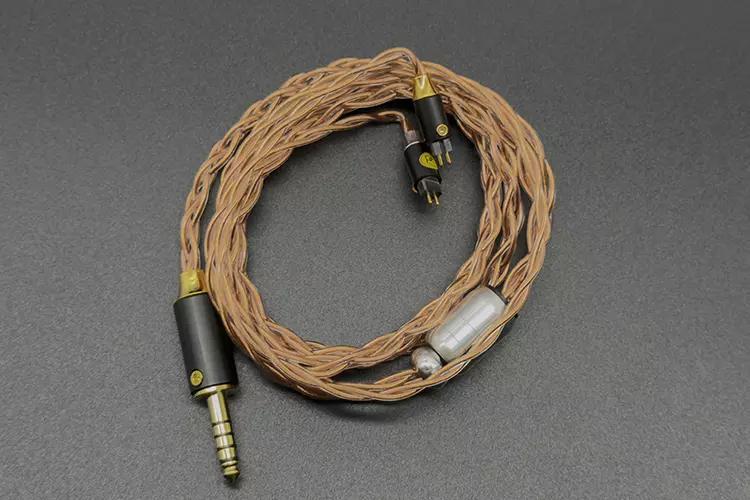
Design and looks are where the Copper Fusion Hybrid immediately differentiates itself from other cables in its price range. The cable’s adapter, 2-pin connectors, and Y-split all carry that same robust PLUSSOUND identity found on their higher-priced cables.
The outer sleeve is transparent and carries a slight shine, so the conductors peeking through add a bit of visual charm. The splitter’s rose gold surface gives it a refined appearance. Both these cables, with their thin and supple build, are extremely easy to handle.
There is no denying that the Eryx’s hardware elements feel very elegant, but the cable overall does not appeal as much with its looks as the PLUSSOUND cable.
The addition of a carry case to the ddHiFi package is a bonus.

Performance
For this comparison, I tried both cables on the AFUL DAWN-X for a good amount of time. The Eryx offers a fuller performance, adding a nice touch of warmth to the mix along with a more substantial low-end floor.
The Copper Fusion Hybrid keeps the mix more transparent and does not let any warmth seep in.
For warmer IEMs, this proves to be a good thing when you want a more detail-oriented signature. I also find that the Eryx improves the overall quality of the low end by enhancing the layering and textures.
The Eryx has a more engaging midrange. It adds some weight to the notes, along with a tiny dose of warmth, thus pushing the musical side a bit more.
It brings some refinements in how the background gains a shade more cleanliness, and this darker background gives the details more room. It also adds a sense of depth and a better arrangement of instruments on the stage.
If you want a layer of bite and crispness in the treble region, the Copper Fusion Hybrid will serve you better. The Eryx, at most, sorts out some of the excess energy and makes the treble a bit smoother.
With Eryx, you do not compromise on the details. It also adds more air and sparkle in the top end, but this is all done very subtly.
Thus, the Eryx adds a sense of openness, while the Copper Fusion Hybrid offers more shimmer and energy in the treble notes.
For an IEM that already has a treble-focused tuning, the Eryx is the better choice. It adds a welcoming sense of calmness.
Effect Audio DIONYSUS
Technical
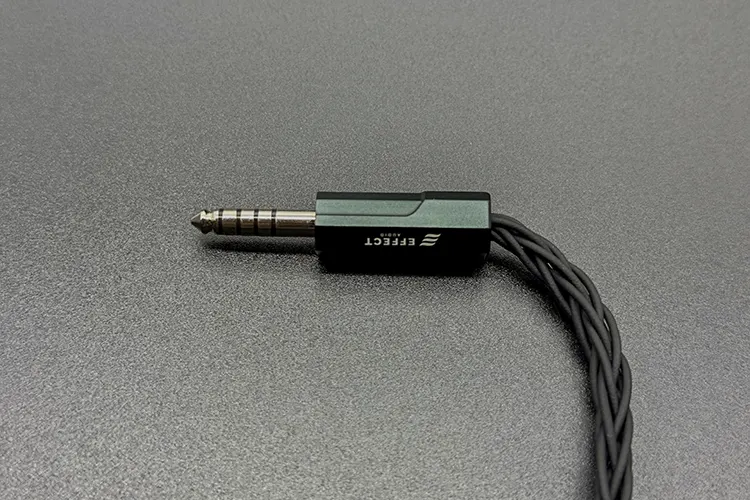
The DIONYSUS cable sits at the top of the Signature Series lineup, which Effect Audio refreshed last year. The cable combines gold-plated silver alongside pure silver and copper, totaling six multi-sized bundles.
The cable uses a central core made of a silver and copper alloy surrounded by these six multi-sized bundles. It also uses EA Ultra Flexi™ Insulation for flexibility and protection. The termination is the EA standard rhodium-plated brass straight plug.
You also get the proprietary Effect Audio ConX system with the DIONYSUS, which enables easy swapping of connectors and compatibility with 2-pin, MMCX, and Pentaconn Ear.
However, the pins are not included in the package. Here, the Eryx gets an edge, as it includes these extra pins to be used immediately.

Design
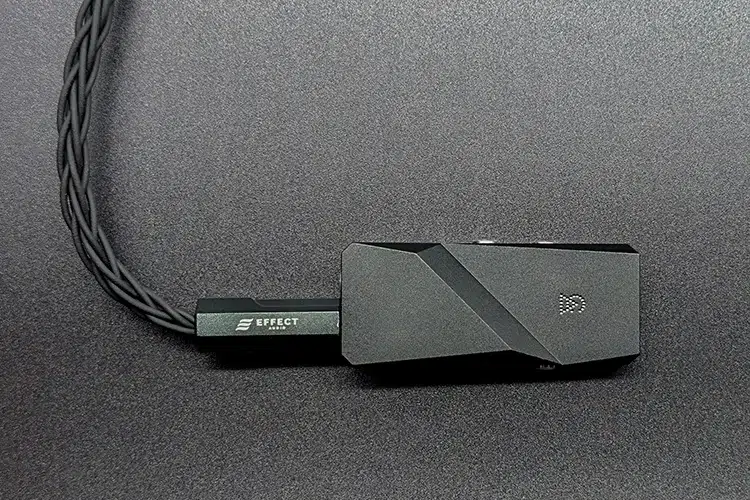
The DIONYSUS carries an all-black sleeve with a matte finish. It is not transparent, but this outer jacket feels silky smooth and non-sticky, and under low light, it gives off a low-key glow. Compared to the Eryx, it carries a more premium vibe.
The Y-split on the DIONYSUS is machined from forged carbon with random dark facets and a subtle gold flake spread. The hardware feels more robust here. The Eryx’s hardware is built to be more sophisticated but lacks the firmness that the DIONYSUS has.
The DIONYSUS has some thickness due to the 8-wire build, yet the weight is surprisingly low. In terms of handling, the Eryx has an edge.
Performance
For the comparison of the two cables, I paired them with the THIEAUDIO Monarch MKIV.
I have held the DIONYSUS cable in quite high regard because of its performance. I admire the way it opens up the bass, and its midrange is something special. However, to my surprise, the Eryx cable is just as competent and proves its capabilities quite well.
The biggest surprise I found was in how it handles the low end. On the Monarch MKIV, it offers a better foundation and a slightly more grounded feel.
The textures and detailing feel on par with, or perhaps even better than, what the DIONYSUS offers. So, for the bass response, the Eryx gets higher marks.
The DIONYSUS has a fuller and lusher presentation. The Eryx tones that down, so even on bass-heavy tracks, it is more about textures and details in the low end rather than a mid-bass cloud.
In the midrange, the Eryx offers a cleaner approach. Notes feel better separated, and it has a slightly more musical feel.
The cleaner and darker background is one of the reasons the music feels more sorted on this cable, and that is really its party trick. The DIONYSUS lends more warmth but does not offer as clean a separation in the midrange.
In the treble, both cables aim for a smooth delivery, so neither of them really adds a lot of air and sparkle in the top end. On the Monarch MKIV, the DIONYSUS feels a touch smoother, so I prefer the Eryx’s pairing here. The stage also feels tidier on the Eryx.
Overall, due to its more engaging pairing with the Monarch MKIV, I feel the Eryx stands out for its better synergy.
My Verdict
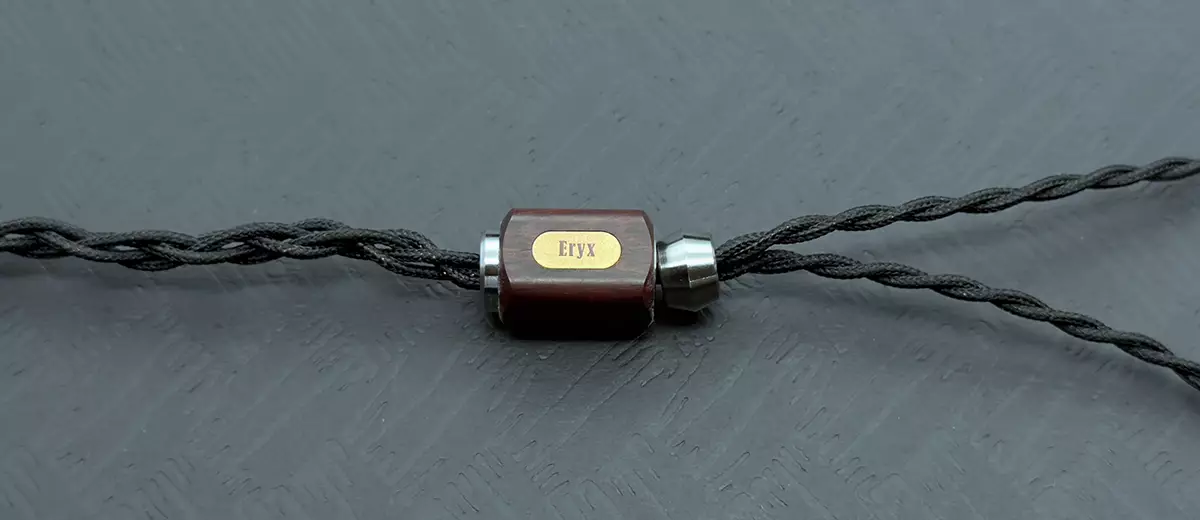
To be honest, I was torn when I started checking out the ddHiFi Eryx. It has the craftsmanship you expect from ddHiFi. The red sandalwood and titanium alloy elements on the cable felt premium right off the bat, but the thin, flimsy look of the cable did leave me in doubt.
Once I put it to use, I could feel the differences it brought along. The laid-back and musical approach that ddHiFi mentions rightly shines through.
Among the bunch of cables in its price range, it did offer a character of its own. It holds its ground. The dark background and a very refined musical sound that it offers feel quite impressive.
While I enjoyed the experience, there is certainly room for improvement. The one thing that still bothers me is the thin build of this cable.
A good thing is that handling is a breeze, but the cable does not feel like it has much of a personality. Compared to some of its peers, it does not inspire that much confidence.
I would have preferred a slightly firmer and more rugged build. I like the build of their earlier release, the Nyx Net, more. But in terms of performance, the Eryx gets higher marks. The inclusion of a few extras does make the Eryx a more competitive cable in its price range.
I would really love to see ddHiFi build upon this same philosophy and release a more convincing cable – that would be really something.
Overall, I would suggest putting the cable on the list of cables one should evaluate before pulling the trigger. Who knows, you might end up liking it.
ddHiFi Eryx Technical Specifications
- Conductors: 25 AWG, 4 Wires
- Material: Hybrid-stranded comprising German OFC, OCC, Gold-Plated OCC & high-purity silver
- Sleeve: American PVC with black braided mesh double insulation
- Plug: 4mm Rhodium-Plated Copper Plug / 4.4mm Gold-Plated OFC Plug
- Connector: Nyx-Pin interchangeable connectors (0.78 mm 2-pin x 2, MMCX x 1)
- Weight: 28g
