

Synergy
Efficiency
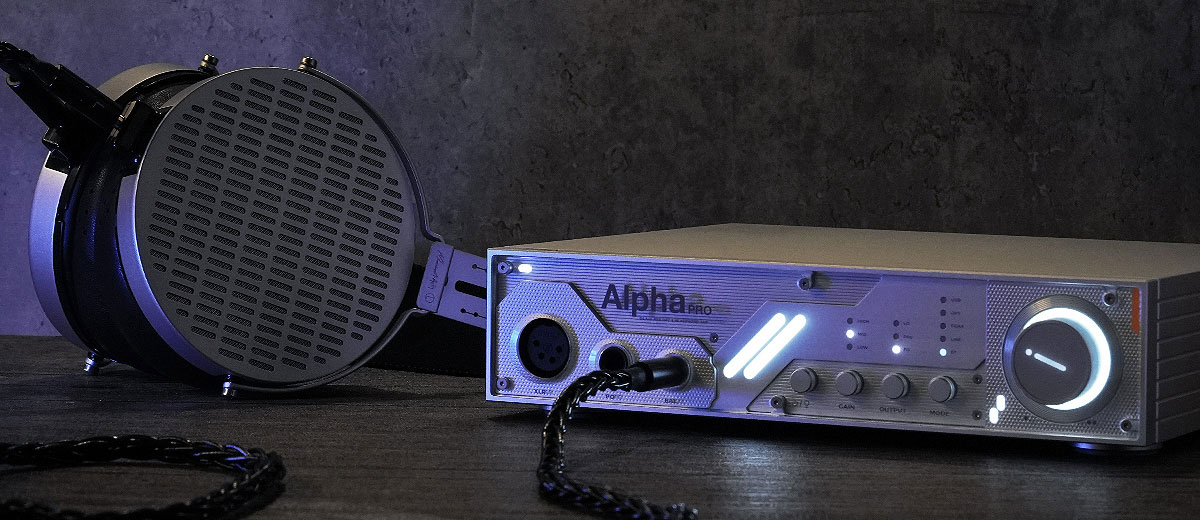
The Alpha PRO is very quiet at all gain levels, even when paired with sensitive IEMs and custom IEMs. The ultra-low output impedance does give it good edges in pairing with sensitive devices, and not just noise control, but the actual dynamics are well retained even at low volume.
Power
The Alpha PRO has 6000mW per channel in its output, which is more than sufficient for most headphones.
In low gain, it sounds slightly softer yet very precise and highly resolving, probably due to more effective negative feedback. And at higher gain levels, it gets sharper, firmer on both ends, while still delivering satisfactory dynamics and layering.
Mid gain is sufficient in most cases for me. It provides a good balance between power and the attack speed of the bass, as well as the perceived sharpness of the vocals.
The steady character and technicalities are commendable. The Alpha PRO sounds very dynamic even at low gain and volume, with sufficient power reserves that can handle intense, forceful orchestra works, while also sounding engaging and layered with a solo performance.
Overall, I find the Alpha PRO versatile in design as it fits a wide range of gears while being able to deliver ample power when in need.
Pairings
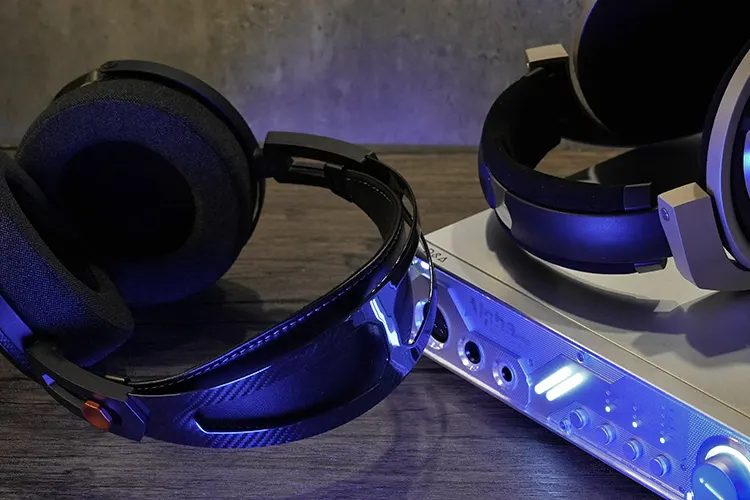
MOONDROP COSMO
On mid gain, which I prefer for better linearity and balance, there is a lot of air in the bass alongside the dark vocal presentation. On the highest gain, the treble gets more protruded, and on low gain, sounds sweeter, rolling off earlier.
I am surprised that the Alpha PRO does quite a good job in keeping everything airy and defined at the same time, and the mids are not skewed, maintaining a good balance throughout the spectrum.
The nasal tones are still strong, but the Alpha PRO has sufficient power to open up the upper register with swift extension and a gentle roll-off that suppresses sibilance.
The resulting output works well for nostalgic ACG music and Asian pop, especially those in the 80s-90s that have a lot of synth elements and thickened vocal lines, which sound sweetened, dense, and elaborated in the overtones, while being very clearly defined.
The Alpha PRO displays its control, balance, and power with the COSMO, and it also shows good synergy with other planars, delivering strong dynamics and linearity in response with the MOONDROP Venus and the FiiO FT5.
Both headphones sound vivid in the treble, with sufficient openness and brilliance but free from sibilance, overall maintaining a natural profile with great dynamics and defined transients, especially in the treble with percussion instruments.
FiiO FT7
With the FiiO FT7, the Alpha PRO sounds dynamic even at lower volumes. The typically spiky area in the upper vocal range is well-rounded, and without hampering openness, while hi-hats and cymbals are very clearly defined.
Vocals on this setup are generally naturally sounding, though there is a bit of coloration to make it more engaging.
The FT7 is quite responsive to different gain levels, and I feel like mid gain is sufficient and high gain gets the vocal more up front and exciting, though it may compromise the dynamics slightly.
Sennheiser HD800
With dynamic-based headphones like the Sennheiser HD800s, it delivers an even airier punch in the bass. The mids are particularly smooth and dense, perhaps a small boost would make it more engaging for Pops, and now it works great with Jazz and instrumentals.
I feel like the Alpha PRO works well with dynamic headphones as well, sounding dynamic and punchy, with a small boost in EQ on the two ends may make it even more contrasty and sharper in the transients, giving more brilliance to the treble.
Cleaner-tuned headphones like the Meze 105 AER can sound more expansive with some ambience leaking through, and there is sufficient fullness and bass presence from the Alpha PRO for this pairing that sounds pretty engaging and expansive with various music.
Select Comparisons
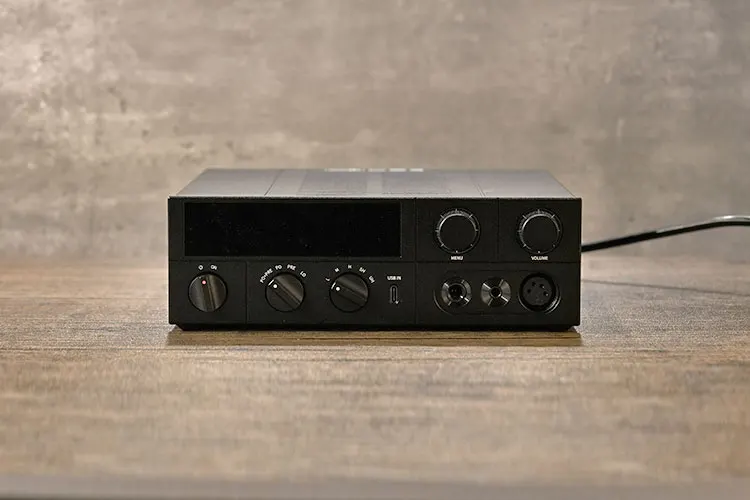
FiiO K17
Technical
The K17 is FiiO’s latest sub-flagship model with 4000mW output per channel. The device has a fully balanced amplifier with some minimal local playback/streamer functionalities and supports streaming.
The device employs AK4191 and AK4499EX*2 for decoding, supporting up to DSD512 and 32bit/768kHz for USB decoding. It also features a discreet amping design with the M21586Q DSP chipset for user configurable PMEQ.
At ultra-high-gain mode, the K17 delivers 4000mW into every channel @32ohm load. The output impedance is 1.5ohm with ≥124dB (A-weighted) SNR and<0.00049% (1kHz/-13dB@32Ω) THD performance.
As for the Alpha PRO, the output impedance is much lower at 0.1ohm, while its output power is 50% higher at 6000mW, its THD+N is as competent at ≥124dB.
Design
The K17 has a lovely retro-grade case design and is the more multi-functional one here, which is why it has a screen, and some options can also be controlled via the phone app.
Meanwhile, the Alpha PRO is probably one of the few in the market that looks cool, if not even cooler. Being a dedicated DAC Amp, there are no streaming or other features, but the Bluetooth connection is handy.
Looking at just the build and light signals, I would say the Alpha PRO is marginally more well-built as it uses a thicker, extruded metal casing versus the K17’s folded metal case. The LED light effect with switchable modes is also cooler and more cyber-looking.
The K17 is a more integrated device with decoding and amplification functions, but since the Alpha PRO is a traditional device dedicated to pre-amplification, digital decoding, and Bluetooth receiving, I will focus on comparing limited to these aspects.
Performance
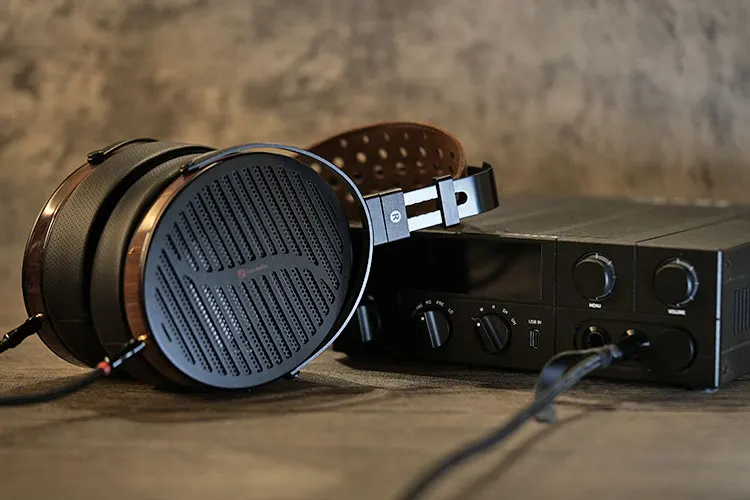
Testing with the HD800s, the K17 delivers good warmth and fullness in the vocal frequencies, along with an elaborated bass decay that tilts the signature toward the lower end, which works nicely for Pops.
There is good vocal forwardness, bringing out more raw brilliance in its stock tuning and more bite for weaker voices, though it sounds drier in the midrange before equalization and not as polished across all gain levels.
Despite this, the bass on K17 exhibits a good sense of density and tightness, likely due to the decoding section.
The Alpha PRO, while more powerful, provides a tighter, more solid bass image with better layering and a cleaner response, especially in the mid-lows.
The vocals on the Alpha PRO are articulated more swiftly and have a clearer 3D image, with a more polished sibilance zone and spatially more separated, which may not be as immersive as K17’s bass, but has more definitive power for classical music and speedily attacking big bass kicks.
With planar headphones, which often lack dynamics when not properly driven, the tonal signatures of the two devices become more apparent. Testing with the VENUS and COSMO, the Alpha PRO provides better dynamics.
While it doesn’t push the vocals as upfront, the stereo image is rendered more solid and detached from the backing. The Alpha PRO also excels in micro-details and layering, while the K17 sounds more relaxed, smoother, and vivid.
The Alpha PRO is technically more proficient, with a more natural power distribution across the spectrum and more delicate in defining midrange frequencies, also more swiftly extended. I
In contrast, the K17 delivers a more energetic, thicker punch with stronger alterations and colorings, which helps give quite some planars a boost in the low end for dynamics.
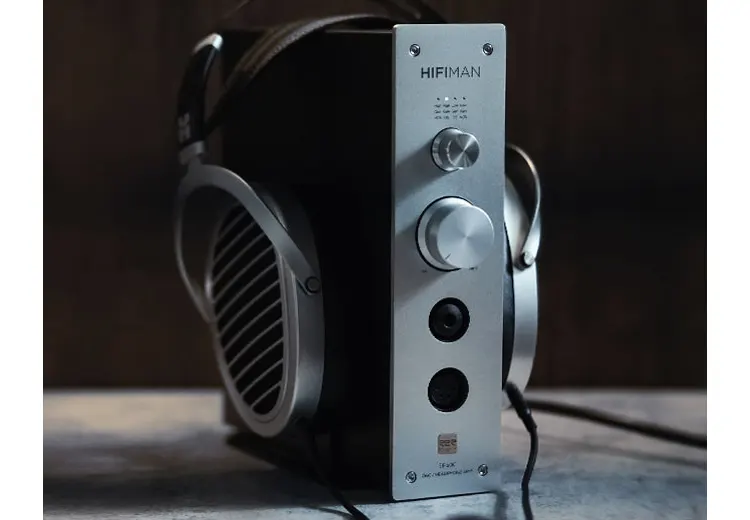
Hifiman EF500
Technical
The EF500 is a Decoder and Amplifier with a streaming receiver module. Unlike most in the competition, Hifiman develops its own R2R module and HYMALAYA LE R-2R-based DAC with a lower decoding rate of PCM 24-bit/768kHz and DSD64.
With its discreet amplification circuit, the EF500 can output as much as 4.5 watts max on a 32Ω load and achieves a decent 131 dB for channel separation and 117 dB for S/N, which should be considered adequate, especially when this is a R2R design
Design
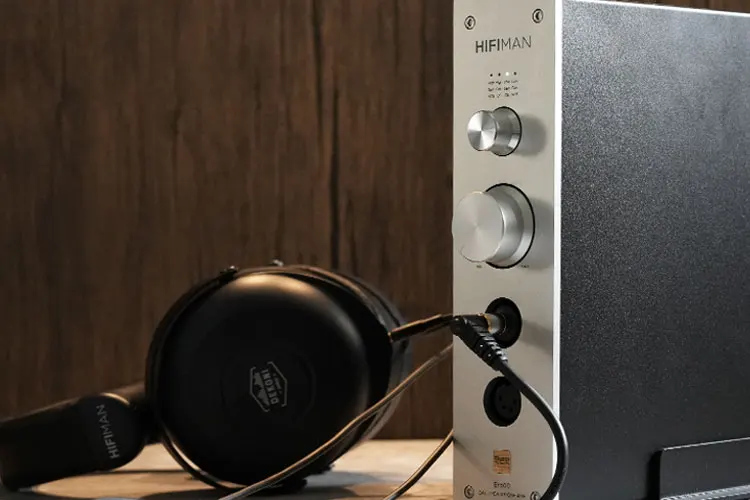
The EF500 probably has a very heavy transformer inside, so it weighs even more than the Alpha PRO. With limited desktop space, the EF500 doubles as a headphone stand with its straight-up orientation.
Their design approach is different; the EF500 is built like a tank and keeps everything minimalistic, while the Alpha PRO takes a more futuristic approach.
The Alpha PRO has a Bluetooth receiving function, whereas the EF500 doubles as a streamer, but I am not comparing these functionalities and focusing only on the decoding capabilities.
Performance
The EF500 has some organic sweetness and texture from its R2R implementation, and the difference with the Alpha PRO’s presentation is quite distinct.
Testing with the HD800s, the Alpha PRO delivers a cleaner, more extended low end and is smoothly articulated in the mids. The treble sounds swifter and more polished compared to the EF500 on NOS mode, which is tuned more W-shaped and offers the vocal with much more energy and penetration power.
The EF500 keeps it softer, more rounded, and organic, and it sounds more thickened and fuller bodied throughout the bass to the mid-bass.
The character is quite different here, and one of the bigger differences is that when switched to a higher gain level, the EF500 will more clearly push the upper frequencies forward.
I think it works better with dynamic headphones than planars, which are generally more revealing in the sibilance zone.
The EF500 offers more texture in the vocal’s reverbs and overtones, while the Alpha PRO is comparatively much more laid-back.
The Alpha PRO still maintains a higher level of dynamics, with stronger detail retrieval power, and maintains a more natural, dynamic headroom, especially when the treble gets more intense in the mix.
Technically, the Alpha PRO is superior in resolution, power, and control. The lower output impedance seems to give it some good edge in defining a more layered, well-positioned imaging experience.
Nevertheless, the mid coloring and two switchable characters on the EF500 are engaging and an attractive tuning for those who prefer denser, more textured, enriched mid-lows with a relaxing “analogue” vibe.
My Verdict
The D&A Alpha PRO stands out as a desktop DAC and amp with strong technicalities in its performance and an eye-catching design.
The low output impedance, ample output power, and balanced tuning work exceptionally well with various gears, to sound very refined up the top end and with a great sense of control in the lower end.
The neutral yet technically proficient approach seems to fill a notable gap in the current market, especially when it pairs well with planars.
Overall, the Alpha Pro is very competitive and versatile in pairing not only for planar headphones but with dynamic headphones as well. That should easily appeal to planar users while being a great match for many other headphones.
It would be even more perfect if there were a remote and some switchable filters, and I am looking forward to seeing what D&A is going to offer next!
D&A Alpha Pro Technical Specifications
- Inputs: USB / Optical / Coaxial / Bluetooth / RCA
- Outputs: XLR / RCA / XLR headphones / 4.4mm headphones / 6.35mm headphones
- Line output voltage: XLR: 5.2Vrms / RCA: 2.5Vrms
- Headphone output level: 4000mW x 2 (16Ω) / 6000mW x 2 (32Ω) / 1400mW x 2 (150Ω) / 700mW x 2 (300Ω)
- THD+N: XLR: 0.00006% (−124dB) (UN-WTD) / RCA: 0.00007% (−122dB) (UN-WTD) / HP: 0.0001% (−115dB) (UN-WTD)
- SNR: XLR: 133dB / RCA: 128dB / HP: 125dB
- Output impedance: Line out: 100Ω / Headphone out: Near 0Ω
- Bluetooth: 5.1, codecs supported: SBC, AAC, aptX, aptX HD, LDAC
