

Nihal reviews the ddHiFi Eryx, a new flagship IEM audio cable with a hybrid quad-conductor wire design and interchangeable connector pin system. It is currently priced at $499.99.
Disclaimer: This sample was sent to me in exchange for my honest opinion. Headfonics is an independent website with no affiliate links. I thank ddHiFi for their support.
You can read about ddHiFi products previously reviewed on Headfonics here.
This article follows our latest scoring guidelines, which you can read here.
ddHiFi is synonymous with premium quality without digging a big hole in your wallet. Over the last few years, they have built a solid reputation in the cables and adapters space.
For me, they are my go-to brand for adapters or cable connectors. I reviewed one of their cables last year, Nyx Net, and found it quite decent. The build quality and overall packaging made for a good user experience.
This time, they have released Eryx, a flagship cable priced at $499.99. The images of the cable were already doing rounds on the internet, and the rosewood elements indeed looked elegant.
In this review, I will assess how the cable performs, compare it to the company’s Nyx Net, Effect Audio’s DIONYSUS, and PLUSSOUND’s Copper Fusion Hybrid, and see where it stands in today’s market.
Material & Geometry
The Eryx cable combines four premium conductors in a quad-conductor hybrid design: OFC paired with OCC copper, along with pure silver combined with gold-plated OCC.
The combination is aimed at achieving better signal transmission speed and clarity.
The cable also gets an in-house interchangeable Nyx-Pin System, which lets you swap between 0.78 mm 2-pin long pins, 0.78 mm 2-pin flat pins, and MMCX connections.
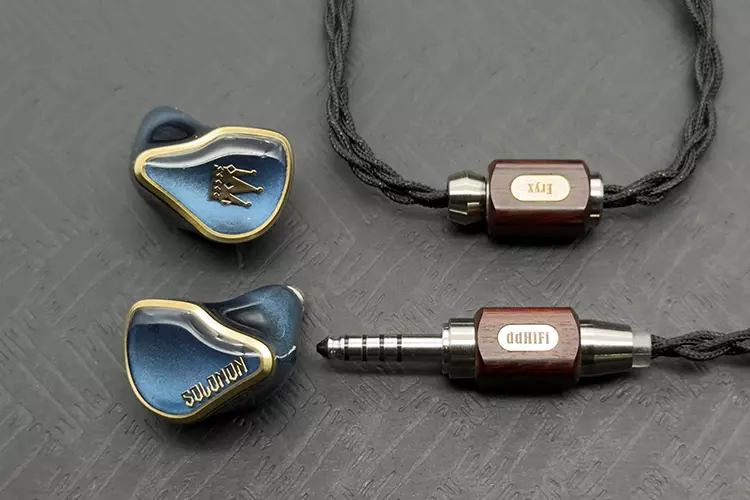
The 4.4mm termination plugs are offered in two versions: rhodium-plated and gold-plated. On paper, the cable has all the bells and whistles you’d look for in a premium cable.
Design
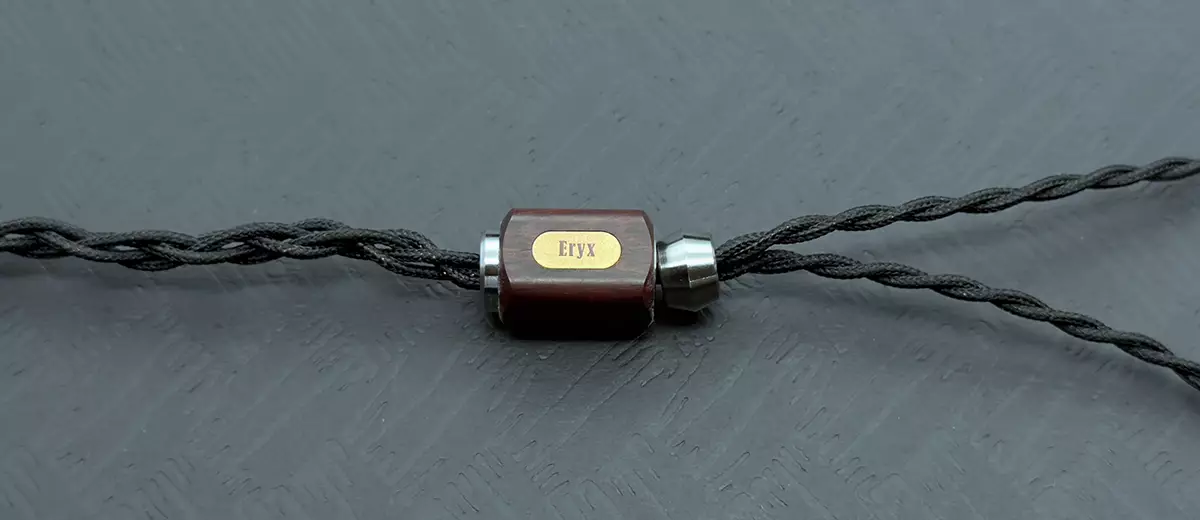
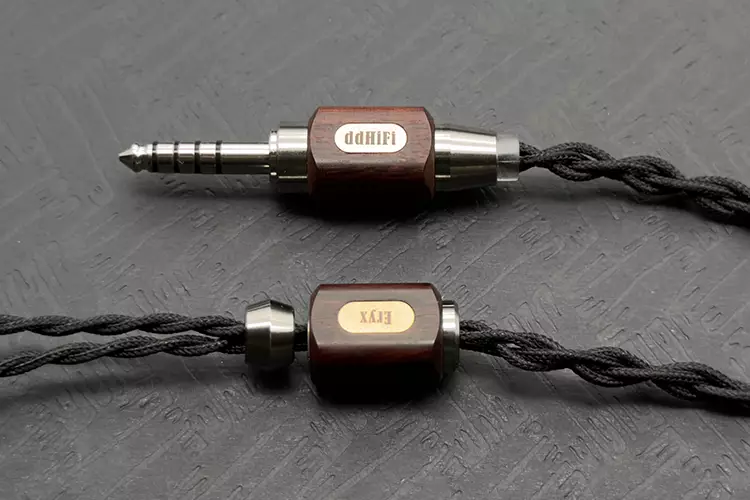
Personally, for me, the design has a two-sided story. First, the good part is that the rosewood and hardware look different from the usual cables we see around.
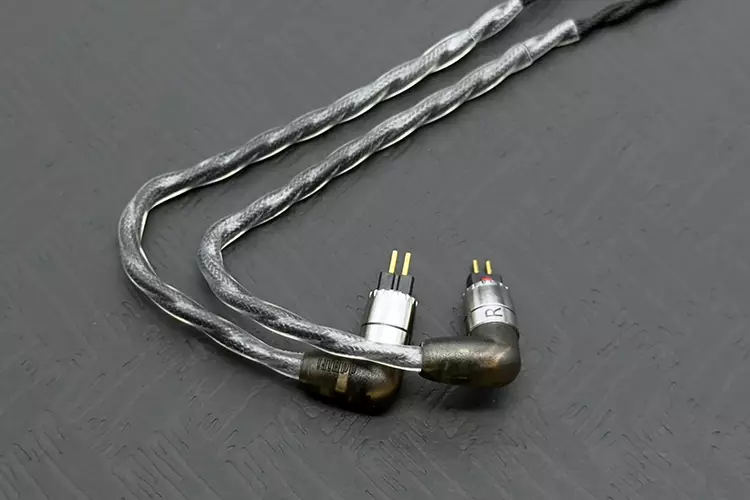
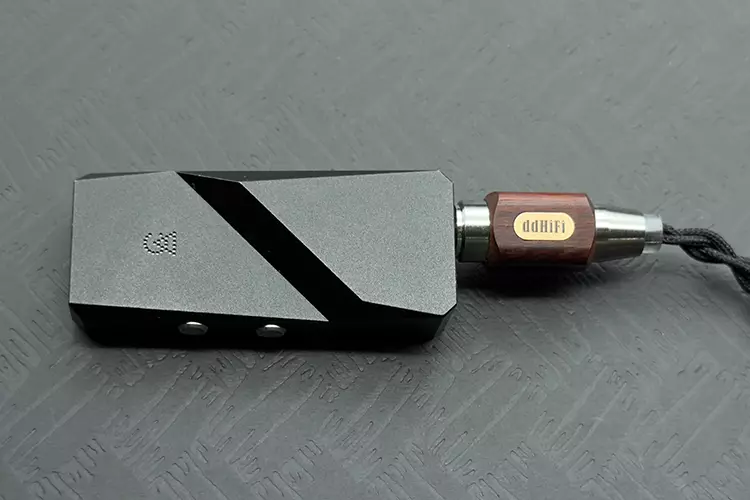
The Y-splitter and plug housing are crafted from high-density, rich red sandalwood and aerospace-grade titanium alloy.
This adds to stabilizing the delivery, as these elements absorb micro-vibrations generated during signal transmission. The finish is very smooth and does show off the elegance ddHiFi wanted to bring around. The build feels quite premium in hand too.
The other part is the insulation, which is American PVC with black braided mesh double insulation. If you ask me, I’m not a big fan of this style of braiding. I like the usual wire design more than this one.
Also, to add, the build is very thin. The cable lacks some of the firmness and character in appearance. I preferred the braiding style of Nyx Net, which felt a bit firmer.
However, I understand a lot of people want a lightweight, fuss-free cable, and that’s what Eryx is. It is soft, lightweight, and very easy to handle.
Another highlight of the cable is the right-angled ear hook. That part is quite well-built. So design-wise, the cable gets full marks.
Handling
Handling is one of the best parts about this cable. It feels so lightweight, and the wires are quite thin, so coming from the usual cables that we often use, this cable feels very easy to use.
However, it does lack some firmness in its build, like I mentioned, so you may have to watch out for slight tangling in between.
The stiffness is almost negligible, making it easy to roll up and store. But I would not roll it very closely, as it can tangle quickly. The other good aspect is that the hardware is kept very light, so there is hardly any tension when you are using the cable.
The ear hooks are very soft and supple, and you won’t feel them when wearing them. These right-angled ear hooks feel a bit different, as I am more used to the ones that wrap around the ears.
Due to its sleeve, I found slight microphonics during my use, but nothing that would bother me.
Overall, it’s always a breeze to use this cable, and for people who look for a thin and lightweight cable, this one is quite a relief.

Packaging & Accessories
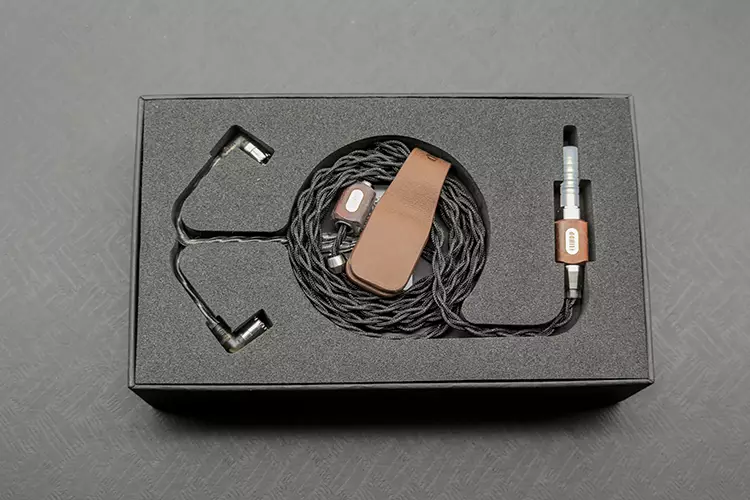
Like previous releases from ddHiFi, the Eryx arrives in a well-packaged box. It’s always good to see the brand going for a good user experience by including a few accessories.
I’ve not seen other brands, such as Effect Audio and Astral Acoustics, include any accessories with their mid-fi releases.
When you open the box, you get the cable laid out very nicely in a foam tray. Underneath the tray, you get all the accessories, which include a small plastic carry case, a cleaning cloth, a magnetic cable tie, and a set of interchangeable pins.
This carry case is not too large, but it can be used to store just the cable. It does not have enough space to store the IEMs along with the cable.
While I do not expect a lot of accessories to be included with cables in this price segment, the inclusion feels just fine, and ddHiFi gets applause for that.
Performance Impressions
The following sound impressions of the ddHiFi Eryx were completed using the THIEAUDIO Monarch MKIV, AFUL DAWN-X, and the BGVP Solomon alongside my main source, Lotoo’s PAW Gold Touch.
Summary
The Eryx arrives with a clear agenda: adding a touch of musicality. And that’s how ddHiFi describes it. It does not promise an overhaul in any way; rather, it sorts a few things out and mainly works on the dynamics and cleaner transmission of sound.
The choice of conductors keeps the changes balanced. It adds a sense of naturalness to the sound. It works quite well with tunings that already have strong technical ability but miss a bit of naturalness.
For dry-sounding or analytical-leaning IEMs, the Eryx can ease things down. It adds some smoothness to the top end. Along with refining the sound, the darker background it brings helps push the details in a natural manner. That is one of the strong traits of this cable.
Even with IEMs that you’d put in the warmer category, the cable works well. It does not add much warmth to the mix, and with a dark black backdrop, the details feel more vivid, which works well for most of the IEMs you’d pair with the cable.

Timbre
The Eryx does not alter the core tuning of the IEMs, and that’s what I prefer in a good-quality cable. It should not noticeably boost the bass, midrange, or treble; otherwise, the change feels forced or artificial.
Instead of coloring the sound heavily, Eryx improves the overall background, smoothness, and flow of the presentation.
One of the biggest contributions of this cable is the black and dark background it creates. The backdrop feels cleaner and quieter, which allows small details to emerge in a more natural manner.
Those smaller nuances and micro-details, which you may find hidden beneath the stock cables, emerge well here. In short, the Eryx offers better separation and a more relaxed sense of clarity.
The low end also feels more sorted and controlled. When the bass is cleaner, it stops bleeding into the rest of the mix, bringing more midrange clarity.
The cable also helps smooth the treble. It will not heavily reduce detail, shimmer, and sparkle, and the sense of openness is still preserved. Rather, the sharp edges and excessive energy are slightly trimmed down.
The Eryx brings this much-needed change to IEMs such as the Solomon, where the top end can be very incisive and fatiguing. I find the upper frequencies more refined and less aggressive.
I did not really bother putting Solomon down for very long. It felt more musical, smoother, and less analytical; controlling the energy is what adds to that organic behavior.
The Eryx keeps the tuning balanced, smooths the treble slightly, and creates a darker, quieter background. These qualities help details flow more naturally. It turns the IEMs emotionally engaging without making the IEMs overly warm or colored.
Staging & Imaging
The soundstage and imaging also benefit from the same qualities that make the cable sound more organic and natural. The space around instruments feels more open and better defined, as the darker and cleaner background helps there.
The stage does not necessarily become much larger, but it feels more organized, more layered, and slightly more holographic. It feels like the instruments have discovered a newfound space.
Instruments no longer feel clustered together or blurred. This better sense of placement helps a lot with busy passages where IEMs may struggle a bit.
Vocals and instruments have a stronger sense of body. The result is a presentation that feels more three-dimensional, with improved depth and cleaner layering.
Images become cleaner, but not in a sharp or overly etched manner. Some of the excessive energy is toned down on the Eryx, and the tone feels more composed. It feels musical, natural, and well-shaped. The resolution and details remain intact.
If the IEMs have extra warmth, that settles down, and the sound is less hazy. It does not remove the warmth completely, but it reduces the blurry or overly thick character that can sometimes make the stage feel crowded.
The separation between instruments also feels improved. The darker background gives each note some extra breathing room.
Dynamics also feel slightly better. This is not because the cable adds extra punch, but because the cleaner background and better control make the transitions easier to notice.
So, overall, the Eryx makes staging and imaging feel less technical and more organic and natural. With the darker, blacker background and cleaner behavior, the presentation becomes less muddy and more fluid.
As a result, the stage feels better arranged, imaging becomes cleaner, and the overall sound feels more holographic, musical, and natural.

Synergy
THIEAUDIO Monarch MKIV
The THIEAUDIO Monarch MKIV has a tribrid configuration with two dynamic drivers, six balanced armature drivers, and two electrostatic drivers.
It carries a balanced yet highly refined sound and immediately feels impressive with its clean, open presentation. The stock cable, however, pulls back some of the goodness, or let’s say the IEM responds very well to cable changes.
When you bring the Eryx into the scene, you know you have swapped to a better cable within the initial few seconds. The bass has a better delivery with more texture, along with more detailed and layered notes.
The other noticeable benefit is a more organized soundstage. The silent background and a more settled low end help tidy up the stage.
In the midrange, the cable also adds some warmth. Not that the stock cable does not feel warm in the midrange, but it has a slightly more neutral approach.
With the Eryx, the notes gain more detail and a better musical trail. This gives a more emotional feel to the midrange instruments and vocal notes.
With the stock cable, I did have a complaint about the vocals lacking a bit of body and nuance, but that feels sorted out.
In the treble region, I could earlier feel a tad extra focus, so the tuning would push more treble energy while lacking an emotional touch.
With the Eryx, the midrange has a more organic feel, and the treble notes also feel euphonic. It’s not just about the details and shimmer now; it is more pleasing and harmonious.
The laid-back approach that ddHiFi advertises really plays off well with the Monarch MKIV. You do not sacrifice details or lose out on anything; it’s just a nice musical massage that the notes get, along with a polished low end.

AFUL DAWN-X
The AFUL flagship has a very loaded quadbrid configuration. Each shell houses a 14-driver quadbrid setup with one dynamic driver, eight balanced armatures, four electrostatic drivers, and one bone-conduction driver.
It has a warm-neutral and smooth tuning, with a slight U-shaped sound signature. The low end and treble regions get extra focus.
Regarding its stock cable, personally, I think it does its job fine, but it’s just not the kind that gives off a premium feel, and it falls short in performance too. This is where the Eryx rightly steps in.
To be honest, a little help from a cable brings noticeable changes to the DAWN-X. One area where I personally feel the Eryx helps is in settling down the excess treble energy, which sometimes may feel scattered and untidy. For me, this change sorts out the IEM a lot.
The other benefit it brings is organizing the low end better. You get a tighter and more textured low end with the Eryx, which hits with better punch and impact.
In the midrange too, compared to the stock cable, you get a touch more engaging delivery in the sense that the haziness the stock cable sometimes brings in is lifted off.
The midrange feels cleaner and neatly arranged. The details are more prominent, and that’s done with a musical undertone. So, it is more engaging and more immersive too.
The settling of treble peaks and energy, along with a darker background, adds better separation among instruments. The stage feels more organized, and the overall flow feels more natural.
In fact, the DAWN-X, which already feels very capable, handles busier passages with more ease. The Eryx has great synergy with the DAWN-X and makes a very strong case here.
BGVP Solomon
Solomon is already in a good place with its stock setup. The Temple Cable does a surprisingly solid job. Good enough, in fact, to keep upgrade thoughts away for a while.
Solomon is highly resolving, and the top end is tuned to be extra energetic and lively. However, it can sometimes push a bit too much energy into the presentation.
What it really needs is a cable that mellows down the peaks and adds more naturalness. This is exactly where the Eryx fits in.
With the energy trimmed down, the treble is less aggressive. The details are still intact; they just do not feel forced or pushed forward. The notes carry more detail, and the trails land more accurately. It is a slightly more relaxed presentation, while the core tuning remains the same.
With Eryx, the differences are more noticeable on treble-heavy tracks, where Solomon can be quite harsh with the stock setup.
The background polishes the midrange further. With the stock setup, it comes across as neutral and lacking an emotional touch. With the Eryx in the scene, that lost musical feel is regained.
The transition from the upper midrange to the treble feels more coherent and smoother. In the low end, I notice more detail and texture. The dynamic driver’s bass goes extra deep, lending a better foundation down low.
Technically, Solomon does not need any help from cables, but since the presentation is more relaxed, you appreciate the details flowing more naturally.
Notes separate a bit better, and instruments feel better arranged on the stage as the cable adds to the spaciousness. Images are relaxed but carry the same glow. Overall, the pairing strikes the right chord.
