

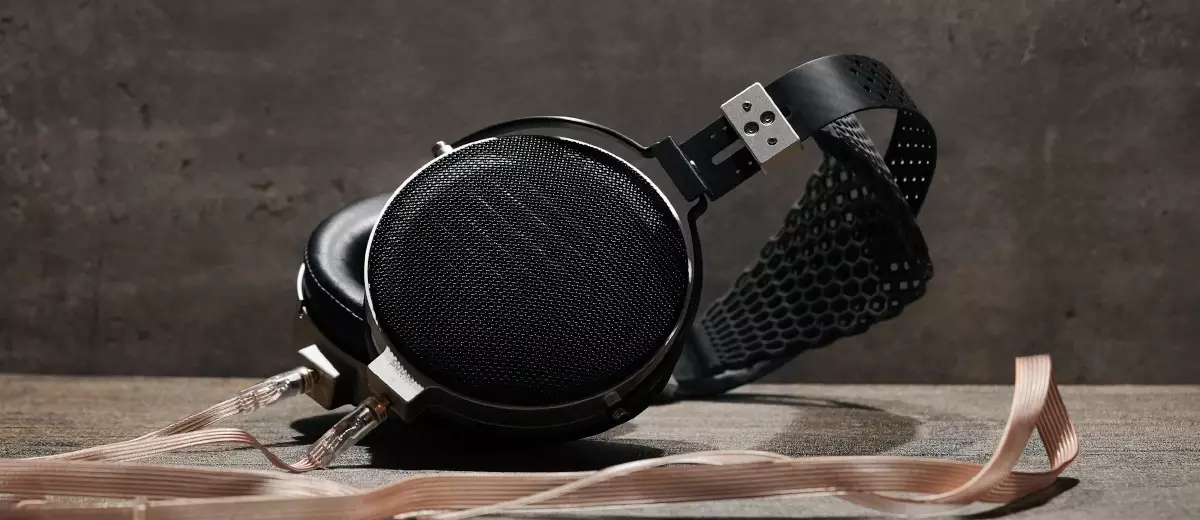
James reviews the MOONDROP Skyland, the company’s latest flagship open-back 100mm planar magnetic driver headphone with FDT technology. It is currently priced at $799.99.
Disclaimer: This sample was sent to me in exchange for my honest opinion. Headfonics is an independent website with no affiliate links or status. I thank MOONDROP and Shenzhen Audio for their support.
Click here to read more about the MOONDROP products previously reviewed on Headfonics.
This article follows our current scoring guidelines, which you can read in more detail here.

The MOONDROP Skyland is the brand’s latest open-back planar flagship, replacing the COSMO.
The Skyland represents a complete departure from the predecessor’s full-bodied tuning and power handling. Instead of following the VDSF target, the Skyland also shifts to a more distinct, open sound signature that adds more brilliance to ACG and pop music genres.
The new aesthetic undoubtedly looks sleeker, featuring carbon fiber elements and a custom 3D-printed headband, while the overall color scheme offers much higher contrast.
Priced at $200 cheaper than the COSMO at just $799, let’s see what this package brings to the table and how it stacks up against the former flagship and other competitors, such as the FiiO FT7.
Features
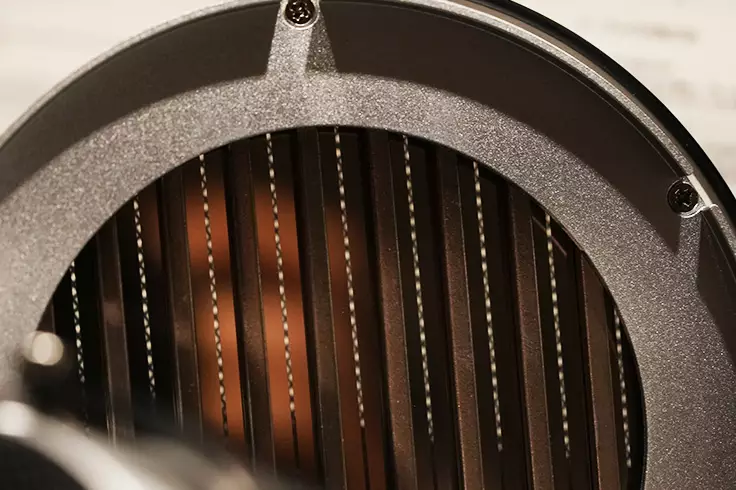
The MOONDROP Skyland features a large diameter 100mm planar magnetic driver utilizing their Full Drive Technology (FDT), where a pure silver-etched circuit covers 95.5% of the effective drive area.
It also uses a 500-nanometer nanoscale diaphragm, which is identical to the thickness of some summit-fi gear such as the LCD-5.
On the Skyland, MOONDROP replaced the N52 magnets with stronger N55 neodymium magnets; this is perhaps the reason why the sensitive get pumped up.
Again, MOONDROP implements its Tension Balance Technology (TBT) on the driver edge, which helps enhance transients and imaging clarity, and this whole structure is patented.
Tuning-wise, it targets the VDSF wide-band curve, which ideally yields a vocal-forward presentation with excellent brilliance in the upper registers.
With an impedance of 60Ω and a sensitivity of 96 dB/Vrms, the Skyland offers plenty of room to scale with stronger voltage swings and is less stringent on current amplification.
Design
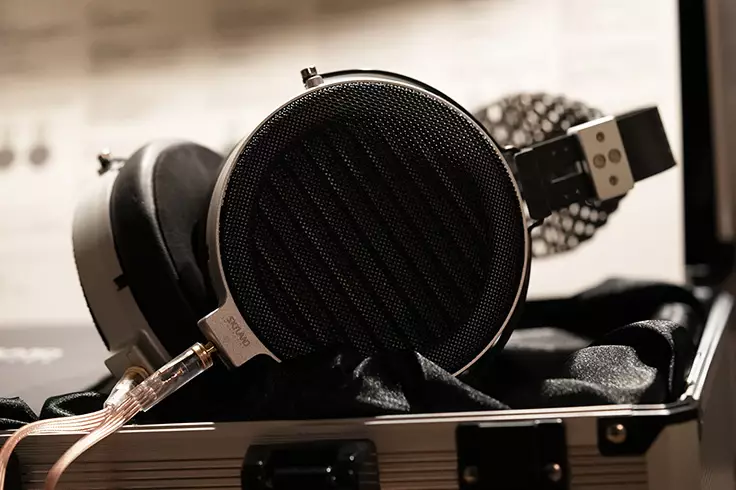
With its contrasting colors and sleek material choices, the Skyland is, in my opinion, the best-looking flagship MOONDROP has released to date.
The carbon fiber frame keeps the headband lightweight, balancing out the heavier main earcups, which house a dense array of magnet bars.
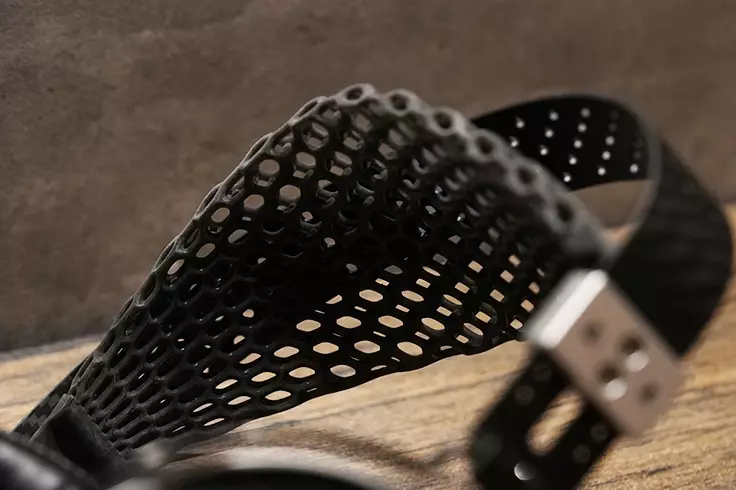
To ensure the headphones stay securely in place, MOONDROP has implemented a futuristic, 3D-printed headband suspension system that feels stable when listening at the desk, but may need some adjustment from time to time when walking around with it.
There are numerous patterned openings on both the headband and the grilles in front of the drivers, allowing for minimal airflow restriction.
Headband adjustment is straightforward, though you may need to take the headphones off to adjust them, as the locking mechanism is slightly on the stiff side.
The choice of materials perfectly complements the industrial design theme. I particularly like how the carbon components and grilles add contrast to the grey-silver aesthetic; despite the more competitive price point, it feels significantly better built than previous offerings.
The honeycombed, 3D-printed headband pad is also a delight, helping the Skyland balance better on the head, though I do hope it won’t deteriorate after a few years of use.
On a side note, I find the L/R markings not too easily spotted, and it would be nicer if they were more clearly lasered.
Comfort
I can feel MOONDROP’s effort to keep the design lightweight by using thinner, innovative materials, which is crucial since the heavy magnet arrays and metal framework of the earcups add significant weight right from the start.
The structure feels quite rigid in practice. Even though the clamp force isn’t very tight, the Skyland sits securely and comfortably, though it may shift laterally if you walk around with it.
The lambskin earpads, on the other hand, are beautifully crafted to feel soft while providing sufficient support. They avoid overly sealing the cavity, which helps deliver a more open tonal signature without muffling the bass.
Stock Cable
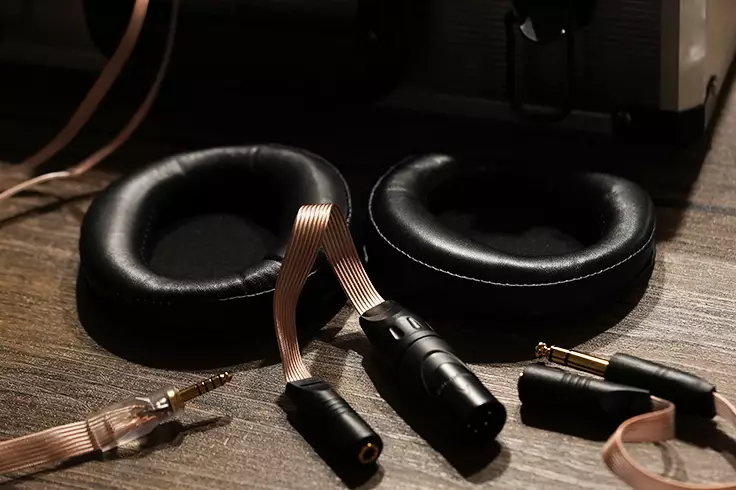
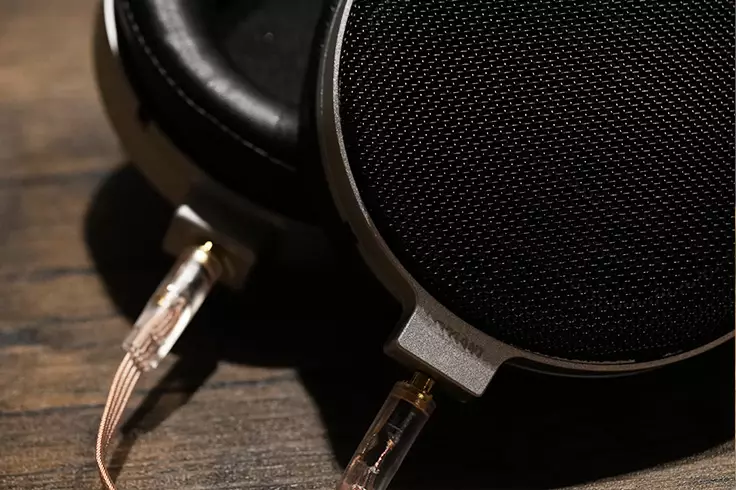
The Skyland comes equipped with a slim, flat cable terminated in a 4.4mm balanced plug, alongside 6.35mm and XLR adapters for desktop amplifiers.
The soldering joints are cleanly visible through the transparent connector housings, and the custom-machined components are well over-molded, with thick enough sheathing to ensure the cable isn’t tangling.
From a technical standpoint, choosing a flat cable with a parallel conductor layout is an unusual decision, as this geometry can traditionally compromise shielding and worsen crosstalk compared to twisted or braided designs.
In practice, however, the stock cable performs quite well. It doesn’t introduce an audible noise floor when compared to alternative cables, nor does it negatively impact stereo separation.
Packaging & Accessories
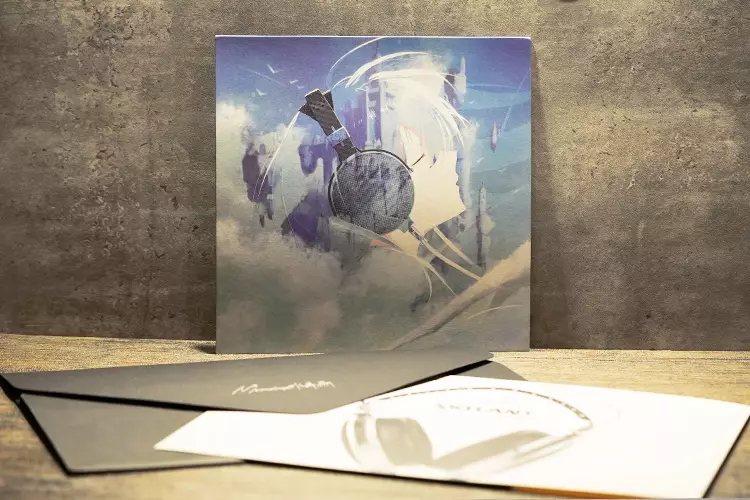
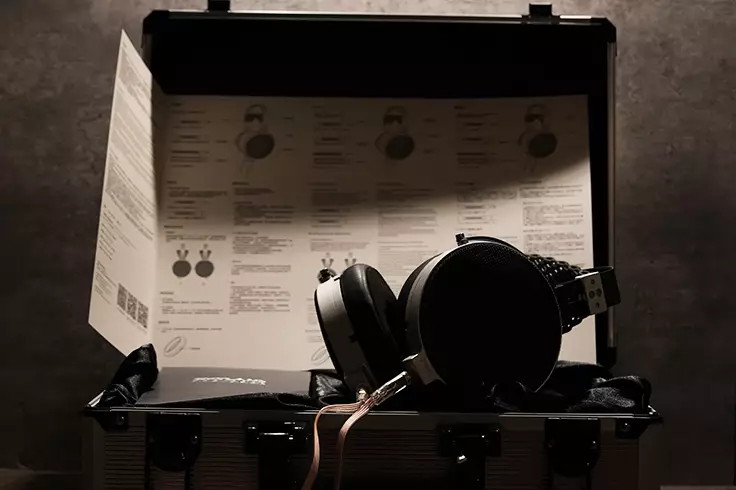
I really like how the packaging is presented this time, as the Skyland is shipped in a metallic case.
Aside from that, you get a huge envelope encasing the manuals, while the converters mentioned above are placed inside the box. There is also a large print instead of a small card or sleeve this time, which you can hang somewhere.
The case offers great protection and could be a long-term storage option if you drop in some silicone gel packs.
You’ll also find an extra pair of earpads, and instead of the hybrid suede-like material with leather wrapped on the sides. The spare pads are fully covered by leather and have a larger cavity space. As usual, we get MOONDROP’s waifu card for this model as well.
Sound Impressions
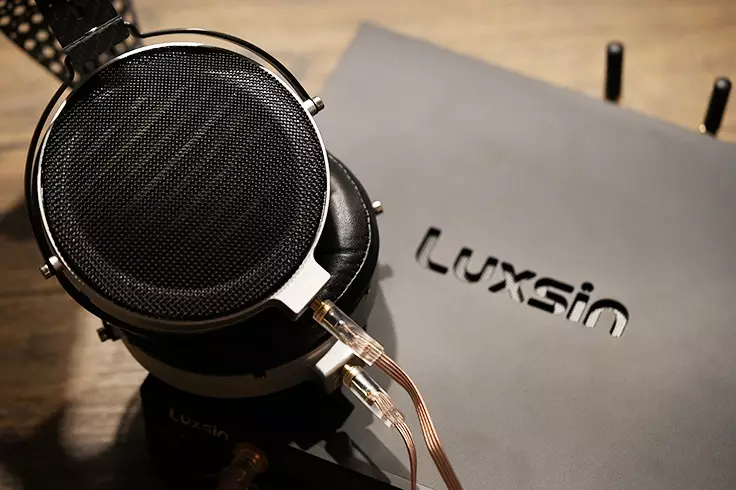
After more than two weeks of burn-in, I paired it with the FiiO K17 and Warmer R2R DAC and amplifier combo, the FiiO K19, the Luxsin X8, and the D&A Alpha PRO.
Summary
This time, MOONDROP explicitly stated that the Skyland aligns ideally with their VDSF target curve and features excellent non-linear distortion.
Testing it across multiple gears, it is indeed tuned to be on the bright and extended side, yet it remains nicely controlled at high volumes and with intense, sharp vocals.
This actually aligns closer to my impression of MOONDROP, a brand with an ACG-targeted background, more so than the COSMO, which takes a more traditional audiophile approach and does not favor the ACG genre as directly.
Conversely, its bass-light character may turn Rock and R&B fans away. I initially thought the spare pads would shift the tuning toward a more bass-heavy direction, but they somehow make it sound even cleaner, and in a good way, as they do not make the treble sharper, but rather more extended and airy.
It is also a relief that the Skyland is much easier to drive compared to the COSMO, which I compare below.
Timbre
Due to its design and tuning target, the Skyland embodies the classic MOONDROP house sound and places more emphasis on technicalities this time.
Paired with the Luxsin X8, it delivers a clean, balanced, and vocal-forward presentation with decent extension in the treble end.
The bass benefits from the X8’s NOS mode to gain more presence, softening the top end with a more rounded roll-off and enhancing overall musicality.
Whereas OS mode renders the sound sharper with tighter, denser transients. This pairing works nicely with EDM and synth-heavy tracks, making them sound swift and well-textured.
However, you might find yourself wanting a bit more bite in the bass and sub-bass for darker vocals and bass instruments.
In some ways, the Skyland reminds me of the Venus and vintage gears that stress on the upper mids, but updated with superior technicalities, articulation, and definitive power. There is also more room for it to scale with power, and pairing feels easier.
This upgrade becomes much more obvious when pairing it with high-end source gear and amplification, where you can feel an enhanced sense of texture without even cranking up the volume, but the presentation feels cooler in tone.
Control over the pinna gain zone and the upper registers is also superior. The vocal intensity around the vocal sibilance zone is well dialed in for ACG and J-Pop, avoiding an overly forward vocal placement.
Ultimately, the driver is responsive and adds little coloration to decays and overtones. Technicalities are strong, though the tuning is still rather safe, and it relies more on system pairing to give it colorings and bring out more energy in the low end.
Overall, I find the presentation uplifting and dynamic, lending a sweet, refined tint to clean vocals while successfully steering clear of harshness.
Staging & Dynamics
The Skyland sounds expansive even on portable sources such as the Shanling M8T, thanks to its swift treble extension and ample energy.
However, control and dynamics improve noticeably when it is supplied with more power. Without sufficient amplification, the bass can feel a bit light. A higher power output significantly helps render better depth and layering as well.
Vocal positioning is distinct and forward, creating the sensation that the singer is standing just a few meters in front of you.
The presentation feels stereophonic, with instruments clearly defined and precisely layered across the lateral soundstage, a feat made possible by the driver’s speedy transient response, and it remains well defined at high volume.
There is good, definitive power across the entire audible spectrum. Even when paired with warmer gear that puts more emphasis on the low end, the bass impact remains firm and fast.
While the overall macro-dynamics are satisfactory, they can be enhanced further by introducing a slight bass boost and gently softening the treble sibilance zone.
The stock tuning could perfectly fit listeners seeking an exciting presentation with added brilliance in the upper registers, as the Skyland does a fantastic job of delivering sharp, clean vocals while maintaining adequate dynamic contrast and a slightly sweetened tuning.
If you switch to the alternative set of pads that is fully leather wrapped, it feels even more expansive and seals better, so it helps give the two ends of the spectrum a bit more attention.
Click on page 2 below for my recommended pairings and selected comparisons.
