

Selected Comparisons
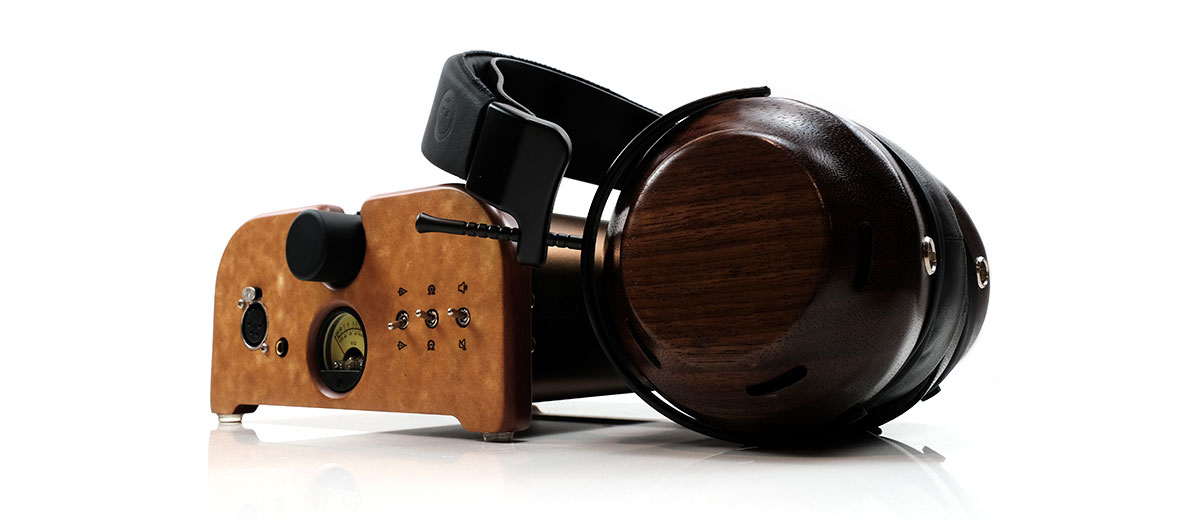
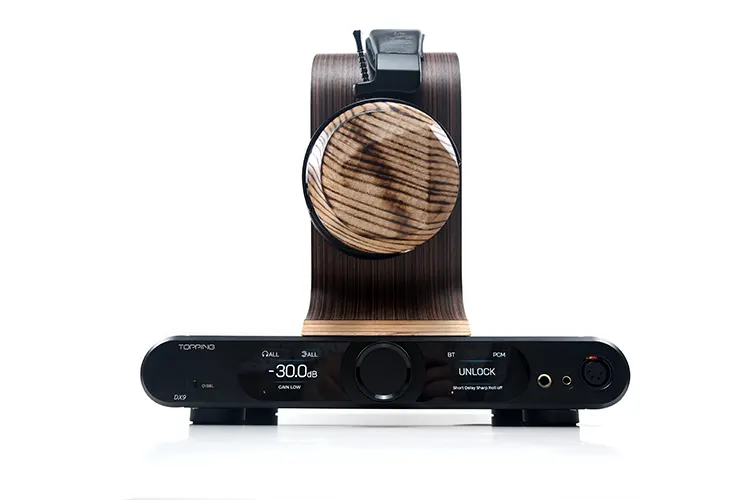
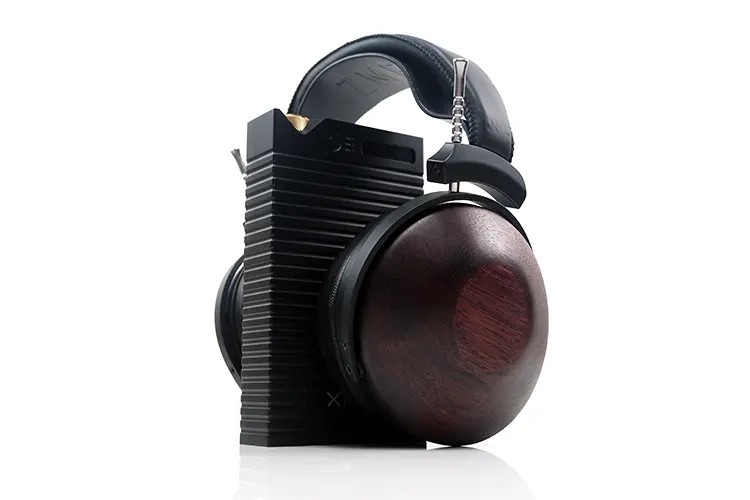
The following selected comparisons to the ZMF Headphones Ori 3.0 were completed using a mix of the Ferrum WANDLA GSE/Chord Electronics Alto stack, and the ZMF Headphones Homage desktop balanced amplifier with the Cayin N7 as my main source in PRE-out mode.
In all comparisons, the Ori 3.0 was fitted with its stock Caldera Lambskin Thick Top‑Perf pads. The tuning plugs were left out by default, with reference to any changes where applicable, when inserted.
ZMF Headphones Caldera Closed
The ZMF Headphones Caldera Closed was launched in early 2024 and is the company’s flagship closed-back planar headphone. It was also our Co-Winner for Best Closed-Back Headphones in our Top Gear 2024 Awards.
Technical
Despite the price difference, these two headphones have a lot in common, at least on paper.
Both use ZMF’s latest 80mm planar magnetic driver with a 61mm active moving surface area, and CAMS dual-sided N52 magnet arrays. Both also have a custom-designed Atrium damping system.
The key difference is the diaphragm, where the Ori 3.0 version has a 6μm-thick Kapton film diaphragm, and the Caldera Closed has a thinner and lighter 2μm version.
Typically, a thinner, lighter diaphragm will improve transient speed and micro-detail, but also create a tighter level of control on the lows.
Despite the different diaphragms, both drivers have a similar 60Ω impedance rating and only 1 dB/mW lower for the Caldera Closed’s SPL at 94 dB/mW @1kHz compared to the Ori’s 95 dB/mW.
Beyond that, its features. The Ori 3.0 has a slight edge with its tuning plug system, providing more tuning variations than the pad system alone.
Design
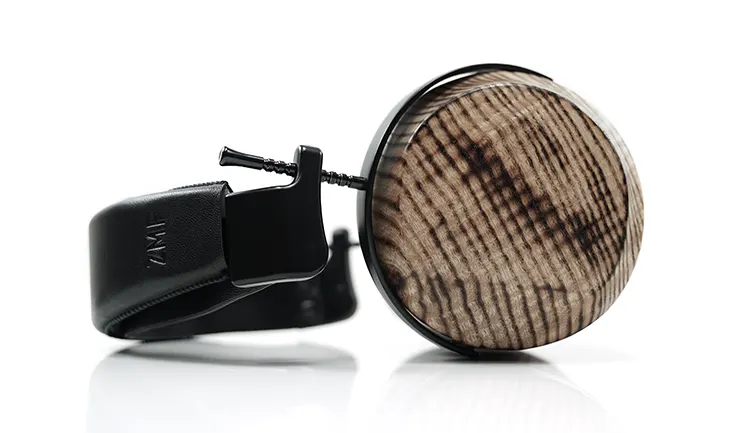
Although the Ori 3.0 and the Caldera Closed share the same classic ZMF round cup form factor, the choice of wood here is quite different.
The Caldera Closed sample I have here is finished with a strongly grained Shou Sugi Ban ash wood, which produces a very striking look to the naked eye.
Currently, the Caldera Closed wood option is Zebrawood, which has a darker color, closer to the Torrefied Limba hue on the Ori 3.0 cups, but with a more striking grain.
Wood finishes are a very subjective matter, but I prefer the original day 1 ash wood finish on the Caldera Closed and the Limba over the Zebrawood currently on offer. You are free to disagree.
There are a couple of noted design differences at a granular level. For example, the Caldera has the raised ‘Caldera Delta’ geometric curve through the middle of the cups, something which the Ori 3.0 lacks.
I am not sure if there are any acoustical advantages, but it is unique to the Caldera Closed, and no other ZMF headphone currently uses it. The closest is the dome-like structure on the BOKEH closed cups.
The change in headband materials is another nuanced update. Given that the Ori 3.0 is significantly cheaper, I am not surprised the fine leather of the Caldera Closed has been swapped out with a synthetic substitute. The pressure strap on the Ori 3.0 also has a stiffer quality.
You can get more or less the same pad options with both headphones, though the default for the Caldera Closed is the Hybrid Top Perf, which is more fluted and wider on the inside, creating a roomier, but shallower pad.
Performance
I can see fans of the ZMF closed-back sound swing either way with these two headphones, depending on their preference or mood on the day.
The Ori 3.0 is by far the more aggressive and in-your-face sound signature, so if it’s first impressions, slam and thunder, and a front row seat, then the Ori 3.0 delivers more of that style.
Its bass shelf is not hugely amplified over the Caldera Closed using the same pads, but rather the driver or presentation feels a lot closer, immersing you in the bass power.
Combined with a more elevated 1-3k region and less upper-treble presence, vocals and percussion pop with an elevated fundamental frequency, sounding thicker but quite centered.
The Caldera Closed is more refined, delivering improved micro-detail and staging a little further back, giving you a stronger perception of space and a calmer perspective when comparing both using the same recordings.
The coloration is not as overt, the bass layering is superior, with more lower-mids presence and a neutral ear gain region. The treble extends a bit more, creating improved height and air through the mids and highs.
I would also argue that the transient response and dynamic range of the Caldera Closed are superior, though the general explosiveness of the Ori 3.0 bass can be more captivating.
There is no question I would pick the Ori 3.0 for hard-hitting EDM, but for depth and clarity, more nuanced mixes, perhaps with deep bass and complex guitar layering on top, I would likely choose the Caldera Closed for its superior imaging.
ZMF Headphones Atrium Closed
The ZMF Headphones Atrium Closed was launched in 2023 and is currently the company’s flagship dynamic driver closed-back headphone. It was also our Top Gear 2023 Award winner for Best Closed-Back headphones.
Technical
Another closed-back, but this time a dynamic driver as opposed to the Ori 3.0’s planar. Inside the Atrium Closed is a 50mm dynamic driver with a composite bio-cellulose diaphragm surrounded by N52 rare-earth neodymium magnets.
And with different drivers come different ratings. The Atrium Closed is rated at 300Ω as opposed to the Ori 3.0’s much lower 60Ω benchmark.
These two headphones will need very different amplifiers to drive them well. Ideally, OTL for the Atrium Closed and any amplifier with a solid current capacity for the Ori 3.0.
Despite the very different drivers, both headphones have an Atrium damping system. I do wonder if some of the mechanics of their damping are similar, given they are closed-backs.
ZMF spoke about gradual sound wave diffusion, eliminating the potential for standing sound waves as key to the Atrium damping for a closed-back driver performance. I would presume both headphones benefit from that thinking.
Just a small note regarding tuning options. Both benefit from the ZMF swappable pad system and have interchangeable pad structures, but only the Ori 3.0 has the additional tuning plug system.
Design
As with most ZMF Headphones, the choice of wood in the cup changes over time.
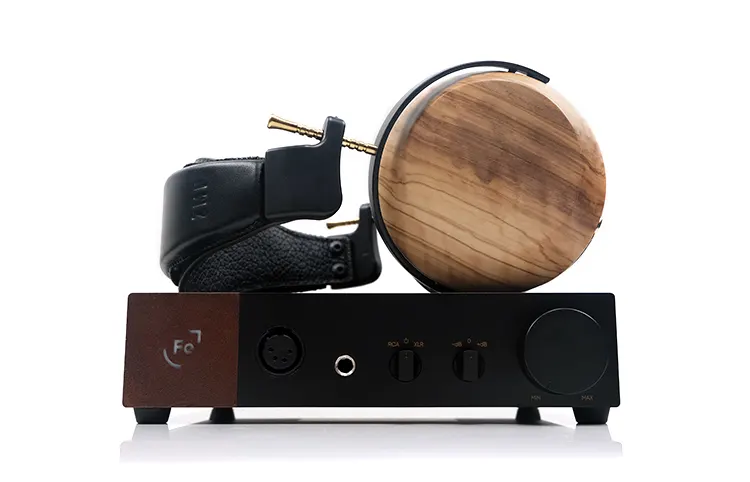
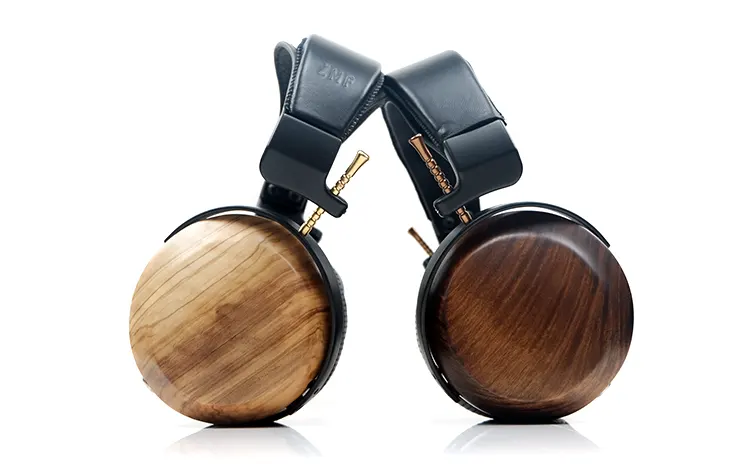
The day 1 launch had two options. The first was a more muted but still attractive dark mahogany-aged cherry finished with some beautiful-looking coffee gold adjusting rods. The second was a natural grain of cherry wood, which bears a closer resemblance to the Atrium Open finish.
The one I use daily is the Italian Olivewood Limited Edition, which remains to this day my favorite ZMF closed-back headphone in terms of performance and looks.
The cups have a beautiful golden hue with a unique mix of lined and ‘cracked’ grain with a slightly matte finish from its natural hard wax oil, compared to the glossier exterior of the dark Ori 3.0 Limba wood variants.
The shape of the Ori 3.0 cups also has a noticeably more pronounced dome, making the Atrium Closed cups look comparatively thinner and flatter. By comparison, the Atrium Closed vents are smaller and more discreetly placed on the side of the cups.
That seems to be an acoustical adjustment to allow for the sizable vents on the Ori 3.0, thereby creating more room for the driver to ‘flex.’
Although you can buy straps and retrofit most ZMF headphones, the Olivewood Atrium Closed Edition came with an olive green ZMF B.B.B. strap by default. It has a wider, thicker quality leather, much higher than the option used on the Ori 3.0, and creates a much firmer and more secure fit.
By default, the Atrium Closed comes with the Caldera Thin Lambskin pads, which are more perforated than the thick options on the Ori 3.0. You can, of course, change the Ori 3.0 to matching pads as they are interchangeable.
Performance
I should mention that the Atrium Closed Olivewood Edition has a punchier, tighter sound signature with elevated vocal presence compared to the day 1 stock edition.
The Atrium Closed is more mildly V-shaped than the Ori 3.0. There is considerably more elevation and punch in the lows of the Atrium Closed. Even with the tuning plugs out, the Ori 3.0 low-end response sounds more linear and controlled.
However, I felt the Ori 3.0 delivered a more pleasing bass response. There is bloom in the Atrium Closed bass to around 500Hz, which can create a slightly pillowy effect, whereas the Ori 3.0 bass sound denser with some suck out in upper-bass and less decay to prevent excessive bloom.
If you want the absolute monster bass with the best punch, I still feel the Atrium Closed delivers more of it. The Ori 3.0, despite its “bass-heavy label,” still has plenty of planar sensibility about it.
The mids are very different, also. The Ori 3.0 has more of a classic Harman-type 1-3k rise, perhaps slightly north of neutral in that regard, whereas the Atrium Closed has a narrower 2-3k peak but stays relatively south of neutral over the same range.
Vocals are further forward and firmer-sounding on the Ori 3.0. The Atrium Closed vocals have a sweeter tone, slightly lighter note quality, but are relatively smooth.
Some of that sweetness comes from a stronger 3k-5k push over the Ori 3.0’s flatter tuning. It provides a little more ‘spice’ in that region over the Ori 3.0, but again, note quality is more ethereal than dense.
The Atrium Closed staging is deeper and taller, with the Ori 3.0 delivering a stronger midrange emphasis. I would say the Ori 3.0 is the more intimate presentation of the two headphones.
ZMF Headphones BOKEH
The ZMF Headphones BOKEH was launched in 2024 and is the company’s entry-level closed-back dynamic driver headphone.
Technical
Like the Atrium Closed, the BOKEH is also a dynamic driver closed-back headphone. Both headphones use the company’s Atrium damping system for airflow resistance optimization.
However, it uses a different variant, a 50mm LCP (Liquid Crystal Polymer) driver with a lighter (fewer windings) voice coil rated at 80Ω rather than the usual Bio-cellulose 300Ω driver benchmark.
It is still a little higher in impedance than the Ori 3.0’s planar driver 60Ω rating, but with an SPL of 103 dB/mW rather than 95 dB/mW, you will find it much easier to drive.
Like the Atrium, I would still go for an OTL headphone amplifier rather than a regular push-pull solid-state amp, but the BOKEH will not fall apart, even with portable amplification.
Design
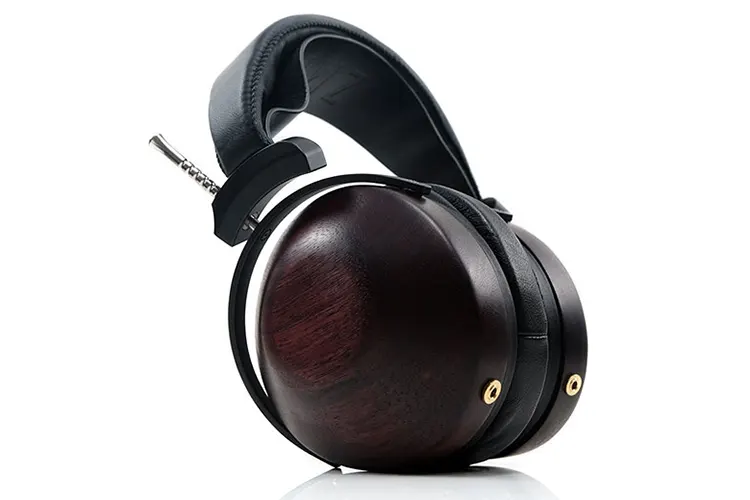
The BOKEH is the headphone that has the most notable design departure from ZMF’s classic round cup form factor.
The wooden cups are more Ovoid than round, though, like the Ori 3.0, there is a dome-like effect on the cup face that creates some additional space in the chamber.
Both headphones use a version of Limba wood for their main material. The BOKEH has an African Black Limba hardwood with my sample, the wine-toned Claret Edition, which I find a little darker (and redder) than the Ori 3.0 Torrefied Limba cups.
I have to say, I might prefer the structure and flow of the BOKEH frame over the more traditional yoke and rod design of the Ori 3.0. Both do a great job; there are no issues for comfort, but the BOKEH’s leaner-looking pivot blocks just look a little sleeker.
Both seem to use almost the same Crescent strap and headband materials, which I presume is there to keep a tight lid on costs.
They are not quite as premium-looking as the Atrium Closed or Caldera Closed materials, but they feel comfortable on the head with excellent pressure dissipation.
Passive isolation is also extremely close in performance. I feel that if there are any differences, it will come down to the pad choices, and in that respect, you can interchange the pads on either to acquire similar isolation levels.
The BOKEH uses 3.5mm cable connectors and comes with a lightweight and shorter 4.4mm cable option. It is seen as a more mobile headphone than the Ori 3.0 in that respect. You can still opt for mini-XLR or SE terminations if you prefer to keep it on the desk.
Performance
Very different sound signatures here with the Ori 3.0 delivering a clearer set of mids, and the BOKEH going heavy on the bass amplitude with more bloom and warmth.
Arguably, the Or 3.0 has the more evenly balanced midrange tuning and a more linear bass response. The BOKEH is more colored on the lows, with more noticeable bloom from 200-500Hz and less presence from there up to 2k.
Certain registers can get left behind in a frenzy of bass and vocal/upper-mids energy, whereas the Ori 3.0 sounds more evenly tempered, albeit a little more neutral through the same range.
Lower-mids instrumental impact and clarity do not get lost on the Ori 3.0, although its muted upper-mids reduce some impact from percussion, keeping them slightly behind a more forceful 1-3k range.
Truth be told, with EDM, where midrange fidelity is less essential, I thought the BOKEH competed quite well, and it was more down to a preference for punch and fullness (BOKEH) versus density and control (Ori 3.0).
It’s only when you switch to more mid-centric recordings that you get a better sense of how more flexible the Ori 3.0 tuning is, and that is before you start using the tuning plug system.
The Ori 3.0 has better transient response and micro-detail retrieval, with a smoother bass-to-mids transition. In contrast, the BOKEH mids struggle more with fidelity when the bass is either overworked or underplayed.
I think if you remain rooted in heavy-hitting house and EDM, the BOKEH is competitive, but once you start exploring different genres, the Ori 3.0 is the more balanced and revealing of the two headphones.
My Verdict
The ZMF Headphones Ori 3.0 is another gorgeous-looking headphone with an emphasis on ‘fun’ in its sound signature. This is a deep and powerful tuning, with great vocal presence, but also a presentation that is highly tweakable with the included tuning plug system.
ZMF might be onto something here with the tuning plugs, especially for those who struggle with pad swapping and want to quickly tweak the bass or add some vocal emphasis or both.
They are dead easy to insert or take out and produce an instantly recognizable change in the Ori 3.0’s performance.
Where do these headphones sit in the ZMF lineup? I would argue they are closer to the BOKEH and Atrium Closed than the Caldera Closed in terms of intent.
The flagship planar Caldera Closed feels more insightful and refined in its presentation, whereas the Ori 3.0 is more about letting your hair down. They bring more of a quality fun factor to the listening experience.
ZMF Headphones Ori 3.0 Technical Specifications
- Driver: 80 mm planar‑magnetic diaphragm, 6 µm Kapton® film
- Magnet System: CAMS – Caldera Asymmetrical Magnet Structure
- Damping: ADS – Atrium Damping System (rear‑wave tuning)
- Impedance: 60 Ω
- Sensitivity: 95 dB/mW
- Weight: 500 g ± 30 g (aluminum chassis)
- Form Factor: Closed‑back, circum‑aural
- Chassis Options: Aluminum (stock) · Magnesium (upgrade)
- Cup Material: Torrefied Black Limba hardwood
- Pads (1 pair included; others available as optional add-on):
- Caldera Lambskin Thick Top‑Perf
- Caldera Suede Top‑Perf
- Caldera Hybrid Top-Perf
- Caldera Protein Thin Top-Perf
