

Kurt reviews the ZiiGaat Horizon, a hybrid in-ear monitor featuring a 10mm dynamic, dual BA, and dual composite planar drivers, currently priced at $329.00.
Disclaimer: This sample was sent to me in return for my honest opinion. Headfonics is an independent website with no affiliate links or services. I thank the team at Linsoul and ZiiGaat for giving me this opportunity.
Click here to read more about the ZiiGaat audio products we have previously reviewed on Headfonics.
This article follows our latest scoring guidelines, which you can read in more detail here.

ZiiGaat has been relentless with their releases, dropping models like the Odyssey, Lush, and Arcanis in rapid succession, and establishing a rhythm of delivering distinct flavors with each set, building a reputation for variety and value.
Now comes the ZiiGaat Horizon, utilizing a tribrid configuration featuring dynamic, balanced armature, and planar drivers.
Will this unique combination become a hit for ZiiGaat, and how does it compare to the recently released Luna and competitors such as the XENNS Mangird Tea Pro?

Features
The ZiiGaat Horizon utilizes a tribrid setup comprising five drivers per side. It features a tribrid configuration designed to balance the strengths of three driver types without relying on a single technology.
A single 10mm biodynamic driver handles the bass, serving as the foundation for the low-end frequencies. The midrange is managed by two custom ported Knowles 30262-163 balanced armature drivers, tuned to provide an analog texture to the vocals and instruments.
For the treble, dual custom composite planar drivers are dedicated to the high frequencies and are specifically designed to enhance the ultra-treble range. These planars are tasked with the upper registers, aiming to deliver what ZiiGaat calls a ‘Buttery Treble Extension’.
The crossover network integrates these three distinct driver types to work in unison. ZiiGaat claims that they engineered the Horizon to achieve an almost completely linear treble extension across the upper frequency range.

Design
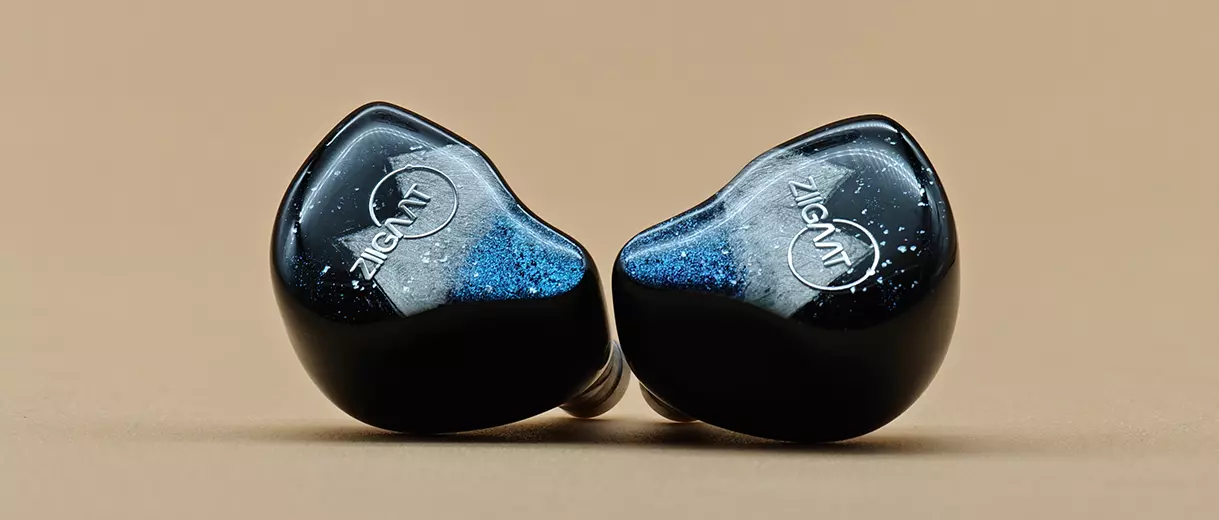
The faceplate of the ZiiGaat Horizon is undeniably pretty, evoking the imagery of a landscape like Mt. Everest. White peaks contrast against a dark sky above, while blue glittery highlights below mimic the icy depths or shimmering waters.
This artistic touch gives the Horizon a premium and unique look that stands out in the ZiiGaat lineup. It captures the theme of a “horizon” perfectly, blending different elements into a cohesive visual scene.
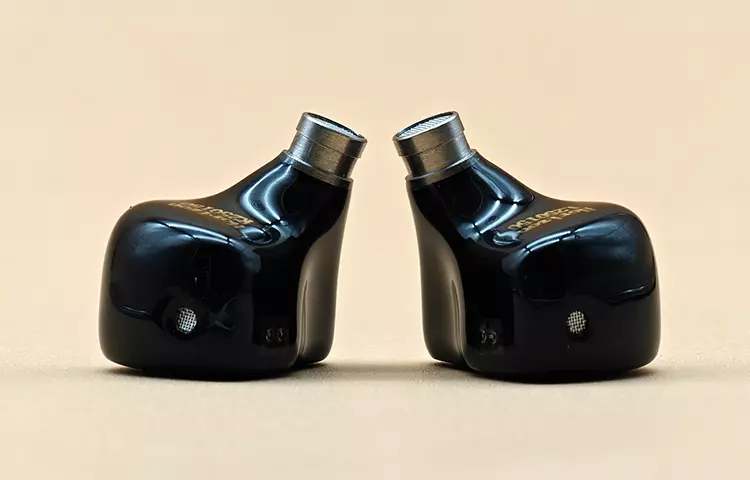
The shell retains the standard black resin body found on other ZiiGaat models, maintaining consistency in the design language. It features the same protrusion on the inner side, designed to lock into the concha for stability.
Standard 0.78mm 2-pin connectors are flush with the shell, ensuring compatibility with a wide range of aftermarket cables. A small vent is located near the connector to relieve pressure from the dynamic driver.
Comfort & Isolation
Despite the familiar protrusion seen on other ZiiGaat IEMs, the Horizon remains comfortable in the ear. The resin shell is smooth and lightweight, allowing for extended listening sessions without creating hot spots.
It serves as a good companion for commuting, as the lightweight shell stays secure without causing fatigue. The cable is simple and unobtrusive, ensuring it doesn’t get in the way during daily travel.
However, I wouldn’t use it for sleep since the classic ZiiGaat protrusion makes lying on your side difficult. I wouldn’t even gamble wearing it while lying on my back due to the shell’s shape.
The seal creates a quiet environment that works well for daily use, blocking out distractions effectively. It sits securely in the ear, making it a viable option for moving around without constant adjustments.
Ear Tips
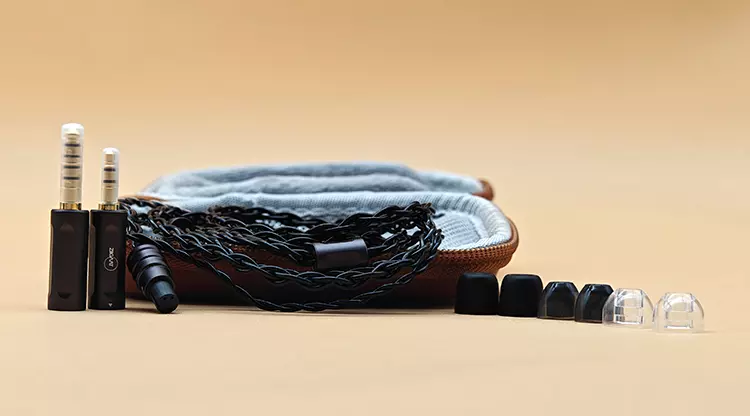
The ZiiGaat Horizon comes with three distinct types of ear tips to help you find the perfect fit. You get one pair of foam tips, three sets of white, clear silicone tips, and three sets of black silicone tips.
The black silicone tips feature a shorter flange and a sharper end, intended to provide a balanced fit. However, due to the shorter flange, I found them to itch my inner ear during movement, making them less ideal for long-term wear.
The foam tips provided a standard experience, softening the fit and increasing isolation. They didn’t offer anything unique compared to generic foam tips found with other sets.
The white, clear silicone tips were the clear winner, featuring a longer and wider flange that sealed the entire canal properly. They eliminated the itchiness found with the black tips and felt the most secure.

Stock Cable
The stock cable is a bit of a letdown in terms of feel, coming across as just “meh” and rather boring. It is the same cable seen on previous ZiiGaat releases, which feels functional but lacks a premium touch.
On the positive side, it is modular, offering versatility for different sources right out of the box. It includes plugs for both 3.5mm single-ended and 4.4mm balanced connections, which is a nice inclusion at this price point.
However, the locking mechanism for the modular plugs is questionable, relying on a simple plug design without a screw or twist lock. This lack of security makes me worry about the longevity of the connection over time.
Packaging & Accessories
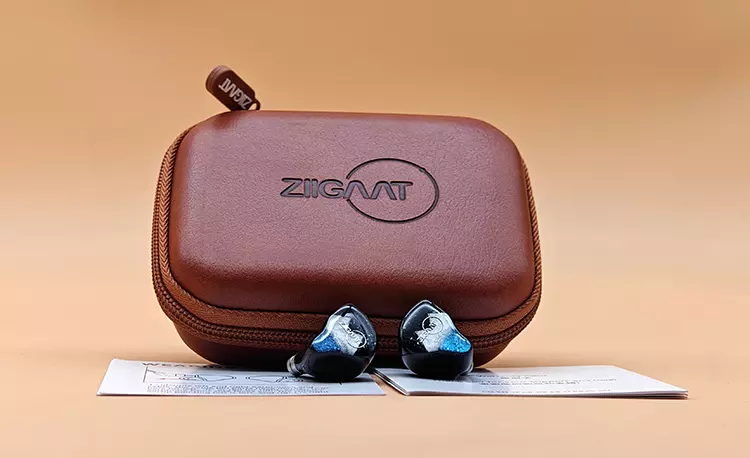
The unboxing experience follows the standard ZiiGaat formula, offering no surprises for returning customers. It starts with an outer sleeve featuring the IEM imagery, covering a simple black box underneath.
Opening the book-style flap reveals a foam layer protecting the IEMs, ensuring they arrive safely. Inside, the IEMs rest in a cardboard cutout, presenting the faceplates immediately upon entry.
Below the IEMs lies a box containing the carrying case, which houses the remaining accessories. Inside the carrying case, you will find the cable, the modular plugs, and the assortment of ear tips neatly packed away.
Sound Impressions
The following sound impressions of the ZiiGaat Horizon were completed using the Heartfield R1 and Colorfly CDA-M2 dongle DACs.
Bass
The bass is arguably the weakest point of the Horizon, taking a step back to prioritize clarity elsewhere. While the quality is fine on its own, the midbass takes a noticeable hit to ensure the midrange remains clean and open.
It lacks the slam and authority found in other ZiiGaat models, presenting a more polite low-end response. The sub-bass extension is adequate, but it doesn’t provide a visceral rumble that bassheads would crave.
Due to its weakened midbass, it helps the mids sound cleaner, but at the cost of a lighter vocal note weight and overall energy in the low end. Unfortunately, it merely serves as a foundation rather than a driving force, keeping the presentation light and airy.
Despite the lighter note weight, the speed of the dynamic driver is quite good, keeping up with faster tracks without blurring. It offers just enough texture to keep bass guitars audible, but it will never be the star of the show in any mix.

Mids
The midrange is indeed very clean, offering a level of transparency that is impressive for a hybrid. Despite this cleanliness, there is an adequate amount of warmth, creating a unique “clean warmth” or even semi-U-shaped sound signature.
Vocals stand out with good definition, avoiding the veil that often comes with warmer tunings. Both male and female vocals have a natural timbre, though the lack of midbass support can make male vocals lean slightly towards the thinner side.
Instruments in the midrange are rendered with precision, allowing for easy identification within the mix. The unique combination of warmth and clarity makes the Horizon sound distinct from its competitors in this range.
This clean presentation allows for complex layers of instruments to be easily dissected by the listener. It avoids congestion admirably, ensuring that acoustic guitars and pianos resonate with a lifelike decay that feels unforced.
Treble
The treble is the best thing about the Horizon, offering great extension that reaches far into the upper registers. So many little details are revealed, bringing a sense of air and sparkle that brings tracks to life.
The micro-planar drivers do heavy lifting here, providing a speed and resolution that traditional BAs struggle to match. Cymbals and high-hats decay naturally, adding a layer of realism to the listening experience.
This excellent extension allows for a very airy presentation that never feels suffocated. Even in complex tracks, the separation in the high frequencies remains top-tier, ensuring that no micro-detail is lost in the mix.
However, this extension comes with a caveat, as the treble can be spicy or fatiguing at times. There are hints of sibilance that rear their head, especially on tracks that are already prone to brightness.

Staging & Dynamics
The soundstage on the Horizon is great, offering a spacious listening environment that feels open and unconfined. The width and depth are well-represented, creating an immersive experience that punches above its weight.
Imaging is a strong suit, with subtle shifts of sound upward or downward being heard with great accuracy. This verticality adds a holographic dimension to the sound, allowing for precise localization of instruments.
This “orbital” staging effect allows sounds to seemingly float around the head, creating a very engaging 3D effect. It utilizes the micro-planar’s speed to place transient sounds with pinpoint accuracy across the soundfield, making it excellent for gaming or complex orchestral works.
Dynamics are generally good, though the restrained bass limits the impact of macro-dynamic swings. Micro-dynamics are excellent, thanks to the resolving power of the planar drivers in the treble, capturing the smallest shifts in volume with ease.
Click on page 2 below for my recommended pairings and selected comparisons.
