

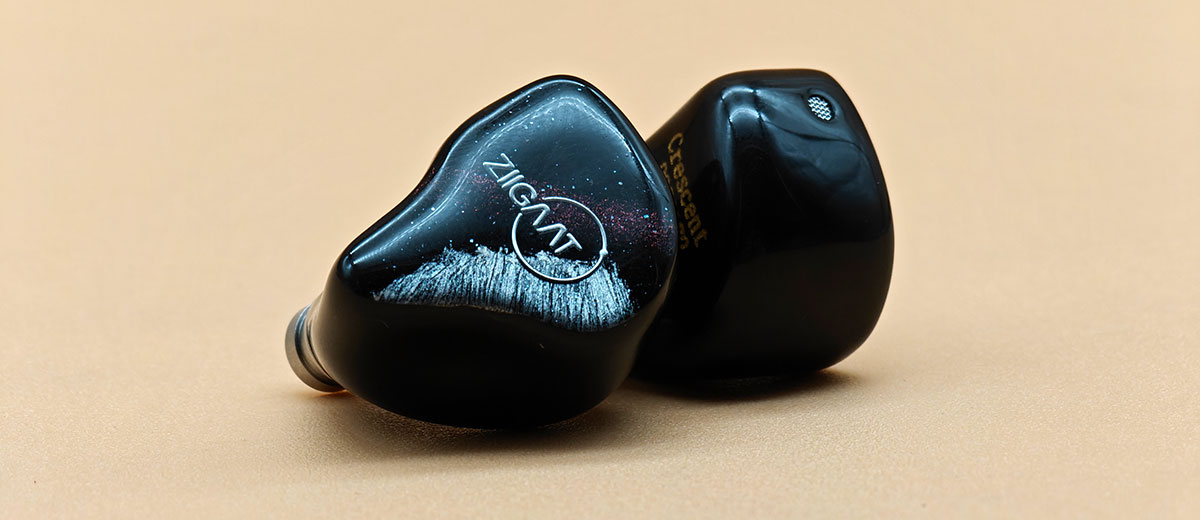
Synergy
Efficiency & Sensitivity
The Crescent has a sensitivity of 102 dB and an impedance of 12Ω, making it easy to drive from nearly any source. Even basic dongles and phones can deliver a comfortable volume level without strain.
Using the 3.5mm plug already delivers enough volume and stability in most setups. The 4.4mm option doesn’t add much beyond flexibility, as the Crescent isn’t prone to hissing or static that would demand a balanced output.
At lower volumes, the bass still carries a convincing thump, and treble detail remains present. Nothing important drops away, so it holds together well without the need to push levels.
When turned up, it gains more energy, though the top end can sound bright and may fatigue some ears. Control stays intact overall, but the added sharpness at louder settings is worth noting.
Pairings
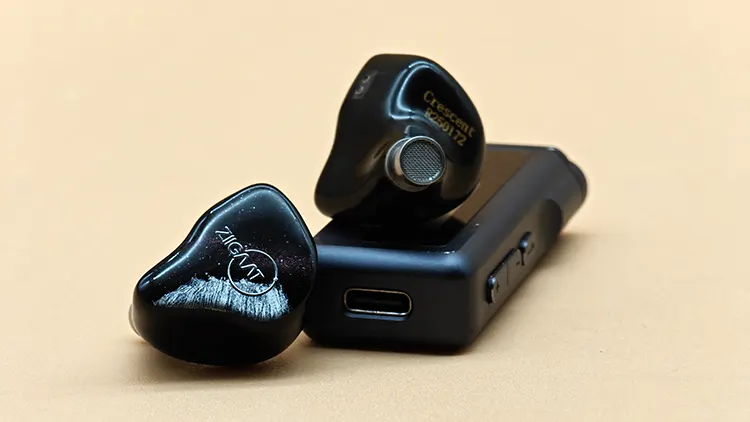
Out of a phone, the Crescent reaches more than enough volume and keeps a solid sense of bass presence. It doesn’t struggle with dynamics, but the overall presentation feels a little flatter compared to stronger sources.
With the FiiO JA11, the sound gains more control and clarity in the treble. Bass impact also tightens up, making the balance feel more precise without losing warmth.
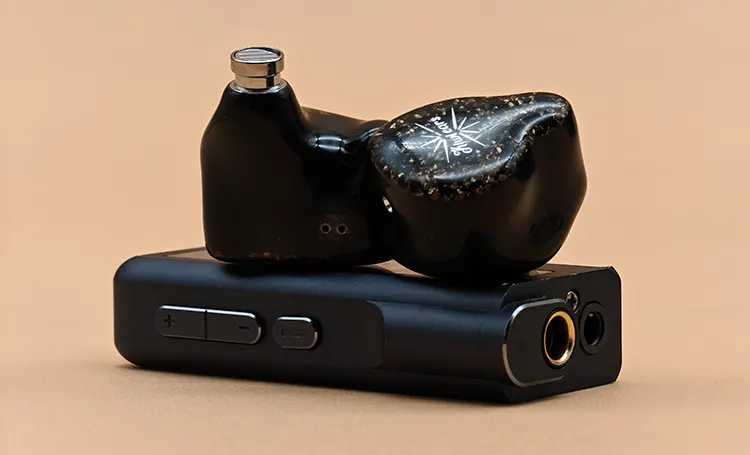
The Heartfield R1 adds some extra weight in the low end, which brings out more fullness. However, separation isn’t as strong here, giving a thicker but less spacious impression.
Colorfly’s CDA-M2 is the best pairing, opening up the stage with cleaner imaging and detail. Bass hits with better definition, while treble gains a smoother but more articulate edge.
Select Comparisons
Kiwi Ears Septet
Technical
The Kiwi Ears Septet is built with a seven-driver hybrid system that combines four driver types.
A 10mm composite dynamic driver is used for the bass, four balanced armatures handle the midrange, a micro planar driver takes the treble, and a piezoelectric driver pushes into the ultra-high extension.
A five-way crossover manages the drivers, keeping each in its own band. Output is channeled through a three-bore nozzle system, a layout intended to maximize separation and control between the ranges.
Design
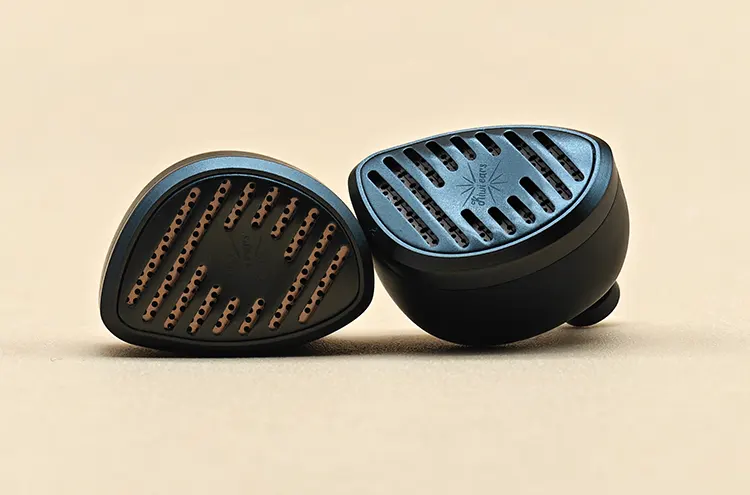
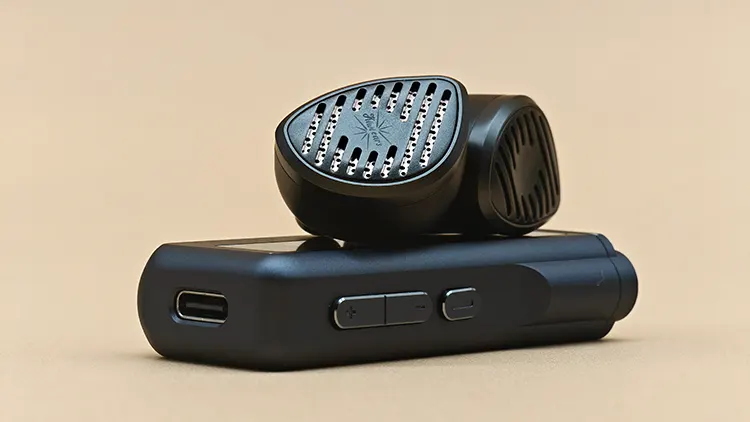
The Septet features a dark gray faceplate finished with a lighter accent pattern. Beneath the surface sits an open-back grille, while the rest of the body is a solid metal shell that gives it a weighty, durable feel.
Branding is kept minimal with only the Kiwi Ears logo on the exterior. It uses recessed 0.78mm 2-pin connectors, a short nozzle with a mesh lip, and two small vents cut into the shell for airflow.
Performance
The Septet’s bass, which slams harder and digs deeper with greater subbass rumble, delivers itself better. The Crescent lands hits with good punch and control, but it simply lacks the fullness and power that makes the Septet’s low end more convincing.
The midrange flips the balance, with the Crescent sounding fuller and more natural in the vocal body. The Septet may pull ahead in clarity, but its leaner tone keeps voices from carrying the same warmth or timbre.
Vocals show that divide even more clearly. Male and female ranges feel lifelike and rounded on the Crescent, while the Septet pushes sharper edges that strip away body for the sake of articulation.
The treble of the Septet offers brighter sparkle and more shimmer in cymbals, sometimes leaning towards sibilance. The Crescent avoids sharpness with its smoother top end, but it loses some airiness and fine detail that the Septet uncovers more easily.
Soundstage also tips toward the Septet, spreading instruments wider and deeper into a larger image. The Crescent relies on its stronger imaging to stay clean and organized, even if it cannot match the width and depth of the Septet.
Kiwi Ears Astral
Technical
The Kiwi Ears Astral uses a hybrid configuration with one dynamic driver and six balanced armatures. Its 10mm bioceramic diaphragm dynamic driver is tuned to handle the bass region.
The midrange is covered by dual balanced armatures, while a modified SWFK dual tweeter extends into the treble. These groups are managed by a crossover system that splits the spectrum into low, mid, and high bands.
Design
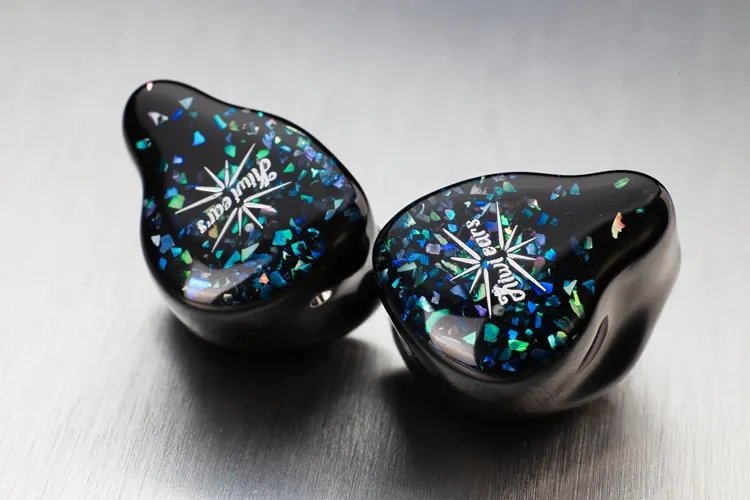
Astral’s faceplate combines a dark resin base with embedded gold flakes, finished in a glossy coat that reflects light with a shimmer. A white Kiwi Ears logo is placed at the center, giving contrast without cluttering the look.
Its shell is molded in black resin with a rounded and slightly bulbous cut that follows the ear’s contour.
The inside carries gold markings for model, channel, and serial, while the top uses a standard 0.78mm 2-pin connector, and the wide metal nozzle is fitted with a grooved grill and mesh filter.
Performance
The sub-bass of both IEMs reaches equally deep, but the Astral leans smoother while the Crescent slams harder with midbass punch. That extra thump makes drums and basslines hit more convincingly, leaving the Astral a step behind in sheer impact.
Male vocals benefit from the Crescent’s added weight and body, sounding fuller and more natural compared to the Astral’s leaner tone.
The Kiwi model does well in clarity, but its lighter approach keeps voices from feeling as grounded or lifelike.
Instrument timbre follows a similar story, with the Crescent giving instruments extra warmth and richness. The Astral keeps things cleaner, yet in doing so trades away the sense of fullness, leaving its midrange presentation a touch thinner.
Treble is where the Astral pulls ahead, carrying more sparkle and air that brings cymbals and higher notes to life.
The Crescent avoids harshness with a smoother top end, but its safer tuning cuts away some detail and openness that the Astral handles with more finesse.
Soundstage also tips toward the Astral, offering better width and depth to create a larger space for instruments.
The Crescent fights back with strong imaging and separation, but it ultimately cannot match the reach and layering that the Astral lays out more effectively.
My Verdict
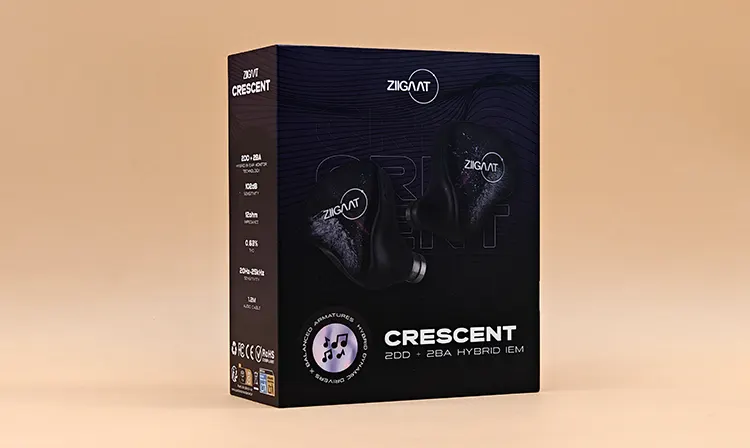
The hybrid multi-driver ZiiGaat Crescent IEM stands out with a midrange that feels musical and lifelike, making vocals convincing across male and female ranges. Its bass carries punch and rumble with good control, while imaging stays accurate enough to keep instruments clearly placed.
Despite coming with a thin stock cable that doesn’t match the refinement of the IEM itself, the Crescent still feels like a well-rounded release.
With its engaging midrange, solid bass, and precise imaging, it proves itself as one of ZiiGaat’s most balanced and enjoyable offerings yet.
ZiiGaat Crescent Technical Specifications
- Driver Type:
- One (1x) 10mm PET dynamic driver + one (1x) 10mm LCP dynamic driver
- One (1x) Knowles 30262-163 balanced armature, and one (1x) Knowles 33518 balanced armature
- Plug: 0.78mm 2-pin modular cable with interchangeable 3.5mm and 4.4mm plugs
- Frequency Response: 20Hz – 25kHz
- Impedance: 12Ω
- Sensitivity: 102 dB
