

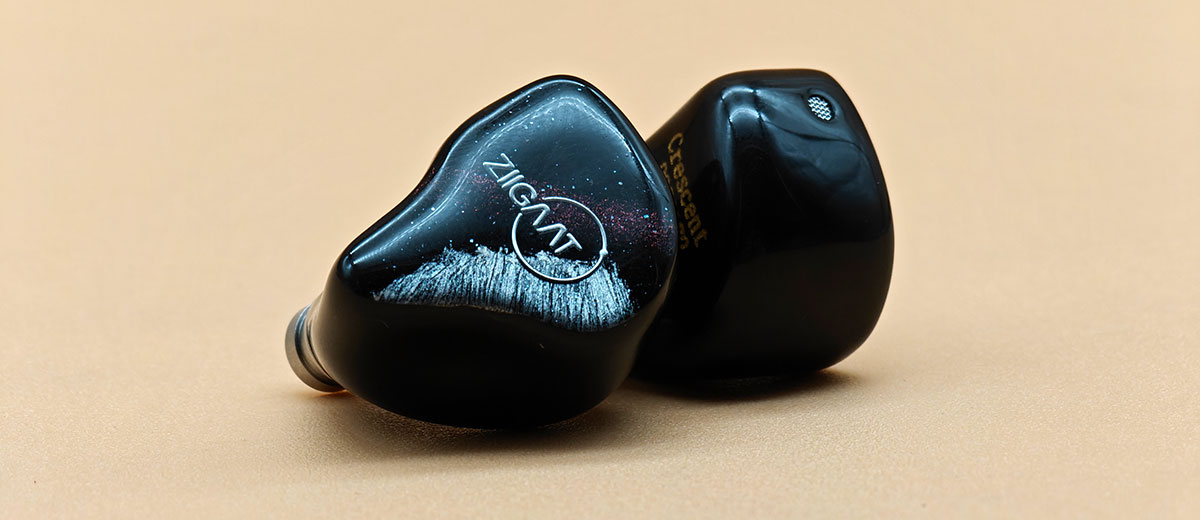
Kurt reviews the ZiiGaat Crescent, a new hybrid dual 10mm isobaric dynamic and dual Knowles BA driver universal IEM currently priced at $279.00.
Disclaimer: This sample was sent to me in return for my honest opinion. Headfonics is an independent website with no affiliate links or services. I thank the team at Linsoul and ZiiGaat for giving me this opportunity.
Click here to read more about the ZiiGaat products we have previously reviewed on Headfonics.
This article follows our latest scoring guidelines, which you can read in more detail here.
ZiiGaat has steadily built its lineup with models like the Odyssey, Lush, and Arcanis, each exploring different approaches to tuning and presentation.
Their willingness to experiment with unique hybrids has shaped them into a brand known for combining great sound with higher-end, unique configurations.
Now comes the ZiiGaat Crescent, bringing together premium dual dynamic drivers and dual balanced armatures, aiming for tonal balance and refinement.
Will the Crescent mark itself as the next standout in ZiiGaat’s growing catalog, and how will it compete against the likes of Kiwi Ear’s Astral and Septet? I found out in my full review below.
Features
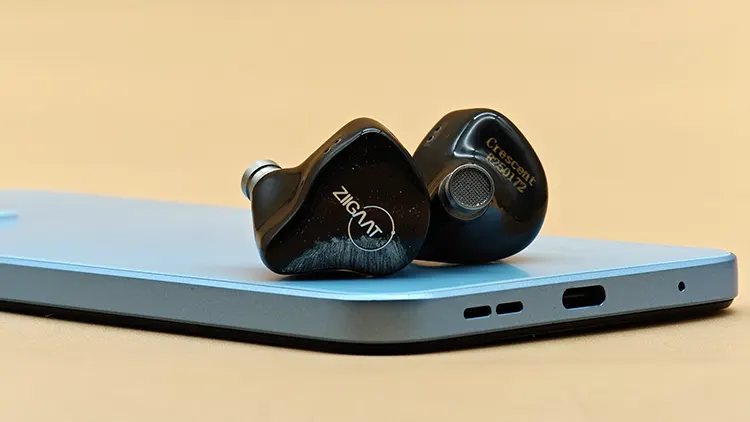
The ZiiGaat Crescent is a four-driver hybrid that combines two dynamic drivers with two balanced armatures.
A 10mm PET diaphragm is paired with a 10mm LCP diaphragm in an isobaric configuration, giving the dual dynamics a stable and efficient foundation.
The midrange is handled by a Knowles 30262-163 balanced armature with a custom ported design. A Knowles 33518 balanced armature tweeter is placed for treble, covering the upper range and air region.
The crossover details are not disclosed by ZiiGaat, but even so, the layout strongly suggests a conventional three-way split across the dual dynamics, midrange armature, and tweeter.
Design
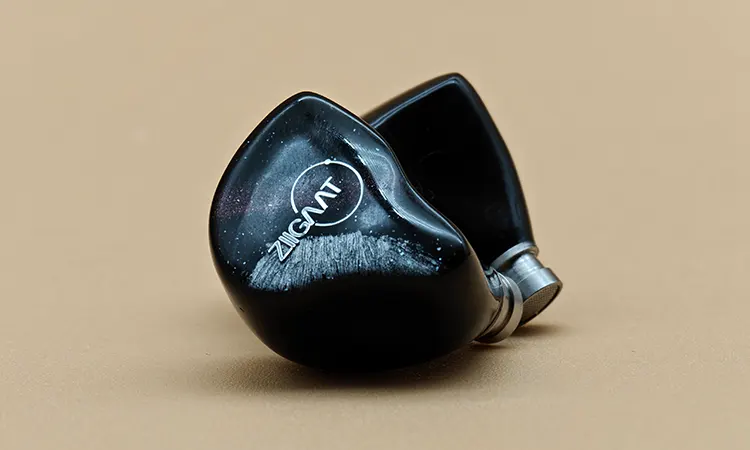
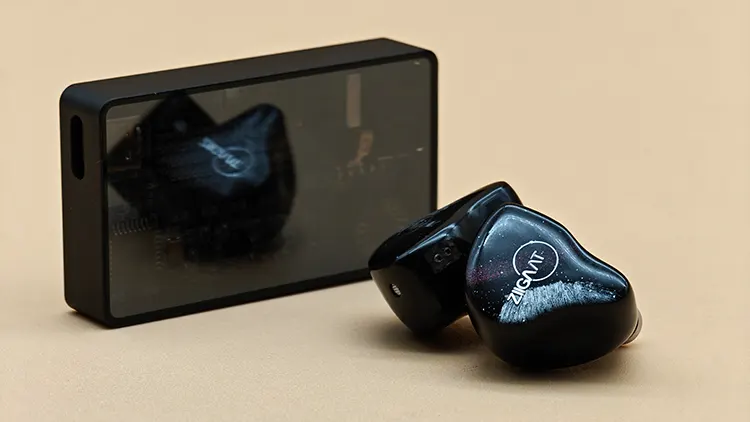
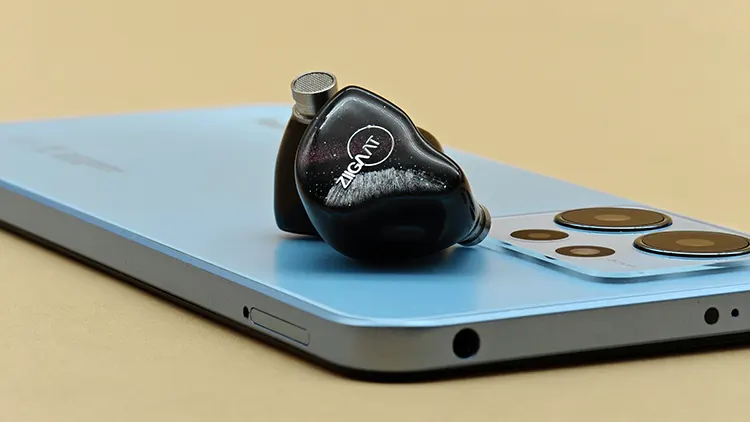
The ZiiGaat Crescent carries a faceplate design that feels distinct within the brand’s lineup. White speckles appear like stars scattered across a night sky, joined by a faint red nebula and a bold white streak resembling an asteroid belt.
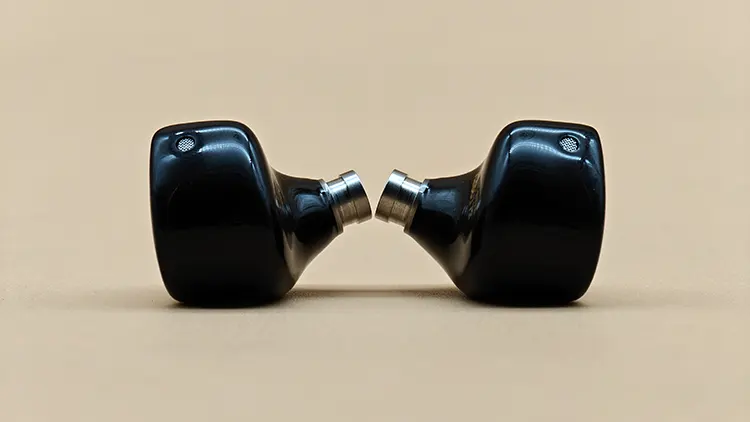
Its shell is a familiar glossy black resin, using the same ergonomic form seen on other ZiiGaat models. The finish is smooth and rounded, giving it a compact and natural fit.
Markings are kept simple, with the Crescent name and serial number printed in gold on the inner side. Channel identification is integrated by prefixing the serial with an L or R, rather than using separate markings.
A single vent is cut into the top of the shell, protected by a fine mesh filter. This placement mirrors other ZiiGaat designs, offering airflow to the dual dynamics while keeping the exterior clean.
Connection points are the standard flush 0.78mm 2-pin sockets. At the front, a stainless-steel nozzle with a mesh filter is used, ensuring durability while keeping ear tips firmly in place.
Comfort & Isolation
The ZiiGaat Crescent keeps the familiar ergonomic resin shell design used across the brand’s lineup. Its rounded body sits securely in the ear, staying light and stable without creating pressure points.
Comfort holds up well even in long sessions thanks to the compact profile and smooth build. Unlike the Arcanis and Lush, the Crescent does not suffer from driver flex, making it quieter to adjust.
Its size is smaller than previous ZiiGaat IEMs, making it more practical for sleep and simply better for comfort than before. While it still isn’t ideal for side sleeping due to pressure on the ear, it remains manageable for upright rest.
Isolation is solid once sealed, cutting out most environmental noise during daily use. It is effective enough for commuting and office work, keeping distractions at a minimum without relying on an overly deep fit.
Ear Tips
The ZiiGaat Crescent includes three sets of tips, the same selection found with the Luna. A wide-bore silicone set, a transparent silicone set, and foam tips are all provided.
The black translucent wide-bore silicone tips sit securely and give a natural fit. They don’t noticeably alter the Crescent’s sound, making them a safe and consistent option, though they can feel a little itchy during longer sessions.
The white transparent silicone tips use a softer, slightly tacky material that locks in more comfortably. They provide the strongest isolation of the set and avoid the itchiness, even in extended use.
Foam tips are also included, giving stronger isolation and a touch more low-end presence. They are the weakest choice here, as they trade comfort and noticeably dampen the treble compared to the silicone options.
Stock Cable
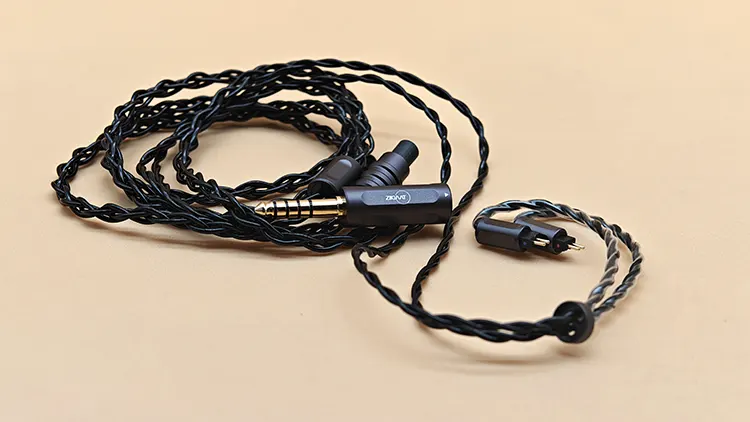
The stock cable with the ZiiGaat Crescent is identical to the one included with the Luna. It is a thin, black 4-core braid that feels light but lacks the thickness and refinement ZiiGaat normally brings.
The hardware uses matte black housings with the ZiiGaat logo on the plug, keeping the look understated. It connects via standard 0.78mm 2-pin connectors, which sit flush and hold securely without wobble.
This is a modular cable that includes both 3.5mm and 4.4mm plugs. The system is simple to swap, though the lack of a firm locking mechanism makes it feel a bit worrisome during use.
Functionally, it works as intended, but the thin build paired with the no-lock plug system leaves it feeling less premium than the Crescent itself.
Packaging & Accessories
The ZiiGaat Crescent arrives in a dark outer sleeve featuring a render of the IEMs on the front with the Crescent name in bold text. The back of the sleeve carries the full specifications list along with driver details and certification icons.
Sliding the sleeve off reveals a black inner box finished with a clean matte surface. The presentation is consistent with ZiiGaat’s other models, relying on a simple book-style design.
Flipping open the lid shows the Crescent secured in a cardboard-foam tray, each earpiece held in a precise cutout. The layout is identical to the Luna, with the IEMs presented at the top and storage space below.
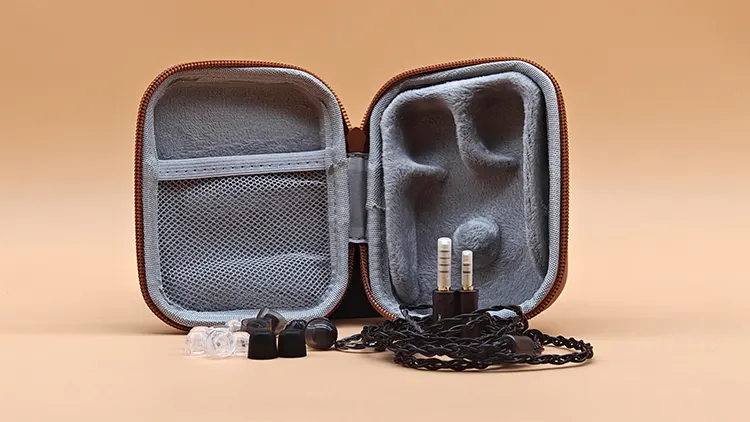
Unboxing the bottom cardboard box reveals the brown leatherette carrying case inside. The case sits snugly, filling the space with some warranty cards and wearing cards.
The case itself is semi-rigid with a zipper and features the ZiiGaat name embossed on the surface. Its interior is divided into a main cavity for the cable and a mesh pocket for smaller parts.
Inside is the stock modular cable with its 3.5mm and 4.4mm plugs, along with three sets of tips: wide-bore silicone, translucent silicone, and foam. Extra mesh filter, brushes, or other accessories aren’t included here, keeping the packaging similar to ZiiGaat’s other IEMs.
Sound Impressions
The following sound impressions of the ZiiGaat Crescent were completed using a mix of the HeartField R1 and Colorfly CDA-M2 dongle DACs.
Bass
Low-end presence on the Crescent reaches down with a rumbly foundation that gives music a strong sense of weight. Depth feels both clean and natural, making the subbass satisfyingly physical without becoming muddy.
Punch lands with authority in the midbass, while kick drums and basslines hit with convincing body. Rhythm sections sound anchored and solid, adding warmth that supports the overall mix.
Texturing across the bass is clear, with details in notes that avoid blending into a blur. Sheer bass prowess feels sufficient, supplying enough emphasis to stand out without overwhelming balance.
Drums, in particular, benefit, hitting with slam and carrying a realistic body that makes them feel lifelike. The combination of rumble, punch, and clarity shapes a low end that stays engaging at all times.
Mids
Vocals come forward with a natural tone that feels smooth and convincing. Male voices carry weight and body, while female vocals rise cleanly without harshness.
Clarity holds steady even when tracks grow dense, keeping voices stable and easy to follow. Upper mids provide presence but stay controlled, avoiding peaks that could turn sharp.
Warmth gives the midrange fullness and a musical tilt that feels natural. In return, detail takes a step back, leaning more toward flow than strict resolution.
Instruments share the same qualities, with guitars striking clean and pianos carrying lifelike weight. They sound musical and engaging, though fine texture is left behind in favor of warmth and body.
Treble
Highs on the Crescent carry a smooth and refined tone, adding sparkle without introducing sharpness. Details are present in good quantity, giving tracks a convincing sense of clarity.
There is no sibilance even in brighter recordings, keeping treble fatigue completely absent. This makes long listening easy, with the top end staying controlled at all times.
Air can be lacking, preventing the treble from sounding open or expansive. It leans safer in extension, trading spaciousness for a more grounded presentation.
What stands out is the balance of refinement and restraint. It creates a treble that feels musical and polished, but not the most revealing or airy in nature.
Staging & Dynamics
The Crescent does not push out a wide or deep stage, but it keeps it size above average. It does avoid sounding closed-in, but it never offers a properly expansive presentation or experience.
Instruments and vocals hold their place firmly, with positions properly mapped out clearly across the mix. This makes imaging one of its strongest qualities, adding confidence to the overall presentation.
Busier recordings remain tidy, with sounds and layers kept apart instead of collapsing together. Separation, one of its strong points, helps prevent congestion, keeping the sound clean and controlled.
Its dynamics lean more toward refinement, carrying punch without going over the top. Shifts in the volume land smoothly, never jumping out with sudden force or brightening to create additional fatigue.
Click on page 2 below for my recommended pairings and selected comparisons.
