

Selected Comparisons
The following comparisons to the Vision Ears VE ZEN were completed using a mix of the iBasso DX340 and the Cayin N6iii with the R202 motherboard.
Vision Ears VE10
The Vision Ears VE10 was launched last year and, up to this point, it was the only universal IEM in the older VE Series line. It has now been rebranded as the VE ZEN 10th Anniversary Edition.
Technical
Aside from the PRV or pressure relief value, which, in a way, is really the VE ZEN’s interpretation of the lateral venting grill on the VE10, the internals are the same. After all, the VE ZEN is Vision Ears taking the VE10 back to what they do best, custom monitors.
That means both are hybrid 5-way crossover monitors with a single 8mm dynamic driver for the lows using an acoustic low-pass and 8 balanced armature drivers for the mids and highs, and 1 super tweeter for the ultra-highs.
You will not be surprised to learn that their rated impedance and SPL are also the same at 8.4Ω (at 1 kHz) and 118.6 dB @100mV @1KHz.
If there is going to be an audible difference, it’s in the acoustical environment and how the signal is delivered into your ear. One is made of metal, the other is resin; one uses ear tips, the other does not.
Design
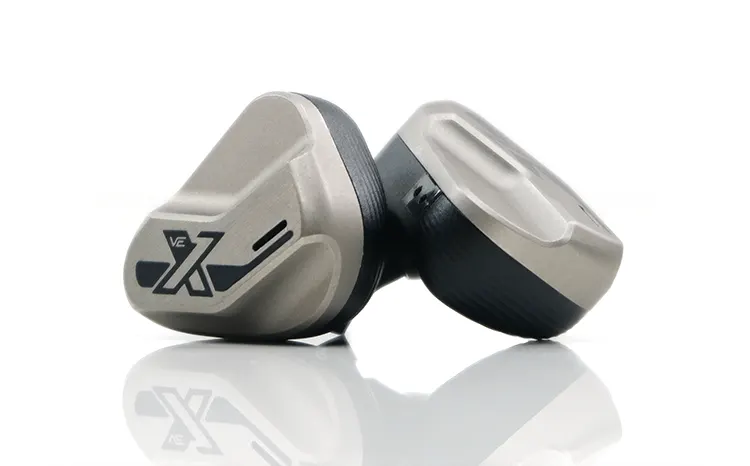
This is where things are very different, and there will be fans of both formats. The universal VE10 is much smaller, though its aluminum shell is arguably heavier than the VE ZEN’s resin build.
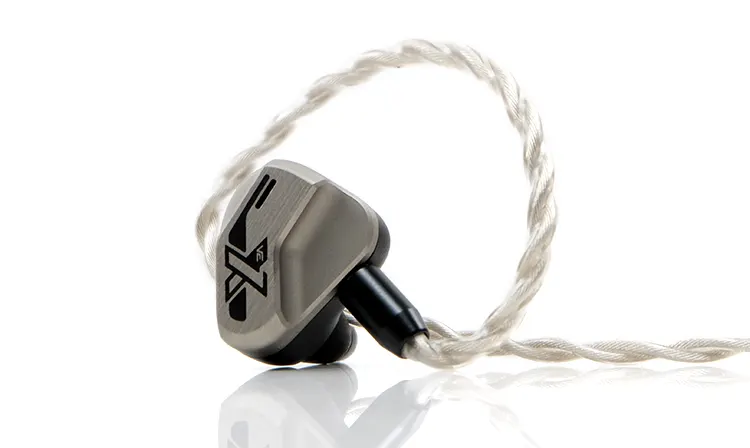
You only get one design choice with the VE10, but it’s a beautiful choice nonetheless. The finishing is a two-tone approach with a mix of ribbed black for the shell and a striking matte silver/grey faceplate. Both the shell and plate’s aluminum are anodized with a slimline but long venting port to the front.
It has a lovely cyberpunk design, not that far away from the EXT MKII design language, and I know there are a lot of fans of this more robust build and modern look.
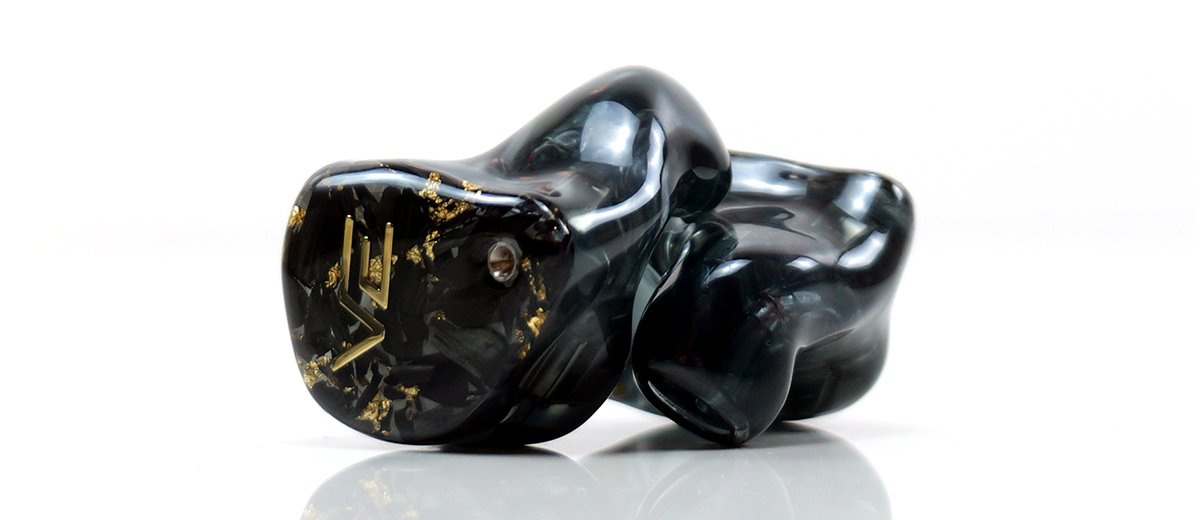
The VE ZEN can almost look like anything you want it to look like within certain parameters. Its resin shell will closely match your ear’s shape, so there is a degree of conformity required. Outside of that, go crazy.
For the Obsidian Gold version I have here, it’s more of a classic custom design than anything aggressive or left-of-center. I would say both are striking, but in very different ways.
For comfort and isolation, no question that the VE ZEN outperforms the universal variant for passive isolation and secure and accurate fit. However, I rate the VE10 as very good in its own right with excellent levels of isolation despite being a universal hybrid.
Tips are a factor with the VE10. I use the wide-bore silicone stock tips as they create the most immersive sound of the supplied stock choices.
Both have the same stock cable, save for the fact that the VE10 version, called the Titan, has a transparent PVC jacket rather than smoky, creating a much brighter visual appeal.
Performance
The frequency response between these is almost the same. Any changes you will hear are due to the differences in how the sound is delivered inside the ear canal, i.e,. solid resin to the 2nd bend or a silicone ear tip.
For example, the bass depth on the custom sounds a little more elevated with more reach and sub-bass presence, whereas the silicone-tipped VE10 biases a little more to a speedy mid-bass punch and a touch more contrast.
The fundamental frequency on the VE ZEN mids is a touch heavier, the vocal harmonic balance a little smoother and more even-harmonic biased. The VE10 version is a little lighter in weight, imaging a smidgen further back with more noticeable percussion attack and presence.
The VE ZEN resin shell passive isolation is superior, which, in turn, creates a more focused presentation.
The VE10 silicone tips are more porous, and whilst the music is playing, you will not hear too much by way of external noise. I perceived the positioning as a little further away, so it’s not as attention-grabbing as the VE ZEN.
Overall, the VE10 sounds a shade lighter and cleaner in tone with the silicone tips, with a soundstage that sounded a tiny bit flatter than the VE ZEN. The custom format delivers a slightly smoother, beefier tone, and given its longer nozzle and superior isolation, the soundstage sounds more immersive and dynamic.
Unique Melody Maven II Crescent
The Unique Melody Maven II Crescent was launched in 2024, with our review of the custom format version in early 2025.
Technical
Both IEMs are hybrids, but the key difference here are the additional EST drivers inside the Maven II Crescent.
Inside are 2 dynamic drivers for the lows, split between a 9.8mm ‘core bass’ dynamic driver and a smaller 6.8mm variant that covers the ultra-low and bass frequencies. Beyond, there are 4 BA for the mids and highs (mix of Sonion and Knowles), and 4 Sonion electrostatic drivers for ultra-highs with a 5-way passive crossover.
The VE ZEN also uses a 5-way crossover, but only one 8mm dynamic driver as opposed to 2 for the lows, opting instead to blend the lows and mids with 2 dual BAs, a dual for the mids, another for the mid/highs, and a BA super tweeter for the ultra-highs.
The Maven II is rated at 10.7Ω for impedance with an SPL of 106 dB/mW @1kHz, so it is quite efficient and reasonably sensitive. However, it is not as sensitive as the 118.6 dB rated VE ZEN in real-world tests using the DX340 in a low-gain mode.
However, neither monitor will pose any problems with a high-gain setting on a dongle or any resolving DAP.

Design
Both are custom IEMS with world-class levels of passive isolation. That’s where the similarities end, and whilst I give the edge to the VE ZEN in terms of lightweight presence and absolute comfort, there is no denying that an accurate rendition of my ear canal made out of titanium is truly unique.
No question, for pure ingenuity and craftsmanship, the grey hue of the 3D-printed Maven II custom titanium shells are gorgeous. And it’s not just the look but the finish, which is smooth, accurate, and fits my ears perfectly.
The VE ZEN’s resin, however, is more comfortable and has a small edge in passive isolation but is barely noticeable in everyday use. Both are vented IEMs, so you have to tip your hat to UM and VE for producing such excellent levels of ‘quiet’.
The one caveat of titanium is its temperature sensitivity. In a cold room or a frosty outdoor setting, it will feel very chilly in your ear for a few minutes before it warms up. That’s not the case with the VE ZEN.
One other anecdotal observation is the length and pressure of the Maven II Crescent nozzle. It’s deeper and has a little more pressure on the ear canal walls, but not quite as wide at the tip.
The VE ZEN dimensions feel just right for my ear, giving it a slightly more relaxed feel over longer listening sessions.
The Maven Pro is custom-designed in collaboration with PW Audio of Hong Kong and is sold separately for $562 via Musicteck USA.
It’s 24AWG gauge OCC copper 4-wire geometry is slightly thinner than the 21AWG 1AWG silver-plated over 6NOCC copper inside the premium cable that comes with the VE ZEN.
Performance
You should have no problems identifying the differences between these two monitors.
Both have excellent sub-bass presence, perhaps 1-2dB more for the Maven IIi Crescent, but this is dwarfed by a heavier mid-bass and upper-bass presence from 60Hz up to around 250Hz, producing a fuller-sounding and warmer low-end.
Perceptually, the VE ZEN bass will sound bigger, though the UM tuning will have a stronger bass-to-mids separation courtesy of a more neutral upper-bass and lower-mids.
The Pinna Gian is also quite a bit stronger from 2-5k on the VE ZEN. The Maven II Crescent is a little more lifted around 1-2k, so imaging-wise, anything that falls in this band will position similarly.
However, beyond, it’s a little further back. Combined with a more neutral set of lower-mids and less warmth, the Maven II Crescent strikes a slightly leaner note.
That note also has a bit more contrast courtesy of a slightly stronger upper-treble tuning. It’s not that the VE ZEN lacks treble; it does have it, but it’s a different timbre to the EST drivers inside the UM custom.
I find the UM EST drivers just to be a bit more articulate and attack-minded compared to the VE ZEN Ba drivers, which deliver more body and a slightly drier decay.
Overall, the VE ZEN is a slightly warmer and more vocal-focused monitor, whereas the Maven II is more to the neutral-to-natural side with a cleaner tone and a bit more energy in the highs.
FIR Audio Krypton 5
The FIR Audio Krypton 5 forms part of the company’s Frontier Series and was launched in 2023. It also won our Top Gear 2023 Award for the Best Custom IEM.
Technical
As with the previous comparisons, the Krypton 5 is also a hybrid multi-driver custom. Like the VE ZEN, it’s purely a dynamic and BA driver implementation, but it is a stripped-down configuration with a strong focus on the acoustics of the dynamic driver.
The Krypton 5 is a 5-driver configuration consisting of a 10mm dynamic and 4 balanced armatures, but that only tells half the story. The BA are OpenDriver, meaning they are tubeless, and the bass response is divided between the 10mm dynamic driver and a single OpenDriver BA.
The dynamic driver is called a “Kinetic Bass Dynamic Driver” and houses a hybrid bone conduction technology, so you get a mix of bone conduction as well as traditional air conduction.
The dynamic driver is also open and ported to the exterior of the shell to maximize the effect of the bone conduction mechanism. Hence, the Krypton 5 will not isolate anywhere near as much as the VE ZEN.
The last key acoustical difference is the Krypton 5’s use of ATOM filters, which also similarly target pressure relief to the PRV on the VE ZEN. However, the Krypton 5 filters are not fixed in nature, with FIR Audio supplying swappable modules that vary the dB isolation and amount of relief.
This, in turn, affects the sound or performance from very bassy to mildly bassy. I typically use a silver ATOM filter as it produces the best balance of sound and isolation (-15 dB).
There is no SPL rating for the Krypton 5; we just have the impedance level, which is set at a reasonably low 22Ω, but I can say it is not as sensitive as the VE ZEN when A/B’ed using the N6iii/R202 combo in low gain mode.
Design
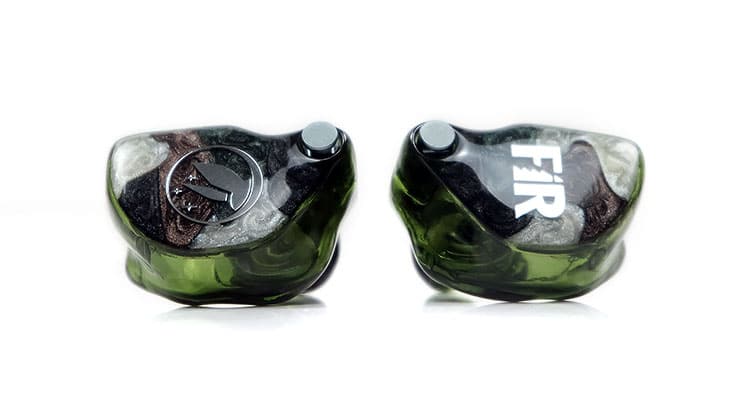
Two very similar resin-build approaches to the respective custom designs. However, courtesy of the ATOM filter system and the exposed dynamic driver, the Krypton 5 has a lower level of passive isolation.
I guess it is unavoidable, given the nature of how the bone conduction technology works on the FIR design. You can tighten up the passive isolation with the -20 dB Gold filter, but it comes at the cost of unbalancing the sound signature, giving it an overload of bass.
Both have similar comfort levels. I would rate the Krypton 5 form factor as marginally smaller, and since it has 5 drivers as opposed to 10 with no tubes, it feels a little lighter in the hand and in the ear.
Though the Krypton 5 does not have a horn principle design for its spout, the shape is elongated to ensure a very secure fit, similar to the VE ZEN.
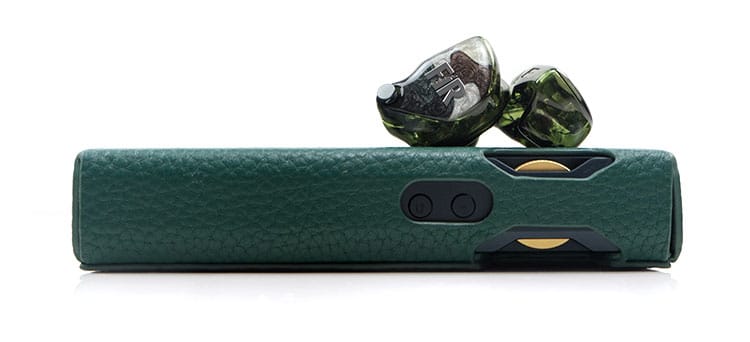
The mix of green translucent for the shell and a complementary camo faceplate has a slightly brighter tone than the darker Obsidian Gold and Midnight shells of the VE ZEN. However, has a similar blended feel to its finish as the VE ZEN.
The supplied 21AWG silver-plated over 6NOCC copper stock cable for the VE ZEN is a step up in aesthetics and gauge from the Krypton 5’s 48″ 26AWG SPC ‘Scorpion’ wire.
The barrels have a more premium feel to them, with a classier braided soft PVC jacket that makes the Krypton 5 cable feel hardened despite being lighter in the hand.
Performance
No doubt that the Krypton 5 is the bass king, but everything above might weigh more favorably toward the VE ZEN.
It’s not that the VE ZEN is less elevated than the Krypton 5. From 20Hz up to 100Hz, it feels like it has similar extension and presence. Rather, it’s the aggression of the Krypton 5 bass courtesy of the open-back hybrid air and bone conduction tech that is the difference maker.
It hits harder and faster to a level I would describe as visceral, whereas the VE ZEN bass is full and weighty but slightly softer in its dynamics.
Above and beyond the lows, the VE ZEN is going to win more plaudits. From 2- 5k, the Krypton 5 is a little more subdued and, at times, struggles for air and vocal presence when the bass starts to get busy.
The VE ZEN has a stronger 2-5k pinna gain, so vocals can and do stay ahead of the bass response, ensuring their presence is more emotive and detailed-sounding.
The Krypton 5 has excellent depth and decent height, so staging-wise the separation is good, just a lack of midrange presence and lower-treble fill when a/b’ed with the VE ZEN.
You can enhance the treble fill on the Krypton 5 by changing filters. Switch to the red filter, and the bass presence is pulled back, allowing the treble to pick up in presence and influence.
So, there is a degree of flexibility there, but to be honest, I am not a fan of stripping away its strongest assets, that excellent bass weight and control.
In summary, pick the Krypton 5 if you want some of the best lows in the business. Opt for the VE ZEN if you require beautiful vocals, accompanied by substantial bass weight.
My Verdict
The hybrid Vision Ears VE ZEN custom monitor takes everything I love about the universal format VE10 to the next level.
It’s the same basic sound signature, but it sounds like it’s on steroids with a more immersive, slightly deeper sound, complete with a bolder vocal presentation.
It’s possibly one of the most complete ‘vocal-lover’ performers out there, and what a joy it is now to have this in a perfectly fitting and attractive-looking custom shell.
The VE ZEN will not appeal to those who crave a massive soundstage with airy treble sparkle. There are better options out there for that kind of sound. This is a more emotive sound signature, one that places you right in the middle of the performance.
I was not expecting Vision Ears to create a custom version of the VE10, but I am glad they did. The VE ZEN fully deserves its Custom Line flagship status.
Vision Ears VE ZEN Technical Specifications
- 5-way system with 10 drivers (Hybrid: BA + DD)
- 1 x Bass driver (8mm dynamic driver)
- 4 x Bass /mids drivers (BA)
- 2 x Mids drivers (BA)
- 2 x Mids /highs drivers (BA)
- 1 x Supertweeter(BA)
- Impedance 8.4Ω (at 1 kHz)
- 118.6 dB @100mV @1KHz
- Frequency 10 Hz – 25 kHz
