

Synergy
Power
At this tier, it will be hard to find a more powerful model with this much wattage on tap. I was able to power some of my hardest-to-drive headphones with the DX5 II.
I pulled out my set of Dekoni Blue headphones for that, and the single-ended side can push them to very loud levels with a minimum amount of distortion and breakup.
When it comes to driving IEMs, the Topping DX5 II has that 200-step volume control, plus a two-level gain adjustment, which translates into fine control ability. That makes the DX5 II IEM-friendly. It also seems to be hiss-free on the low-gain setting.
It’s delicate enough for sensitive IEMs. One of the most sensitive models I’ve encountered lately was the Flare Audio Studio Basic set, which also reveals hiss when others fail to do so, and I could not detect any.
Pairings
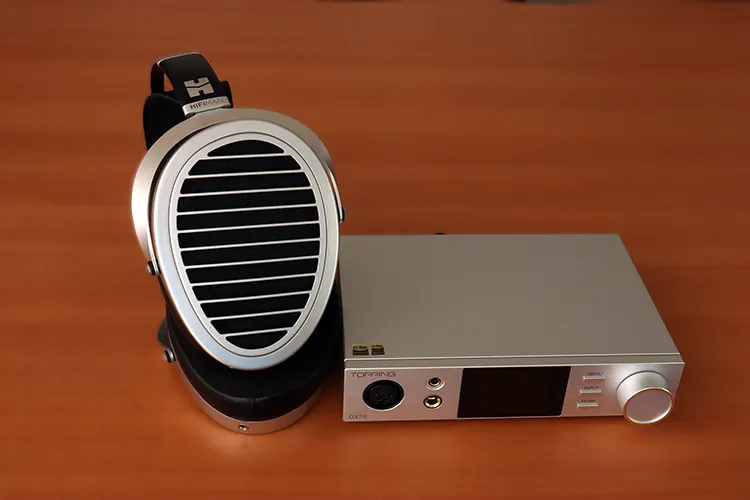
High-tier gear has the capacity to expand a good headphone’s soundstage without altering focus and placement. The DX5 II seems to limit the size of the overall soundstage of ultra-wide-sounding cans, however.
For example, I was unable to obtain the ultra-wide soundstage that the Arya line of headphones can produce, but the soundstage was maximized on a Sundara, which has a smaller driver size.
In essence, try not to pair the DX5 II with an ultra-wide sounding can like the Arya V2, since it does better with the Organic variant, which has a reduced size soundstage but a better focused soundstage over the V2.
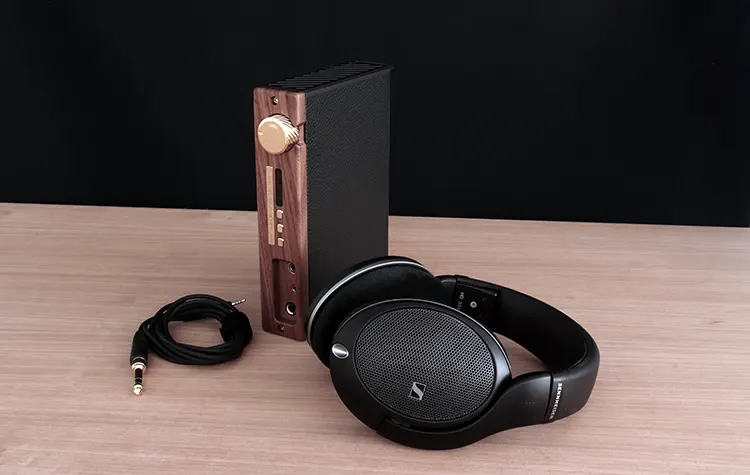
But somehow, dynamic cans like the Sennheiser HD 490 PRO Plus or the oval brothers, the HD 505, and the HD 550 produce better staging from the DX5 II. It’s a combo unit that caters to wattage and voltage, but current seems limited, which seems to be the determining factor.

Select Comparisons
iFi audio ZEN DAC 3
Technical
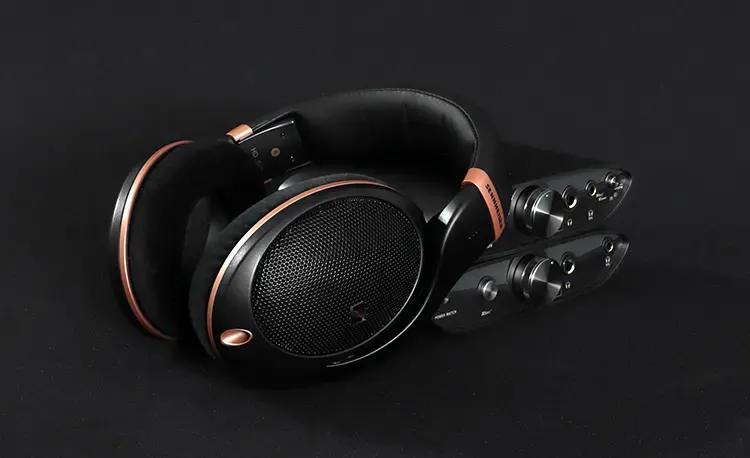
The ZEN DAC is one of iFi audio’s most iconic items on its product list. It’s what I call a staple piece in that most of our readers have one, have had one, or have heard one.
And, yes, version 3 has a heftier price tag compared to the first version, but some refinements were made in version 3.
The ZEN DAC 3 is digital savvy, capable of the same 768k 32-bit PCM decoding and the same DSD512 capability, alongside MQA.
The ZEN DAC 3 uses iFi’s firmware running a Burr-Brown DAC section, an XMOS USB implementation with a USB-C port that can manage faster data transfers compared to an older USB B type of connection.
Design
The only DAC amplifier AIO you will find with a rounded trapezoid-shaped body style out there will come from iFi, and the ZEN DAC 3 continues the tradition. But version 3 throws a splash of luxury on the fascia, adding lines and texture over its predecessor.
The IO on the ZEN DAC does supply balanced connectivity, and although the 4.4mm connector is commonplace nowadays for powering headphones, it’s not as common in the analog line level realm.
All the components after the DAC section are analog on the ZEN DAC 3, including the volume knob and the XBass feature that gives the user a restored bass response that’s a refreshing tune over the common, and often bloated, bass boost features. But I prefer a full-featured parametric, if you catch my drift.
Performance
Of late, iFi audio switched over to Cirrus Logic on some of their components and has lost the warm sound signature of the Burr-Brown DAC section and their custom firmware.
Some have mentioned this besides me, but not as specifically. But fortunately, the ZEN DAC 3 retains that tradition and gives off the familiar iFi warm house sound.
The overall sonic characteristics of the ZEN DAC are warm, smooth, and musical, with an expansive soundstage. The overall tonality is balanced with a good amount of layering and cohesiveness.
My only gripe with the ZEN DAC 3 is the lack of driving power, which sits at around 400mW off the 4.4mm connector, and 280mW off the 6.35mm port, which is no match for the 7.6 watts produced by the DX5 II.
It lacks power but still manages to throw in iFi’s XBass bass enhancement, which is effective on the analog line out ports as well.
Meaning it makes a great DAC, but to power some full-sized headphones, you might need to invest in a ZEN CAN 3, and that throws off the value aspect.
Monoprice Monolith THX
Technical
I want everyone to pull out their Jimmy Castor Bunch LP because we’re going to go back, way back, back into time. One of the longest production runs belongs to the Monolith THX amplifier combo unit that sports the AK4499 DAC section with THX power.
The Monolith THX gave me my first taste of a DAC amplifier with a built-in equalizer, and that’s what attracted me to it.
It also gave me my first taste of a DIRAC-equipped piece of gear. DIRAC works well, gives life to sound, and I wouldn’t mind it being introduced into more gear.
Design
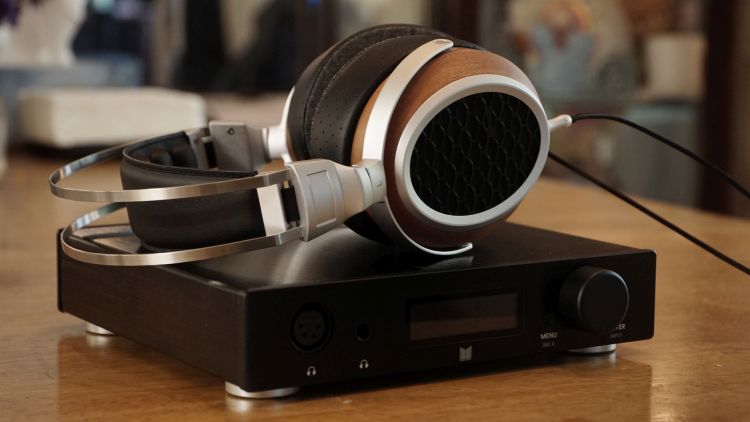
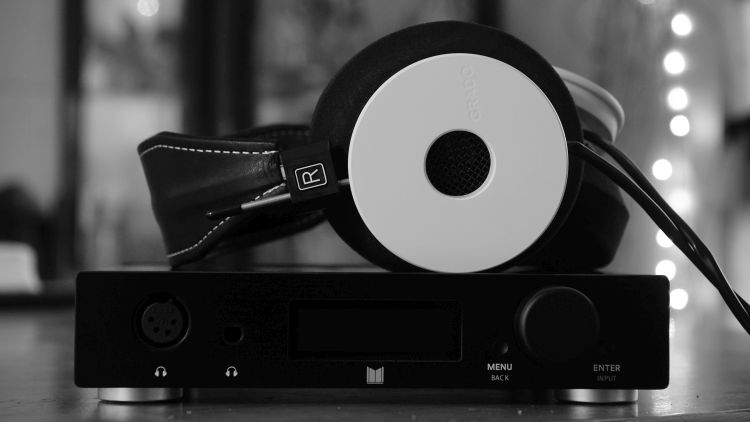
The Monolith THX uses a traditional design sketch, boxy and rectangular. Black and brushed anodizing covers the front panel. There’s also a front panel display, but it’s monochrome, appropriate for Monoprice gear, but a full color display is, of course, preferred. I mean, what year is this?
One aspect I did not like about the Monolith THX, and this might sound trivial until you run into a similar situation as I did.
The power adapter is an oddball 16.5 DC wall wart. A friend lost his, and we had a hard time obtaining a replacement because Monoprice unfortunately did not carry that voltage adapter. Yep.
Performance
The dynamic range and transient response capabilities of the Monolith THX are unquestionable. It hits hard, is potent, and has a good amount of speedy response that makes it a good monitoring unit, but it does lack a bit in the musicality department.
It produces a dry bass output that, fortunately, can be remedied with the built-in equalizer. The DIRAC also helps because without it, I wouldn’t bother listening to it, and since without the features, it would be almost unlistenable, honestly.
The mids are produced with a lot of presence, and the high frequencies are on the bright side borderline. The unit can get strident if pushed hard, and it’s only capable of 2000mW, which is a formidable amount, but, again, does not compete with the DX5 II’s 7.6 watts of power.
HIFIMAN EF400
Technical
HIFIMAN went all out, as they say, and developed their own R2R chip, which they call Himalaya, to use on the EF400. If you have ever heard R2R DACs, then you know to expect an organic sonic experience.
Teamed up with a high-current amplifier section and a power supply section that uses a large toroidal transformer that produces ample amounts of current, enough for their own planar headphones.
The EF400 comes equipped with two digital filters and two gain levels, but it has no sound shaping features. The EF400’s digital realm sticks to PCM, and it doesn’t play MQA.
Although I successfully ran DSD128 once on the EF400, I was unsure if it was my software or the internals of the EF400 that was doing the work.
Design
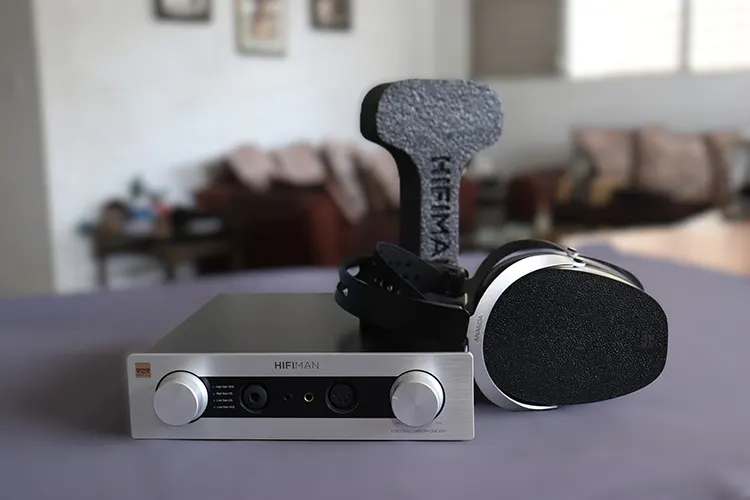
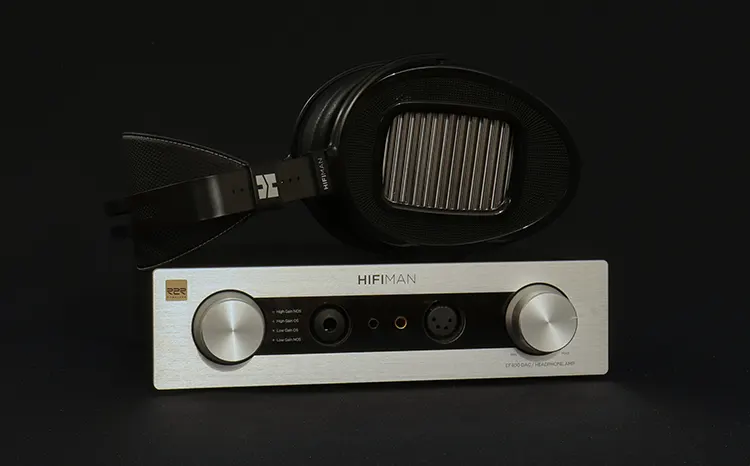
The EF400 cabinet design has an old-school vibe when it comes to construction. It displays up front a thick aluminum front panel that screams vintage gear, and the rest is covered in a thick metal shroud. But of course, the innards tell a different story.
It’s a heavy cabinet, larger than the DX5 II. That’s something to consider if your space is limited. The EF600 is even larger and heavier, but it stands upright and might be best since it also doubles as a headphone stand.
One of the things I liked about the EF400 is the quality feel of the parts used during construction. For example, it has a very nice volume knob and an equally nice knob on the opposite side, which gives the overall look some balance.
Another nicety about the EF400 is that it has four headphone taps upfront, including a 3.5mm tap, eliminating the need for adapters. If you want to run 3.5mm connectivity on the DX5 II, you have to use the supplied adapter or a similar one.
Performance
The EF400 is available at a reduced cost at this time and is a high-performance-per-dollar piece of gear atm, and even at full retail. It puts out 4 watts per side and is fed by a Himalaya DAC that, combined, produces a sonic signature that’s full-bodied.
The EF400 is on the warm side of the scale, compared to the DX5 II, which tends to veer into analytical territory, sonically and comparatively speaking.
Power-wise, the DX5 II, on paper, has a higher wattage output rating, but it doesn’t seem to be as high current producing as the EF400, which seems to excel with planar magnetic cans. I wonder why?
Rose Technics RT-5000
Technical
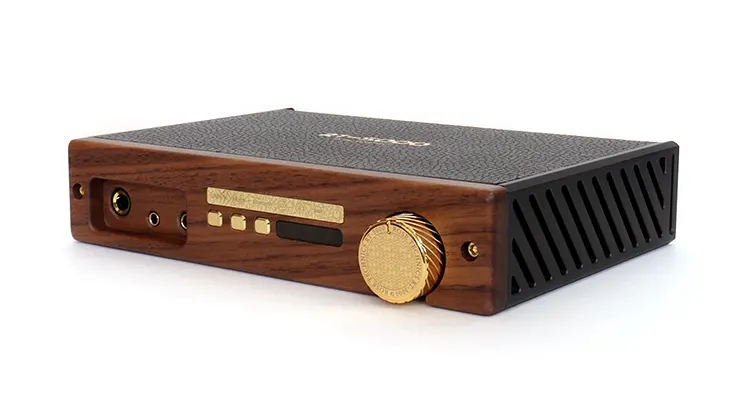
The Rose Technics RT-5000 has turned out to be one of my favorite all-in-one units below a $599 price tag. It combines new tech with old, wood and gold amenities, and a sonic profile that is smooth, delicate, and detailed.
It uses a pair of ES9038PRO DAC chips, together with ten opamps, and a pair of Muse flagship JRC MUSEE01-fet chips in a copper frame to quickly dissipate heat and to obtain the previously mentioned end results.
The RT-5000 uses the same Bluetooth receiver, the Qualcomm QCC5125, that runs on a 5.1 radio. Again, not the latest, but if it’s LDAC capable, I’m happy with it.
Design
One of the quirks I have with the RT5000 is that the build quality is not all there. My model had a small, barely visible scratch on top because the way it was originally packed, the adapter’s electrical legs were facing down, and that did some damage during shipping.
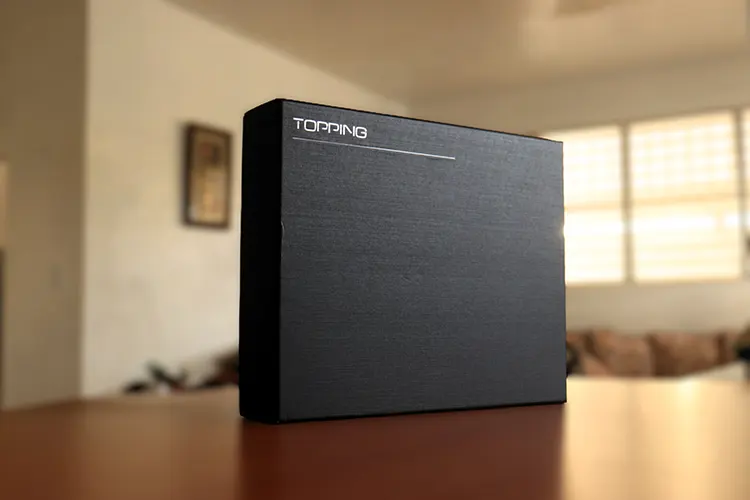
However, Rose Technics has changed the box and upped the unboxing experience. The RT-5000 now comes in a box with slide-out drawers, similar to what ORIVETI did with the OH700VB box or what FiiO did to the FX17’s box.
But this only means one thing. The company is committed to improvement. But, regardless, Rose Technics produced an excellent-sounding AIO here and is the more luxurious-looking of the bunch.
Performance
The RT-5000 is a sweet-sounding audio device that serves up musicality over sterility.
It has a set of digital filters that are more like EQ presets because, although subtle, they have a higher level of effectiveness over other digital filter implementations, for example, the two filters on the EF400.
The RT-5000 does supply ample power, but it’s not a powerhouse since it’s built around opamp tech. The one that can produce the highest current of the bunch is, again, the EF400. But the DX5 II still reigns supreme when it comes to producing watts.
What does the RT-5000 excel in? The RT5000 produces a wider and broader soundstage that also produces better resolution and lots of body.
The RT-5000 comes at double the cost, and I can live with some of the small compromises that, unless you’re focusing on those particular nuances, you probably won’t notice. Plus, you can always open up the PEQ and fix things up.
My Verdict
In case you didn’t notice, I just compared the Topping DX5 II to more expensive competitors, and yet, the DX5 II is still competitive at those higher price brackets. On its own tier level, it’s almost unbeatable.
Topping has a winner here. The compact desktop Topping DX5 II DAC and headphone amplifier produces lots of clean power, showcases lots of valuable features, and has a customizable UI to boot.
However, the feature that I like the most is the PEQ, which can transform the DX5 II into a fun machine that can mold itself to your personal preference. I have nothing else to say.
Topping DX5 II Technical Specifications
- DAC Chip: ES9039Q2M X2
- THD+N @1kHz(A-wt): <0.00006%
- Amplifier Architecture: Fully Balanced Headphone Amp
- SNR @MAX OUT 1kHz (A-wt): 133dB @1kHz
- Dynamic Range @1kHz (A-wt): 133dB @1kHz
- Headphone Output Power:
- 7600mW x 2 @16Ω THD+N<1%
- 6400mW x2 @32Ω THD+N<1%
- 4300mW x2 @64Ω THD+N<1%
- 990mW x 2 @300Ω THD+N<1%
- 490mW x 2 @600Ω THD+N<1%
- PEQ: 10-band high-precision PEQ
- Display: Full-Color Display
- 12V Trigger: Supported
