

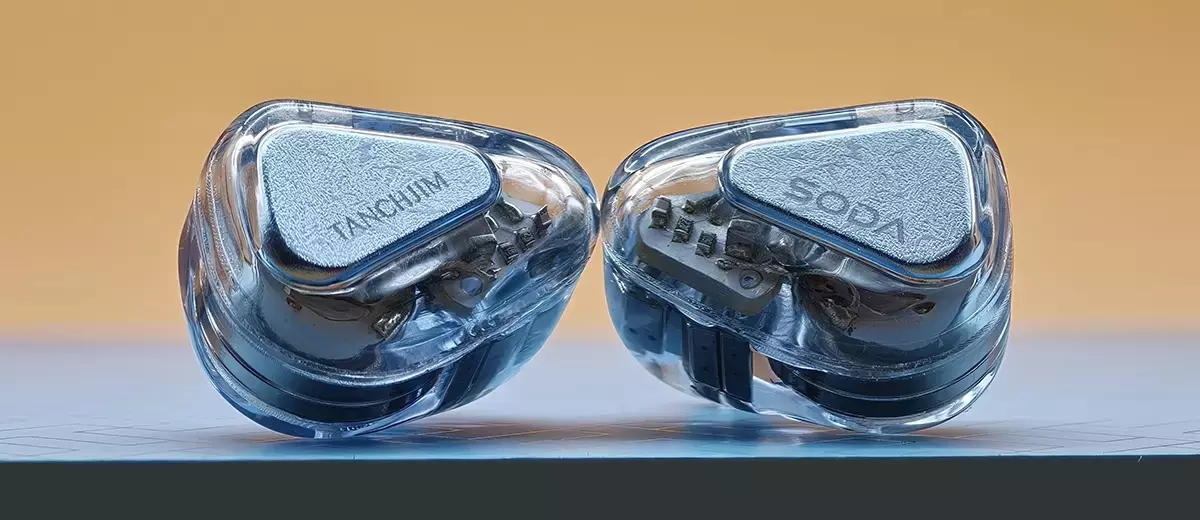
Synergy
Efficiency
With a sensitivity of 120 dB/Vrms and an impedance of 15.5Ω, the Tanchjim SODA is easy to drive.
It reaches adequate volume levels on most sources without requiring much power, making it accessible across a wide range of devices, including smartphones, laptops, and portable DAC-amps.
At lower volumes, the treble becomes more relaxed and loses some of its upper-end sparkle, while the bass presence weakens slightly as well.
The midrange stays forward and maintains its clarity, keeping the overall tuning grounded even when things are dialed back.
Pushing the volume higher brings a noticeable boost to the treble, letting more detail and energy come through.
The bass gains more impact and control, becoming fuller and more authoritative, while the midrange remains the most forward part of the presentation without being pushed back.
Pairings
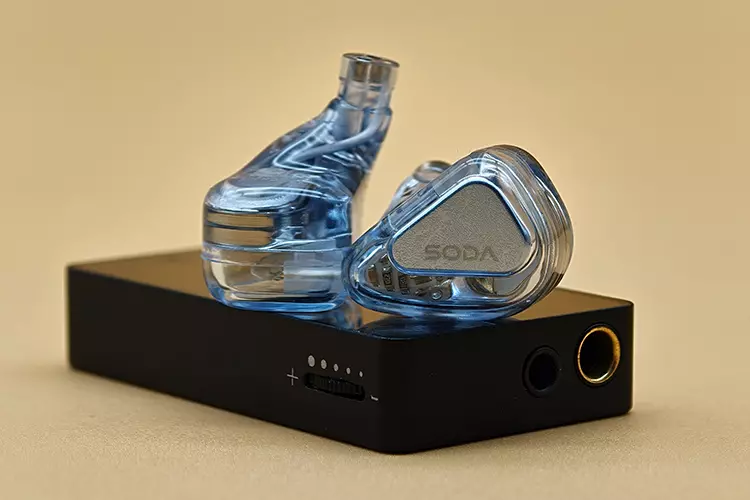
Using a standard 3.5mm jack from a phone keeps the SODA neutral and consistent. It gets loud easily and sounds clean without issues in power or balance, making it a solid option for casual listening on the go.
Switching to the FiiO JA11 brings the vocals even more forward than they already are, pushing them from centered to aggressively in-your-face. It also adds a bit more energy to the upper mids, making it feel more intense and more fatiguing over longer sessions.
The Colorfly CDA-M2 offers a different approach, enhancing separation and layering to make instrument positions easier to follow. It brings out more detail in the treble, though it can push the sibilance more apparent as well
Meanwhile, the Heartfield R1 adds warmth through a slight bump to the mid-bass, giving kick drums more presence and body. It also smooths out the upper midrange slightly, making the SODA less fatiguing without sacrificing its forward vocal presentation.
Selected Comparisons
ZiiGaat Horizon
Technical
The ZiiGaat Horizon utilizes a tribrid setup comprising five drivers per side, featuring a combination of dynamic, balanced armature, and planar technologies. A single 10mm biodynamic driver handles the bass, serving as the foundation for the low-end frequencies.
The midrange is managed by two custom ported Knowles 30262-163 balanced armature drivers, tuned to provide texture to the vocals and instruments.
For the treble, dual custom composite micro-planar drivers are dedicated to the high frequencies, specifically designed to enhance the ultra-treble range.
Design
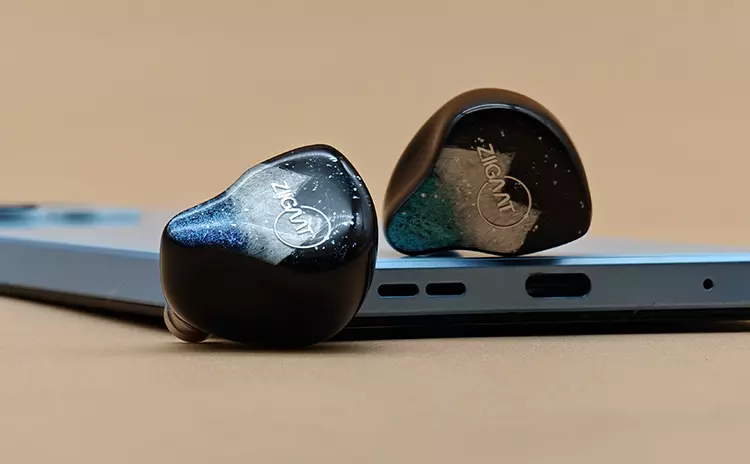
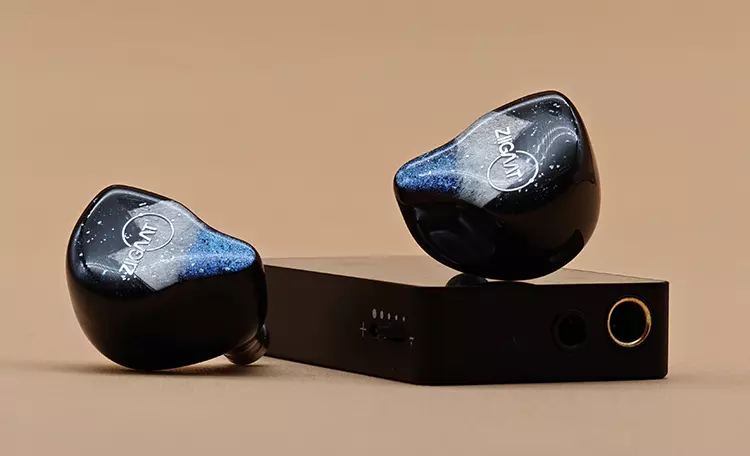
The faceplate of the ZiiGaat Horizon evokes the imagery of a landscape like Mt. Everest, with white peaks contrasting against a dark sky above and blue glittery highlights below mimicking icy depths or shimmering waters.
This artistic touch gives the Horizon a premium and unique look that captures the theme of a horizon perfectly.
The shell retains the standard black resin body found on other ZiiGaat models, featuring the same protrusion on the inner side designed to lock into the concha for stability.
Standard 0.78mm 2-pin connectors are flush with the shell, with a small vent located near the connector to relieve pressure from the dynamic driver.
Performance
Bass favors the SODA, delivering stronger weight and impact across both sub-bass and mid-bass. The Horizon keeps its low-end quick and controlled, but it feels leaner and lacks the prominent punch that makes the SODA more engaging.
Moving to the midrange, the Horizon takes the win with its incredibly lush and natural vocal presentation.
The SODA pushes vocals aggressively forward with strong upper midrange energy, creating fatigue over time, while the Horizon maintains a balanced and effortless sound that feels inviting rather than exhausting.
The treble continues the Horizon’s advantage, offering better extension and airiness. The SODA delivers competent treble with good detail retrieval, but it can’t match the Horizon’s reach into the air region or the sense of space it creates.
For the soundstage, the SODA pulls ahead with a wider soundstage that offers better height and depth control.
The Horizon provides a holographic experience with excellent verticality, but the SODA’s overall dimensions feel more balanced and immersive.
Both excel in imaging but approach it differently, with the Horizon placing sounds precisely across a vertical plane while the SODA handles placement well across all dimensions.
The Horizon creates an out-of-head effect, but the SODA’s imaging does the same and feels more cohesive.
Power scaling favors the SODA, which responds better to stronger sources and shows more potential as amplification improves.
The Horizon stays competent but feels constrained by its restrained bass and sensitive treble, making it less forgiving at higher volumes, where the SODA continues performing confidently.
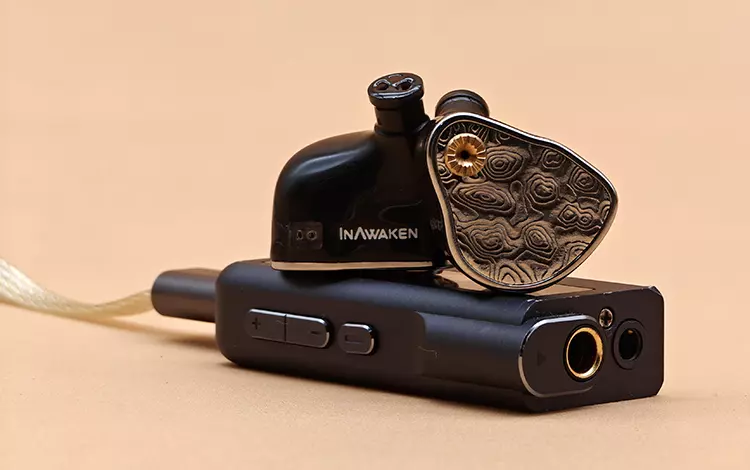
InAwaken Twilight-DS
Technical
The InAwaken Twilight-DS features a massive 12-driver hybrid configuration, combining four dynamic drivers with eight custom balanced armatures per side.
This complex setup is managed by an RC precision-controlled four-way crossover to ensure proper frequency division.
The bass is handled by a unique coaxial quad dynamic driver system housed within a CNC-machined aluminum alloy module, arranged in a counter-oriented setup to boost dynamic range and reduce distortion.
The midrange and treble are powered by eight custom-made balanced armature drivers, with four covering the midrange and the remaining four split between the highs and ultra-high frequencies.
Design
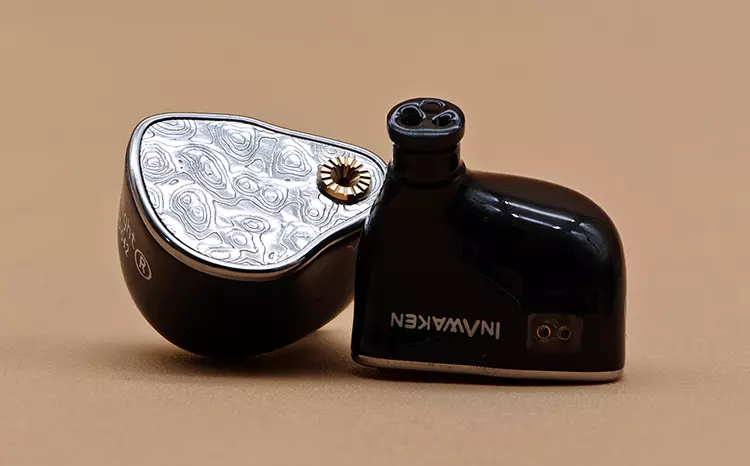
The faceplate is crafted from real Damascus steel, featuring a mesmerizing swirling pattern that mimics organic topographic lines. Its polished silver surface reflects light dynamically, creating a premium and rugged aesthetic that feels unique to each unit.
The main body uses a CNC-machined titanium alloy frame paired with a medical-grade 3D-printed resin back cavity, resulting in a solid black shell that feels durable with a smooth finish.
A distinctive gold circular vent is embedded into the lower corner of the faceplate, offering sharp contrast to the silver steel with its radial grille pattern serving as both a pressure relief port and visual accent.
Performance
The Twilight-DS dominates in bass, delivering a massive subbass rumble with semi-subwoofer-like authority that the SODA cannot match.
The SODA provides solid weight and impact in its low end, but it feels overshadowed by how much bass the Twilight-DS provides.
For the midrange, the SODA takes the win with a more surprisingly balanced presentation that keeps vocals engaging without being overshadowed.
The Twilight-DS still has excellent clarity and detail in the mids, but its dominant bass can make the vocals feel less prominent, whereas SODA’s aggressive upper midrange energy maintains focus and presence better.
Treble favors the Twilight-DS, which captures fine nuances and textures more effectively with its sparkling top end. The SODA delivers strong treble detail, but the Twilight-DS reveals micro-details with greater ease, making it the more resolving option overall.
The SODA pulls ahead in soundstage, offering a wider presentation with more noticeable height and depth. The Twilight-DS keeps its stage more confined and average in size, making the SODA feel more expansive and immersive.
That staging pairs up with the excellent imaging of the SODA, handling positioning across all dimensions with better cohesion and precision.
The Twilight-DS offers accurate placement with good vertical control, but the SODA’s execution feels more natural and three-dimensional overall.

My Verdict
The Tanchjim SODA stands out as a successful step into hybrid driver territory, proving its engineering extends beyond single dynamic drivers.
Its combination of strong staging, precise imaging, and a powerful bass presence showcases its capability in handling more complex configurations.
The upper midrange energy can become fatiguing over longer sessions, pushing vocals between engaging and exhausting.
Despite this, the SODA delivers a solid tribrid with competitive staging, making it a great performer overall.
Tanchjim SODA Technical Specifications
- Driver Type: One (1x) 10mm DMT5 dynamic driver, four (4x) PURE balanced armatures, and two (2x) Silk System passive units
- Plug: 0.78mm 2-pin with modular 3.5mm and 4.4mm terminations
- Frequency Response: 8Hz – 48kHz
- Impedance: 15.5Ω
- Sensitivity: 120 dB/Vrms
