

Synergy
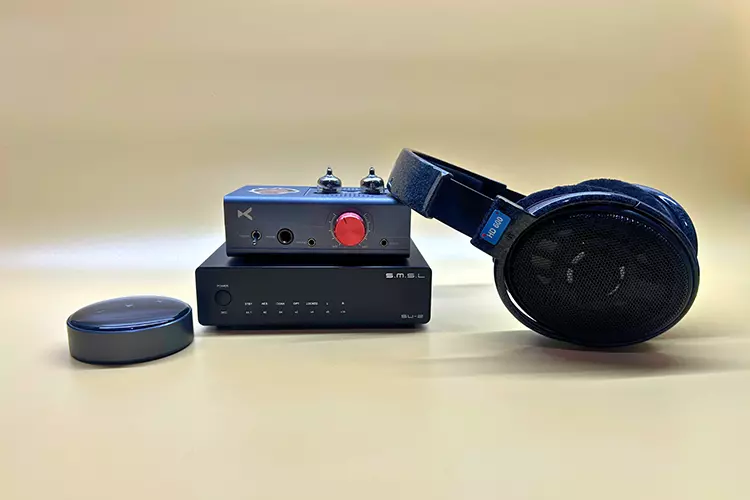
Being a clean, neutral-sounding DAC, the SU-2 paired well with equally neutral amplifiers powering headphones with pleasantly colored sound signatures, or paired with warmer amplifiers powering more neutral headphones like the HD 600.
With the Sennheiser HD 600 and Topping L30II, the SU-2 performed decently; the HD 600’s natural organic sound signature complemented the SU-2’s transparency, resulting in a tonally balanced presentation.
I usually prefer warmer sources with the HD 600, so I preferred pairing the HD 600 and SMSL SU-2 with the xDuoo MT-602 hybrid tube amplifier.
When testing with the V-shaped Modhouse Argon Mk3, I preferred the combination of the SMSL SU-2 with the Topping L30II since it preserved the dark yet engaging sound signature I enjoyed without adding unnecessary bloat or darkness.
The Sendy Audio Egret, with its relatively neutral tuning, paired cleanly with the SU-2’s transparent presentation, offering good detail retrieval without tonal mismatch.
On the IEM front, the neutral-leaning MOONDROP Blessing 3 worked well, with the SU-2’s clean signal path allowing the Blessing 3’s technical capabilities to come through clearly.
The V-shaped Yanyin Canon II also paired adequately, with the SU-2’s neutrality helping to keep the Canon II’s elevated bass and treble from becoming excessive.
Selected Comparisons
SMSL SU-1
Technical
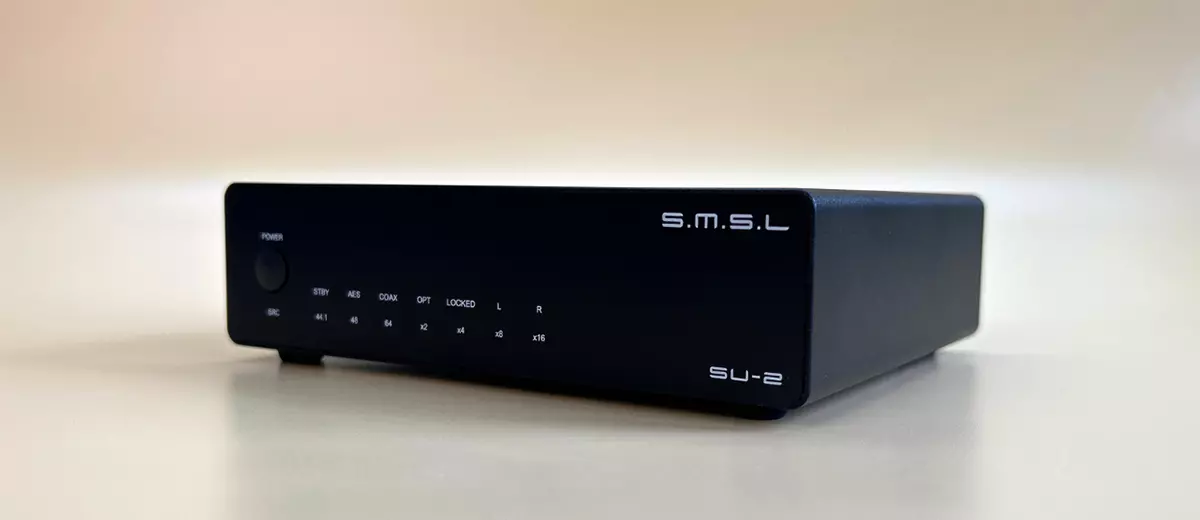
The SU-1 and SU-2 share a common design philosophy but diverge in chip selection, connectivity, and output capability.
The SU-1 uses an AKM AK4493S DAC chip supporting PCM up to 32-bit/768kHz and native DSD512 via USB, while the SU-2 employs the ESS ES9039Q2M, limited to PCM 24-bit/192kHz and DSD64 via DoP through its digital inputs.
The SU-1’s higher maximum resolution figures and USB connectivity make it significantly more versatile for computer audio.
The SU-2, by contrast, drops USB entirely in favor of a professional AES/EBU input, a trade that benefits studio users and audiophiles with high-end CD players, but alienates the typical desktop listener.
Output configurations differ meaningfully. The SU-1 offers only RCA single-ended outputs at 2.0Vrms, while the SU-2 adds balanced XLR at 4.7Vrms, a significant advantage when feeding amplifiers or active monitors with balanced inputs.
Design
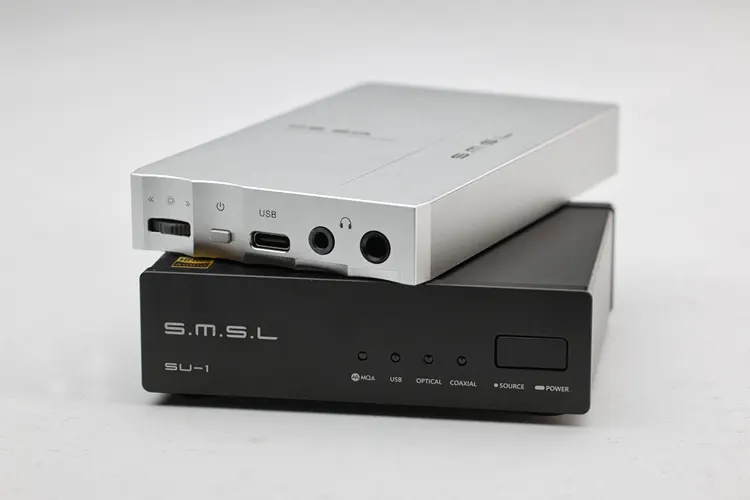
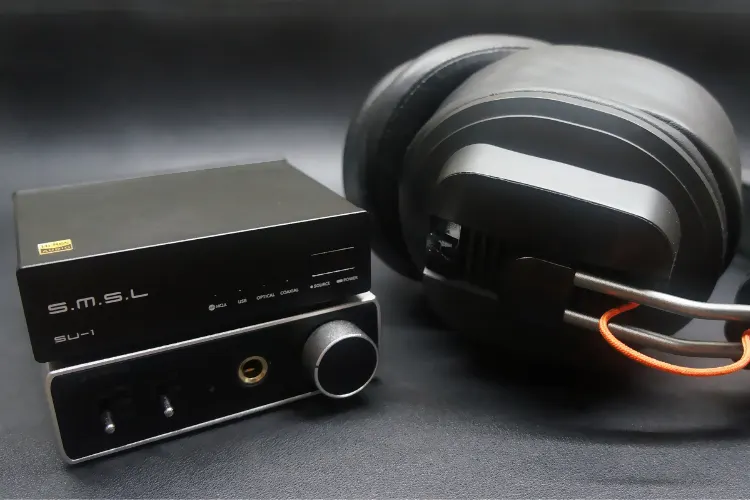
Both units share SMSL’s compact, CNC-machined aluminum aesthetic and minimalist front panels. The SU-1 is notably smaller, making the SU-1 the more portable and desk-friendly option.
Both rely on LED indicators rather than a display, though the SU-1’s LEDs are fewer in number and simpler in information density.
The SU-1 is bus-powered via USB-C, requiring no external power supply in most configurations.
The SU-2 requires mains power via its IEC inlet, which is consistent with its more substantial output stage but reduces its simplicity advantage at the desktop.
Build quality is comparable between the two, with both being solid and purposeful at their respective prices, though neither unit could be called premium in feel.
Performance
The differences between the SU-1 and SU-2 are more significant than their similar pricing suggests, largely due to AKM vs ESS implementation.
The SU-1’s AK4493S delivers a warmer, more organic sound. Bass has more mid-bass body and weight, giving instruments a fuller, more natural presence without sounding overly colored.
In contrast, the SU-2 is tighter and more controlled, prioritizing precision over richness.
Midrange differences are most noticeable in vocals. The SU-1 sounds smoother and more natural, making it better suited for long listening sessions, while the SU-2 is cleaner and more transparent but slightly cooler and more detached.
Treble further separates them. The SU-2 offers better extension, air, and detail, while the SU-1 is smoother and more forgiving, trading off some resolution for comfort.
Technically, the SU-2 leads in staging, imaging, and dynamics. Its lower noise floor enables better separation, a wider soundstage, and improved micro-detail retrieval.
The SU-1, while less precise, compensates with a more relaxed and enjoyable presentation for casual listening

SMSL D1
Technical
The SU-2 and D1 share a similar price bracket but take markedly different approaches to DAC implementation.
The SU-2 uses the ESS ES9039Q2M chip, while the D1 features the comparatively rare ROHM BD34352EKV, a Japanese chip chosen by SMSL for what they describe as its natural, refined presentation.
Connectivity is where the two diverge most sharply. The D1 includes USB-C, optical, and coaxial inputs, making it broadly compatible with virtually any desktop or portable source.
The SU-2 replaces USB with AES/EBU, targeting professional connections at the cost of everyday convenience.
On outputs, the D1 offers only RCA at 2.0Vrms, while the SU-2’s balanced XLR at 4.7Vrms represents a meaningful advantage for balanced amplifier and active monitor use.
Neither unit includes a remote, EQ, or software control. Both are positioned as pure conversion stages with no user-adjustable signal processing.
Design
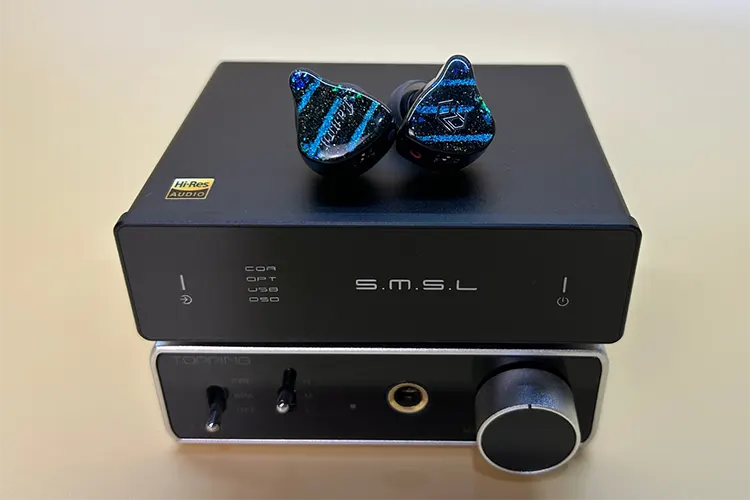
Both DACs embrace compact aluminum chassis construction with minimal front-panel elements.
The D1 is slightly more compact at 101 × 90.1 × 30mm versus the SU-2’s 150 × 42.5 × 133.1mm, and its glossy acrylic front panel with soft-touch buttons gives it a more consumer-friendly aesthetic than the SU-2’s industrial plainness.
The D1’s touch-sensitive front panel controls are slick in appearance but inconsistent in tactile feedback, a criticism noted in my original D1 review.
The SU-2’s single physical input button is more reliable in practice, even if the overall control scheme is equally limited. Build quality is solid on both, with the SU-2 feeling somewhat more substantial in hand due to its greater weight.
Performance
The SU-2 and D1 take different approaches despite similar pricing, driven by ESS vs ROHM architectures.
The D1 leans warm and organic, with fuller bass and added mid-bass weight that enhances musicality. The SU-2 is leaner and more controlled, offering greater accuracy but less warmth.
In the midrange, the D1 stands out with better density and harmonic richness. Instruments and vocals sound more natural and engaging, especially for acoustic music.
The SU-2 is cleaner and more resolving but comparatively cooler and less emotive. Treble is where the SU-2 pulls ahead. It delivers greater extension, air, and detail, while the D1 is smoother but rolls off earlier, sacrificing some resolution.
The SU-2 also leads technically in staging, imaging, and micro-dynamics due to its lower noise floor and balanced output.
However, the D1 counters with a more musical, engaging sound. Ultimately, the choice depends on whether the listener prioritizes technical precision or tonal richness.
Fosi Audio ZD3
Technical
The Fosi Audio ZD3 and SMSL SU-2 both carry the ESS ES9039Q2M DAC chip, meaning their measured performance figures are closely aligned.
Both achieve excellent dynamic range, though the ZD3 operates at 126 dB while the SU-2 reaches 130 dB on its balanced output.
Where they differ substantially is in connectivity breadth. The ZD3 offers USB-B, HDMI ARC, optical, coaxial, and Bluetooth 5.0 with aptX HD, a far more comprehensive suite than the SU-2’s AES/EBU, coaxial, and optical trio.
The ZD3’s HDMI ARC input is particularly notable for TV integration use cases, while the SU-2’s AES/EBU is the more professional-grade alternative.
Output voltage is also meaningfully different. The ZD3 provides fixed RCA and XLR outputs, while the SU-2’s XLR delivers 4.7Vrms, slightly higher than the ZD3’s balanced output.
The ZD3 also includes a 12V trigger for system automation, a feature absent on the SU-2. However, this is to be expected given the more affordable price point of the SU-2
Design
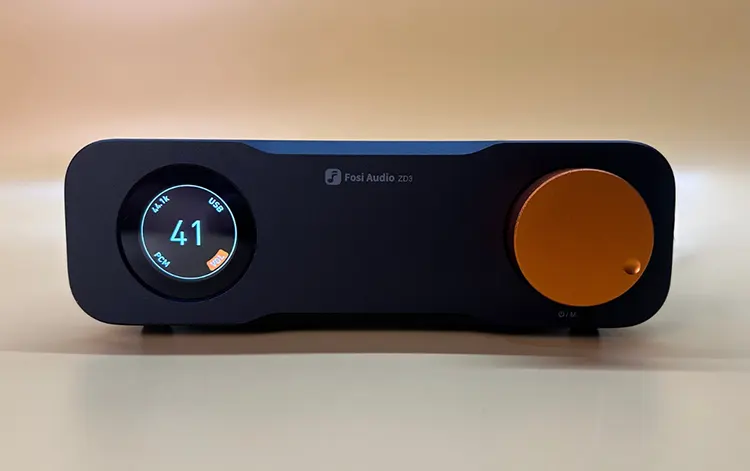
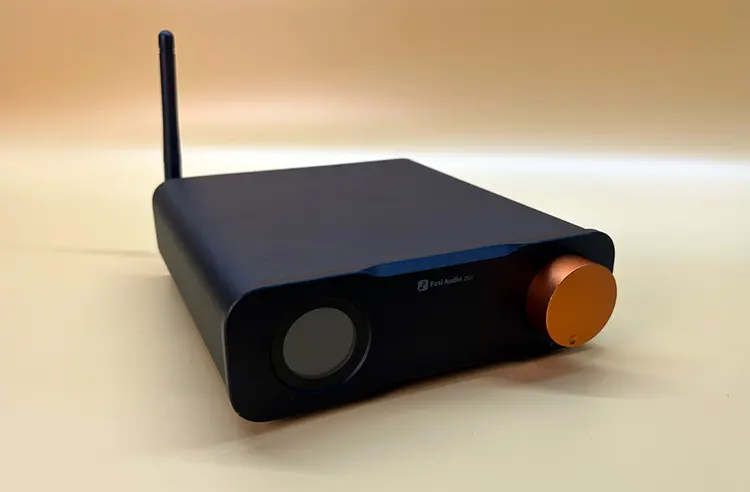
Both DACs use CNC-machined aluminum chassis with minimalist aesthetics.
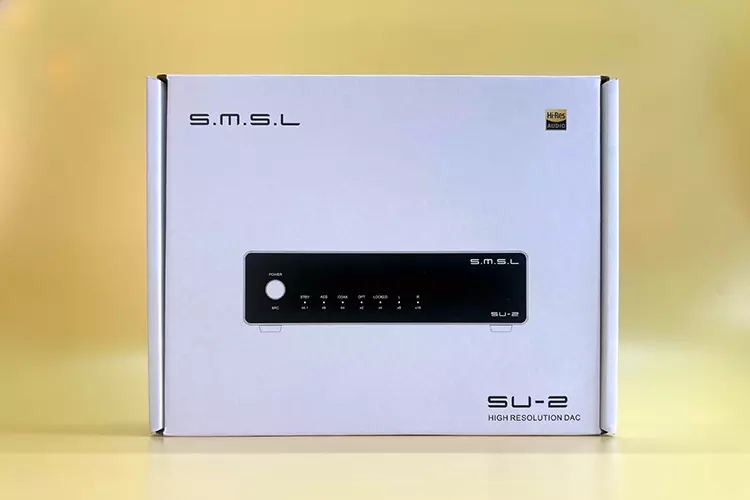
The ZD3 is larger and heavier, featuring a circular OLED display and a physical volume knob that doubles as a multi-function button, a considerably more user-friendly front panel than the SU-2’s LED-only array and single input button.
The ZD3’s physical controls and OLED display make day-to-day operation considerably more intuitive, and the volume knob is a meaningful practical advantage in desktop contexts.
The SU-2’s industrial simplicity suits its monitoring use case but works against it as an everyday desktop component.
Build quality is strong on both units, with professional fit and finish that exceeds expectations for the price tier.
The SU-2’s lighter weight makes it easier to reposition, while the ZD3’s heft provides better stability when heavier cables are attached.
Performance
With both using the same ESS ES9039Q2M chip, differences between the SU-2 and ZD3 come down to implementation rather than DAC architecture. Both share a clean, extended, and resolving ESS sound.
However, the ZD3 has slightly fuller bass with more mid-bass body, while the SU-2 is tighter and more controlled.
Midrange on both is neutral, but the ZD3 adds a touch of warmth and density, making vocals and instruments sound slightly more natural.
The SU-2 is more transparent but also more clinical. Treble is where the SU-2 has the edge. It offers slightly better extension, air, and sparkle, while the ZD3 is smoother and slightly more relaxed.
The SU-2 also slightly outperforms in staging and imaging when using balanced output, delivering a wider and more precise presentation. It has a slight advantage in micro-dynamics as well.
My Verdict
The SMSL SU-2 DAC is a technically strong entry in the budget DAC space, offering a clean, transparent sound signature backed by good measurements and a capable balanced output for the price. At $99.99, its raw performance is easy to appreciate.
That said, its usability is harder to justify. The omission of USB significantly limits its appeal for typical desktop setups, and while AES/EBU is a meaningful inclusion, its relevance at this price point remains niche. This leaves the SU-2 feeling somewhat caught between use cases.
For general use, alternatives like the SMSL D1 and Fosi ZD3 DAC offer more practical connectivity without giving up much in sound quality.
The SU-2 is easy to respect from an engineering standpoint, but for most users, it’s a more specialized pick than an easy recommendation.
SMSL SU-2 Technical Specifications
- DAC Chip: ESS ES9039Q2M
- Op-Amps: 4× Texas Instruments OPA1612A (symmetrical layout)
- Inputs: AES/EBU (XLR), Optical (TOSLINK), Coaxial (S/PDIF)
- Outputs: XLR Balanced (4.7Vrms), RCA Single-Ended (2.3Vrms)
- PCM Support: Up to 24-bit/192kHz via all inputs
- DSD Support: DSD64 via DoP
- Dimensions: 150 × 42.5 × 133.1mm
- Weight: 532.6g
