

Synergy
Efficiency
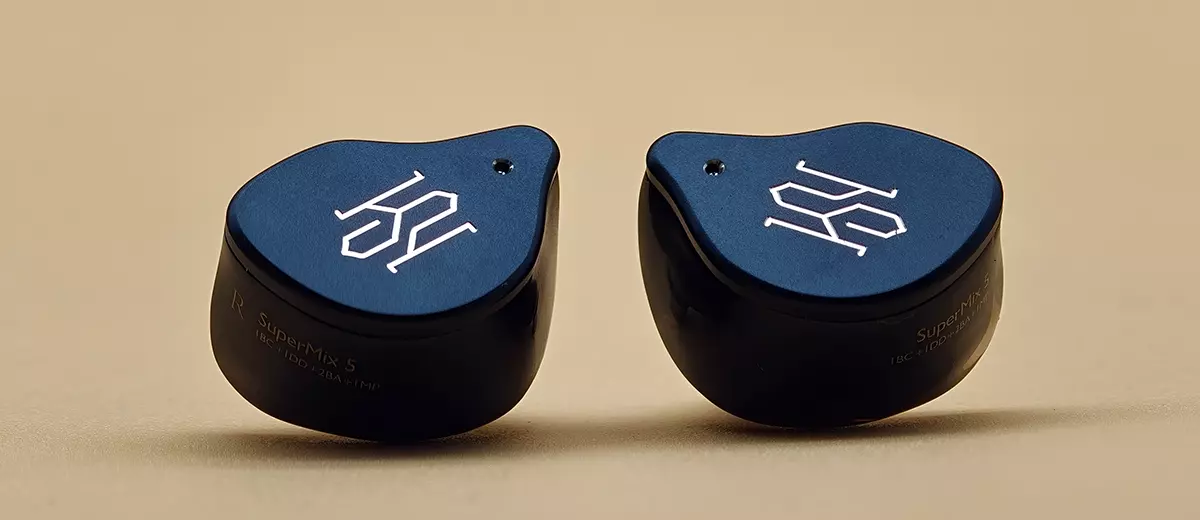
At 19Ω and 120 dB/Vrms sensitivity, the SIMGOT SuperMix 5 is easy to drive from any source, including phones and basic dongles.
Running it at low volumes leaves a lot on the table, though, as the bone conduction driver needs a healthy listening level before its contribution to the bass and midrange becomes fully apparent.
The modular 0.78mm 2-pin cable with screw-lock 3.5mm and 4.4mm plugs gives the set flexibility across source types without a cable upgrade. The swap process is straightforward once the alignment is learned.
At lower volumes, the bass loses its tactile quality, the BC driver contributes very little, and the midrange thins out noticeably. The presentation at quiet levels is an incomplete version of what the SuperMix 5 can do.
Pushing the volume brings the SuperMix 5 to life, with the BC driver engaging more fully to add physical weight to the bass and organic density to the midrange.
A better source also helps unlock more of its precision, making source pairing more meaningful here than it would be for a simpler configuration.
Pairings
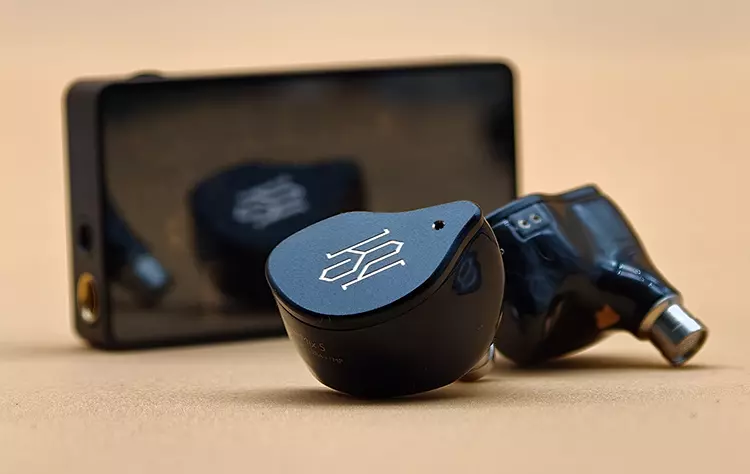
Running the SIMGOT SuperMix 5 from a phone’s 3.5mm output keeps things clean and accessible, reaching comfortable volumes without strain.
The bone conduction driver’s contribution is slightly subdued here, making it a serviceable but not particularly revealing pairing.
Switching to the FiiO JA11 brings vocals noticeably more forward and lifts the upper midrange, giving the presentation more edge and presence. This suits the SuperMix 5’s naturally pulled back midrange well, and the result is a more immediate and engaging sound.
The Colorfly CDA-M2 delivers the most technical improvement, tightening up separation between elements and sharpening imaging noticeably. It is the best pairing for listeners who want more precision and definition from the SuperMix 5.
Meanwhile, the Heartfield R1 addresses the midrange body issue directly, adding warmth and fullness to vocals that the SuperMix 5 lacks on its own. For vocal and acoustic listening, it is the most natural-sounding combination of the four.

Selected Comparisons
ZiiGaat Odyssey
Technical
The ZiiGaat Odyssey uses a three-driver hybrid setup, combining one 10mm custom Topology dynamic driver with two Knowles RAF 32873 full-range balanced armatures and one Knowles RAD 33518 ultra-frequency driver.
The dynamic driver handles the low end, while the Knowles drivers cover the midrange and treble through a three-way passive crossover.
The two full-range Knowles BAs are tuned for smooth and natural vocal reproduction, while the RAD 33518 extends the upper frequency range.
The crossover keeps transitions clean between each driver, maintaining coherence across the full frequency response.
Design
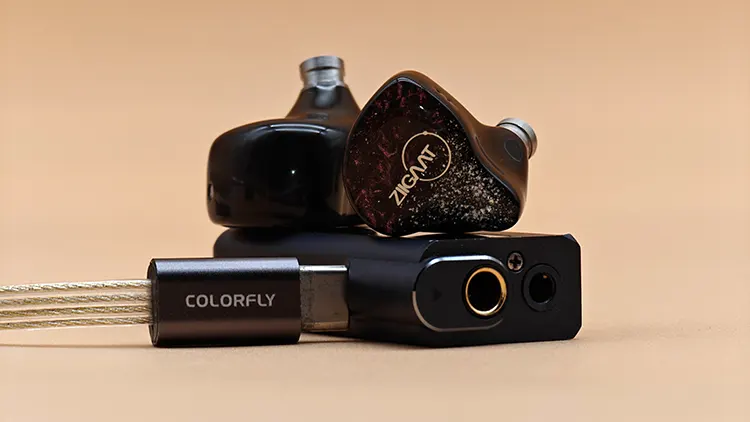
The Odyssey features a glossy black resin shell paired with a faceplate that blends red and silver glitter, creating a striking resemblance to a red nebula.
The ZiiGaat logo sits at the center of the faceplate, and the ergonomic shape is designed to sit securely and comfortably in the ear.
Markings are minimal, with gold-printed product IDs on the inner faceplate side that incorporate the L and R channel indicators as prefixes.
A larger-than-average vent sits near the top of the shell by the 0.78mm 2-pin connectors, designed to prevent pressure buildup during use.
Performance
The low end is where these two take noticeably different paths, with the SuperMix 5 delivering deeper extension and that tactile, physical punch that gives kick drums a decisive and immediate feel.
The Odyssey’s bass rolls off earlier and sits back as a supporting layer, and while it stays clean and tidy, it feels underwhelming next to the SuperMix 5’s more grounded delivery. The SuperMix 5 has the better bass here, clearly.
The midrange narrows the gap considerably, with the Odyssey presenting vocals with more body and natural weight than the SuperMix 5 can offer.
The SuperMix 5 has better texture and clarity in vocal detail, but the Odyssey’s fuller and more musical delivery makes it the more emotionally engaging listen through the mids.
Both prioritize a safe and controlled treble over sparkle and air, making this region close between them.
The SuperMix 5’s micro-planar gives it a slight edge in detail retrieval and tonal accuracy, while the Odyssey leans darker and occasionally makes elements in a track feel slightly dampened.
Unfortunately, neither IEM offers a genuinely expansive stage. With that said, the SuperMix 5 still edges ahead in separation, keeping elements more distinctly layered and organized than the Odyssey manages.
The Odyssey counters with more accurate imaging and better vocal placement within the mix, giving it a more convincing sense of where sounds belong despite the limited space. Both struggle with the same ceiling here, just in different ways.

Kiwi Ears Astral
Technical
The Kiwi Ears Astral uses a 1DD and 6BA hybrid setup, pairing an in-house 10mm bioceramic diaphragm dynamic driver as the subwoofer with six balanced armature drivers. The dynamic driver rolls off gently at 300Hz to allow the bass to blend naturally into the midrange.
The midrange is handled by two dual custom BA units tuned for a neutral and accurate vocal response, with a compensated peak at 2.8kHz.
A modified SWFK dual tweeter manages the treble, extended smoothly up to 15kHz through an engineered crossover that keeps each driver group operating cleanly within its range.
Design
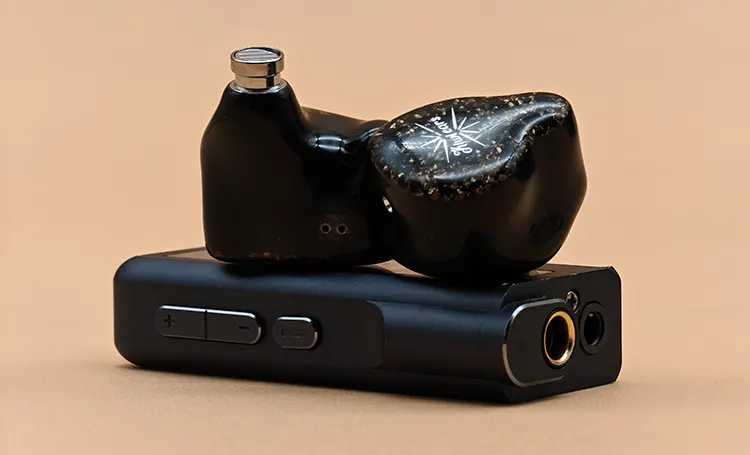
The Astral’s faceplate features a dark resin base filled with metallic gold flakes, giving it a subtle shimmer under light. The Kiwi Ears logo sits at the center in white, standing clearly against the textured background.
The shell is deep black glossy resin with rounded curves and a slightly bulbous profile, fitted with a metal wide-bore nozzle featuring a grooved grille tip and replaceable mesh filter.
Markings are minimal, limited to gold text on the inner shell near the connector, and the 0.78mm 2-pin connector sits at the top of the shell.
Performance
The Astral carries noticeably more subbass weight, with a dominant rumble that gives its low end a heavier and more physical presence than the SuperMix 5.
The SuperMix 5 reaches deep with genuine extension of its own, but its bass tells a different story through its tactile, physical punch that makes every kick drum hit feel immediate and decisive in a way the Astral does not replicate.
Where the Astral’s emphasis pulls heavily toward subbass, its mid-bass ends up feeling slightly uneven by comparison.
The SuperMix 5’s controlled and focused punch keeps the low end more balanced overall, and that tactile quality gives it a character that stands on its own rather than simply losing to the Astral’s weight
Moving to the midrange, the Astral presents vocals with more body and emotional presence, sitting naturally in the mix with a fullness that the SuperMix 5 falls short on.
The SuperMix 5 is cleaner and more textured, but clean and lean is a hard sell against something that actually sounds alive and grounded.
Treble favors the Astral, which is more detailed, more extended, and more resolving. The SuperMix 5 is the safer and more controlled option, but it concedes meaningful resolution and air in exchange for that comfort.
The staging gap is just as clear, with the Astral offering a genuinely spacious presentation and precise imaging that makes the SuperMix 5’s average stage feel limited.
Positional cues land convincingly on the Astral, while the SuperMix 5 struggles to move sounds with any real conviction.
The SuperMix 5 holds its ground in separation, though, keeping elements distinct and organized in a way that remains genuinely competitive with the Astral.
Neither becomes congested under pressure, though the Astral’s superior staging gives its separation more room to breathe.
My Verdict
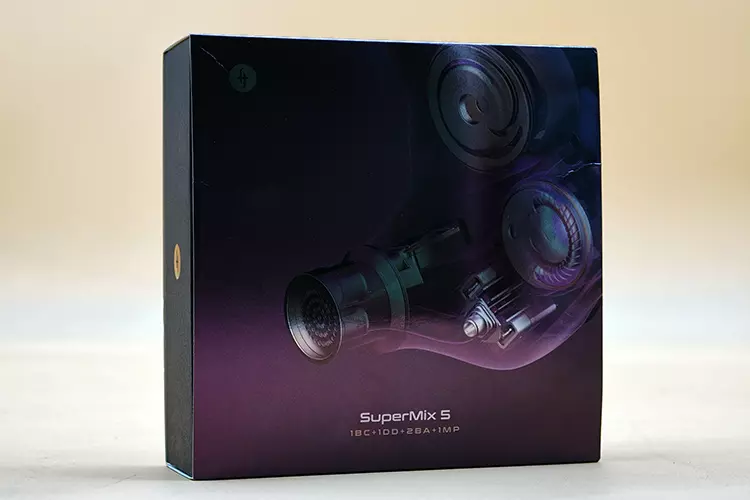
The SIMGOT SuperMix 5 is a genuinely interesting hybrid IEM that delivers on its bone conduction promise in the bass, bringing a tactile and physical punch to the low end that feels unlike most hybrid sets at this level.
Its treble is among the most controlled and fatigue-free available at this price, and the nuance retrieval in the midrange surfaces details that regularly catch you off guard.
The comfort situation is hard to ignore, though, as the pinging from the BC driver during jaw movement and the difficult fit make it a poor match for anything beyond careful, stationary listening.
Despite this, the SuperMix 5 delivers as a unique hybrid IEM with a bone conduction implementation that brings something physically distinct to the table.
SIMGOT SuperMix 5 Technical Specifications
- Driver Type: One (1x) 10mm custom coil bone conduction driver, one (1x) 8mm DLC dynamic driver, two (2x) large-volume balanced armature drivers, and one (1x) micro-planar driver
- Plug: 0.78mm 2-pin with modular 3.5mm and 4.4mm terminations
- Frequency Response: 8Hz – 40kHz
- Impedance: 19Ω
- Sensitivity: 120 dB/Vrms
