

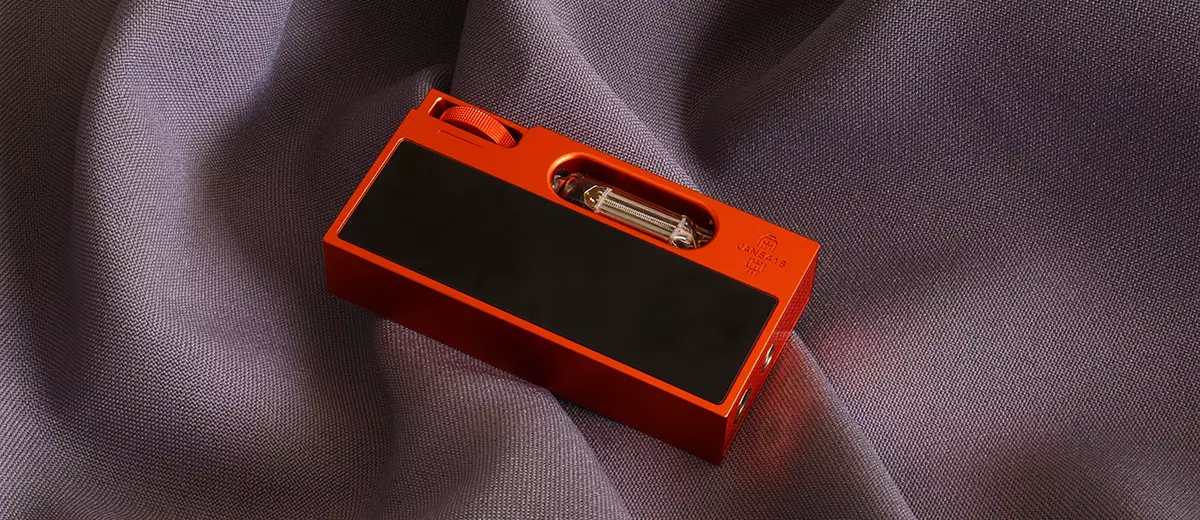
Synergy
Battery drain
I did worry at first when I received the first dongle that uses tubes because I assumed that all the extra hardware, or more specifically, the additional tubes, were going to tax my mobile device’s battery.
I noticed a small amount of drainage. My daily driver has a 6000mAh battery and doesn’t suffer from battery drain on standby. I mention this for reference.
My mobile device was losing around 1% every 15 or so minutes of playback time, depending on volume and what the output jacks were driving. It will tax your phone if you use hard-to-drive headphones, not so much with IEMs, typically.
Mathematically, that translates to around 20 hours of playback time. However, I didn’t get that much playback time since that was an optimal situation, and the overall playback time was more like 10 hours or less.
Power
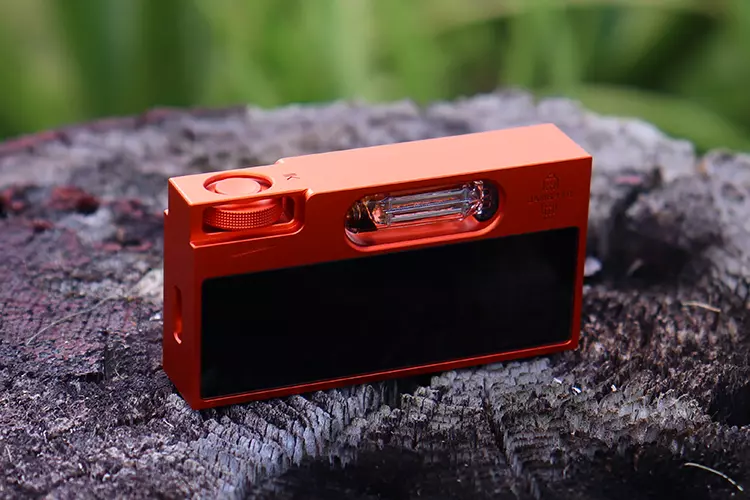
I bet in a blindfold test, most would say that the Shanling UA7 has more power than what is written on paper.
This dongle pushed my pair of Sundaras with authority, and my HE1000 Unveiled, or similar headphones that present higher loads than the average 32Ω headphone, and that require some current versus watts as well.
I was able to drive all my ample Planar headphone collection easily. Most were comfortable at below 70% volume, and I never had to go past that point with any of the headphones I tried.
Now, if you’re pushing IEMs, there’s plenty of power at the low gain setting. I also used some on high gain to check for background noise, which would degrade sound quality. I could not detect any hiss production, even at high volume levels.
Pairings
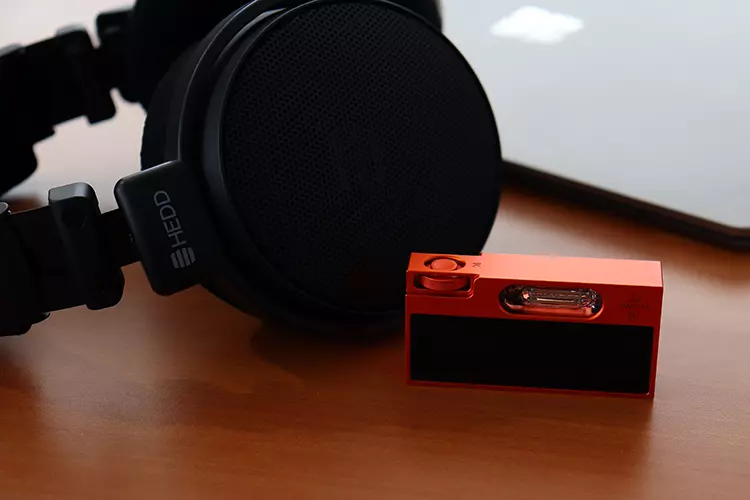
The Shanling UA7 is a dongle with good taste. It tends to like upscale gear. It likes my Sundara just fine, but it likes the HE1000 Unveiled even more and shows off the benefits of a better headphone.
Heck, it preferred the HEDD Audio Heddphone D1 over the Sennheiser HD 550 just because it’s a higher-tier headphone.
With IEMs just the same. I can clearly distinguish the differences between the FiiO FH9 and the FX17, for example.
You can tell textures, tones, and overall realism are increased in the upscaled set. The same happens with sets like the Oriveti OH700VB over the Grand Supremacy.
I would consider the UA7 for use with upscaled headphones or IEMs, and although I would not consider the UA7 exclusively for analytical listening, enough micro-detail comes through to do so.
It also fares well with budget IEMs and exploits all their positive aspects.
Selected Comparisons
ONIX Beta XI2
Technical
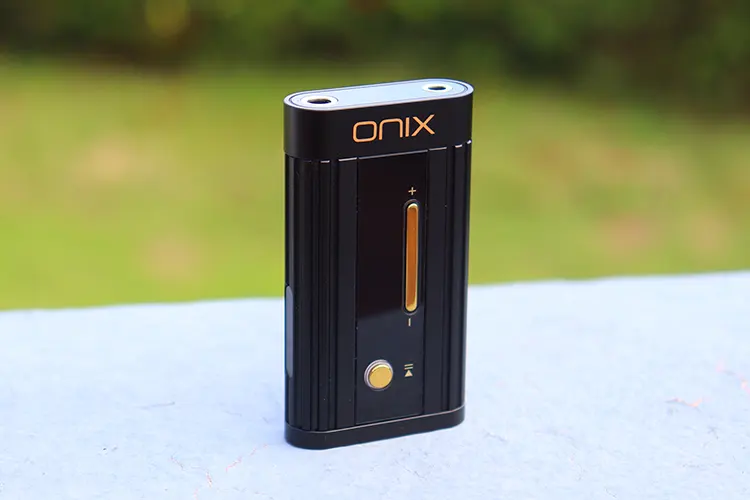
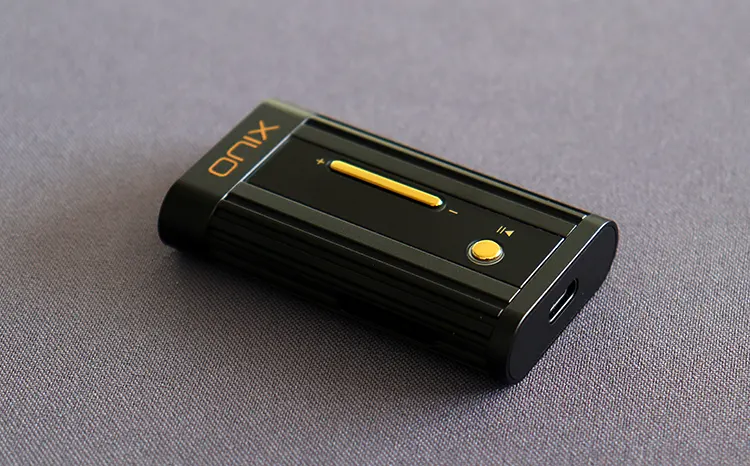
With a similar configuration, the ONIX Beta XI2 doesn’t display the dual JAN6418 tubes on the surface, and you only get a taste of the tubes on the outside of the chassis. But similarly, it’s the highlight of the Beta XI2.
Power ratings are similar. The ONIX Beta XI2 produces 550 mW balanced and 180 mW single-ended compared to the slightly higher 577 mW and 195 mW from the Shanling UA7. The power output differences are marginal.
The digital-to-analog conversion is done via a set of Cirrus Logic CS43198 versus the single ESE9069 solution on the UA7, which I feel is the more upscale chip than the CS variant within the XI2.
Design
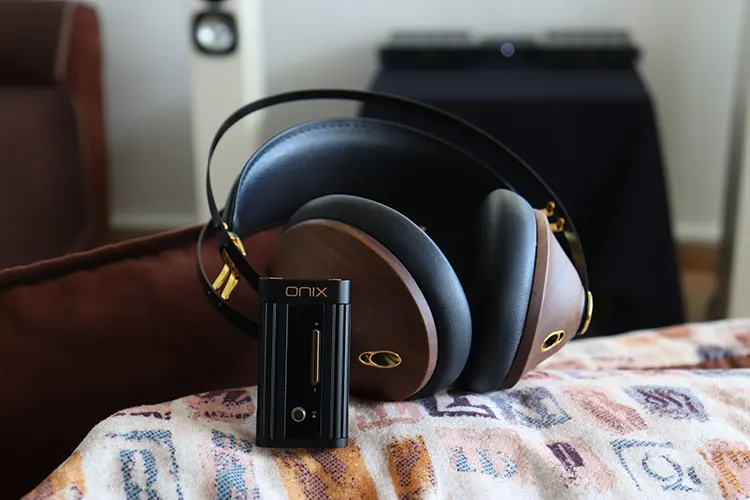
The ONIX Beta XI2 displays the ONIX colors, which are Black with Gold trim throughout. It’s a classic design that will not age, but the style is a bit traditional in contrast to the UA7’s modern-day design and the incorporation of the multifunction rotary volume knob.
The ONIX Beta XI1 relies on some onboard push buttons, and there are three. One gives access to the menu and its options. The other two control the volume and menu selection.
The ONIX XI2 controls are a simple but effective solution. But the volume knob speaks to most audiophiles since it’s the original volume control implementation. The push-button volume came later.
Perhaps you like color choices, and the XI2 comes in only one color scheme. Meantime, the UA7 is offered in three colors, which I know will cater to some urbanites who like to color coordinate their gear and lifestyle choices.
Performance
The ONIX XI2 gives the listener what I call a tube-like experience over the tube mode on the Shanling UA7. However, the XI2 comes across as the more technically capable dongle, but the Shanling takes it on musicality.
The bass response from the ONIX XI2 has more of that tube characteristic, with more richness and texture. The bass response of the Shanling UA7 is tighter and cleaner with a forward character.
The XI2 seems more intimate, and I tend to like the solid-state option if I want to catch a glimpse of detail. The UA7 produces even more detail, even on tube mode, which I stated previously has a sonic profile closer to digital.
Overall, the ONIX XI2 has more color and a brighter character in solid-state mode. The Shanling UA7 does tend to sound the more musical and engaging of the two dongles.
FiiO QX13
Technical
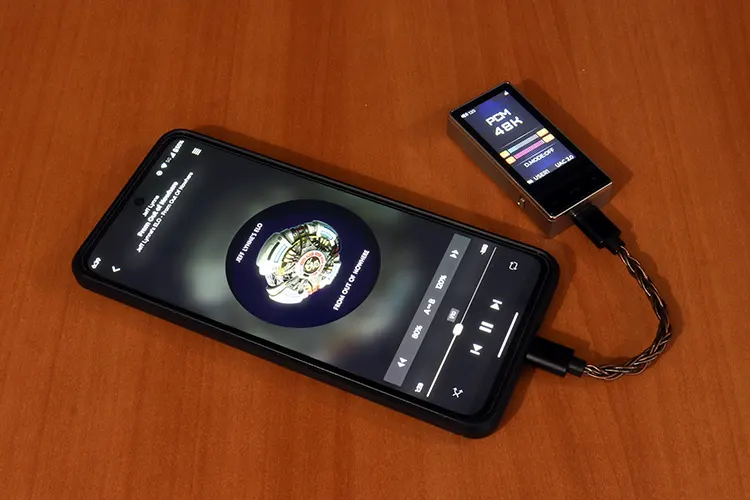
The FiiO QX13 is the most powerful dongle in my collection, but to obtain that power, you need two power sources, which is not ideal for portability. That would involve taking along an extra power bank.
The QX13 produces up to 990 mW balanced, but when using a single power source, it drops down to 650 mW, which is still higher than Shanling’s max rating of 577 mW on the UA7. Again, that’s in normal mode.
The FiiO QX13 uses a single desktop-grade Sabre ES9027SPRO. It also employs a single amplification system via a couple of OPA1692s alongside four INA1620 opamps.
Design
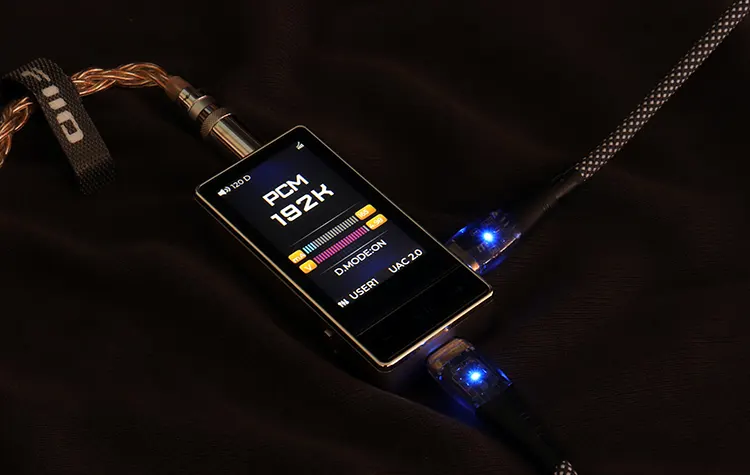
One of the FiiO QX13’s standout features is the extra-large 2-inch display mounted on a solid carbon fiber body that also displays a uniquely artistic display pattern.
The QX13 is a good-looking dongle, but more aligned with other dongle designs compared to one with rotary controls. The overall design, if not for the unconventional placement of buttons and curved edges with a decorative back plate, would look like other dongles.
The QX13 uses a unique button placement that is placed south of the large 2-inch screen, in contrast to the rotary volume knob. All these dongles have similar IO ports, so there’s not much to talk about in that respect.
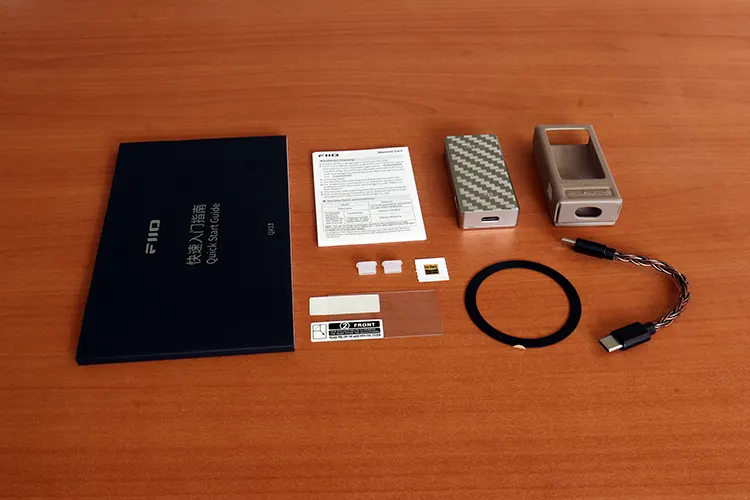
The FiiO QX13 is a digital beast of a dongle that offers a lot. It comes with a protective case, USB covers, and it even comes with a Magsafe magnetic ring that works in conjunction with the included protective case. It’s the best accessorized dongle of the bunch.
Performance
The more neutral-ish dongle seems to be the QX13 by a small margin, with coloration done pleasantly on the Shanling UA7, again pushing forward in musicality by adding warmth and a sliver of tincture.
Then again, FiiO is the only one with an app that includes a full-out equalizer to color you way into what your ideal sonic signature would be, or you can also correct flaws in your present collection.
The FiiO control app is one of my favorites because it has most of the features that I could want.
The QX13 does best with complexity since it has a linear character overall, and in desktop mode, it tends to run out of power less so compared to the average output of the UA7.
I would say that both these dongles are aiming for an organic tonality, but the QX13 has a more digital-inclined signature, while the UA7 has a hint of analog character, making it the more organic of the two by a small margin.
The most powerful of the two is, of course, the FiiO QX13, but again, two power feds are needed. So, to compare the bottom line metaphorically, the FiiO is a tasty, large cup of coffee, but the UA7, on the other hand, is the sweeter coffee with reduced caffeine.
The UA7 sounds warmer in comparison and produces what I call harmonic fullness. Neutral, detailed, and powerful dynamics of the QX13 versus the warm, organic, musical UA7 sonics are your choices here. The rest are cosmetics and dollar signs.
My Verdict
Every year, dongles get better and better. The Shanling UA7 follows suit by offering not one, but two sonic profiles that are clean, natural, and dynamic-sounding.
The UA7 also produces two sonic profiles that provide excellent soundstaging capability, making it worthy of the flagship title.
The Shanling UA7 dongle DAC doesn’t have a classic tube sound signature; the effect is subtler. It caters to those who are looking for solid-state cleanliness and detail but want warmth and a subtle tube-like experience that adds richness and musicality.
Alongside the bottom line determining factor on purchase day, the Shanling has undercut everyone when it comes to SRP. Including the performance level, alongside that fact, instantly makes the Shanling UA7 a best buy contender at the moment.
Shanling UA7 Technical Specifications
- Dual JAN6418 tubes
- ESS ES9069 DAC
- Upgraded amplifier design with 2x 1662 + 4x BUF634A
- Extra powerful with up to 577mW @32Ω
- OLED 0.87 inch with on-device available settings
- Refreshed design of UA line and newly designed multifunctional volume wheel
