

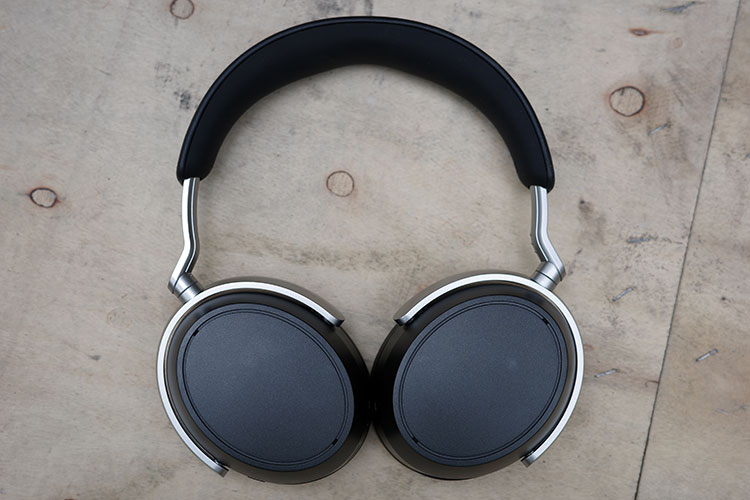
Sound Impressions
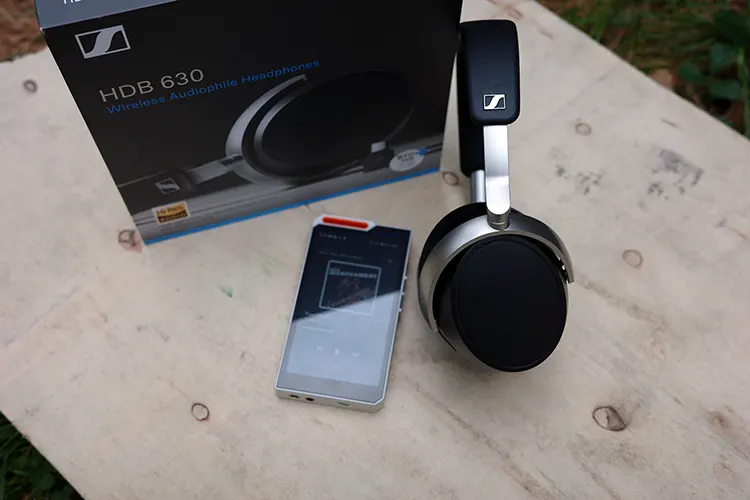
My sound impressions of the HDB 630 were made after 75 hours of burn-in. Sources used for evaluation were my iPhone 16 Pro Max, MacBook Pro (w/BTD 700), and the HiBy R4 (BT/USB-C/3.5).
Summary
Updating the HDB 630 firmware first, critical listening was made after the requisite time. Bass comes on as controlled, but not reaching overly deep unless the song builds that into the mix. The midrange sits slightly forward, but not elevated, which is a nice change.
The treble extension is nothing to brag about, but it does not become piercing either, thankfully. I found that extension allowed the music to spread out, adding to the depth of layers, giving a note that benefited in weight.
The HDB 630 soundstage comes across as a smaller venue-oriented, but with good height. That height makes sense, since the top-end extension allows for the spatial capabilities.
Width is slightly out of head, but the height and depth make up for that “conservative” approach, making for a quite enjoyable listen.

Bass
The HDB 630 low-end benefits from full ANC, as expected. The bottom drops, with tighter control, but will not be labeled bass-heavy at all.
To get that guttural feel, the listener will need to EQ some extra punch. But the down low feel allows for the midrange to come about without bleed into the mids.
While not overly thick, the control of the lows kept the tuning taut, with good attack and decay. This made for a succinct, efficient use of the low end, without becoming bloated or ponderous.
I do wish for a bit more down low, giving more of a guttural punch, but the “bass boost” of the app can add a bit, while using the excellent PEQ allows you to fine-tune a low foundation.
The control of the bass also provides for a smoother sound, without smearing, which helps to keep the signature alive. Any tighter control, though, and that low end would suffer in note weight, making for a thinning textural response to the whole.
If the music has good grunt down low, the HDB 630 portrays it as honestly as it can, keeping control without losing too much emphasis. Those who prefer more on the low end can always add more.
Mids
The HDB 630 midrange tuning allows vocals to come forward with distinction and detail. Clarity is top-notch, with succinct intonation and weight.
The alacrity with which vocals come about lends to a thoroughly engaging midrange that pairs well with the rest.
The tight control helps keep things tidy and speedy, but without becoming thin or lacking musicality.
Instead, the distinct nature that comes forth is a very musical affair, which is only slightly lifted. Instead, think of it like a singer is promoting the music by reaching forth, forward a bit.
This can also hinder other parts that may otherwise show forth. If a complicated piece comes about, the lack of distinction from those parts can seemingly get a bit lost behind the vocals.
But when working together, in musicality, the melding becomes precise, natural, detailed, and with good authority, without becoming disingenuous.
Treble
The HDB 630 top end is more nuanced than authoritative. I won’t say that it is rolled off, but extension reveals politeness rather than reaching.
This does favor those who may be treble intolerant, but those wishing for a more definitive top end will want to use the PEQ to accommodate their flavors.
That said, the treble region presents itself with excellent clarity and detail, more so than the lower regions. This does allow for the layering I mentioned earlier to extend into the upper realm, which naturally adds lift and thickness (yes, thickness) to the layers.
Stretching in a more natural tonality aspect, that stretching allows the vertical placement to give a good frontal response. Depth is picked up by the low end, adding a complementary effect to the top.
The treble notes, as a result, come across as clear and controlled, which seems to me to be a Sennheiser trademark. Efficiency rules here, giving a succinct tonality to the top that is accurate and musical at the same time.
I never felt the music became harsh in the treble region, but I do wish it carried a bit more extension.
Staging & Imaging
The HDB 630 has excellent height, aided by the “spreading” of the top end, and control down low (but not low-end grunt).
That height gives good vertical placement to the instruments, while a slightly wider than head experience allows that two-dimensional pairing to fill the stage.
The depth can seem a bit shallow, but there is a good 3-dimensionality to the music, which I attribute to the midrange coming across as so musical. I would not call it intimate either, but it is taller, wider, and a bit more frontal in experience.
Side-to-side musicality is very good, but with a bit of dryness to the music. Not artificial by any means, but lacking in a sense of naturalness.
This might be construed as more monitor-like than emotive, but I still appreciate the honesty with which instrumentation is presented.
Wireless Connectivity
Bluetooth
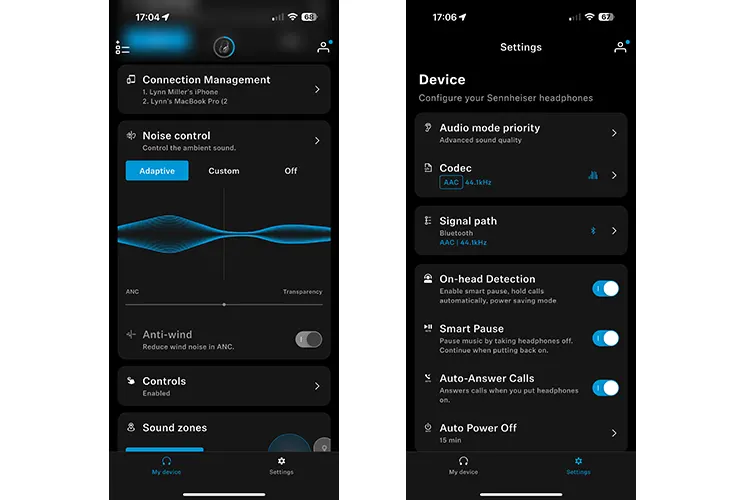
The HDB 630 connected easily across multiple devices. Having two simultaneously connected allows rapid switching between the two. This aspect alone was one of the best multi-point connection experiences I have had.
I could quickly go from streaming a video on my MacBook to music on my iPhone with a pause on the MacBook Pro and play on the iPhone.
Latency was non-existent on video reviews of a camera lighting system, as were more interactive videos, such as game play videos & requisite sounds associated in real-time.
BTD 700
This USB-C dongle deserves special mention for the capabilities offered in such a device. Simply hooking it up to my MacBook allowed me to stream music and videos without going to the HDB 630, in a Hi-Res format.
As I understand it, USB-C dongles (Bluetooth transmitter) such as this “raise the level” at which your source can function (or give the device the ability), sending Hi-Res quality audio to the headphones, where normally your source might be the limiting factor.
Wired Connectivity
USB-C
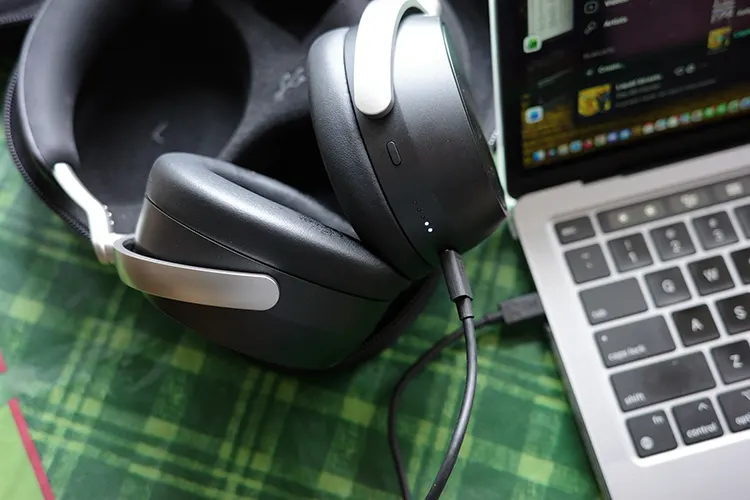
A nice thing about many USB-C audio connections, such as this, is that you can charge the headphones while playing. Add in that the audio quality mimics what a wired headphone might provide, and it is a double win.
The HDB 630 gives off the typically robust Sennheiser sound quality, with excellent clarity when hooked up through the USB-C connection. Bass goes fairly low, and the midrange comes across with alacrity. Treble reach is extended a bit, with good reach.
A viable alternative to running BT, with the added benefit of charging the headphones while in use.
I will note that a powerful source is needed to attain loud listening levels. The HiBy R4 was adequate, but I did wish for more oomph.
Aux
I noted a bit of an airier response when using the 3.5mm cable. There was still good note weight, but the sound became brighter to me.
Bass did reach a bit deeper with the USB-C, with better control. This is another alternative to BT that is worth trying.
While using the AUX cable, much like “the old days,” the sound fell slightly behind the USB-C method, overall.
The treble became brighter, with a certain brittleness to it that became more genre-specific. The sound did provide good quality, but the note weight became a bit thinner.
