

Synergy
Efficiency & Sensitivity
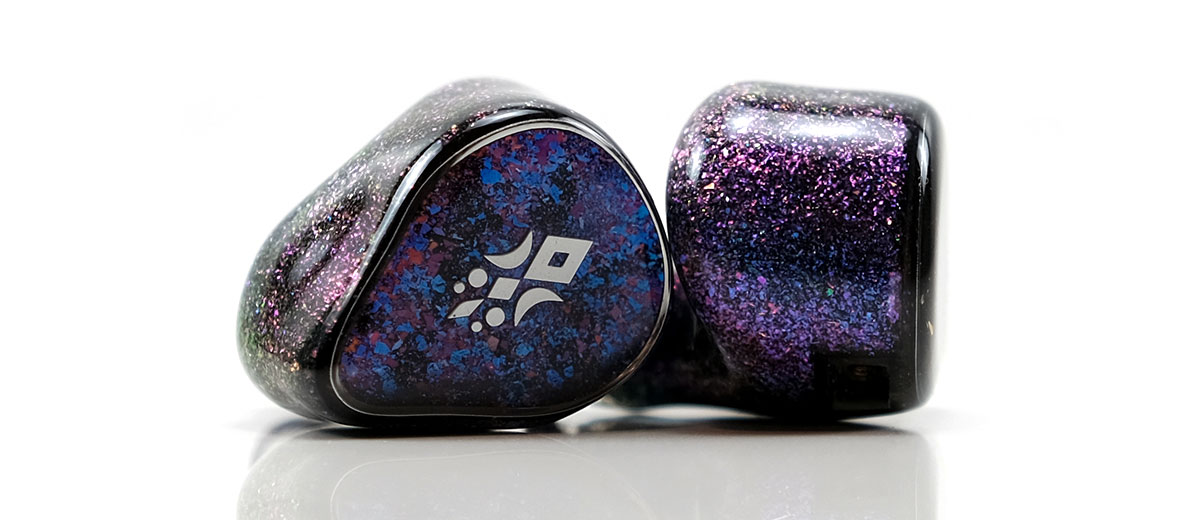
The Rossi&Wing Lua Serendipity is rated at 23Ω for impedance, with an SPL of 112 dB/mW at 1kHz. Therefore, there should be no issues driving this IEM from a dongle, DAP, or portable amplifier.
Dynamic range will improve with a good amplifier, and by that I mean quality rather than just simply power.
With the stock tuning of the Serendipity, I found that a cleaner, solid-state sound with a good level of upper-mids and treble presence offered the most balanced presentation. Warmer sources sounded too muddy.
However, with modern PEQ from apps such as HiByMusic, iBasso’s Mango app, and FiiO Music’s new PEQ controls, I could craft the correct profile to sound just right with almost any source I paired the Serendipity with.

PEQ Pairings
So, with the above in mind, the journey through pairings was less about which DAC/Amp or dongle sounded the best with the Serendipity, but just how transferable was my PEQ stance, given every app has a slightly different approach, and every amp has a distinct sound signature.
As per my sound impressions on page 1 of this review, I felt I had broadly nailed a common PEQ profile close enough to my preferred target to produce a more modern V-shaped response. One that could be applied to almost any source to ensure the Serendipity sounded competitive.
My peaking filters were configured to inject more upper-mids and treble fill, suck a little warmth out of those lower-mids to create more space for voicing, and shift the bass weight to 50Hz or lower for maximum bass-to-mids separation.
My largest peak was 7 dB on a 0.3 Q factor at 8k, dropping down to -2 dB 0.3Q at 500Hz and enhancing the sub-bass by 2 dB at 30Hz with a Q factor of 0.7.
iBasso Mango
This worked a charm on the more neutral DX340/AMP15 Mango app PEQ, producing a very deep bass response, excellent vocal clarity, and above-average treble fill.
The DX340 vocals are not quite as pronounced as the HiBy R8 II, using the same PEQ Profile in HiBy Music, but that’s more to do with the AMP15 sound signature than any real difference in the app’s algorithm.
The only problem with the DX340/AMP15 pairing was the inability of the Mango app to transmit the PEQ tuning via OTG, meaning connected DAC/Amps such as the iBasso D16 reverted to the Serendipity’s muffled stock tuning.

HiBy Music & FiiO Music
That was not the case with HiBy Music or the FiiO Music app. With the R8 II, the Cayin N6iii/R202, and the iBasso DC-Elite via a smartphone, I was able to duplicate the Mango PEQ settings and produce the same excellent V-Shaped performance from the Serendipity.
My only caveat was with the N6iii R202, which sounded more natural in 1-Bit over the forceful midrange sound of the R-2R mode.
I tamed the peaking filter a little by dropping to a 6k peak rather than 8k on the DX340 and 7k on the HiBy R8 II. I also dropped the gain to 6 dB rather than 7 dB, which seemed to produce a smoother tone from the Serendipity.
The only source I wasn’t convinced of using any of the PEQ stock settings was the iBasso Nunchaku. For some reason, the vocals felt a bit off, or a bit distant, and lacking in impact when using the tube mode. The DC-Elite’s cleaner, punchier profile was much better suited to the Serendipity’s dynamic driver.
Selected Comparisons
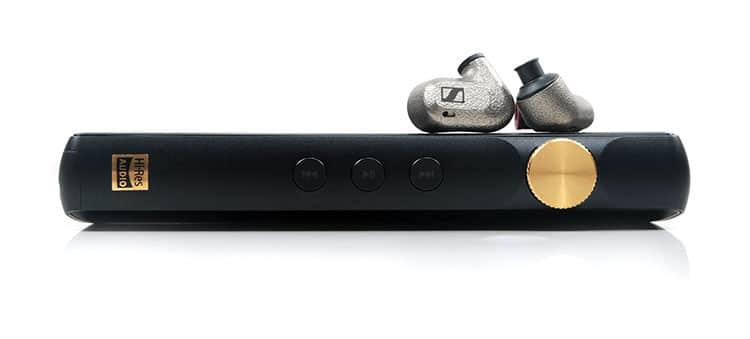
The following comparisons to the Rossi&Wing Lua Serendipity were completed using a mix of the iBasso DX340/AMP15 combo and the Chord Electronics Mojo 2 via an OTG connection to a Xiaomi 15 Ultra smartphone.
The performance descriptions are split between the stock tuning and my preferred PEQ tuning of the Serendipity, created in the DX340 Mango app and FiiO Music on a smartphone.
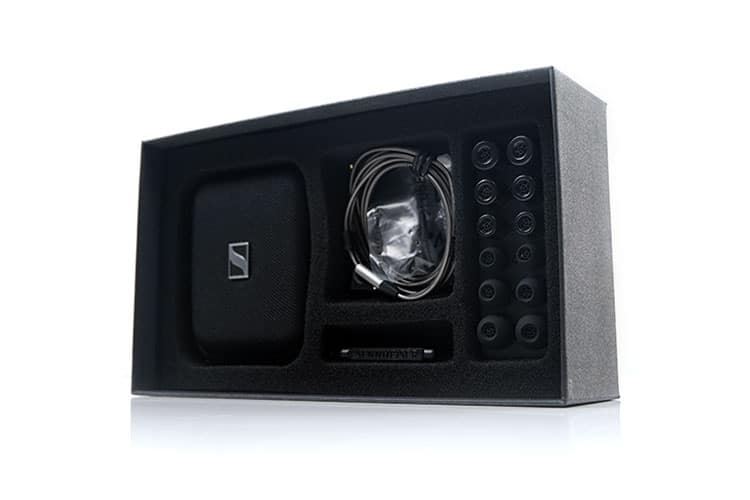
Sennheiser IE 600
One of the staples of Sennheiser’s refreshed IEM lineup, the IE 600 was launched in 2022, with our review of it published in the same year.
Technical
Both IEM are single dynamic driver universal models, and both use proprietary driver designs. The IE 600 houses a slightly smaller TrueResponse 7mm single dynamic driver as opposed to the 10mm R&W “Magna Resonus” MR10 dynamic driver inside the Lua Serendipity.
The IE 600 also uses a type of resonator chamber called a D2CA or dual resonator chamber, first seen in the previous IE 800. They are designed to reduce the potential resonance that reduces the quality of high-frequency signal reproduction.
Rated at 18Ω and 118 dB/Vrms, the IE 600 is relatively efficient on paper, but less so than the Serendipity, which is rated at 112 dB/mW @ 1kHz or 128.4 dB/Vrms on a 23Ω weighting.
Both IEMs are easy enough to drive and, like most decent dynamic drivers, can improve in performance with quality amplification.
Design
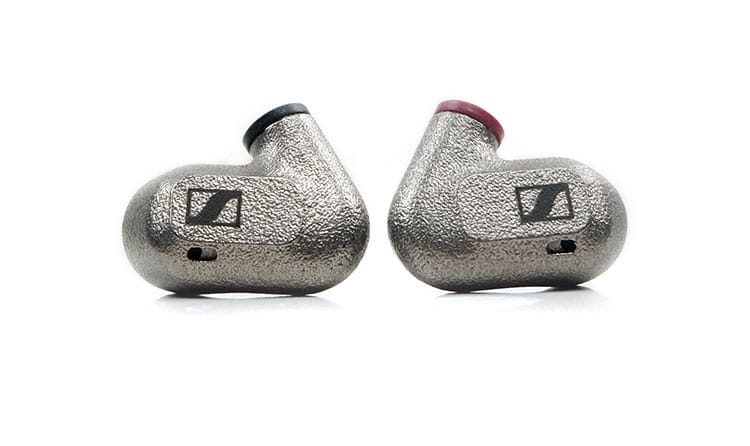
The Serendipity is by far the bigger of the two IEM form factors, but the almost blasé silver finish of the IE 600 has far less appeal next to the purple ‘pop’ of the Rossi&Wing creation.
There is some logic behind the IE 600 aesthetic since it uses a durable amorphous alloy, which is technically formed from undercooled frozen metallic liquids known to be quite tough and fairly resistant to abrasion and corrosion.
So it is a bit of a compromise. Go with the more aesthetically pleasing but probably more delicate resin build of the Serendipity or the tough IE 600 shells that fly under the radar visually.
The shaping on the IE 600 is also a bit offbeat. They are tiny with almost no depth, meaning the tips do most of the passive isolation and grip whilst in the ear.
The Serendipity’s contoured resin shell helps with isolation and fitting, and while the nozzle extends deeper into the canal, tips still seem to matter. I found Final E tips to seal the best with the stock tips a bit too loose in my ears.
You get two cables with the IE 600, both of the same finish but terminated with different 3.5mm and 4.4mm jacks. Like the Serendipity, there is no mention of gauge, so I presume both have a similar 24-26AWG. The IE 600 cable wiring is OFC copper, a wiring I assume is also inside the Serendipity cable.
I find the IE 600 cables lightweight and easy to handle, with the MMCX connectors adept for granular adjustments. But the rubbery finish is less attractive compared to the braided cloth jacket and durable aluminum splitters on the Serendipity version.
Performance
With the Serendipity in stock tuning, the IE 600 has the brighter, cleaner tuning with a bit more control in the lows and a lot more treble presence and extension.
The staging is taller on the IE 600 with a shorter decay and leaner note quality. It offers more contrast, a little less ‘girth’ in the note weight, though the bass is well controlled despite some distinct elevation sub-100Hz.
The Serendipity has a heavier bass response, providing a stronger fundamental, more mid-to-upper bass bloom, and sounds darker with an attenuated set of upper-mids from 2-4k and a similar approach from 6-8k.
It sounds very rounded and lacking in upper-harmonic contrast. Vocals are even-harmonic but lack space to shine. Keeping the IE 600 on the foam tips produces a smoother response, but overall, the Serendipity is not as peaky and is more forgiving, albeit with a less detailed sound.
With PEQ, everything changes. Damping down the Serendipity bass bloom produces a drier, more controlled, and heavy-hitting bass response, ideal for EDM.
It’s a much more natural sound now with more treble fill in the 6-8k region that adds some necessary energy to percussion attacks.
I would still rate the IE 600 as more accurate in terms of percussion energy in metal and rock genres. The Serendipity still has a somewhat muted delivery, but at least you can hear it now.
Now the vocals sound more natural than the edgier IE 600, more evenly balanced, with greater presence and separation from the heavy bass response courtesy of a small PEQ dip around 200-400Hz.
With that dip, you can even raise the sub-50Hz elevation by 1 dB to further enhance the power and get away with it.
HIFIMAN RE2000 Pro Silver
The HIFIMAN RE2000 was launched way back in 2018, with the Pro version coming out in 2021, which refined the fitting experience.
It is still sold on the HIFIMAN shop website to this day. The price had a high degree of volatility, with a debut price of $1500 before it settled on a regular price of $799.
Technical
Both IEMs use single dynamic drivers, but like the IE 600 comparison, they are radically different in application. The Serendipity has a slightly larger 10mm MR10 driver than the RE2000 Pro Silver’s 9.2mm version, and, like the HIFIMAN driver, it is also in-house designed.
The RE2000 Pro Silver driver is called a Topology dynamic driver, which means its diaphragm is coated with nanoparticles with distinct geometric patterns on the surface.
The reasoning here is that the distinct patterns can control the final sound signature and reduce typical diaphragm distortions with far more finesse than with traditional dynamic drivers.
The one drawback of the RE2000 Pro Silver is that it is not that efficient, with an SPL of 103 dB/mW and an impedance of 60Ω.
You will find it harder to drive than the 23Ω, 112 dB/mW rated Serendipity, though, with more powerful and modern DAPs and dongles, it’s not a huge hurdle to climb.

Design
The RE2000 Pro Silver design language has more in common with the IE 600 than the Serendipity. It’s a narrow, long aluminum top in a r-angle format, with a silver and black finish and a smaller than the more standard sizing of the Serendipity.
The RE2000 Pro Silver does not have the visual flair of the purple resin finish of the Serendipity, and they are a little bit awkward for fitting in my ears.
I would say the passive isolation is just average for the RE2000 Pro Silver, at least when compared to the Serendipity. The angular nozzle design means the tips are doing most of the work in securing the shells in place and providing the seal.
Out of the stock tips for the RE2000 Pro Silver, I use the triple flange tips. They have the best penetration and audible performance, but can leak a little.
You can try using firmer tips like the Final E, but the nozzle is so short that I never really feel that the shells go that deep into the ear canal, meaning leakage is still an issue. Foam tips improve isolation but dull the resulting presentation a bit too much for my tastes.
No such issues with the Serendipity fitment, though stock tip selection for passive isolation is an anecdotal story and challenge for my ears. I found a good solution with Final’s E tips, which provide superior isolation over the RE2000 Pro Silver.
The RE2000 Pro Silver cable is very similar to the IE 600 in its rubbery look. It is lighter than the Serendipity cable and easy to handle, but lacks the style and 4.4mm plug of the Rossi&Wing offering.

Performance
Starting with the stock Serendipity tuning, the R2000 Pro Silver is more V-shaped-sounding with a noticeable suckout around 500Hz to 1k that drains it a little of some presence and note weight beyond the excellent fundamental frequency.
The Serendipity is more L-shaped, with a similar bass elevation and good power but less of a lower-mids dip, so it carries a lot more warmth and body up into the lower-mids.
The RE2000 Pro Silver’s 2-5k is more Harman-friendly, with decent gain lifting the vocals above the bass response, providing some nice clarity, and backed by a noticeable 8k peak, but one that doesn’t seem to bother me.
Instead, the RE2000 Silver Pro treble tuning adds a nice sheen over notes, creating some decent contrast in the midrange instrument and vocal timbre. It also adds some necessary space and height to the staging performance.
This is Serendipity’s Achilles heel. Its stock tuning has a decent 1-2k elevation, fleshing out a nice, strong vocal presence. However, its detail and accuracy are comparatively masked by an attenuated 2-4k tuning and a lack of treble elevation to counter the even-harmonic dominance in the note timbre.
With the PEQ profile added, the Serendipity is more competitive and perhaps the more natural-sounding of the two IEMs through the mids. With 1-2 dB below 50Hz, it can deliver more power without distortion.
I would still say the RE2000 Silver Pro exhibits more treble detail and height, but the PEQ’ed dip in the Serendipity lower-mids is not as strong, providing vocals and instruments with more natural warmth and body.
The RE2000 Silver Pro mids sound a little glassier and leaner in comparison with vocal imaging sitting further back, so mids engagement is not quite as good as the PEQ’ed Serendipity.

My Verdict
The Rossi&Wing Lua Serendipity has an excellent dynamic driver but is loaded with a niche tuning that might limit its appeal in its stock format.
With PEQ, everything changes. Though you are not limited to V-shaped profiles, I found my own personal sweet spot there with a very powerful performance without any noticeable distortion
Now, the Serendipity is a competitive IEM at its price point without losing its somewhat smooth sound that I know the company wanted to showcase.
Throw in a God-tier unboxing experience with some excellent perfume and an attractively designed set of shells, and the Lua Serendipity becomes a very memorable IEM offering.
Rossi&Wing Lua Serendipity Technical Specifications
- R&W “Magna Resonus” MR10 Dynamic Driver
- Sensitivity: 112 dB/mW @ 1kHz
- Resistance: 23Ω @ 1kHz
