

Synergy
Power
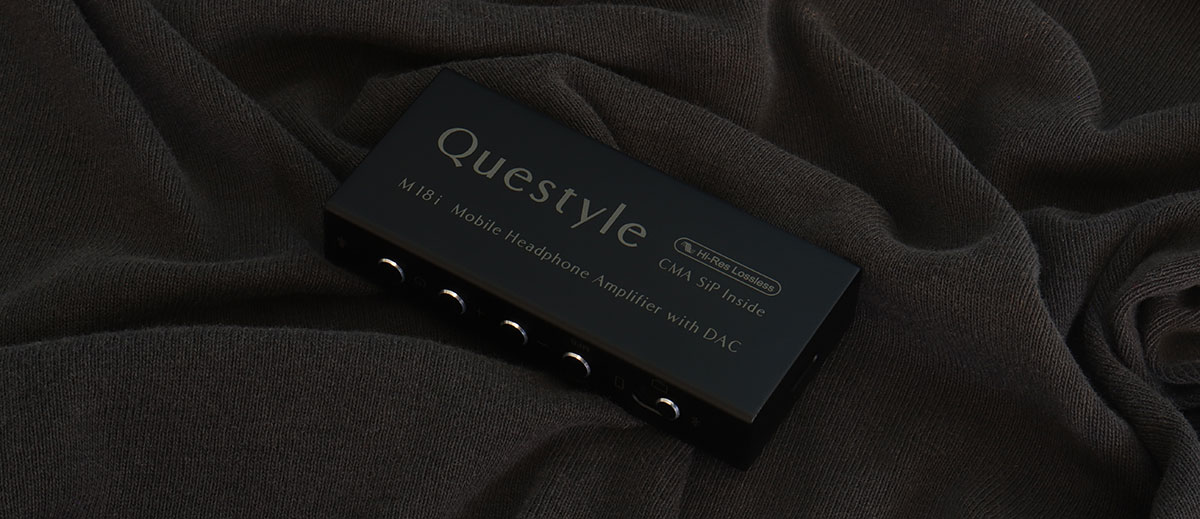
I wish that Questyle had posted power output ratings besides the 300Ω 28mW rating that’s unofficially floating around. So, I have to go by ear and instincts here.
I noticed that the M18i prefers to drive a high impedance dynamic headphone like the Sennheiser HD 490 PRO Plus, which is rated at 300Ω, or the HD 505 at 120Ω over a planar magnetic HIFIMAN Arya Organic at 16Ω or the new Arya UNVEILED at 27Ω.
I did find something peculiar with the two headphone connections, and that was that the 3.5mm port sounded warmer, while the 4.4mm port sounded more vivid, or hot.
Pairings
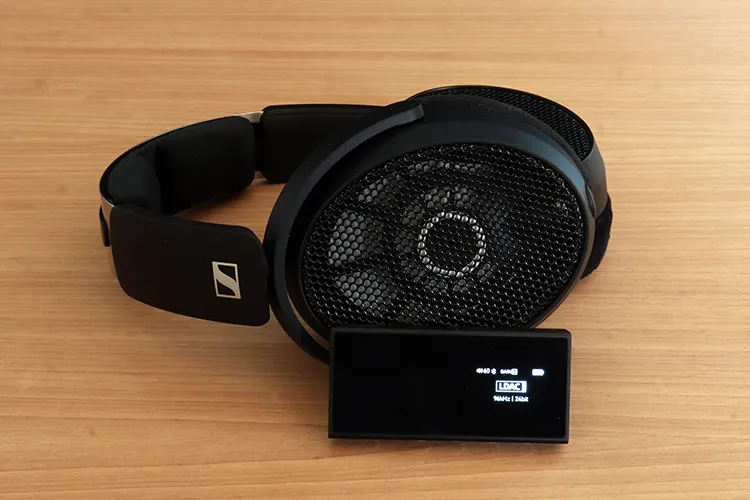
I would look into pairing the Questyle M18i with a set of cans or IEMs that can produce a good soundstage. If you look at the Questyle page, you’ll see lots of Sennheiser headphones and IEMs.
I had a good experience matching the Sennheiser HD490 PRO Plus and the HD 505 with the M18i. Since they all have studio-like qualities, sonically speaking, they match up well if you want a good monitor-like portable combo.
Not that the M18i can’t pair well with something like a Meze Audio 99 Classics, 109 PRO, or even the 105 AER, since you might prefer headphones (and IEMs) that have more coloration in their tuning.
Microphone
The Questyle can be used via USB-C or Bluetooth with a phone, and it has a self-contained microphone located behind an orifice above the power button.
The single microphone does have Qualcomm’s CVC 8.0, and it does a decent job rejecting lots of distant noises and picks up nearby vocals well. Just don’t expect epic pick-up capability if it’s inside your purse, pocket, or backpack.
Treat it as if it were your mobile device, which works best by remaining within two or three feet away from your person.
You will obtain acceptable performance from the built-in microphone, but no further, because the pick-up capability and voice quality will diminish considerably.
Bluetooth Performance
Bluetooth Codecs on the M18i go up to LDAC and aptX Adaptive, but I used the M18i with LDAC most of the time, given its superior transmission capability. The M18i doesn’t come with aptX Lossless.
The M18i’s BT range was particularly good, allowing me to walk to the extremities of my average-sized home without experiencing any dropouts.
The distance covered was a little over 50 feet, and I wasn’t even using a BT 5.4 device. My particular Motorola Edge uses a 5.3 radio, and I would expect better performance if I were to use a 5.4 radio-equipped device.
Select Comparisons
FiiO BTR17
Technical
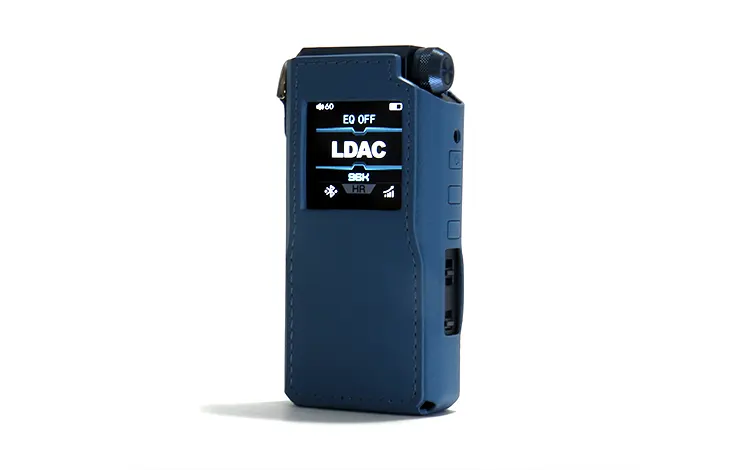
The FiiO BTR17 is one model many might associate with when thinking about this audio gear segment. It has become popular because it has lots to offer for a small investment. It produces plenty of power in a small, versatile package and is the smallest Xbass-equipped solution.
The BTR17 blends old tech with new tech and combines THX AAA78+ amplification with dual-ESS ES9069Q DACs, an XMOS XU316 USB front, and a flagship Qualcomm QCC5181 5.4 Bluetooth solution that handles a plethora of modern-day codecs.
The BTR17 can handle the MQA format alongside DSD and PCM. The Bluetooth section goes up to the LDAC level codec, but is not capable of the latest aptX Lossless, though neither is the Questyle M18i.
Design
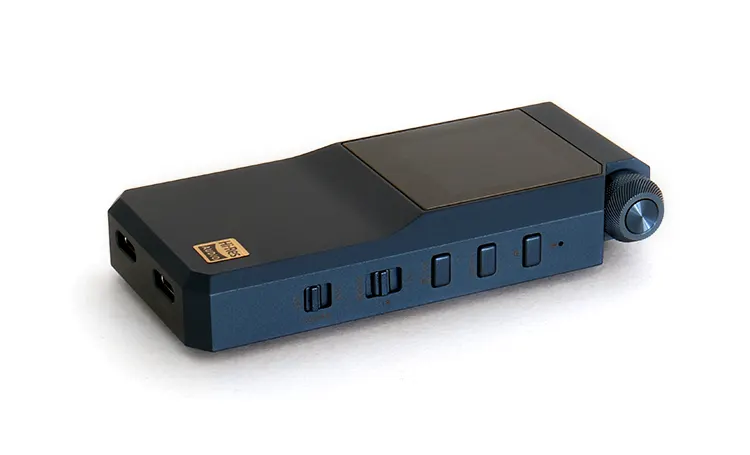
One cool implementation on the FiiO BTR17 is the multifunction rotary volume control. But then again, our other comparison model has a similar feature, so this is not a unique implementation of the BTR17.
The BTR17 is perhaps the largest unit within this comparison by a small margin. FiiO includes a custom cover for the BTR17 inside the box, which is something most manufacturers should look into. Especially with our next product in this comparison.
The BTR17 has a more upscale screen compared to the display on the M18i. It’s not a monochrome screen and is capable of displaying a few colors. But the best part is the plethora of features behind that screen that are absent on the M18i, making the BTR17 a more attractive option.
Performance
The FiiO BTR17 has a more forward sonic presentation, especially if you use the desktop mode, and is a bit more abundant in the top end. The M18i tends to be more relaxed in the top-end range and in general.
Power-wise, the BTR17 seems to have more of it, but it can’t compete in soundstage, focus, and technical abilities. The power difference is by a small margin, but there’s no way to tell by specifications alone because Questyle didn’t post any numbers.
The FiiO BTR17 wins on features that give the end user some sonic flexibility via the FiiO Control app and a full-featured equalizer. However, I have found some users are having issues with the BTR17 and the control app. Updating the firmware and the app will fix that if you want to know.
I have to say that, even though the BTR17 has a more confident and up-front tonality, some might prefer it over the smooth-sounding M18i. It’s a close match, and the sonic differences are small.
The BTR17 seems more vivid and energetic in presentation, comparatively. Not that the BTR17 goes overboard because it’s one of the best-sounding pieces of gear in this segment, and value-wise it can’t be beat.
iFi audio GO blu
Technical
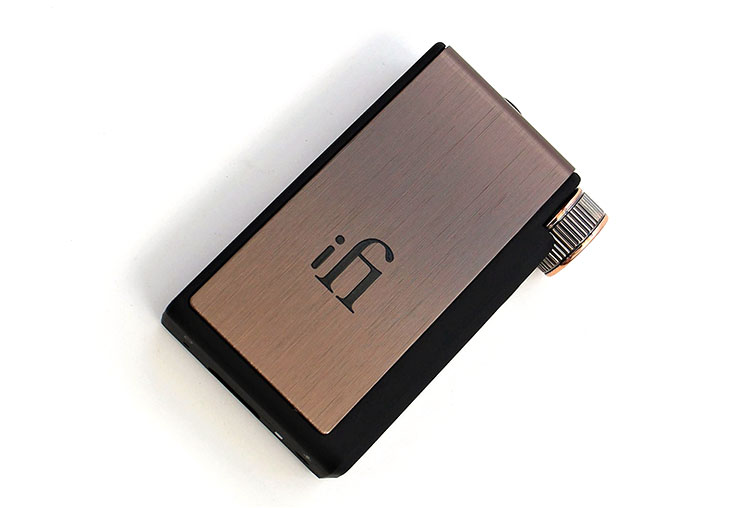
The iFi audio GO blu is one of the most popular models in this segment because of its small stature and big performance ratio. It’s the smallest model, but it doesn’t ‘cheap out’ on features or quality components.
The GO blu uses separate stages. For example, they use an isolated amplification stage, a separate Bluetooth, and a DAC section consisting of a pair of Cirrus Logic CS43131 chips.
The amplifier stage uses a custom iFi OV OPAMP symmetrical twin-mono topology with up to 5.6 volts of power, or up to 100mW at 16Ω, the lowest in the comparison.
Design
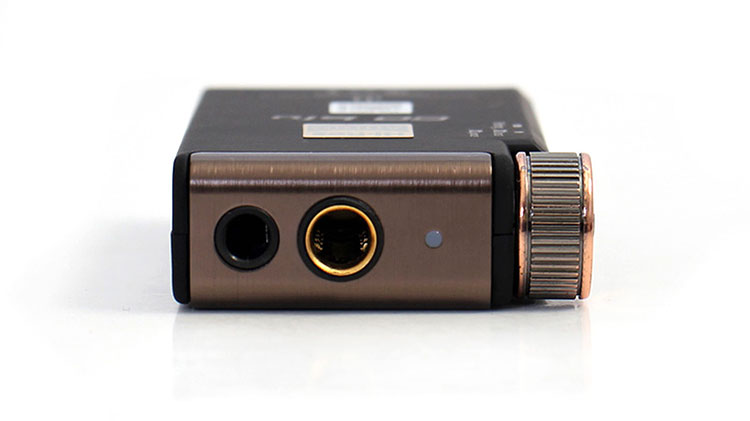
In the GO Blu, iFi audio implemented what they call a Chronodial which is a rotary multifunctional volume knob that to me is a nicer design than the FiiO BTR17’s implementation of the same feature.
The smaller stature of the GO blu makes it the best model for going portable. However, I have a major gripe about one aspect, the rubber coating. My GO blu is already showing signs of degradation and becoming sticky. You can always get a custom cover, but that, of course, will cost you extra.
Another particular aspect I dislike about the GO blu is the GAIA app, which is devoid of features. But, then again, the M18i has no app to count on.
Performance
The GO blu is a good performer, and it’s a versatile piece of gear that’s at home in many types of scenarios, but it came out over three years ago, and it’s starting to show signs of age.
The iFi audio GO blu uses older CS43131 chips and a Qualcomm QCC5100 5.1 Bluetooth solution, which are components that need an update. I like the OV series amplifiers since they give the GO blu that analog-like, warm-sounding characteristic that is an iFi sonic signature.
Feature-wise, both models have a similar set, except that the GO blu has Xbass and Xspace, which are game changers in my opinion. Opposite to that, the M18i has nothing to tailor its sonic signature.
Regardless of that, if you asked me which one I prefer, I would say the M18i. Sonically, it is smoother and functions in a more refined manner with better Bluetooth reception and refined functionality as a desktop DAC amplifier.
The M18i is a proliferate producer of soundstage. That and the smooth-sounding DAC section make it my preferred model, sonically, even though the model lacks features.
My Verdict
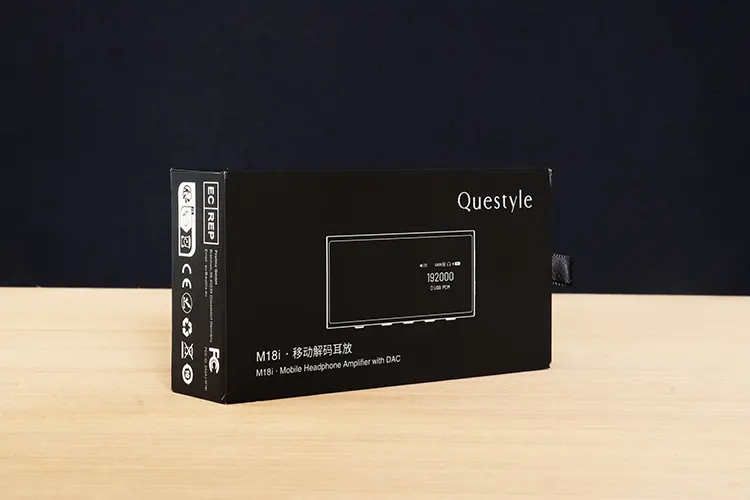
The Questyle M18i is a top performer in the dongle DAC segment with a large and precise soundstage, a clean sound profile, and a high level of technical capability.
The quagmire will come at checkout time because the M18i is twice the price of other comparable models in production, and some might complain of its simplicity and lack of an app or on-screen features.
If you consider it on sonic quality alone, you might find that the Questyle M18i is one of the best out there, and I can only think of one or two models that can surpass it sonically.
Then again, those models are even more costly, and that puts it market-wise where the numbers are supposed to fall.
Questyle M18i Technical Specifications
- Bluetooth codecs: AC, SBC, aptX HD, aptX Adaptive, LDAC, and LE audio
- Battery: 500mAh
- Digital formats: PCM384, DSD256
- Output power: 28mW @ 300Ω
- Frequency response: +0.1dB 20Hz to 20kHz; +0.2dB 20Hz to 20kHz
- DAC: Dual ES9219Q
- Amplification: Questyle’s patented CMA current mode amplification
- Ports: Two USB-C, 3.5mm, 4.4mm
- Operating system compatibility: Android, iOS, HarmonyOS, macOS, Windows, gaming devices
- Size and weight: 75 x35 x 14.5mm, 5 ounces
- Additional features: Qualcomm cVc gen 8.0
