

Nihal reviews the PLUSSOUND Hybrid XL, a high-end pure copper and pure silver 16AWG Quad-Layer Coaxial Type Litz audio cable for IEMs. It is currently priced at $1299.00.
Disclaimer: I received this sample in exchange for my honest opinion. Headfonics is an independent website with no affiliate links. I thank the team at PLUSSOUND for giving me this opportunity.
Click here to read more about PLUSSOUND products that have been previously reviewed on Headfonics.
This article follows our scoring guidelines, which you can read in more detail here.
PLUSSOUND cables have been teasing me for a long time. I am very much a cable believer, and I keep hunting for aftermarket options to try on my IEMs, so their stuff has always been on my radar. This is the first time I finally got to try one, and it honestly feels nice to tick that box.
PLUSSOUND is a Los Angeles-based brand with a long history of making custom cables for both earphones and headphones.
Their website is packed with different lines and finishes, and the amount of customization is kind of crazy. You can pick from a wide range of connectors, terminations, and hardware, so it is very easy to spec out something that fits your setup.
The $1299 Hybrid XL is their main cable release this year, with Lynn and Joshua reviewing the Copper XL and Silver Plated Copper XL in previous years. In this review, I will walk through what this premium cable brings to the table, how it feels and behaves in daily use, and how it pairs with IEMs.
I will also compare it directly with Astral Acoustics Stage 5.5 and the recently released Effect Audio Fusion 1 2025 from the company’s Horizon Series.
Materials & Geometry
Hybrid XL is PLUSSOUND’s “go-big-or-go-home” moment: the thickest, most over-engineered cable they’ve ever wound.
At a structural level, Hybrid XL uses a 7-group quad-layer coaxial Litz layout, with densely packed bundles arranged in a symmetrical ring for maximum stability and current flow.
Inside the 7-group bundles, they’ve braided three UP-OCC pure copper bundles and four UP-OCC pure silver bundles, letting copper’s cozy warmth and easy-going nature shake hands with silver’s microscope-level detail.
Each strand is enamel-coated to keep electrical anomalies and oxidation at bay. The result is a cable that is not just about brute gauge and metal mass, but one that is engineered to preserve the sonic character.
Around this internal architecture, PLUSSOUND uses its proprietary PS Insulation on the outer sleeve, which keeps the cable surprisingly soft and ergonomic for its size.
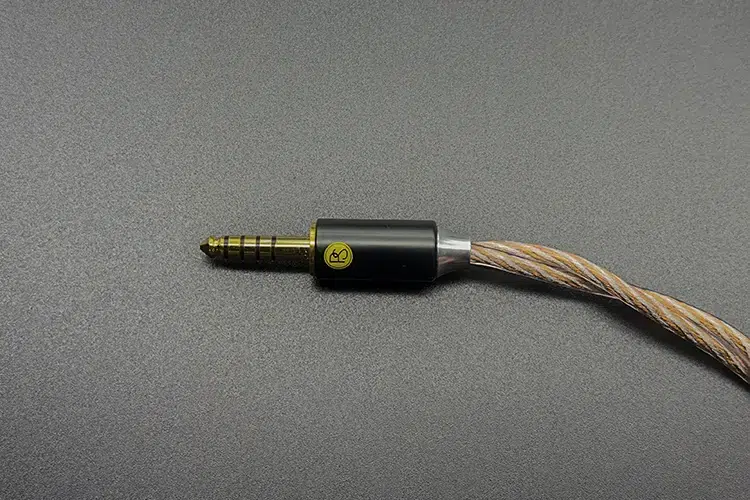
The wire itself is treated cryogenically to stabilize long-term performance and improve durability. Completing the package is a balanced, gold-plated 4.4 mm TRRRS termination, chosen for its solid connection.
Design
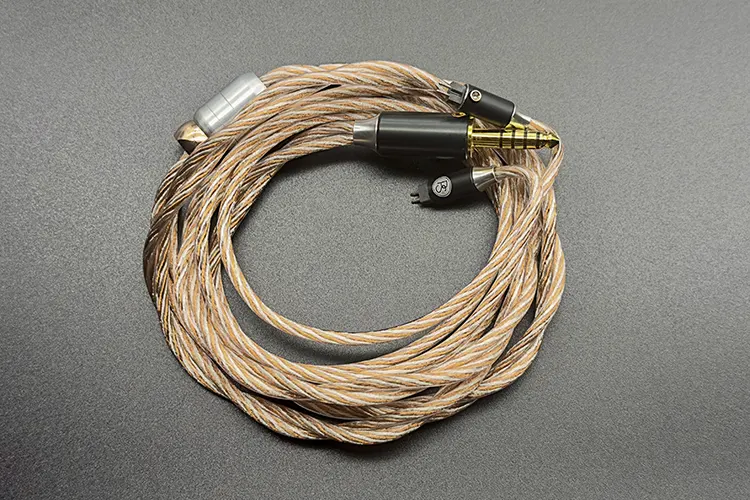
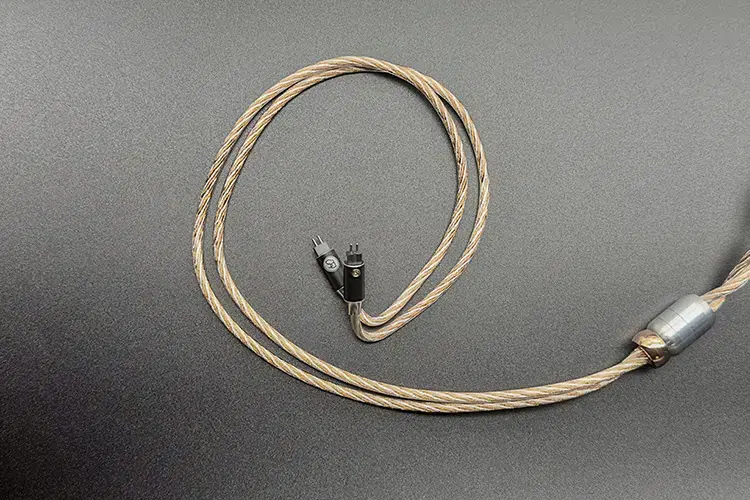
Hybrid XL keeps things low-key until you actually pick it up. The outer sleeve is transparent, which lets the conductors show off. The copper-and-silver twist inside looks like a slow-motion candy cane that runs the full length.
Under a desk lamp, the cable has a soft glow instead of throwing back the cheap plastic glare you half-expect from see-through cables.
The 4.4 mm plug is a little showpiece of understatement: a matte-black barrel, an aluminum collar at the end, a discreet brand logo, and a perfect size that lets your fingers sit on it comfortably.
It’s got real heft, no hollow toy-metal feel, so you get a solid grip while plugging and unplugging.
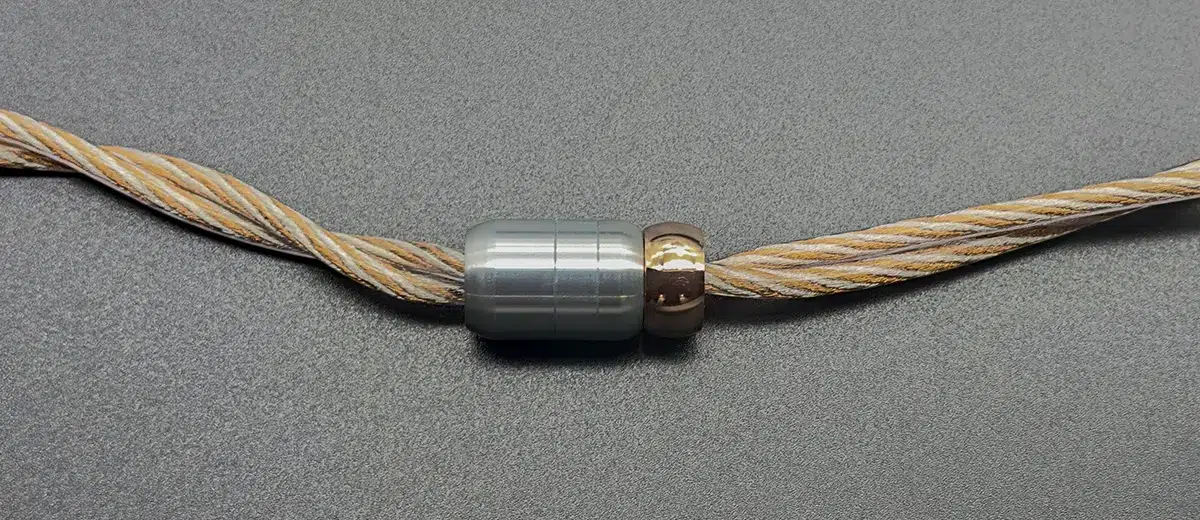
In the middle of the cable, you get a round, cylindrical aluminum Y-splitter with a matching chin slider. The splitter with its silver appearance and the slider in a rose-gold tone play really well with the conductors inside the jacket.
The Hybrid XL splitter adds visual interest without turning the cable into jewellery. The slider moves too smoothly and slides down when you leave it, so it does not really serve its purpose.
At the top, the 2-pin connectors continue the same metal build. You get black bodies with aluminum collars on each end, which makes them look a step above the regular ones.
The pins run a bit thinner than usual, like on the cables from Effect Audio, and feel snug when you plug them into the IEMs.
The cable ships in a standard 2-pin configuration by default, but PLUSSOUND offers plenty of termination and connector options on the website, so you can easily order a version that fits your own setup.
Overall, every corner of this cable gives off a premium feel. Every piece looks like it came from the same design brief, and the whole cable lands in your hand feeling finished, not merely assembled.
Handling
Hybrid XL is one of those cables you stop thinking about five minutes after you put it on, and that’s exactly what you want from something this thick. It’s not too thick but has got some body and heft.
The outer jacket is soft and much more flexible than the gauge suggests, so it falls into loose coils on the table and wraps up quickly when you’re done.
No wrestling, no stiff loops trying to spring back into shape, and it doesn’t really want to tangle either.
There is some weight in the hand, so it’s a bit of a chunky cable after all, but once it goes over the ears, the bulk basically disappears.
The sections around the ear sit gently in place, with very little pressure on the top of the ear and no hard sleeve digging in, so long sessions are easy. I’ve used it for hours at a stretch without that familiar “okay, this needs to come off now” feeling.
The Hybrid XL splitter hits the sweet spot perfectly. It’s got just enough heft to keep the cables from flopping around, but it’s still light enough that it doesn’t turn into a pendulum swinging off your head.
For small movements, the cable quietly follows along without drama. No constant fiddling or yanking it back into place.
Storing is easy; you can wrap the cable into a few loose coils and drop it in the case, and it comes back out in the same shape without any messy knots.
Packaging & Accessories
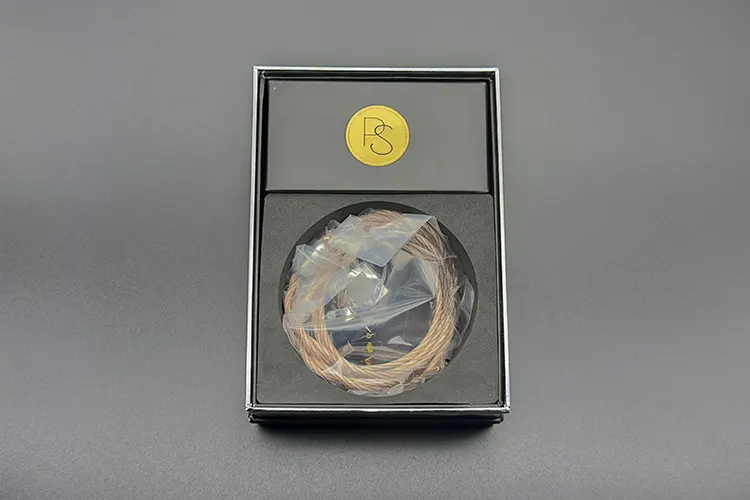
Packaging for the PLUSSOUND Hybrid XL is kept deliberately compact and fuss-free. This comes in a small box, nothing dramatic.
A matte black sleeve with the PS logo in the middle and simple text. No crazy marketing lines, no specs printed all over. It looks more like a neat gift box than typical audio packaging, and the size feels nice and easy to store or throw in a bag.
Open the lid, and the layout is straightforward. The cable sits in a round foam cutout, tucked inside a plastic bag so the plugs do not scratch anything.
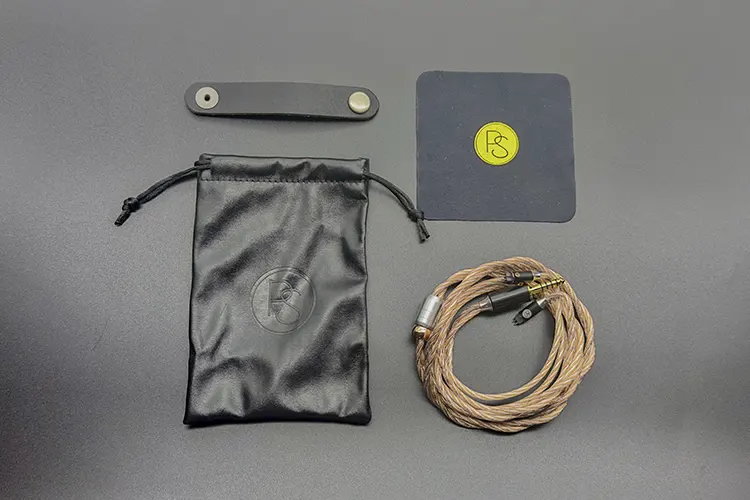
On top, there is a small compartment with a round PS badge. That little box hides the extras: a leather pouch, a cleaning cloth, and a thin leather strap for tying up the cable after you coil it.
Personally, I would have liked a small carry case instead, something that can hold the IEMs together with the cable. A soft pouch is strictly “cable-only” territory.
It’s fine when you are carrying only the cable, but with IEMs attached, it feels a bit risky and not very organized. That said, the pouch itself feels well-made, with soft leather and clean stitching.
You also get a square cleaning cloth with the PS logo for wiping the connectors or IEM shells. Nothing in the unboxing screams for attention, yet nothing feels cheap either.
It is simple, tidy, and has a bit of that boutique vibe. For the price level, the packaging and accessories feel about right and generally satisfying.
Performance & Impressions
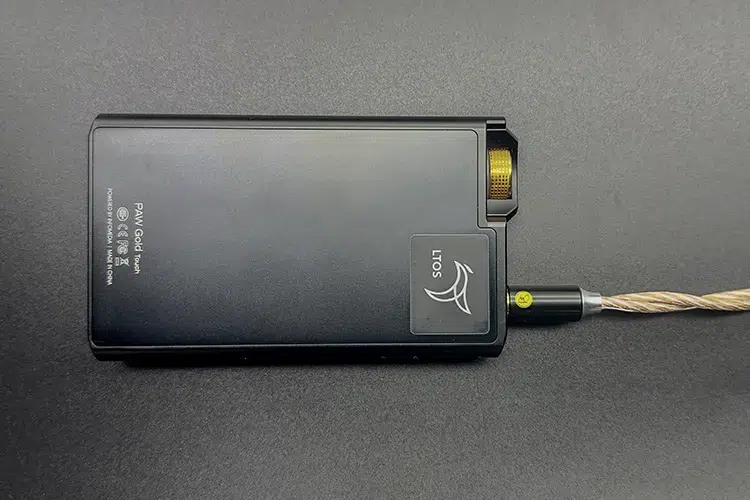
The following sound impressions of the PLUSSOUND Hybrid XL were completed using Alpha Omega Omega, THIEAUDIO Valhalla, and LETSHUOER Cadenza 12 2024, alongside my main source, Lotoo’s PAW Gold Touch.
Summary
The Hybrid XL basically takes the best parts of copper and silver and smashes them together without the usual compromises.
You get that proper, meaty low end that stays tight and fast. Midrange turns deliciously sweet and tall; vocals and guitars just bloom in a way that gives off more musical vibes. Treble gains some ‘floatiness’ and sounds livelier with additional sparkle.
Resolution feels improved, and micro-details casually stroll out into the open without you having to strain for them. In terms of stage, I hear a slightly deeper presentation with better layering and more space between instruments.
In a nutshell, it nudges pretty much every part of the sound forward in the direction I like, leaning into a clean and well-resolved delivery but never a cold or clinical one.
Timbre
Hybrid XL leans hard into clarity and transparency. When you swap it onto your IEMs, the first thing you notice is how fluid and easy everything sounds, like the music starts breathing more freely and nothing feels stuck.
Notes move cleanly from one to the next, and you get this sense that the cable is mostly getting out of the way.
In the low end, it does not really pump up the slam by much; it just keeps things tight and controlled. That sloppy mid-bass hump a lot of IEMs have? It pulls it in and tightens the belt.
Sub-bass digs a little deeper, rumbles a little truer, and suddenly the low end feels a bit more enjoyable. Details down low are delivered clean and distinct, with no overlap and no mush, and the texture feels spot on.
In the midrange, you get that feeling of someone wiping a thin layer of haze off the glass. Everything sounds clearer, a bit sweeter, and more musical.
Voices step half a step closer and feel a little more human and emotional. Because there is a good chunk of silver in the mix, transparency and detail both get a gentle push, but it never turns dry or clinical.
Micro-details and little nuances just appear naturally with the Hybrid XL. For me, the midrange clarity and tonality are the real trump cards here.
Treble keeps the party going without stabbing you in the skull. Notes float with breathing room between them, so complex treble passages are handled easily.
Cymbals decay naturally, hi-hats shimmer instead of splash, and even on badly recorded tracks, the setup refuses to turn harsh. Trebleheads will grin as the cable keeps the air and bite without any nasty sharpness.
Staging & Imaging
With Hybrid XL, the stage stays clean and feels slightly rearranged in a good way. You do not get any fake extra-wide staging here, so it does not suddenly turn your IEM into some holographic monster.
Width stays natural, but the depth improves a bit, so the sound steps back and forward with more confidence. Nothing here feels like a huge jump, but the tweaks are noticeable.
Imaging tightens without turning laser-sharp; instruments simply know their address and stay there. Instruments get a bit more space to breathe, so it is easier to pick and follow individual lines.
Layering improves a touch as well, which makes the whole stage feel more organized and less congested.
Resolution is clearly a step up. Details flow with ease, and you do not have to hunt for them. Little things like room reverb, trailing notes, backing vocals, or faint percussion come out more naturally.
It does not shout details at you; they just appear when you listen. That is the nice bit: it stays musical and relaxed while still giving you more information to chew on.
The background also feels cleaner, which helps you pick up tiny cues more easily. Busy tracks sound less messy and more composed.
At the end of the day, the whole presentation feels decluttered, where every part keeps to its lane while the stage looks freshly dusted.
Click on page 2 below for my recommended pairings and selected comparisons.
