

Selected Comparisons
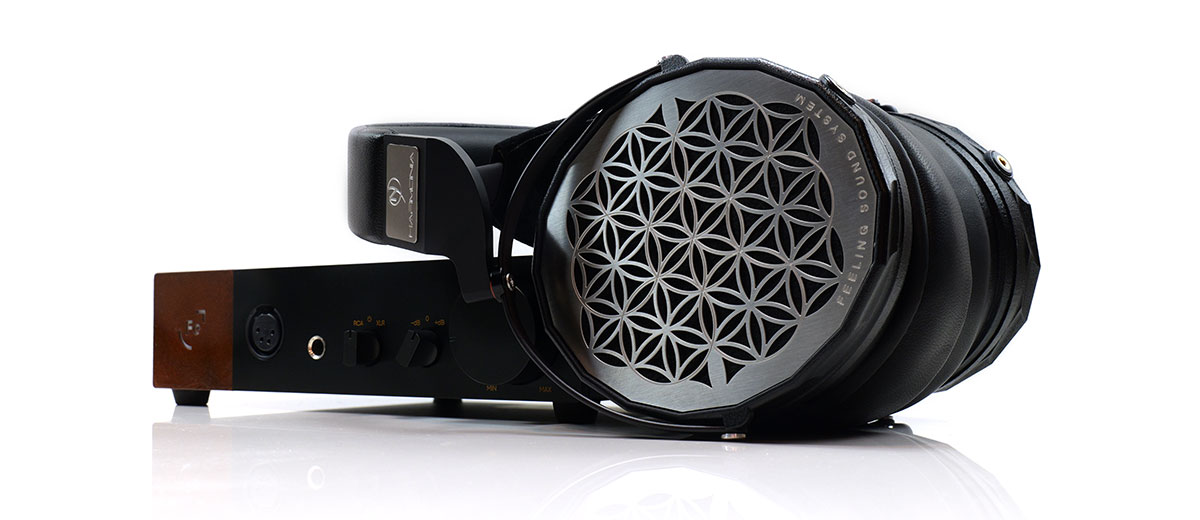
The following comparisons to the Nur Harmonia were completed using the Ferrum OOR and the Chord Electronics Alto desktop amplifiers with the WANDLA GSE DAC in balanced mode.
The default tuning was to use no Feeling Sound System filter, but I will reference them if applicable.
ZMF Headphones Caldera
The ZMF Headphones Caldera was launched in late 2022 and won our Top Gear Best Open-Back Headphone Award for the same year.
Technical
Like the Harmonia, the Caldera is a circumaural open-back planar driver headphone. The driver inside the Caldera is a recently designed and slightly smaller 80mm planar driver with a 61mm active moving surface area, all encased in a lightweight carbon fiber baffle.
If I am not mistaken, the Harmonia voice coil trace materials are aluminum as opposed to Caldera’s gold-plated copper, and might be a factor in its 60Ω impedance rating compared to 48Ω.
ZMF does not reveal the Caldera diaphragm’s thickness, but I know that Harmonia’s PEEK diaphragm is rated at 3 microns, which is not the thinnest available compared to, say, nano-scale options from HIFIMAN, but still rated as quite thin.
If anything, it’s the Caldera’s CAMS and Atrium Damping system that is a strong indicator of how far they have come from a start-up boutique firm.
CAMs is an asymmetrical magnet structure consisting of a dual-sided trapezoidal-shaped N52 (Neodymium) magnet array designed to create a very even magnetic tension on the diaphragm from a minimized magnet footprint.
The Harmonia’s Uniforce application with a dual-sided N52 magnet array is a similar approach, but it’s not entirely in-house in origin, even if the application is company-designed.
The Atrium damping is a more sophisticated approach to the Harmonia Feeling Sound System, though it’s a singular tuning system. ADS is a spongy-looking construction on top of the driver to reduce back-wave cancellation.
It’s a more technical solution focused on refinement, whereas Feeling Sound filters are aimed more at producing variations in the tuning.
Design
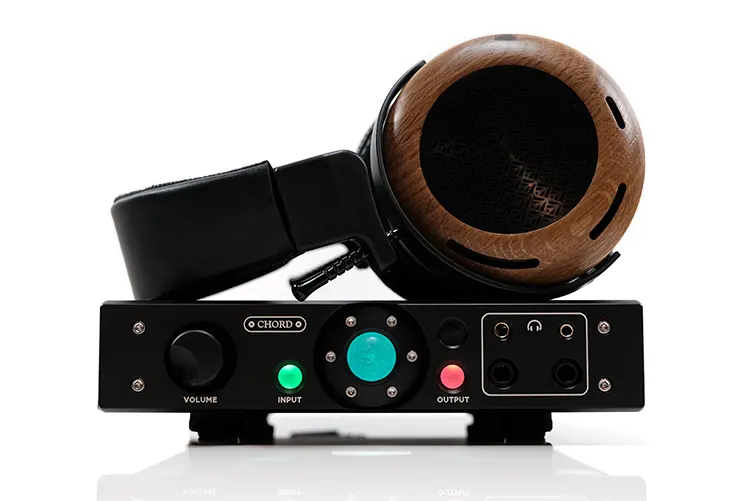
I have to say that both headphones look ’boutique’ but with very different design approaches. ZMF has benefitted from years of development and its strong focus on wood.
You will never really see a non-wood ZMF headphone, and the Caldera is no exception, with that beautiful white oak cup finish surrounding black or coffee-gold grills.
The Harmonia is much more about the stainless steel, with its petal-like grill structure, the center of attention. The rest of the components are a mix of carbon nylon, leather, and suede, and not that far off from the mix of materials used for the Caldera, just not as refined.
The Caldera’s spring steel, anodized black aluminum, or magnesium alloy alternative frame, combined with the heavy-set Crescent strap and headband, are more evolved in its finishing.
Though I find the functionality of the Harmonia headband really good, I would love to see the finishing go up a notch or two to compete with the Caldera.
Both headphones adopt a classic round-cup form factor, though the Harmonia is the bigger and slightly heavier of the two, weighing in at 630g as opposed to the Caldera’s mean weight of 550g.
Pads are a strong feature point for the Caldera, more so than the fixed options on the Harmonia. Different materials produce different sound signatures, such as Suede, perforated Lambskin, and cowhide.
Perhaps this is a bonus point for Harmonia’s Feeling Sound system since it’s discreet, free, and very easy to swap out compared to the ZMF pads.
The comfort levels are similar. Nur has done a good job getting the pressure balance just right on its heavier headphone. The only real difference is the slightly more open feel of the Caldera pads and less sweat build-up compared to the non-perforated pads of the Harmonia.
Performance
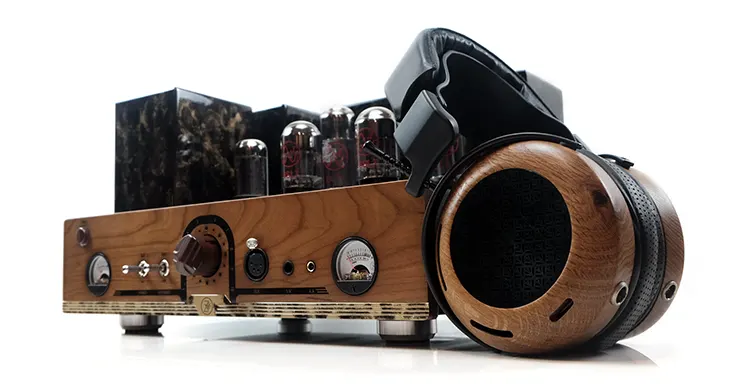
The most immediate difference here is soundstage size. The Harmonia is much bigger in terms of depth and width.
There are also some aspects of the upper-mids, particularly around 4-6k, that are more emphasized over the Caldera, which in turn brings in a little more fill and a slightly harder edge to percussion attacks.
The Caldera is a little more muted over the same range, so it sounds smoother and more liquid in its delivery, particularly for vocals.
Its bass response with the stock lambskin pads is flatter to 20Hz and a little warmer in the upper-bass and lower-mids.
Combined, the Caldera vocals have a bit more richness and coloration, whereas the Harmonia veers more to neutral to natural with enhanced contrast in the brilliance region, drawing your listening attention further upwards
Without any filters, the Harmonia projects a stronger perception of depth and power with noticeable bass-to-mid separation, particularly for emphasizing higher-pitching vocals that can catch some of the upper-mids energy.
I would pick the Caldera if I wanted a little more ‘soul’ to my music and increased emphasis on a natural, liquid-like vocal reproduction. I would opt for the filter-free Harmonia option for scale, a little more brilliance, speed, and enhanced staging depth.
Audeze LCD-4z
The Audeze LCD-4z was launched back in 2018, but it has had some nuanced updates recently, with our review of the latest version published late last year.
Technical
Another full-sized circumaural planar driver headphone, and a high-end example of what I think Harmonia was aiming for.
For example, both headphones feature fairly large planar drivers measuring 105mm and 106mm, and both utilize Uniforce technology with dual-sided magnet arrays.
However, the LCD-4z utilizes its proprietary Fazor waveguide and double Fluxor Neodymium N50 magnet array implementation, as opposed to N52s inside the Harmonia.
The diaphragm inside the LCD-4z is also nano-scale thin as opposed to Harmonia’s thicker 3 micron PPEK version, suggesting a little more speed and a shorter excursion.
At 15Ω as opposed to 48Ω, the LCD-4z is less voltage-intensive than the Harmonia, with a sub-250mW maximum power rating.
However, it is not as sensitive at 98 dB/1mW compared to the 107 dB/mW rating of the Harmonia, meaning you might need a little more gain from your amplifier to volume match.
Design
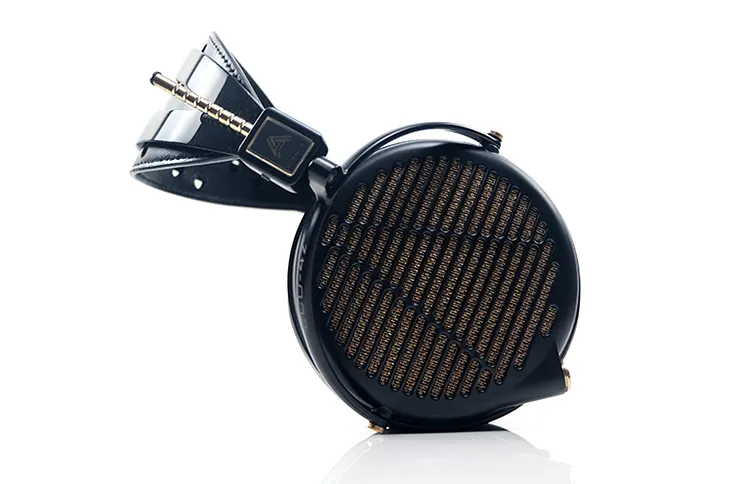
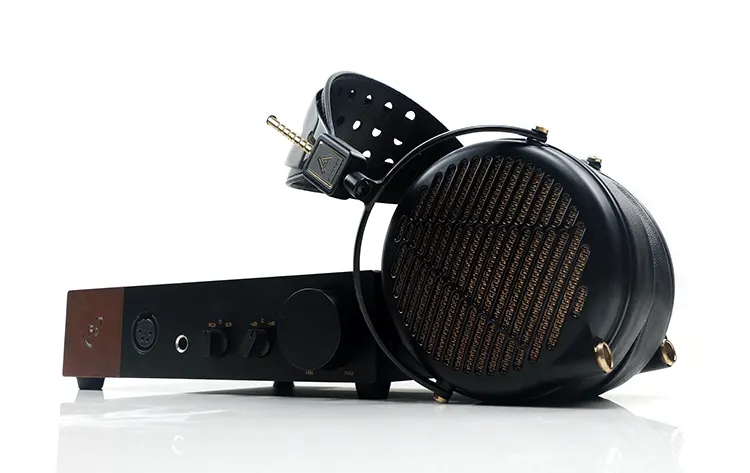
Again, give a boutique firm time to refine its designs, and you get the LCD-4z, one of the most beautiful sets of headphones on the market today.
If you had seen the original LCD-1 from about 15 years ago, you would understand what I mean by that.
The LCD-4z is now very refined, with a dash of gold permeating the narrow cup grill spacing, as well as similarly golden-accented adjusting rods and pivot blocks, and a carbon fiber headband arch.
So, whilst I think the Harmonia has some way to go to reach the level of design refinement apparent from the LCD-4z, it is a freshman attempt from a young firm and should be viewed from that perspective.
Still, what are the differences? Well, not weight, that is for sure. The LCD-4z is slightly lighter by 90g, but you will not notice that on your head courtesy of a stronger lateral clamp than the Harmonia.
Pressure balance is one area that I can honestly say Harmonia gets right, which was important considering its size and weight. It’s not as secure on the LCD-4z, but I would take comfort and low mobility over tight clamping any day of the week.
Both have similar pad depth and angular cuts, with the LCD-4z inner cavity a bit wider and more ear-friendly. Both will easily clear the ear, but the Harmonia opening is narrower with a wider contact surface on the top of the wall, creating a little more isolation than the Audeze pads.
Performance
I have a similar immediate impression regarding the soundstage differences as I did with the comparison to the Caldera.
The Harmonia sits you back a bit further than the LCD-4z but still manages to create a more immersive staging quality, particularly in terms of depth and width.
The LCD-4z pulls you closer, with a thicker and slightly darker tone. The sub-bass weight is slightly lower than the Harmonia without any filters, but through the upper-bass and lower-mids, it is a little more elevated.
Combined with a muted 1-2k and 5-6k FR, the LCD-4z mids are a little more uneven-sounding imaging-wise, though the vocal tones are warmer and more liquid-like than the higher contrast and lighter weight of the Harmonia mids.
One observation with the Harmonia midrange timbre is the slight harmonic dissonance in the quality of natural sibilance. It’s more damped sounding on the LCD-4z, so vocals have body and a slightly more rounded tone, lacking in sibilant overtones.
The Harmonia can sound a little more metallic in the same region, though not a quality I would define as sharp. It’s more of a contextual observation when ranged against the LCD-4z presentation.
Height-wise, the Harmonia is airier. Neither are peaking in the upper-treble, but the LCD-4z attenuates post-6k a little bit harder and faster to create that smooth, albeit darker sound quality.
Dan Clark Audio EXPANSE
The Dan Clark Audio EXPANSE was launched in 2022 and is the open-back flagship headphone of its sibling, 2021’s closed-back Stealth.
Technical
Another long-time boutique firm with one of its most ambitious offerings, the open-back planar driver EXPANSE.
Like its sibling, the closed-back Stealth, the EXPANSE uses a 76mm planar driver, a 4th generation in their long-running V-planar driver technology.
It’s a slightly smaller driver than the 105mm version inside the Harmonia, but whilst smaller, the diaphragm is slightly thinner than 3 microns. It also has a single-sided magnet array as opposed to dual-sided, with 11 magnets per channel positioned to the outside of the driver inside a very heavily damped enclosure.
The EXPANSE driver is rated with a nominal impedance of around 23Ω with a sensitivity rating of approximately 86 – 87 dB/mW, so it is nowhere near as sensitive as the 107 dB/mW rated Harmonia and will require around 1-3W to sound optimal as a result.
The two big selling points of these two headphones are the tweaks applied to their acoustical environment. The Harmonia Feeling Sound System is very similar to the felt pad system DCA used on their previous generation of headphones, such as the Ether 2 and AEON.
The 3D-printed AMTS technology now used inside the EXPANSE and NOIRE XO, among others, is more advanced.
There are no more variable tuning options and felt filters similar to the Harmonia, but rather its programmable design allows DCA to produce an FR exactly as they want it before releasing the headphone.
Design
The EXPANSE design and form factor have benefited from over a decade of design feedback from the audiophile community.
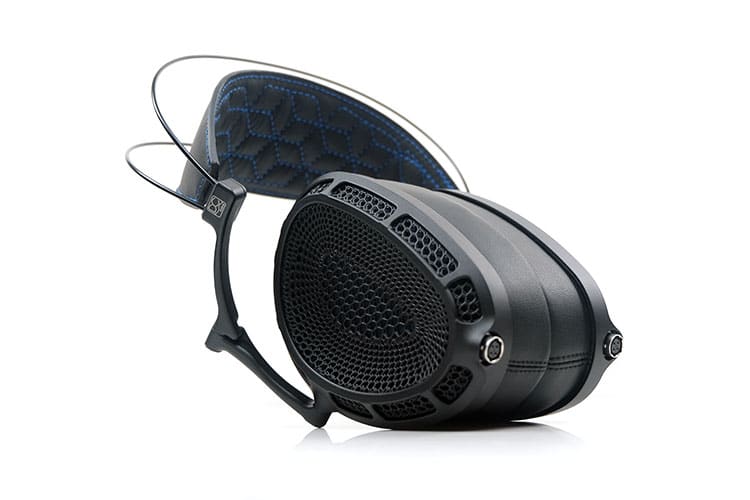
It’s a slick-looking mix of high-class USA vat-dyed leather, vegan suede, and titanium nickel (Nitinol), almost 30% lighter, and comfortable on the head with a unique folding mechanism rarely seen at this price point, if at all.
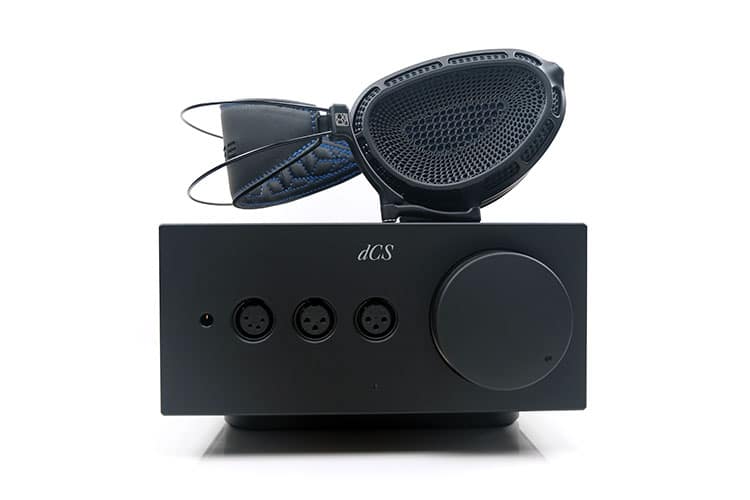
Placed beside it, the Harmonia looks huge, heavier, and with a more traditional circumaural round cup form factor. Its materials feel a bit rougher, but it still has some flair, courtesy of its raw 301 stainless steel petal grill design.
And yet, there are some advantages to the Harmonia form factor. For one thing, the EXPANSE long ovoid cup shape seems to place a little more downward emphasis on its pressure dissipation, whereas the Harmonia pressure strap and looser clamping feel more evenly balanced on my head.
The second is how open those cups feel. Maybe it is due to the AMTS chunk in front of the driver or the pads and cup design, but the EXPANSE does not feel as open as the Harmonia. That does have staging side-effects, as I will explain more clearly in the performance section below.
In short, there is a degree of passive isolation from the EXPANSE that is higher than what I would expect from a truly open-back design.
Performance
I found this comparison the most intriguing because you really have to push up the volume of the EXPANSE to volume match the Harmonia, and only then can you identify that the EXPANSE sub-bass has slightly better extension than the Harmonia without filters.
At quieter levels, the more expansive Harmonia has a bit more mid-bass volume and warmth through the upper-bass and mids, which you will perceive as being fuller-sounding but not necessarily deeper until you insert the “Full Bass Filter”.
Even then, I felt the EXPANSE bass response had more control and separation courtesy of a leaner upper-bass-to-mids curve. The Harmonia bass has a slightly woollier tone and less separation compared to the DCA tuning.
The Harmonia is airier and wider, delivering a much bigger and more holographic soundstage.
The EXPANSE sounds very intimate and narrower in comparison with less upper-mids emphasis around 5-7k. Instead, it pushes harder around 2-3k, creating a stronger spotlight on a forward vocal performance.
The Harmonia emphasis is slightly above the vocal region, with percussion notes more front and center. It has a slightly thinner, more ethereal vocal quality, sitting back a little more compared to the EXPANSE fuller and more natural vocal quality.
My Verdict
The open-back Nur Harmonia planar headphone will surprise you, and in a good way. Its key calling card is a huge and immersive soundstage, wonderfully supported by a neutral-to-natural coloration, excellent speed, and clarity.
Whilst flagship in sound, the physical offering is still a bit boutique in nature, with a slightly raw feel to some of the components. Not that it isn’t robust, but I would like to see some of the character from the cup grills themed more tightly into the rest of the build quality.
Comfort is not an issue despite the weight. Nur has nailed the pressure distribution of the Harmonia very nicely with a softish lateral clamp and a decent headband strap on top.
Overall, the Nur Harmonia is a solid high-end boutique planar headphone offering with excellent staging qualities and plenty of flexibility courtesy of a simple yet effective tuning filter system.
Nur Harmonia Technical Specifications
- 105 mm Magnetoplanar driver with aluminum frame
- Frequency response 8 Hz to 50 KHz
- Sensitivity 107 dB (+/- 1.5 dB) @1kHz
- Rated power 3. 000 mw
- THD <0.1% @ 100dB SPL 1kHz
- Impedance 48Ω
- Toroidal magnetic system, double-sided, high-quality N52 NdFeB
- Weight 630 gr
- Feeling Sound Pad System + Sound Expansion Chamber
- Planar diaphragm made of 3-micron PEEK, printed on both sides with Uniforce technology
