

Select Comparisons
The following comparisons to the Noble Audio Shogun were completed using a mix of the Cayin C9ii, the iBasso DX340, and the HiBy R8 II.
Noble Audio Ronin
The Noble Audio Ronin was launched in 2023 and viewed as the spiritual sibling of the Shogun and is also the successor to 2017’s Katana. It is also one of our Top Gear 2023 Award Winners.
Technical
The Ronin is also a hybrid monitor, but unlike the Shogun, there are no dynamic or bone conduction drivers inside the tone and extension of the Ronin will sound quite different from the Shogun.
Inside is a mix of BA and EST drivers, including 4 Sonion BA drivers for the lows, 4 Knowles full-range drivers for the mids, and a quad EST array for the highs and super highs.
The Ronin has an impedance rating of 17Ω with an SPL of 114dB SPL/mW, so it is quite easy to drive, even easier than the 23Ω 110 dB/mW Shogun on paper.
In real life, with a balanced connection to the iBasso Dx350/AMP15 combo, you might ot perceive that to be the case. The more powerful dynamic driver’s enhanced slam adds a subtle psychoacoustic perception of a louder presentation.
Design
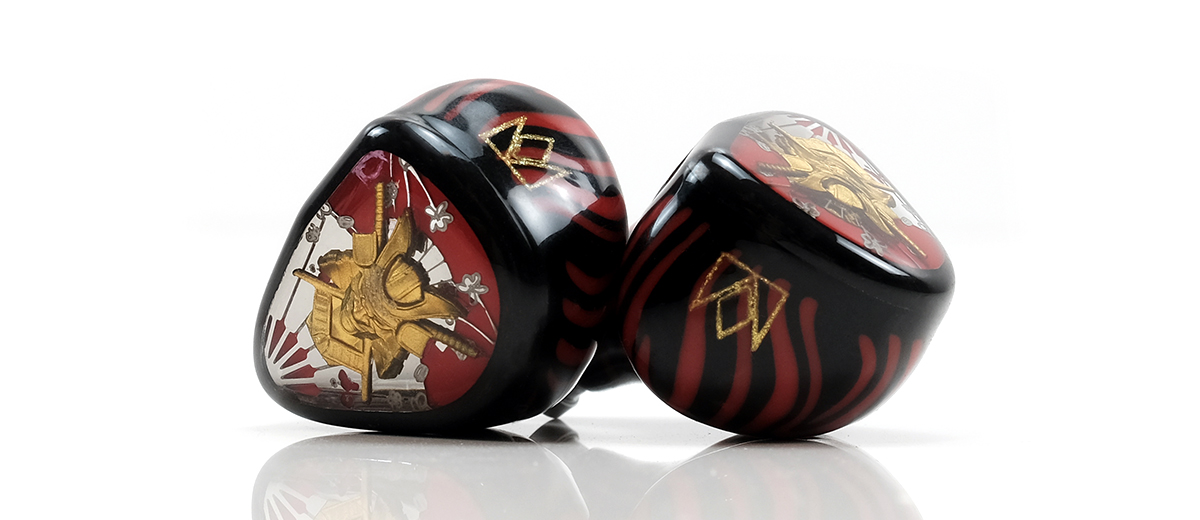
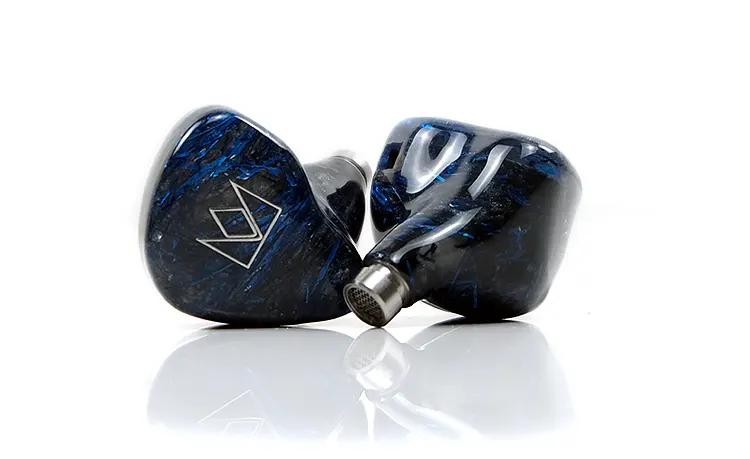
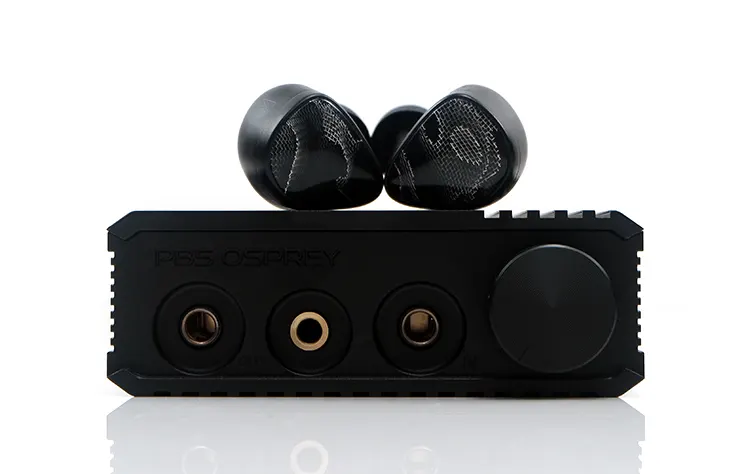
The Ronin design is very attractive to me, but I will admit it is a simpler design compared to the 100% all-out theming ‘pop’ of the Shogun.
Everyone has different tastes, though. The mix of blush nebula or marble brush strokes with a speckled layer on a smoky black underlay is subtle rather than overt, and I know a lot like their IEMs to look good but ‘fly under the radar’.
Both the Shogun and the Ronin are finished with a similar stainless steel spout, so there is some continuity in the materials choice.
Surprisingly, the Ronin shells are a little bit bigger with a thicker nozzle. Given there is no bone conduction or dynamic drivers inside, I would have presumed the Ronin’s more compact BA setup would have been more compact, but that isn’t the case.
That being said, its lack of venting means it does offer slightly stronger passive isolation than the Shogun. A marginally lighter shell also means it is slightly more comfortable in the ear.
Both have excellent cables with a close-knit theme: blue for the Ronin and Red and black for the Shogun version. The Ronin version is a collab with Eletech. It has some of their trademark design motif and is a lighter option.
However, I prefer the more overt theme design of the Shogun cable despite its additional weight. Visually, it’s the more impressive-looking of the two cables.
Performance
Courtesy of that dynamic driver, the Shogun is a more colored sounding experience than the Ronin.
That is not to say the Ronin is a reference monitor; rather, its BA drivers on the low-end are less dominant, less weighty, and not as warm-sounding, and it has more elevation in the low-to-mid treble, tilting the harmonic bias more to the mid to upper order and giving it a lighter, sweeter sound signature.
The Shogun coloration is a little more even harmonic, slightly darker in the mid-treble, and not quite as pushed in the presence region around 2-4k.
It’s heightened bass elevation up to 300Hz (up to 5 dB), and inherent dynamic driver characteristics draw your ear more to the lows than the Ronin’s punchier mid-bass tuning does.
The Shogun bass delivers a stronger fundamental frequency, with more staging depth and power. However, it also has less treble fill from 5-8k, which softens percussion attack and some high-register vocal performances.
The resulting sound is slightly smoother in tone, with longer note decay the further down you go. There is some excellent headroom from the Shogun courtesy of a nice lift post 8-10K, but it does not have the same level of presence and sparkle as the Ronin’s treble tuning.
I would pick the Ronin if the mids and highs’ clarity is essential, especially if using the Noble silicone blue stem tips. You can add a bit more low-end weight with the red stem alternatives, but you lose some of that mid-magic.
I would go with the Shogun and the blue stem tips for depth and power, or when you want a deeper and wider soundstage than what the Ronin can offer.
Noble Audio Viking Ragnar
The Noble Audio Viking Ragnar was launched in 2022 and was the company’s flagship monitor until the recent launch of the Chronos (August 2025). It was also one of our Top Gear 2022 Award winners.
Technical
Like the Shogun, the Viking Ragnar is a hybrid monitor using dynamic, BA, and EST drivers.
However, unlike the Shogun, it does not use bone conduction driver technology and instead relies on a dual 10mm dynamic driver setup for the lows for additional control and power.
Its mids and highs are quite similar to the Shogun with dual BA for the mids, dual BA for the mid-highs, and a quad electrostatic array for the highs and ultra-highs.
The Viking Ragnar is rated at a reasonable 17Ω impedance and 112 dB/mW @1kHz sensitivity, and it seems more sensitive than the Shogun’s 23Ω 110 dB/mW rating on paper.
However, with a balanced DX340/AMP15 connection, the Ragnar is less sensitive compared to the Shogun, requiring a higher volume or a higher gain setting to sound dynamic enough for my tastes.
Design
The Ragnar has a very different look and feel from the Shogun, but it’s similarly complex and well thought out. I would argue its visual pop is more to the lower end of the scale compared to the Shogun’s mix of gold and red, but the choice of materials is a little more premium.
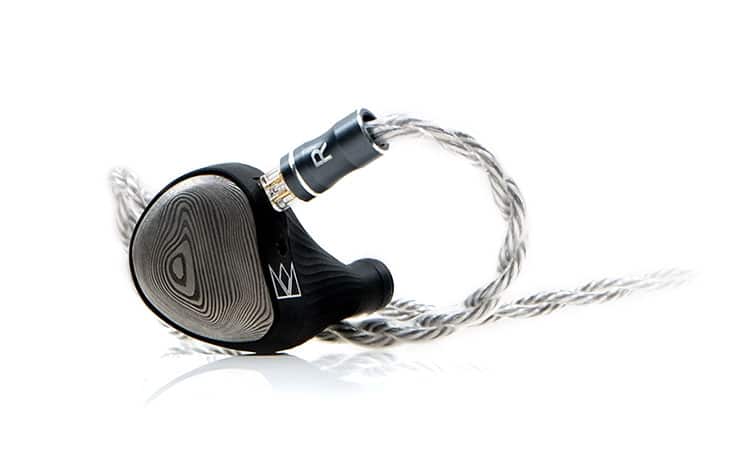
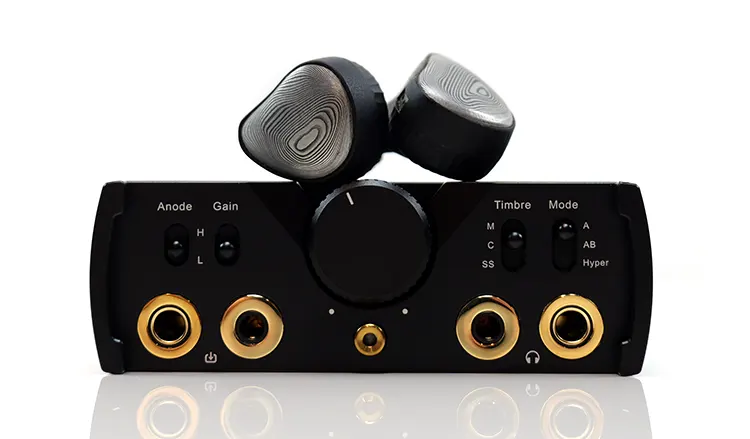
Ragnar’s main shell is a ribbed 2-piece uniform aesthetic inspired by the Kaiser Encore and Katana. The shells are cut from a single aluminum block and given a distinctive shape similar to the Sultan, with a similarly long nozzle.
The main shell is then finished in an anodized matte black coating, which gives it more of a grippy finish compared to the glossier Shogun shell. It’s also a little more compact than the Shogun, but the aluminum gives it a denser feel in the hand and the ear.
The silvery, patterned Viking plate is as stunning as it is sturdy and very unique. The material is Damascus stainless steel, which has this inherent wavy or watery pattern on its surface brought about by a layered mix of various VG steel types combined with alternative metal elements.
Some might prefer the resin of the Shogun shell for its superior passive isolation capability and slightly warmer properties in the ear. Aluminum also takes time to heat up and can feel cold in the ear on initial insertion.
I much prefer the visuals of Shogun stock cable over the Viking’s stock Magnus version. Not that the Magnus is a bad cable, it’s a good performer and built well, but its design is not as tightly integrated with the shell design.
Performance
Whilst the Shogun and Ragnar have equally impressive large and spacious staging qualities, they have very different frequency emphasis with contrasting coloration and note weight.
The standout difference is Ragnar’s stronger 6-10k elevation, which sometimes dominates the midrange harmonic bias, giving it a more metallic, harder-edged note attack to some vocals and upper register percussion in particular.
Further down, the enhanced contrast can help tighten up the bass definition on the Ragnar. So, whilst the Shogun is fuller sounding on the lows, it’s not quite as taut and as articulate as the dual dynamic response from the Ragnar.
However, as a general listening experience, the darker mid-treble of the Shogun makes it a far easier listening experience for a wider range of genres. Percussion and vocals are a lot smoother, though the lack of ‘treble fill’ dulls some percussion attacks.
The Shogun’s bass is more elevated up to 300Hz with more warmth traveling into the lower-mids. The Ragnar sub-to-mid bass is more linear, not as strong, and dips sharply around 150Hz, draining any potential for bass bleed into the mids.
I do not find their vocal imaging to be that different; it’s more the weight and coloration that shapes my perception of how these two perform. The Shogun vocals have more body and warmth, but not as much treble sheen and slightly less perceived clarity.
The Ragnar is all about vocal clarity, but it is a leaner sound and can be source and ear tip picky, meaning it can be too bright for some recordings with the wrong setup.
Noble Audio Onyx
The Noble Audio Onyx was launched early in 2024, with our review published in Q4 of the same year. Its product positioning is one step below the Shogun, but it is still comfortably one of the company’s premium monitors.
Technical
Like the Shogun, the Onyx is a hybrid multi-driver with bone conduction technology. It uses a mix of four different types of drivers, 8 in total, including a single customized 10mm dynamic for the lows, 4 BA split evenly between the mids and highs, dual Sonion ESTs for the ultra-highs.
The bone conduction technology differs between them. The Onyx utilizes a single PZT Bone Conduction driver for mid and treble texturing. At the same time, the Shogun features a dual Bone Conduction implementation that spans most of the frequency range, focusing on staging and imaging performance.
The Onyx is rated with an impedance of 14Ω rather than 23Ω and has an SPL of 108 dB/mW @1kHz, so it seems less efficient than the Shogun’s 110 dB/mW rating on paper.
Using the same DX340/AMP15 in a low amp gain, high DAC gain balanced output setting, I felt the sensitivity gap between them was relatively small. It was more the dynamics and the brighter tuning of the Shogun that leaped out and could influence your perception accordingly.
Design
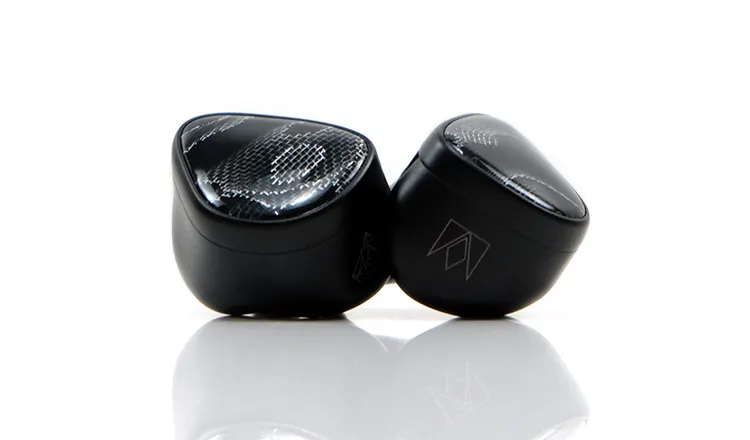
The Onyx is another lower-profile design with a more compact form factor. To be honest, most IEMs are going to have a lower profile look compared to the Shogun, aside from some outrageous custom designs.
The small size comes courtesy of a smoothly finished aluminum, giving it a dense and sturdy feel in the hand.
However, unlike the Ragnar, the shell has no intricate ribbing or rune graphics adorned on the sides. This shell is plainer but offers some finely finished contouring for an accurate fit.
Aesthetically, like its sound signature, it’s a dark-looking monitor. There is no dash of red or gold to be found on the Onyx with more of a ‘noire’ vibe infused alongside the intricate Raffir-partnered faceplate design.
The resin of the Shogun gives it a slight edge for passive isolation. Metal never contours and shapes as well in ear canals as resin, leaving more of the isolating work to the ear tips. I matched the tips on both monitors for this test, with the Shogun drowning out the aircon’s low-frequency hum a bit more.
Like the Ronin, the Onyx 24AWG 4-wire stock cable is an Eletech partnership called ‘Courage’. It is an attractive, well-made, and lightweight cable, much lighter than the Shogun stock cable. However, thematically it’s not as well integrated, with a more eclectic mix of silver, gold, and black coloring
Performance
Whilst the Shogun has some quasi-dark aspects to its upper frequency response, the Onyx is a dark tuning per se. It has a weighty, smooth, almost L-shaped sound signature compared to the milder w-shaped response of the Shogun.
That means a much stronger low-end emphasis, particularly on the sub-bass response, which is much more pronounced than the Shogun equivalent.
That has some pros and cons since the Onyx has a mildly forward pinna gain region, the bass tuning with the foam tips can diminish the vocal presence more, whereas the Shogun’s gentler bass tuning provides more space for its vocal imaging to shine.
Speaking of shine, the whole 1-5k range of the Shogun is more elevated, so whilst both have a fairly muted mid-treble response, the gentle bumps post-5k get picked up a bit more in the Shogun midrange timbre, giving them additional height and clarity.
I would classify the Onyx soundstage as deep and moderately wide. Tip choices matter here, with the single flange, wide bore silicone enhancing the perceived midrange clarity over foam, though arguably that is also the case with the Shogun.
The Shogun soundstage is more immersive to my ear in terms of width and height. Spatial cues have a bit more sparkle, left and right imaging leave a stronger impression with a bit more clarity.
My Verdict
The Noble Audio Shogun is the company’s most rounded high-end hybrid monitor offering to date. It has something for everyone in a nutshell.
Sans peaks and valleys, there is nothing in the tuning that I could point to as polarizing or underwhelming. It has a lovely tuning balance right across the board, backed by a wonderfully holographic and immersive soundstage that keeps the listener deeply involved without fatigue.
Throw in an exquisite level of external design detail with an equally impressive, similarly themed stock cable, and you get one of Noble’s most welcoming and easy-to-like high-end IEMs thus far.
Noble Audio Shogun Technical Specifications
- Driver Configuration
- 1 Dynamic
- 6 Balanced Armature
- 4 Electrostatic
- 2 Bone Conduction
- Sensitivity – 110 dB SPL/mW
- Impedance – 23 Ω
- Frequency Response – 20Hz – 20kHz
