

Select Comparisons
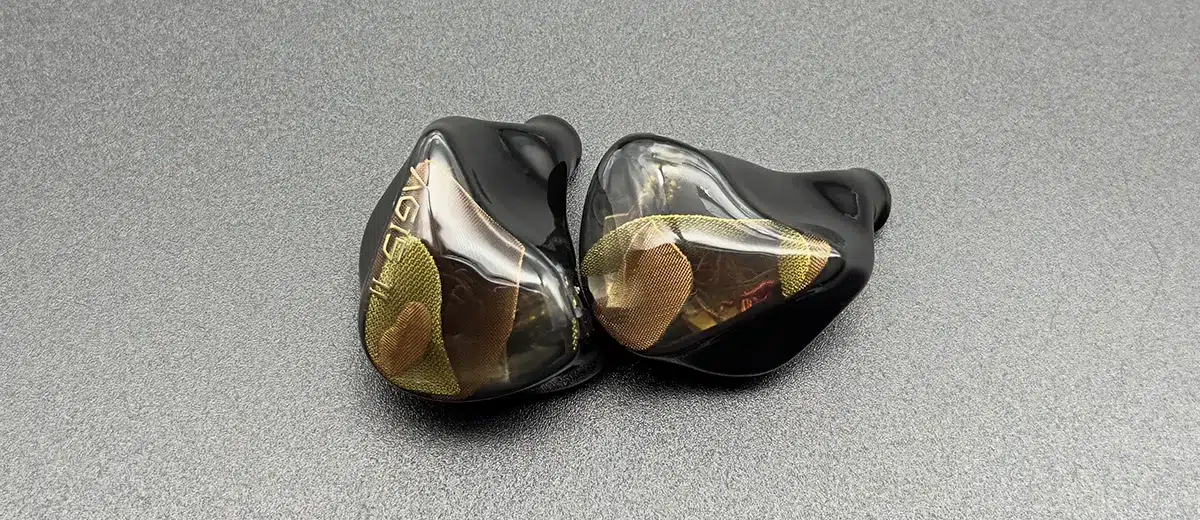
Noble Audio Kublai Khan
Technical
The Noble Audio Kublai Khan features a hybrid driver setup, including a 10mm dynamic driver and a bone conduction driver for the lows, four Knowles BA drivers covering the low end, midrange, and high frequencies, and a 10mm piezoelectric super tweeter for the highs and ultra-highs.
Noble doesn’t provide an exact impedance rating for the Kublai Khan beyond “less than 30Ω.” However, as with the AGIS II, it is sensitive enough to pair well with most DAPs or portable sources.
The Kublai Khan is an easy-to-drive IEM, but its dynamics improve with more powerful sources. On my Lotoo PAW Gold Touch, the Kublai Khan requires a few extra volume clicks compared to the AGIS II.
Design
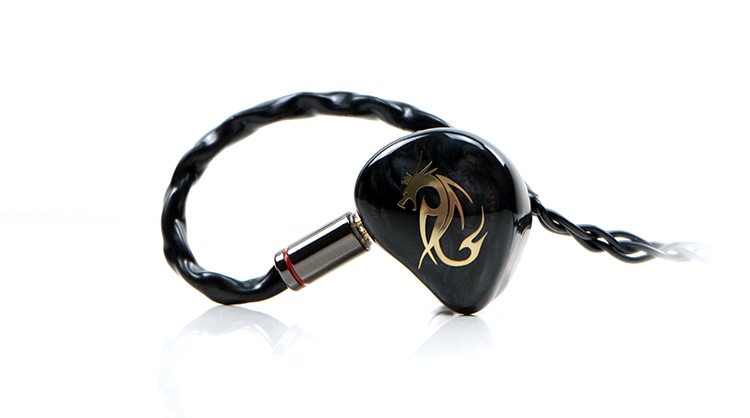
The Kublai Khan features a 3D-printed resin shell and an eye-catching acrylic acetate faceplate with a stylish dragon logo.
The shells are just a bit smaller than those of the AGIS II. Kublai Khan has a more robust build and feels more comfortable on the ears due to having no sharp corners.
Both Noble Audio IEMs offer a very premium experience in terms of packaging and included accessories. The Nanuk 903 case with the Kublai Khan versus the grand leather zipper case with the AGIS II is a tough call to make.
Both IEMs use the same 0.78mm 2-pin connector, but the AGIS II is the only one with modularity. Both stock cables do not compromise on quality while maintaining a flexible character.
The hardware on Kublai Khan’s cable feels very sleek and premium. This cable is slightly leaner than that of the AGIS II.
Performance
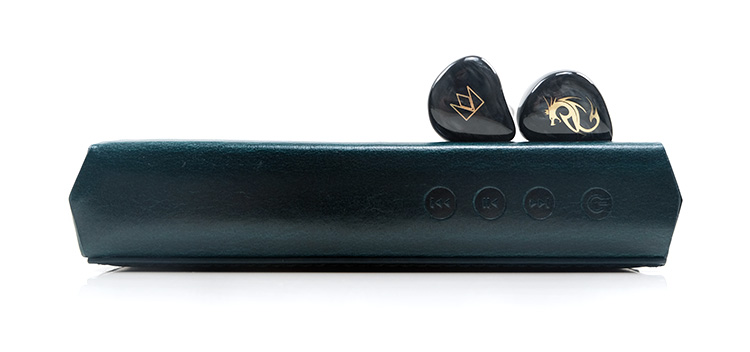
The Kublai Khan and the AGIS II share the same Noble bloodline, yet they aim for two different sweet spots.
In the low end, Kublai Khan still feels like the mature sibling. Its bass is tighter and better controlled, with a bit more body through the mid-bass. It digs deep with ease, and the bone-conduction driver adds that extra bit of tactility you feel more than you “hear.”
AGIS II, in comparison, is more agile and snappier. It hits hard when needed, but the notes are faster and more about definition than depth. It also carries a touch more mid-bass snap that keeps rhythms lively but never bloated.
That contrast carries into the midrange. Kublai Khan sounds fuller and warmer, with male and female vocals coming through richer and more saturated. It has that easy-going musicality that pulls you in and keeps you there.
AGIS II goes for a cleaner, more engaging midrange. The upper midrange is more forward and open, which gives clearer outlines to vocals and instruments, but with slightly less “meat” than Kublai Khan. It’s the more revealing of the two, while Kublai feels more forgiving and lusher.
Up top, AGIS II leads ahead in air and sparkle. AGIS II lets more daylight in. Cymbal strikes, rides, and ambient sparkle arrive with greater extension and air, sounding wide-awake but not sharp. Kublai Khan prefers a softer, duskier top-end glow that’s kinder to treble-sensitive ears.
Stage shape differs as well: Kublai towers in height and carves a deeper front-to-back hall. AGIS II stretches wider left-to-right and layers instruments with sharper, higher-resolution edges.
If you want warmth, slam, and maturity, Kublai Khan still rules; if you’re after speed, detail, and air without losing musicality, AGIS II makes a solid case.
THIEAUDIO Valhalla
Technical
The Valhalla features a whopping 19 balanced armature drivers on each side. The drivers use a combination of Knowles and Sonion units.
Specifically, there are four Sonion subwoofers for bass, ten Sonion drivers for low-midrange and midrange frequencies, four Knowles drivers for the mid-treble, and one Knowles ultra-treble tweeter for the highest frequencies.
The Valhalla also uses a 4-way passive crossover network with a 4-bore acoustic tubing system to accurately split and deliver different frequency ranges.
THIEAUDIO Valhalla has an impedance of 9Ω @ 1 kHz and a sensitivity rating of 103 dB/Vrms. The IEM can be comfortably driven by low-powered sources such as dongles and smartphones.
It benefits from a more powerful source, as I find the stage expanding a bit and the notes gaining some weight as well.
The IEM feels more stable than the AGIS II even with higher-powered sources. On the LPGT, from the balanced end, it takes nearly 30 volume clicks, as does the AGIS II.
Design
Valhalla features Grade 5 titanium shells, which give it a strong and durable build. The shells are slightly larger than the AGIS II’s.
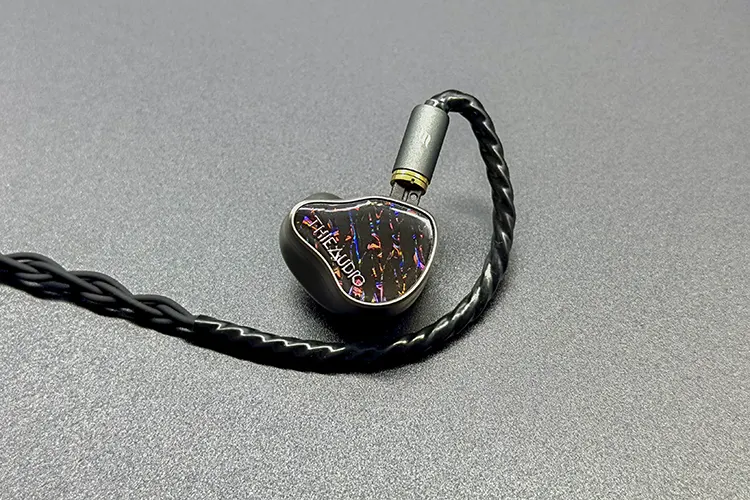
The faceplate on Valhalla features an abstract design. From a distance, the surface appears to have a crystalline or shattered-glass aesthetic.
When it faces light, it creates a very vibrant effect, almost like psychedelic art. It does not feel flashy in design, and I find it minimally designed, just like the AGIS II.
Valhalla has large nozzles, but for me, the fit has never been challenging. AGIS II, having a negligible weight compared to the Valhalla, can fit better for most people. AGIS II takes the unboxing experience up a level, including more thoughtful and premium accessories.
A premium release like the Valhalla did not receive a matching treatment in how it is packaged. The stock cable on the Valhalla is modular but has a stiff build.

Performance
Valhalla and AGIS II both run BA bass, but they do not feel identical in the low end. AGIS II puts a bit more weight into the sub-bass, so drops feel deeper, carrying more rumbles.
Valhalla leans more on the mid-bass precision. It feels tighter and slightly punchier there, which lets bass lines stay cleaner when the mix leans heavy.
Layering and detail in the bass are a touch better on Valhalla, so separate bass lines are easier to follow, while AGIS II sounds a bit more rounded and smoother.
In the midrange, Valhalla is the more neutral of the two. It carries slightly less warmth into the midrange, so vocals and instruments sit a bit cleaner and drier.
AGIS II has a hint more warmth and body. Vocals and instruments feel more natural and emotionally engaging to me.
The AGIS II’s upper midrange is a touch more “spotlit,” which adds excitement and clarity. Both are highly resolving, but AGIS II feels a little more engaging, whereas Valhalla feels a bit more studio-like.
Treble is strong on both sets. Valhalla has excellent extension and plenty of air and sparkle, but its presentation is slightly sharper. Cymbal crashes splash with spice-hot immediacy, thrilling but potentially tiresome if your ears are sensitive.
AGIS II keeps just as much air under the wings, yet it’s a bit smoother at the edges, so it feels easier to listen to for longer sessions while still feeding the inner treble-head.
Technically, they are close. Valhalla offers a stage that feels deep, while AGIS II pans wider, inflating a more holographic bubble that can feel slightly outside the head.
AGIS II strikes a better overall balance of detail, air, and musicality, whereas Valhalla is the choice if you prefer a slightly more neutral flavor.
LETSHUOER Cadenza 12 2024 Version
Technical
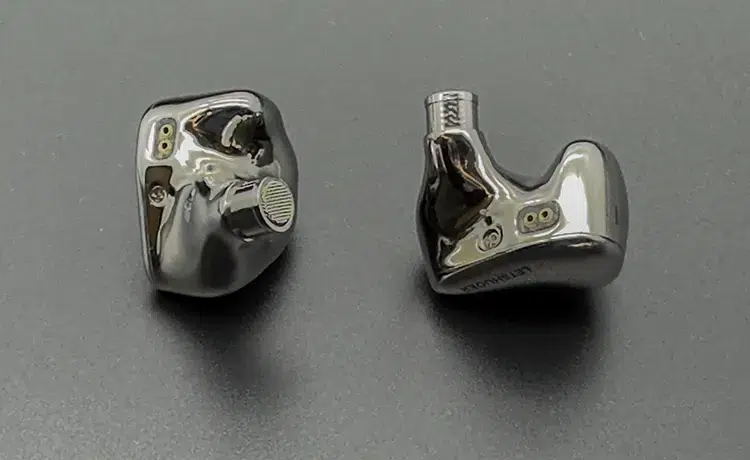
The new LETSHUOER Cadenza 12 2024 is a universal in-ear monitor featuring an array of 12 drivers, including one dynamic driver and 11 balanced armatures, with a mix of Sonion and Knowles drivers and a 6-way crossover.
The Cadenza 12 has an impedance of 16 Ω @ 1 kHz and a sensitivity rating of 110 dB/Vrms. I do not find the Cadenza craving extra juice, so basic sources like dongles are just fine.
It shows some scaling properties with more powerful sources and gets loud as easily as the AGIS II. On my LPGT, the Cadenza 12 takes a couple of extra volume clicks compared to the AGIS II.
Design
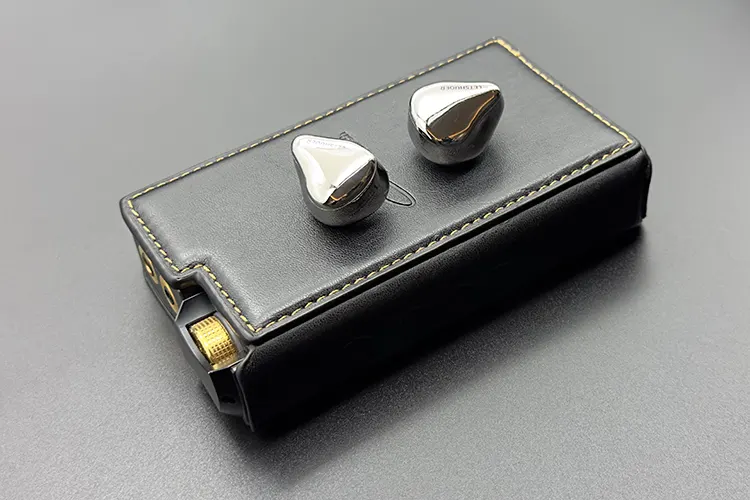
The shells of the Cadenza 12 are made from titanium alloy. These shells are highly polished, almost having a mirror-like finish, but are prone to scratches.
As much as it oozes a luxury feel, it demands a lot of extra care, whereas resin shells, such as those on the AGIS II, feel very easy to use, asking for minimal maintenance.
The AGIS II is super lightweight in comparison, but the Cadenza 12 has a very comfortable fit, too. Metal vs resin: it’s just a matter of preference.
The unboxing experience of the Cadenza 12 is quite satisfying. It arrives in a larger box and includes thoughtful accessories.
However, the AGIS II takes the thoughtfulness quotient a bit further with the inclusion of the large leather carry case and the stylish ear tips pack.
The carry case of the Cadenza 12 deserves a mention due to its premium build and design. The stock cable of the Cadenza 12 is also modular and has a slightly more rugged feel to it.
The ear tips included with the Cadenza 12 do not feel usable to me, and I had to instantly swap to aftermarket ones.
Performance
AGIS II and Cadenza 12 share a broadly balanced, technical tuning, but they walk different paths.
The AGIS II digs deeper into the sub-bass, delivering sudden, tight pulses that thump with a BA’s trademark speed. Mid-bass stays on the leaner side, so the slam is fast but not fleshy.
Cadenza 12 spreads its weight further up; mid-bass carries a little extra padding. However, on tracks with heavy bass lines, I prefer the AGIS II’s delivery, as it feels more “filled in,” while the Cadenza does not adapt much.
In the midrange, AGIS II sounds more natural and relaxed, with extra warmth flowing. Male vocals and lower midrange instruments have more meat on the bones, making it a more forgiving, easy-going listen.
Cadenza 12 goes for a cleaner and energetic midrange, something that feels clinical at times. The lower midrange stays lean, while the upper midrange is forward but can be sharp at times.
Vocals and guitars feel more upfront and more etched, pulling out micro-details and textures that AGIS II plays a bit safer with.
Treble is trickier to call. Both IEMs have plenty of energy and sparkle up top. AGIS II sounds airier, more open, and less aggressively detailed, feeding the inner treble-head without turning outright harsh if the chain is right.
Cadenza 12 carries a bright glow too, but some of the details feel peaky; for example, cymbal crashes feel extra sharp. On AGIS II, edges are softer, and the overall top end feels tidier, better suited for long, fatigue-free sessions.
The Cadenza 12 takes a slight edge in raw resolution. AGIS II handles separation and layering better, and that holographic “bubble” stage takes it even further. AGIS II also counters with a more natural tone and slightly richer note weight.
My Verdict
The Noble Audio AGIS II is a slow-burn charmer: it sidles into your rotation, then hijacks it. I had a lukewarm first date with Spartacus when I first heard it, so I arrived sceptical, and my expectations for its successor were a bit guarded. But Noble Audio has nailed it this time.
This refreshing tuning lands exactly where “reference” meets “replay value”: microscope-level detail wrapped in just enough velvet that you never check the clock. Feed the AGIS II every genre you own, and it shape-shifts like a chameleon, wrapping each track in exactly the colors it needs.
An all-BA bass is usually code for “polite,” but the AGIS II presents it differently. Sub-bass drops deep enough to let the floor rumble.
This bass is the AGIS II’s hidden ace; it’s not the most detailed out there, but it has enough under the hood to satisfy.
The midrange keeps the window spotless, while the treble is where the treble-head inside you gets to smile. It’s a fireworks show with sky-high extension on the AGIS II.
Technically, it punches nothing less than a flagship. It shines with quality source juice yet stays unfussy with most of the sources I tried. Add to all this the premium packaging in which Noble Audio wraps the AGIS II, and it makes for a more confident release.
Sitting beside house-titans like Kublai Khan and Ragnar, AGIS II is the young champion who already swings for the fences.
I can comfortably say the AGIS II deserves a recommendation if you are looking for a premium IEM in this price range and want a highly resolving yet genuinely engaging listen.
Noble Audio AGIS II Specifications
- Driver Configurations:
- 2x Sonion high & Ultra-High Balanced Armatures
- 2x Sonion Bone Conductors
- 2x Sonion Mid-Bass Balanced Armatures
- 2x Knowles Bass & Ultra Bass Balanced Armatures
- Impedance: <35 Ω ± 1 Ω
- Cable: Noble 8-Core OCC Detachable Cable
- Modular with – 2.5mm, 3.5mm, 4.4mm terminations
