

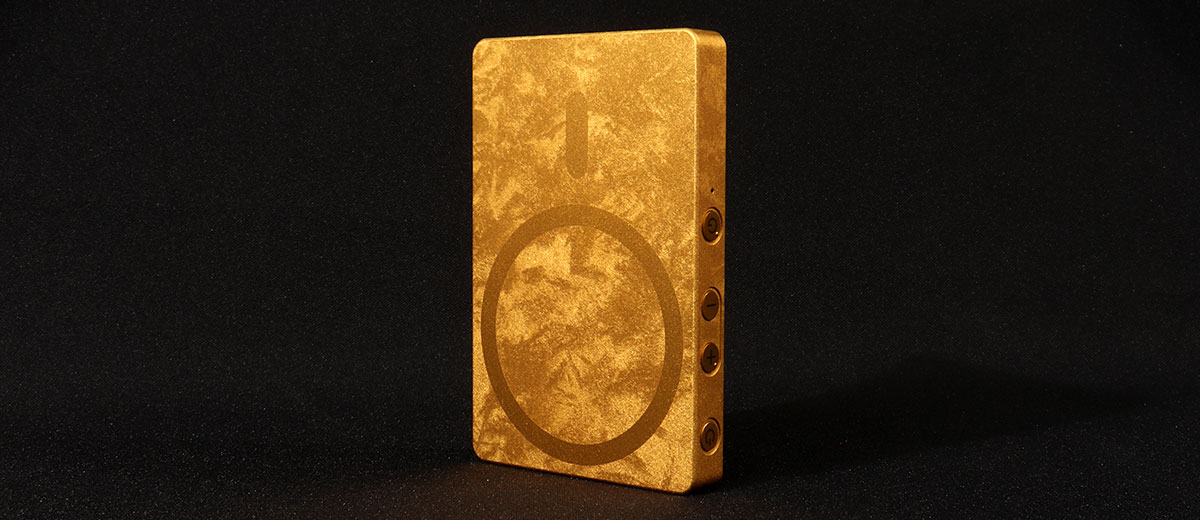
Synergy
Power
The available amount of power on tap, especially on the 4.4mm port, seems conservatively rated. The A100 can easily drive most of my headphones with authority, planar and dynamic alike, such as the Sennheiser HD 490 PRO Plus or the HD 550, which carries an impedance rating of 150Ω.
IEMs? The NiPO A100 can squeeze the best performance out of any IEM. I used some upscale IEMs with great results. The bass alone is one of those areas where the A100 shines with IEMs, but the other frequencies are produced in balance and equally superlatively.
The A100 seems to produce clean power without the need for any mute feature to silence it, and seems to be in hot and ready mode all the time.
However, that doesn’t seem to affect power consumption, and the unit does remain cool or warm to the touch all the time, which indicates that the A100 operates at a high level of efficiency.
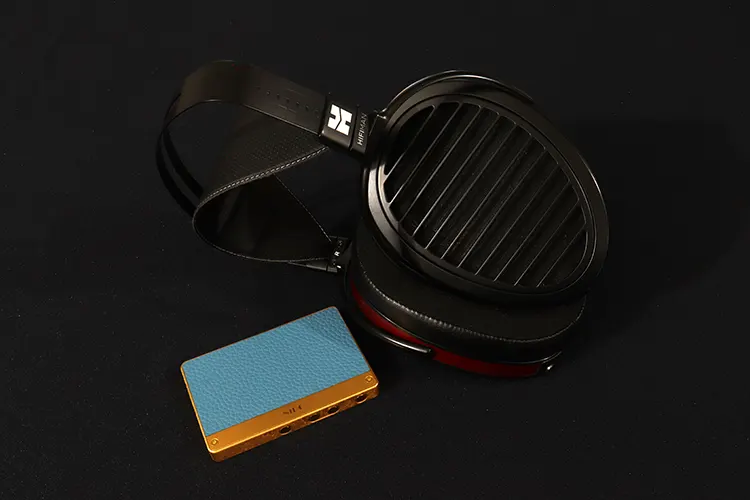
Pairings
Sonically, this is a neutral, linear device that pairs well with almost anything you can throw at it. For example, a headphone from the HIFIMAN headphone line will more than likely sound bright, like the Ananda Nano, or the Arya Organic, and the A100 will showcase the company’s house sound.
Pair it with some Sennheiser HD 490 PRO Plus, and you’ll have a formidable monitoring setup on the go for those who like monitor-like presentations. Pair it with a Meze Audio 99 Classics, and you’ll get the deep bass response the 99 Classics is known for.
The NiPO A100 reveals what the headgear sounds like because it adds a minimum amount of coloration and remains neutral, so whatever the sonic signature of the headphone or IEM can shine through.
In case you missed it, there seems to be an incompatibility issue with IEMs that come with a 3.5mm TRRS or the type with a built-in microphone, in that the sound seems to lose phase and sounds horrible. 3.5mm plugs that are TRS are just fine.
With every other IEM that is equipped with a single-ended 3.5mm TRS, you get a green light. 4.4mm gave no issues whatsoever.
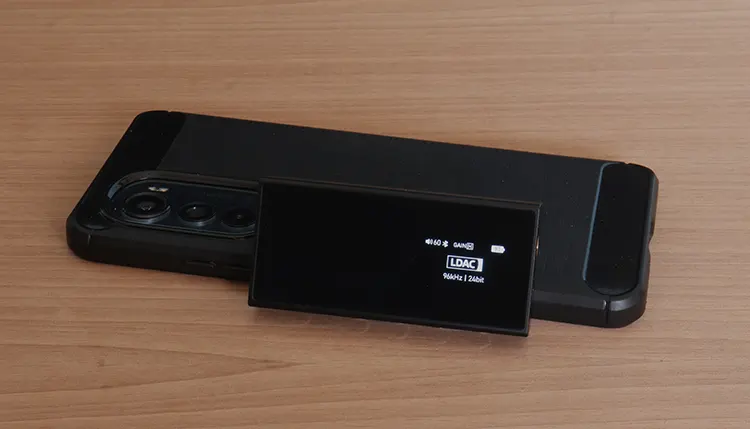
Select Comparisons
Questyle M18i
Technical
The recently released and reviewed Questyle M18i is a high-quality dongle-type DAC amplifier that promises better audio over stock mobile device audio.
Although it’s a device with a smaller stature, Questyle managed to squeeze in Bluetooth receiving capability at up to LDAC level codec, which the A100 does not have. That, and they managed to incorporate five buttons, which is one more than the A10.
You also have to take into consideration that the M18i has a screen that gives you lots of information on where the settings are and what the device is up to. This is a weak spot on the A100, although it’s not a deal breaker. Neither has an app.
Design
NiPO gets credit points here because, on the surface, it’s obvious they went the extra mile to obtain a luxurious-looking component and didn’t just go with the run-of-the-mill black anodized look.
NiPO also rounded every corner, and every edge was smoothed, and there are no abrasive edges or areas anywhere on the chassis.
The A100 is the larger unit; however, it also has a considerably larger battery that gives the average user a good day’s use, meantime the M18i will give you 3 hours on a good day, and I live in the rainy part of town. Dig?
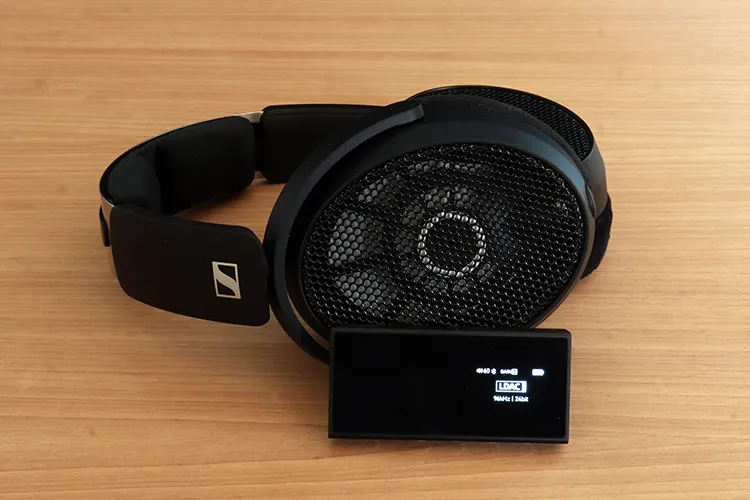
Performance
Both these models present the listener with what I call reference-like tuning. Both models produce clean and neutral sonics, but I would have to give high frequency response to the A100 since it seems to produce cleaner highs, or just better defined with a touch of presence.
It more than likely has to do with the power section refinements that produce a sonic signature deplete of hiss.
It makes sense to think that the A100 was built to be more inclined to please audiophiles versus someone who likes HQ music production, but is looking for convenience more so, since the M18i is smaller, and includes a Bluetooth receiver to boot.
Sonically speaking, the A100 produces a more robust-sounding bass, and the M18i produces neutral bass, and the same applies to the midrange, which are produced with a touch of warmth on the A100.
The treble is more relaxed on the M18i. Meanwhile, the A100 has more forwardness overall and is the more intimate of the two.
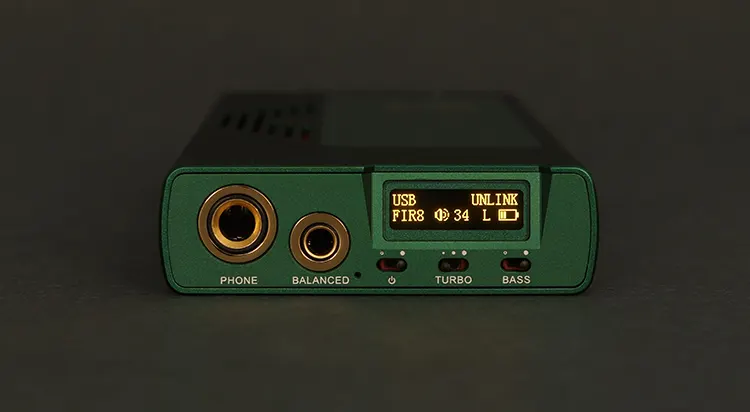
xDuoo XD05T
Technical
If you’re willing to spend a bit more, you can get tubes. The xDuoo XD05T is another portable DAC amplifier, but it’s a total antithesis to the other two models in this comparison.
The XD05T gains MQA decoding at the hardware level, lots of power beyond what the A100 can produce, but at the cost of a few quirks that are inherent with this model.
Design
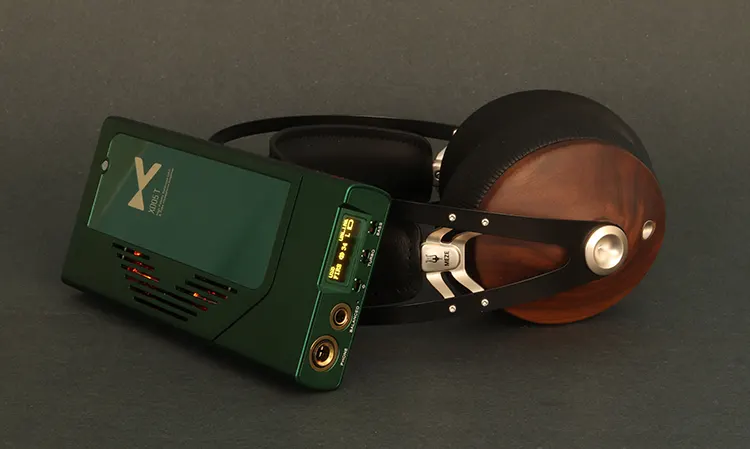
This guy is large, and I would not pocket this device. I would keep the XT05T on my desktop for certain, even though it’s equipped with a large 6000mAh battery. The first reason would be its size.
But the second reason would be because the chassis is vented top and bottom, and it exposes the tubes and all the internal electronics.
It makes for a dangerous situation, in that hopefully you won’t get caught in the rain because it would be disastrous if water droplets got inside the unit. You do have to vent those tubes, but that creates the exposure issue, dam if you do, dam if you don’t.
Performance
These two models offer different profiles, sonically speaking. The XD05T is certainly the warmer of the two. One of the outstanding sonic characteristics is the analog sense you get from the XD05T, but the A100 contrasts with a signature that can only be described as digital.
Hiss could become an issue with the XD05T, and with certain IEMs, you have to use the low gain. Not on the A100, which has the darker background and a cleaner canvas. The drawback is that the A100 doesn’t have the output capacity of the XD05T.
The A100 is the more linear-sounding of the two, and it has no sonic coloring capability like the XD05T, which does have a bass boost feature.
However, the implementation was heavy-handed, covering frequencies up to 1kHz, which is an intentional bleed of a bass boost into the midrange.
My Verdict
If you like clean-sounding, sonically analytical devices, with enough body to sound enjoyable, and with a splash of musicality, you will certainly like the NiPO A100. The NiPO A100 combines good looks and good sound on the go with great battery life to boot.
The MagSafe implementation is cool, but it does have that quirky charging system that has the inherent inconvenience of disabling the device while charging the battery. For that reason, I would not recommend the A100 for home use. That’s the only negative thing I can throw at it.
Other than that, the NiPO A100 produces hiss-free sonics, excellent staging capabilities, and it gives you that option on the go. You supply the music, and the A100 will supply the fun factor. The MagSafe and the Photolithographic finish are the icing on the cake.
NiPO A100 Technical Specifications
- Product name: Magnetic DAC headphone amplifier
- Model: NiPO A100
- Colors: Golden yellow, black, orange, and blue leather finish
- Dimensions: 94.5 x 61 x 10.8mm
- Weight: 131g
- Battery capacity:3900mAh Li-Polymer battery
- Rated input: 5V 2A
- Charging time: approximately 2.5 hours
- Playback time: SE 13 hours, balanced 9 hours
- ESS ES9039Q2M
- Clock: Accusilion Femtosecond dual crystal oscillators
- Headphone amplifier: SGM8662
- I/V conversion: Self-developed, fully discrete current mirror
- Accessories: Type C to Type C cable, Type C to Lightning cable, 2 O-shaped rings, User guide
