

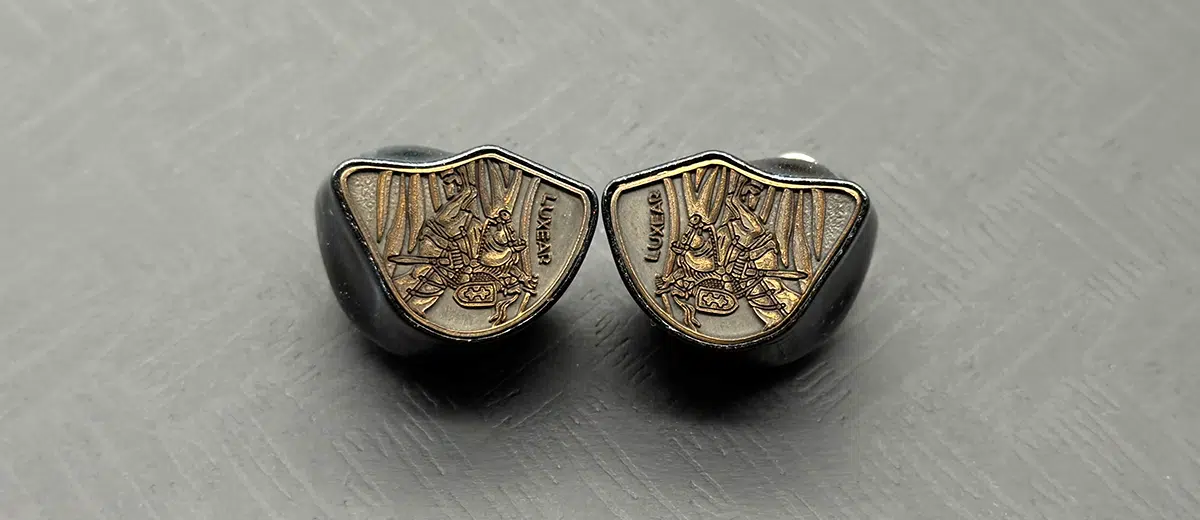
Sound Impressions
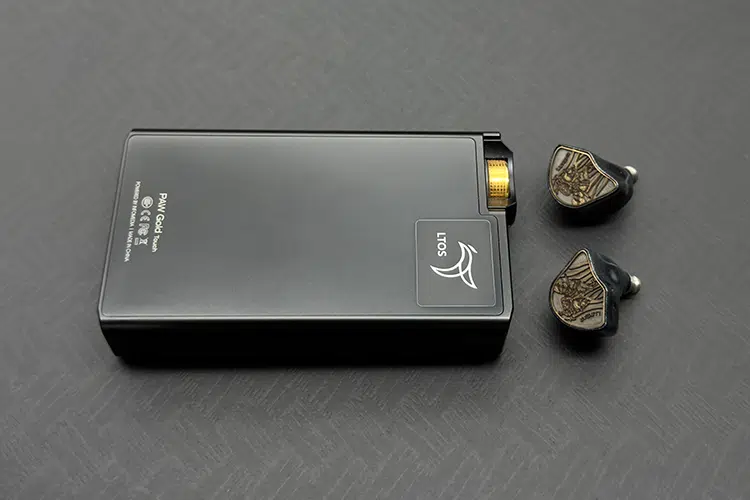
The following sound impressions of the LUXEAR Valor were completed using a mixture of my main source, the Lotoo Paw Gold Touch, and the Luxury & Precision P6 Pro, along with the Campfire Audio Relay dongle DAC.
For the review, I paired the IEMs with the stock cable and stock white ear tips, size L.
Summary
Valor has a bass-boosted, warm tuning. The low end lays the foundation for the whole sound. It hits hard, digs deep, and gives the presentation a strong, weighty base, but it never overpowers.
The other impressive part for me is the treble. It is smooth but still detailed. The planar driver and electrostatic drivers work together nicely here, giving the upper end an airy, almost ethereal feel at times.
The midrange sits between these two ends with a natural, clean, and slightly warm tone. It has a good body, but I do not find it overly thick or veiled.
Overall, Valor is not trying to be a very detailed or analytical set. It is very smooth, easy on the ears, and a very comfortable one to listen to for long sessions.
On the technical side, Valor feels quite accomplished. The stage is deep and holographic. Layering and instrument separation are strong.
Micro-details are present in plenty, but the IEM does not push all of this into your face. That’s one of the aspects I find impressive about the Valor. Even with all its technical ability, you’d find Valor to be an easy-going, music-first IEM.
For genres like classic rock, progressive rock, and metal, I personally find Valor clicking beautifully.
The strong bass adds that necessary musical drive, the treble keeps the energy alive, and the stage keeps things from feeling congested. Guitars have body, drums hit with authority, and the whole presentation feels big without losing control.
Bass
The bass on the LUXEAR Valor is big, physical, textured, and extremely satisfying. The low end is slightly pushed forward, and for me, it’s a major talking point for Valor’s tuning.
The bass hits with brute force and an impact that immediately feels strong. But it’s not just about hitting hard.
The control is what I think makes it enjoyable. It does not keep dragging notes longer than needed. It is not sluggish, but at the same time, I do not find it overly tight or unnaturally fast either.
The bass brings a good amount of warmth into the sound, but it does not veil things. I do not like my midrange tampered with, and it stays the same way here.
It does not blunt the treble either. So, you get a heavy low end without making the whole sound feel closed or muddy.
The balance between sub-bass and mid-bass is also handled nicely. You’ll get plenty of sub-bass rumble here. Not the soft, cushioned kind, but the type that punches straight through your throat.
Mid-bass has a good quantity, so the bass does not feel only focused on rumbling. There is enough punch, body, and meat in the hits.
The bass has plenty of textures to offer. This is not a plain, one-note bass. I can pick up details from basslines just fine. The bass does not feel like arriving as a big wall of pressure. It has a shape. It has edges. It has movement.
The low end can get heavy, but I don’t find it becoming messy. You can find it sounding warm, but it does not become overly soft. It hits hard, but it does not turn into a cheap boom. Valor’s bass has abundance, but it also has a unique taste.
Midrange
The midrange on the LUXEAR Valor is all about warmth, body, and lushness. And you’d expected that, given the kind of low-end this IEM carries.
But the important part is that it does not drown the midrange. There is a mild warmth creeping in, yes, but it feels more like a tonal flavor than an actual veil.
The lower midrange has very good density and depth. This is where Valor gets a lot of its charm from. Male vocals, acoustic guitars, cellos, piano notes, and lower strings carry a nice body and weight.
Notes have a pleasing roundedness and feel properly filled in, which gives the midrange a solid base to stand on.
Female vocals also come through with a smooth and slightly rich tone, though Valor does not push that upper-mid sparkle too hard. So, if you want very open, lifted, breathy vocals, this may not be that kind of tuning.
Now, this is a clean midrange, but not an ultra-clean or brightly lit one. I find Valor very revealing, but it does not throw details in your face. Valor is not chasing that crisp, razor-sharp type of midrange.
There is a bit less glow and lift. But this also has an upside. It keeps the whole presentation smooth and very coherent. It is going for something more grounded. More musical. More coherent with the rest of the tuning.
That is really the crux of Valor’s midrange. It is warm, dense, and smooth, but still quite resolving. It has enough openness because the stage is expansive, so the mids do not feel trapped or congested.
The separation is good. The resolution is very good. Valor manages to keep the midrange lush without making it sleepy and clean without making it thin. That balance is what makes it work.
Treble
For a bass-heavy tuning like Valor, I honestly expected the treble to take a bit of a backseat. That usually happens. But here, the treble is one of the strongest parts of the tuning.
It is not a showy treble. It does not jump at you. It does not try to impress by being extra sharp or extra bright. Instead, it walks that fine line between smoothness and detail.
A good planar driver can bring out a lot of details without needing to poke your ears. You can sense the planar doing its job in the background here.
It adds that extra layer of detail and definition, but does not make the treble feel sharp. I have enjoyed the treble in long sessions without getting any fatigue.
The Sonion ESTs do their work in the upper end, adding a good sense of air, sparkle, and shimmer. Cymbals, tiny metallic hits, trailing notes, and upper harmonics come through with a nice shine.
Not too much. Not too little either. Just enough to keep the whole sound from becoming too thick or closed in.
The treble is more supportive than showing off itself. The bass is big and carries the main weight of the Valor, but the treble makes sure the tuning does not become dark or lazy. It gives openness and definition and that little sparkle on top, which keeps things alive.
Even on tracks with a lot of metallic notes, the treble stays controlled. I don’t find any sudden splashiness. No rough glare. No sharp peaks trying to steal attention.
At times, you may feel a little extra spice in some upper regions, especially depending on the source. But across the sources I tried, the treble never became too jumpy or uncomfortable.
Staging & Dynamics
The soundstage is one of the top highlights of Valor’s technical capabilities. The stage feels wide, tall, and nicely deep, but more importantly, it feels evenly expanded. It spreads in all directions with good balance. That gives Valor a very holographic feel.
The space around the instruments is one of the first things you notice. Nothing feels squeezed in. Notes do not overlap unnecessarily. Even with that heavy low end sitting underneath, the presentation does not become cramped.
Layering is also very strong here. You can pick out what is placed closer, what is pushed slightly behind, and what is sitting further out on the stage.
Background elements are not just quieter; they feel placed behind the main image. That gives the whole sound a more three-dimensional shape.
Instrument positioning feels accurate. Their placement feels stable and well-defined. The imaging feels natural, and it is precise enough to make the stage feel believable. Valor gives you large, clean images.
Valor’s dynamics are something done very well. The macro-dynamics are strong, and a lot of that is because of the low end. The strong bass gives the music real drive and authority. Notes carry good weight and bring in a lot of energy with them.
Resolution is again quite strong here. You’ll get tons of details, and the overall resolving ability feels solid. Notes have clean outlines, good separation, and enough inner detail inside them.
Overall, the technical performance feels very competitive. On most of the technical fronts, Valor delivers with perfection. And the best part is, it never turns dry or overly analytical.
These technicalities are served with a layer of warmth. That musical flow remains intact. That’s where Valor shines.
Synergy
Efficiency
LUXEAR Valor has a sensitivity of 109.6 dB/mW and an impedance of 9Ω. So, this is an easy-to-drive IEM. It does not really ask for a lot of juice. You can simply plug it into a basic dongle, and it will play loud and clear without much fuss.
That said, Valor does scale with a better source. You give it a cleaner and more capable source, and it opens up nicely. The stage grows more expansive, the presentation becomes more relaxed, and there is a better sense of space around instruments. It does not need power, but it does appreciate quality.
On my LPGT, I am around volume 30 before I hit my upper listening limit. So yes, this is not a volume-hungry set at all.
I do find Valor a bit source-dependent, though. Not in terms of driving power, but in terms of synergy. If the source is too warm or adds more weight to the low end, it may not suit Valor that well.
If the source adds even a tiny bit of extra bite or sharpness up top, Valor may not respond too kindly. You really do not want the planar driver picking up extra treble edge from the chain.
What works well with Valor is a source that is only slightly warm. Just a touch. A clean, smooth, warm-leaning source works best.
Reference or neutral-leaning sources can work too, but if they have any upper-end glare, Valor will show it. An R2R source like the Luxury & Precision P6 Pro feels like an ideal match for Valor.
Source Pairings
LPGT pairs quite well with Valor. The low end comes out clean, with no major extra boost. Bass hits hard and has good definition while adding some warmth to the mix. The lower midrange feels full-bodied and dense.
The midrange carries nice warmth and has a natural tonality. The midrange is not as forward as I would ideally like. Treble on LPGT is slightly revealing but still smooth.
The only limitation I felt was in the staging. For Valor, LPGT gives enough space, but it does not fully open up the stage the way some other sources can.
P6 Pro is where Valor gets a stronger synergy for me. It gives the IEM a more immersive and spacious presentation.
The stage feels more holographic, and the height and depth improve right away compared to LPGT. The width is good too, though I still feel Valor can stretch wider on some desktop sources like Questyle CMA18 Master.
The low end on the P6 Pro has more authority, but it is also tighter and better controlled. Bass hits with weight but does not feel loose or overfed. The impact is stronger, yet cleaner.
The midrange also sounds more natural on P6 Pro. Vocals feel organic, instruments have a smoother body, and the overall tone becomes more coherent. Treble is also a bit smoother.
Some micro-details may not feel as openly pronounced as they do on more reference-style sources, but the overall presentation becomes more musical and better tied together.
That is where P6 Pro really works with Valor. Depending on the source, Valor can show different sides of itself. With a cleaner, more revealing source, it can sound quite technical and detailed.
With something like the P6 Pro, it becomes more immersive, coherent, and musical.
