

Wireless Performance
Bluetooth
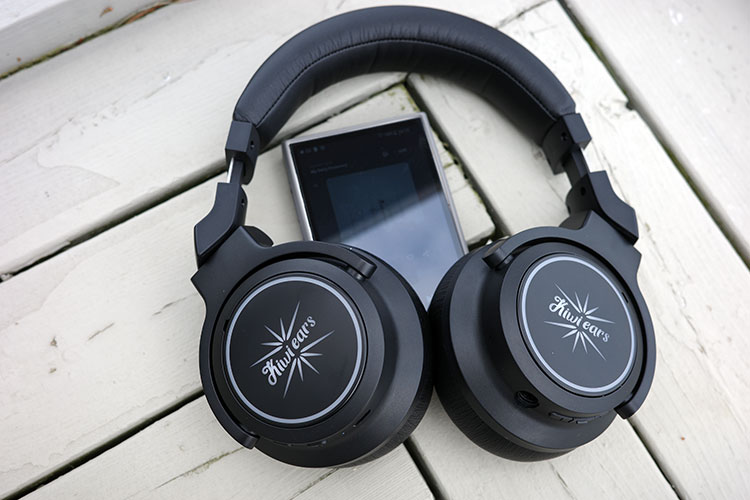
Qualcomm’s BT5.4 is used in the Aventus, with the ability to connect two devices simultaneously. You can be listening to music on your laptop, then answer a call on your smartphone. Once done with the call, it will automatically restart the music.
Latency is all but non-existent when playing YouTube videos or games on my iPhone 16 Pro Max.
Switching between devices is as simple as stopping play on your DAP and hitting play on your smartphone or other secondary device.
I found I could carry the Aventus around inside my home while leaving the BT connected device in place without any issues. The music carried across about 12m, including through several walls, and into my basement. Anyway, BT connectivity is rarely an issue distance-wise.
Wired Performance
USB-C
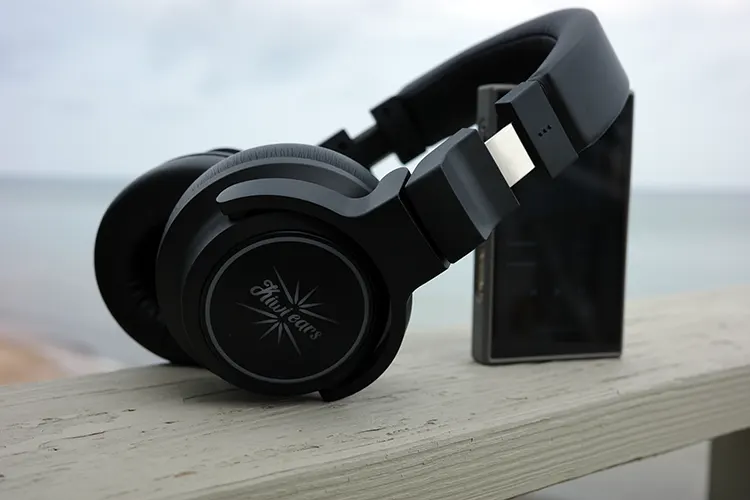
I was unable to get the USB-C to 3.5mm SE connection working, save for the left channel only. I tried both ways (using the USB-C and 3.5mm connections) on both a DAP and my MBP to no avail.
Connecting both ends of the 3.5 to the Aventus and a DAP or my laptop resulted in the headphones running without power being used. The Aventus could be utilized with the power on as well, but I noted the corresponding volume levels were lower running through the Aventus DAC.
Quality sound was had streaming Tidal or Qobuz from my MBP using just the 3.5 to 3.5 connection, with volume levels reaching quite loud.
Efficiency
The Aventus can attain very loud levels, whether using BT or cabled. I never strained the headphones in either case and kept the volume well under control.
This ease of use allowed me to raise the volume of some tracks that needed extra punch to get the music across.
Sometimes, headphones do not correspond to raising the volume across many genres. The Aventus did, but on some tracks, I did note the bass tended to bloat and become a bit smeared, without character.
Pairings
The Kiwi Ears Aventus paired easily with two devices simultaneously, making switching easy. At a whim, I could go from my iPhone to the M21 without a bother, or to my MBP.
I found little to differentiate the sound between the three, except when utilizing the higher quality offerings on my SC card through the FiiO M21. This setup, while running the 3.5mm SE was probably my favorite sound, quality-wise, but the BT usage was just too easy to pass up.
And of course, that is the mainstay of the Aventus.
Punchy bass was had while streaming Tidal or Qobuz since both inject added bass to the mix. The use with 3.5mm to 3.5mm on my MBP became a favorite too, but in the end, I preferred the BT aspects.
Select Comparisons
MOONDROP Edge
Features
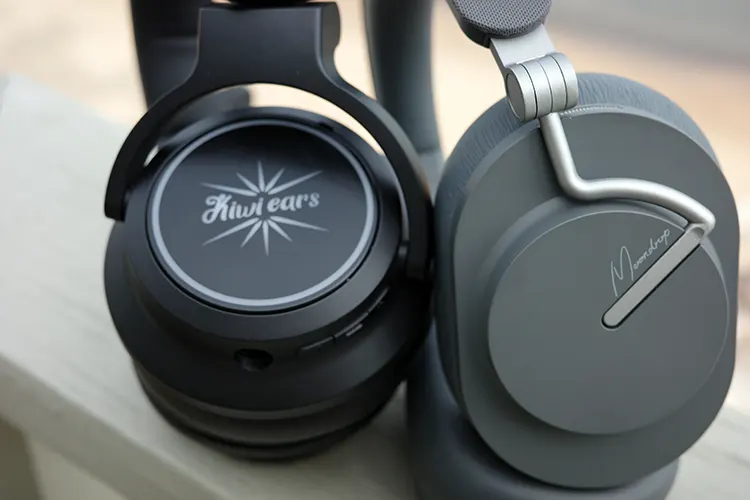
The Edge comes with a 40mm low-distortion dynamic driver, high-resolution beryllium-plated dome, and flexible surround composite diaphragm that gives the sound capabilities. The Aventus matches driver size but adds the full-range 10mm dynamic driver to boot.
Paired with hybrid ANC, the Edge does not lead in any categories but tends towards MOONDROP’s propensity for tailoring units for their own merits.
The onboard long antenna provides for long-distance separation up to a purported 50+ meters, when called upon, and the long 48-hour battery life (ANC off) gives good listening for a long period.
This is markedly bettered by the Aventus at 82 hours with ANC-off and matches the ANC-on at 45 hours.
A five-minute charge will give up to 4 hours for that commute home when you forget to charge the Edge completely. The Aventus takes all of 10 minutes for the same.
Dual microphones handle call duties, but I will note they are near the controls, and I did bump them until I acclimated myself to the controls. The Aventus’s 5-microphone array was more logically placed on top to prevent such occurrences.
Capable of handling SBC, AAC, and LDAC codecs, the Edge also promotes several of the latest sound capabilities. Dual device connectivity, which is now commonplace, of course, comes along for the ride, too.
Design
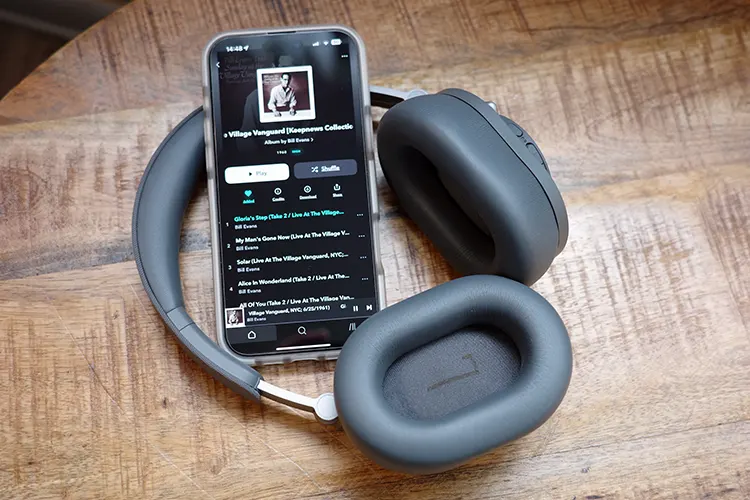
The medium gray color is accented by silver stanchions and swivels, with the same gray color highlighted on the headband and pad. The top of the headband carries a grippy fabric cover, enhancing the user’s ability to hang onto the Edge.
The ear cups only swivel 90 degrees, but do fold into the headband for a smaller, more portable stature. Those rectangular ear pads are soft and pliable as well as deep enough to provide a good listening cavity.
All controls are on the right ear cup, with lighter gray lettering denoting each control. The lettering is hard to read, and the buttons are nearly flush with the side, making them hard to not only decipher, but also use. The Aventus shares the hard-to-read lettering, but tactility is better than the Edge.
The fit is good, with only minimal pressure on my head below my ears. Adjusting the straps is straightforward but requires effort. The Aventus is more comfortable to wear, even with the hotter ear pads.
There are minimal detents for three spots, so getting the legs even with each other is an exercise in eyeballing.
The angle of the cups’ slight forward bend makes for a good fit without too much pressure on my ears. There are no detents on the Aventus, so one needs to eyeball each leg.
I never felt pressure on the top of my head from the band, which meant I could wear the Edge for long sessions. The matte gray finish of the cups does collect fingerprints, though, so keeping the Edge clean is a must.
Fit is about equal, but the Aventus comes across as the more comfortable unit for longer sessions.
Performance
The MOONDROP Edge presents a fairly vibrant signature across the board. With decent reach down low (more so with the R10 EQ) and a more neutral than not signature, the Edge carries a tune across many genres. The Aventus reaches lower with more authority and a more forward midrange.
Treble reach does not become strident or stretched due to the neutrality, but neither does it carry much verve and energy without EQ’ing. The Aventus reaches as high but comes with better clarity. The clarity overall is better in the Aventus.
The Edge does share the emotive, fun signature, though.
Sennheiser ACCENTUM Plus
Features
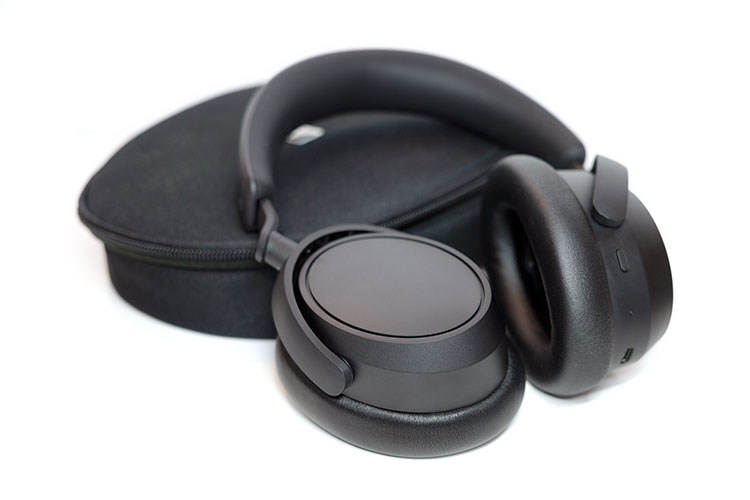
The Sennheiser ACCENTUM Plus is a set of closed-back wireless headphones with additional adaptable ANC capability, which is also a hybrid version, and Smart Control app integration.
It has the same 37mm dynamic driver and supports 3.5mm audio for wired connectivity as well as USB-C. It has a BT 5.2-capable internal chipset for wireless connectivity. The Aventus has BT 5.4 and a dual driver setup.
The headphones are capable of receiving and decoding from SBC and AAC up to aptX and aptX Adaptive codecs.
The hybrid ANC technology is adaptable through Sennheiser’s Smart Control app using the slider for the “hybrid effect,” but on the ear cup, ANC is either on or in full transparency; there is no middle ground.
Battery power came in right at 50 hours on my iPhone, and with the Cayin N6ii at 53 hours. These numbers are a bit longer than the ANC-on of the Aventus, but much shorter than the 82 hours with ANC-off.
A 10-minute charge will give you an additional 5 hours of listening time, as opposed to the 10 minutes and four hours on the Aventus.
Design
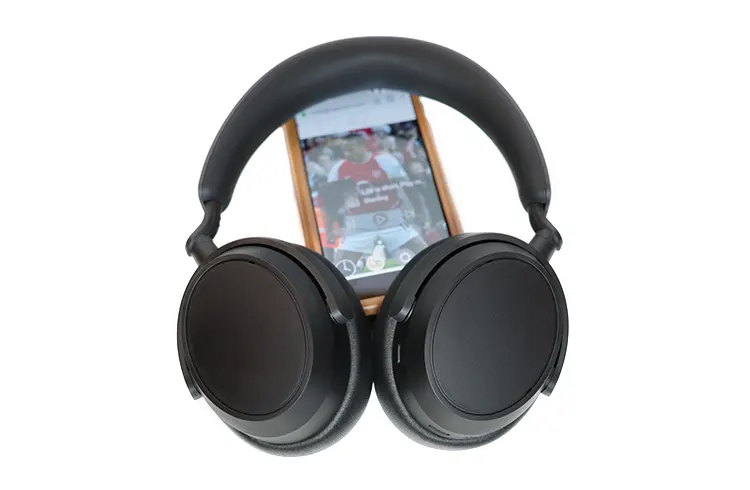
The ACCENTUM Plus follows Sennheiser’s subtle and understated look in most of their recent Bluetooth models.
Smaller in size than the MOMENTUM 4 Wireless (but not by much), the unit only folds flat, and the cups do not fold up to make the unit more portable. Thinner than the Aventus in the case, the ACCENTUM Plus need not worry about the bulbous nature of the Aventus case.
The cup size is medium-small, and those with larger ears will most likely suffer from the pads lying on their ears. Stuffed with memory foam, the pads are comfortable for moderate use but have no waterproof rating. I found the fit to be better, with larger ear pads on the Aventus.
The ACCENTUM Plus is made mostly of plastic, and the headband carries over in one piece with a memory foam insert underneath for head relief.
While the fit and materials are on the budget side, they do follow the market segment. The Aventus is similar, but with a more upscale look and feel to the headband.
That padding only goes halfway down the band in a somewhat odd shape while supporting the top of your head.
Those with larger heads may find that the pad/hard plastic interface could hinder comfort. This plays into the comfort factor, with the Aventus feeling much better overall.
Vent slots sit on top of each cup, while two microphone holes sit on the face and side of the right cup, closer to where they are needed. The five microphones on the Aventus are similarly placed.
Instead of tactile buttons, there is a swipe gesture system on the right earcup. Similar to other models, with swipe gesturing, the controls become intuitive with little effort. The Aventus has a light show instead of swipe gestures.
Performance
The ACCENTUM Plus deviates from the first-gen approach with a more detailed response and a bit more clarity. It also has a more forward bass response as well, with a brighter signature adding to the perceived detail and clarity.
This level of clarity cannot be matched by the Aventus, but the Kiwi Ears show a more emotive, fun signature than the Sennheiser.
The bass also goes lower on the Aventus, but clarity and detail retrieval are better on the ACCENTUM Plus. Having the EQ allows the Sennheiser to be tuned for a more personal taste than the DJ-oriented Aventus.
The top end of the Sennheiser shows more expansiveness and better reach. All without sibilance. The rounded off top-end of the Aventus is still eminently musical, especially with the fun factor, just do not expect the same level of detail as the ACCENTUM Plus can provide.
My Verdict
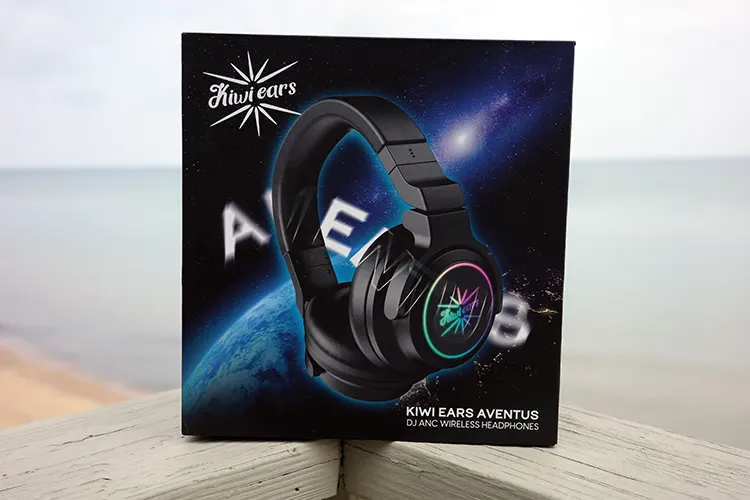
The Kiwi Ears Aventus comes as a nice surprise. Having the DJ/gaming moniker can denote a lack in something, but the Aventus does not. Deep-reaching bass can bleed into the mids, but those bass notes also provide a foundation for the very purpose proposed in using them for DJ purposes.
The midrange comes across as raised and vibrant, countering that looser low-end, and leads into a top end that shows promise without becoming strident or sibilant.
The signature ties together nicely, with a vaulted height allowing notes to spread vertically, albeit with a slight loss in weight.
The warm pads can probably be overlooked in many situations, but for DJ purposes, they would become too hot. But those pads also provide excellent support and cushioning.
I’m also not that fond of the lighting, but I can see how, in a dark room, it may be worth it for the psychedelic show.
When not asking too much of a headphone, it can take on its personality with aplomb. Doing the work necessary to succeed without too much drama. And the Aventus largely succeeds when taken in its pigeon-hole niche. For gaming and DJ purposes, the Aventus works and sounds like it should.
Add in that, for just listening purposes, it also largely succeeds, and you have a headphone that can be used across your listening options before and after using it for the intended purposes, without apology.
Kiwi Ears Aventus Technical Specifications
- 40 mm + 10 mm Dynamic Driver Configuration
- Audio Codecs: SBC, AAC
- Bluetooth: Qualcomm 5.4
- Impedance: 16Ω±10%
- Sensitivity: 102±3dB
- Frequency response range: 20Hz-40kHz
- Noise Cancellation: Hybrid ANC technology, Noise reduction depth -32dB±3dB
- Battery Capacity: 1000mAh
- Playback Time: 18hrs (ANC + RGB on), 45hrs (ANC on), 82hrs (ANC off)
