

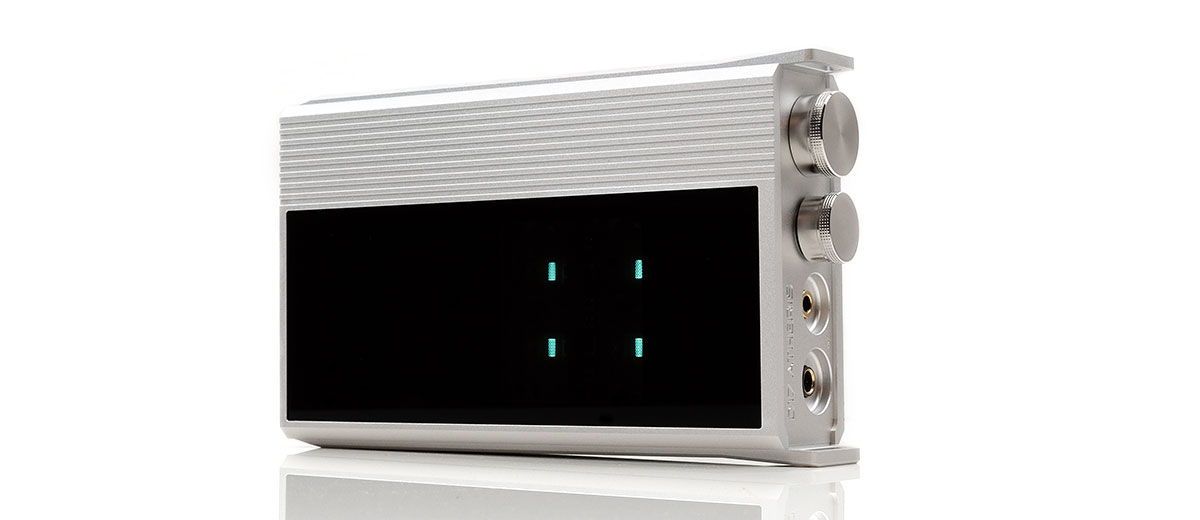
Marcus reviews the iBasso D17 Atheris, a new portable R2R and 1-bit dual discrete DAC with an integrated 1.2W capable tube headphone amplifier. It is currently priced at $1999.00.
Disclaimer: I received this sample in exchange for my honest opinion. Headfonics is an independent website with no affiliate links or status. I thank iBasso for this opportunity.
Click here to read more about the iBasso products previously reviewed on Headfonics.
This article follows our current scoring guidelines, which you can read in more detail here.
Towards the end of last year, I reviewed and awarded iBasso’s 1-BIT D16 Taipan, followed quickly by the PB5 Osprey; two units that operated more like a desktop system than unique components, despite their obvious standalone portability.
I was honestly not expecting such a quick follow-up with the recent launch of the new $1999 D17 Atheris and the more affordable PB6 Macaw quad JAN6418 tube portable amplifier.
The D17 Atheris is a direct replacement for the D16, with the $499 PB6 sort of in its own lane courtesy of that affordable price tag.
However, together, they can replicate the same ‘system-like’ pitch as the previous series due to the additional power of the PB6 over the D17, and both can still be used as standalone devices.
What is new in the D17 is the addition of a discrete R2R DAC architecture to complement the 1-Bit option and the introduction of tubes for amplification from the PB5 rather than the D16’s Super Class A output.
That is quite an upgrade, and in a way, the D17 gobbles up the PB5 Osprey tube output into one neat package. The resulting sound is about as analog-sounding as you can get, but flavored with iBasso’s in-house penchant for a linear sound signature.
How does it perform compared to last year’s models, and how does it compete against price-appropriate competitors and timeless classics such as the ONIX Mystic XP1 and Chord Electronics Hugo 2? I found out in my full review below.
Features
The iBasso D17 Atheris is an integrated portable (dual) DAC and balanced output headphone amplifier.
It can operate as a standalone device for headphone and earphone users, or integrate into a wider system via a lineout interface to amplifiers, and provides digital input options to receive an incoming digital signal for either scenario.
For example, you can connect it to a PC or MAC via traditional USB, a DAP or phone via USB-OTG, or a traditional HiFi transport such as a CD player with optical or coaxial input.
You can then output any decoded signal via SE 3.5mm or 4.4mm PO to your headgear of choice via its built-in tube amplifier, or opt to bypass this for an SE/Balanced lineout to your preferred 3rd party amplifier or iBasso’s new PB6.
DAC
We have two core DAC architectures instead of the D16’s one, with an upgraded FPGA-Master 3.0. The D17 Atheris decoding is drawn from an in-house developed R2R and 1-bit dual discrete DAC.
The R2R component is a four-channel fully balanced symmetrical discrete engineered DAC, using a total of 284 high-precision film resistors with an accuracy of 0.01%.
The 1-bit is drawn from the D16 architecture. However, instead of the D16’s larger 128-resistor array arranged in 16 sets of 8E PWM (Pulse Wave Modulation) cascades, it uses a 64-resistor array in 8 sets of 8E PWM cascades.
Whilst I mentioned the D17 Atheris has two core architectures, there are technically 3 DAC modes you can choose from, depending on the incoming signal format.
If it is PCM, you can choose NOS Mode with PCM routed via the R2R DAC and an incoming DSD signal sent to the 1-bit DAC (most optimal decoding process).
Alternatively, there is an ‘All to R2R’ OS mode to upsample all incoming signals to a PCM format. And finally, an ‘All to 1bit’ SD mode to output into DSD format.
Via USB (ASIO), you can decode up to 32-BIT/768kHz (though via WASAPI this can drop to 386kHz) with a native decoding ceiling of DSD512.
The D17 Atheris also supports coaxial and optical input at PCM 768kHz/DoP256 and PCM 192kHz/24BIT, respectively.
Like the DX320 MAX Ti, the D17 Atheris splits the DAC and amplification volume controls between digital and stepped as well as power supply batteries to keep the signal as clean as possible.
Amplification
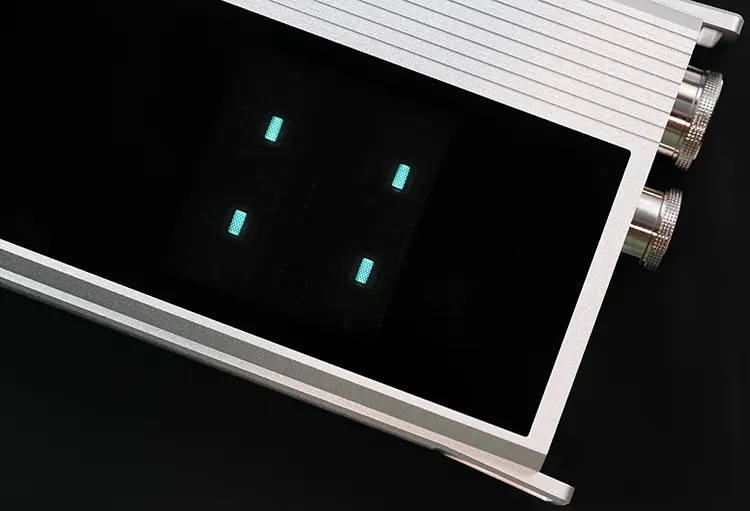
The D17 Atheris absorbs the key feature of the PB5 Osprey architecture with voltage amplification via a pair of Korg Nutube 6P1 tubes.
The anode is powered by a 24V high-voltage supply and paired with a Texas Instruments BUF634A buffer amp, giving it a slight hybrid solid-state/tube amplifier feel.
Consistent with iBasso’s design philosophy, the power supply and volume control of the analog section of the D17 Atheris are independent from the digital side.
You will see that with the independent digital and analog volume controls on the front panel. The D17 Atheris also uses iBasso’s 4-wiper 24-attenuator.
Rated amplification is where things get interesting. At a high level, the D17 Atheris is capable of up to 1.2W balanced into a 32Ω load (no data provided for SE performance under a similar load).
However, this is only when the DAC is in R2R mode. When switching to 1-Bit mode, the D17 Atheris maximum balanced output drops to 340mW @32Ω, which is less than half.
That might make things tricky for those who feel the 1.2W R2R performance is good enough for modern planars but want to hear the 1-bit performance with the same headphone.
And whilst the D17 Atheris has independent low and high gain settings for the DAC and the amp, the above benchmarked performance figures are with both gain levels set to high, meaning there is no more headroom than what is quoted above.
This is where the PB6 Macaw might come to the demanding D17 Atheris owner’s rescue since the lineout gap is much closer at 3.5Vrms balanced in 1-bit mode and 4Vrms balanced LO in R2R mode.
Design
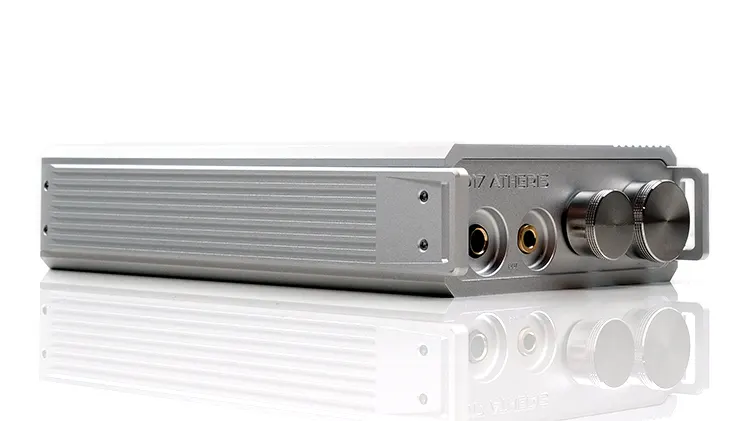
The D17 Atheris is larger and heavier than the D16. It also has the familiar industrial old-school boxy aluminum vibe of its predecessor. Many of the core physical features are still present, such as the ribbed finish and the recessed rear-panel controls and inputs.
However, you can tell iBasso has been listening to D16 owners’ feedback because there have been some pleasing improvements. The first is the front panel guard rails that offer better protection for the two dials, something that the D16 lacked.
The second one addresses one of my own concerns: the lack of label legibility on the D16’s black casing. The D17 Atheris’s solid aluminum chassis is finished in a lighter silvery/grey and black labels that are much easier to read.
The third improvement I can see is more topical, and that is the dimmer 1.3” OLED built-in display, which is now further back from the front panel to allow for the lovely green glow from the two NuTubes when powered.
I say topical because for some people, since the muted strength of the panel’s glow might help with sensitive eyes or prove harder to read for those who liked the brighter display on the D16.
Aesthetically, I think the D17 Atheris finish is superior to the bleaker look of the D16. You can spot some nice touches on closer inspection.
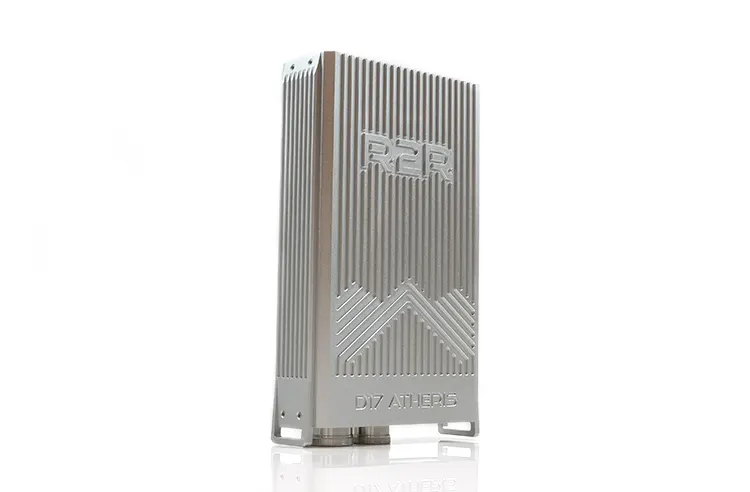
These include the refined knurling on the controls, the enhanced heatsink finishing on the back and sides, and the R2R branding on the rear panel, where flat and plain was the previous order of the day.
I/O
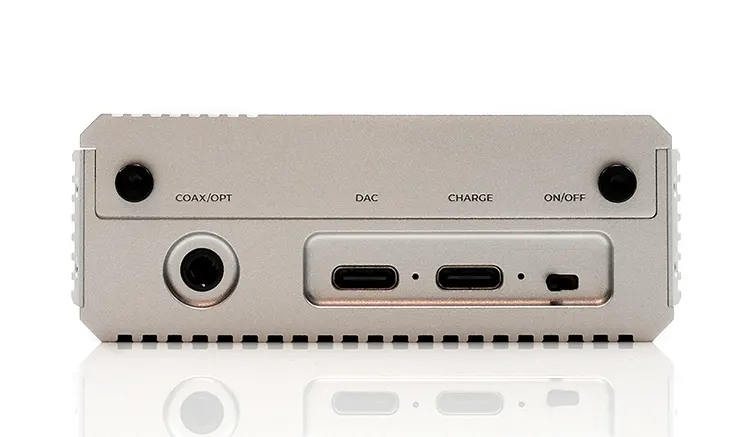
The D17 Atheris inputs and outputs options and arrangement are unchanged from the D16. However, the switch to silver grey and black labeling makes it much easier to see and understand under dim lighting conditions.
As before, all the digital inputs and charging are on the rear of the D17 Atheris, and the PO/LO, as well as the digital/analog volume and system dials, are at the front.
I am still not a huge fan of the tiny on-/off switch at the rear panel. I would prefer it to be integrated into one of the dials or on the front panel, if possible, but given the new, larger dials, space is a premium.
One nuanced difference I did pick up on was the superior damping on the multi-function digital dial compared to the D16’s clunkier sound. I wonder if iBasso swapped out the older design for something new because it feels a lot smoother to press than before.
The PO/LO ports are slightly recessed, which will limit the size of plug barrels that are compatible with the D17 Atheris.
These ports should accommodate most cable plug barrels except for the more flamboyant ones, such as the Elysian Acoustic Labs Annihilator 2023‘s chunky stock Liquid Links cable.
Charging is separate from the DAC, which is always preferred. Like the D16, the D17 Atheris offers QC3.0 fast charging with a full charge taking around 3 hours.
On paper, the D17 Atheris battery life is much better than the D16. Officially, it is rated at 15 hours, though this can vary significantly based on what DAC mode, gain setting, or load you are connecting to the device. I was getting around 11-14 hours in real-world scenarios.
Controls
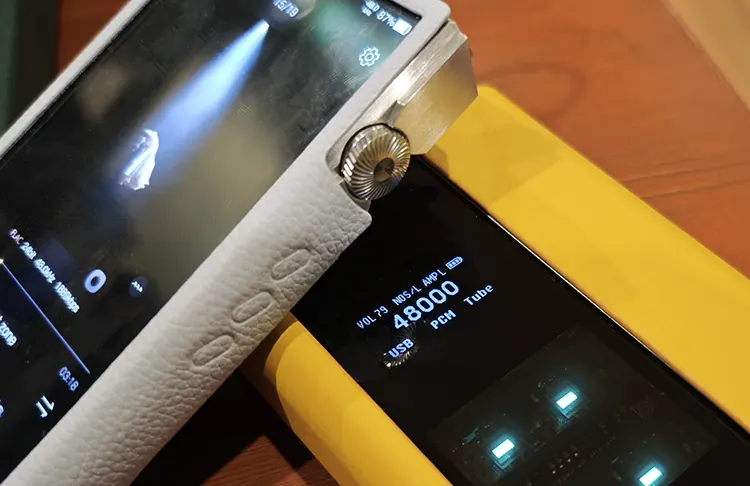
Aside from the minute power switch on the rear panel, the D17 Atheris controls are entirely through the dual dial setup on the front panel.
The slightly smaller one on the left is a multi-function dial for digital volume and for accessing its menu suite via the OLED panel. The larger one is the analog 24-step attenuator for the amplifier.
The DAC and analog volume controls work independently, adding a welcome degree of granular digital volume control in 100 steps to the bigger 3 dB per step (24) provided by the analog stepped potentiometer.
This combination of volume controls works well for sensitive IEMs where 3 dB jumps can be too crude for fine volume control adjustments. The additional 100 steps from the digital side will help nail that precise control level in an easily accessible manner.
Because of the new aluminum guard rail’s proximity to the stepped attenuator, the dial is a bit harder to access and control compared to the D16. You will have to grip it in the 12 and 6 positions rather than the 9 and 3.
The D17 Atheris menu options are almost the same as the D16, save for the new Tube/Line out mode replacing the old phone/line out option from the older model.

Packaging & Accessories
The D17 Atheris soft leather packaging is almost identical to the D16, save for a new white outer sleeve with “D17 Atheris” clearly printed at the front.
There is a small change in the color of the inside lid’s fabric finish from ‘wine’ to tan, but otherwise, inside uses the same lovely-smelling green leather drawstring pouch for the amp and a soft black pouch for the accessories.
The associated leather case has now changed from green to yellow (reminiscent of the Nunchaku leather case color scheme), and it comes prewrapped on the D17 Atheris chassis to save a bit of space.
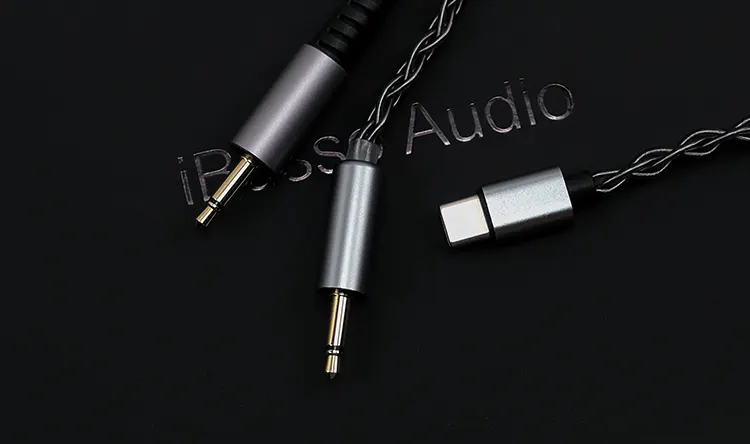
The D17 Atheris also comes with plenty of quality finished short ICs with a braided 4-core high-purity silver-plated copper wire.
You get terminations for Android, Lightning for older iPhones, a classic 3.5mm to 3.5mm SE for LO duty, and a coaxial IC. iBasso has also added a 1m USB-C to USB-A cable for charging, DAC, and firmware updating duties.
One important note is that the USB-C termination on the braided cables has a non-standard USB-pin configuration.
They will work fine with plenty of smartphones and iBasso’s DAPs, but do not have quite the same wide compatibility as their shorter dongle DAC cables, which have a standard pin configuration.
For example, the cable will not work consistently with the Xiaomi 15 Ultra in Exclusive USB Audio Access mode, but it works just fine with my older VIVO X90 Pro Plus.
Click on page 2 below for my sound impressions and recommended pairings.
