

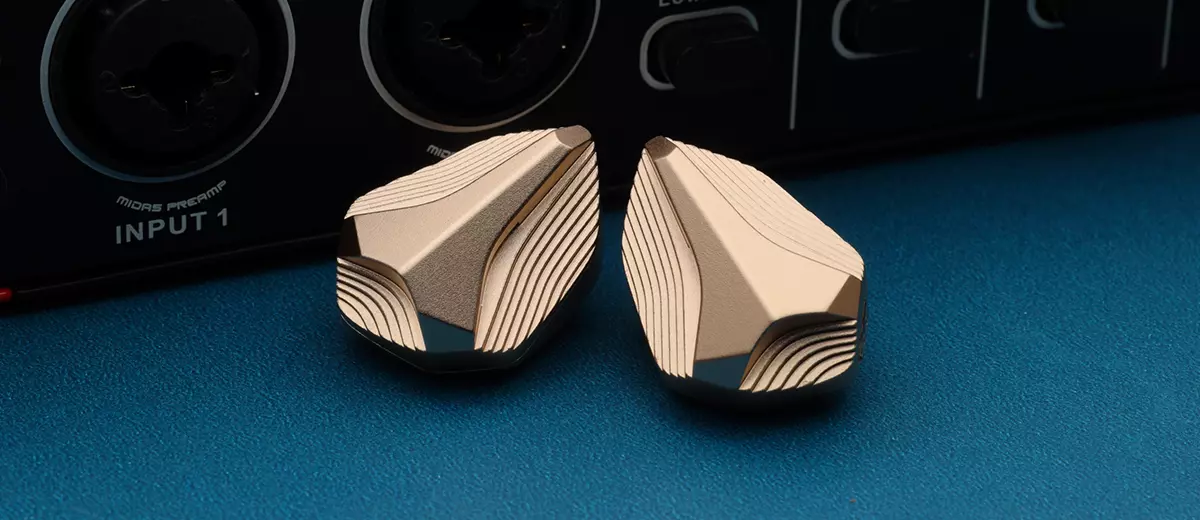
Synergy
I’ve used the MP145 PRO in various situations: while walking, while listening at home, in a coffee shop, etc.
The MP145 PRO never caused any noise across all the sources I paired it with; the cable never picked up any radio-frequency interference, and it never picked up any of my sources’ noise floor.
As previously mentioned, the MP145 PRO is easily driven by low-power tail-style dongle DACs. I never found an audio source in my inventory that would struggle to drive the MP145 PRO.

Pairings
The MP145 PRO is a versatile IEM that doesn’t introduce any difficulty to the source that would change the sound balance, especially for lower-powered sources.
It is easy to drive and sensitive enough to let the source sound as it should, even at loud volumes, without struggling.
The MP145 PRO pairs nicely with the iBasso DC-Elite dongle DAC and other dongles not included in this review. With the DC-Elite, I hear highly resolved sound with very good dynamics.
There is good staging and imaging, as well as musical engagement.
When I switched to the MUSE HIFI M6 Double in tube mode. I hear a tighter bass with even better dynamics; the resolution is good, as is the staging and imaging.
The MP145 PRO’s clean, highly resolved, and speedy transient response easily reveals the tube’s sound signature; the sound is very analog-like without rolling off the upper treble.
And finally, with the FiiO M15S, which has a max output of 1,200 mW, the dynamics are effortless and seemingly limitless. The bass is tight yet without losing note weight. I hear a large soundstage, good imaging, and clean background decay.

Selected Comparisons
Unless otherwise noted, I use my usual sources for review: the iBasso DC-Elite, MUSE HiFi M6 Double, and FiiO M15s for this comparison, and I often switch between them.
Still, I use the iBasso DC-Elite mostly for this comparison, because I can discern differences more easily with its detailed sound.
SIVGA Nightingale PRO
Technical & Design
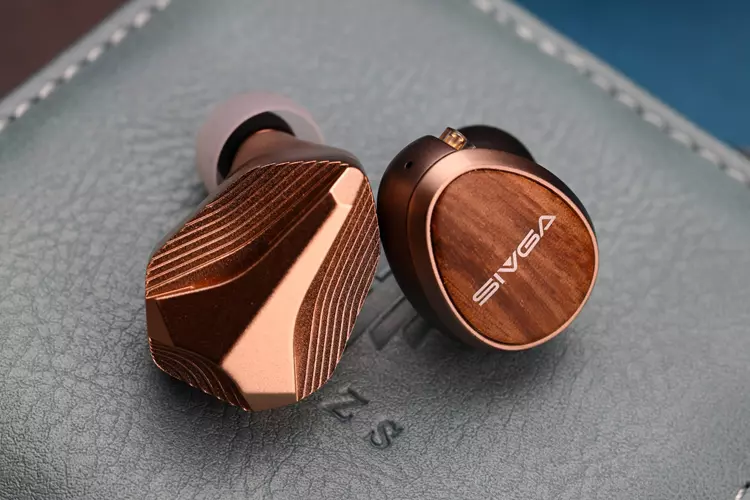
The SIVGA Nightingale PRO features a newly designed planar driver with an ultra-thin composite diaphragm, paired with a newly developed 0.008 mm composite diaphragm and a 0.006 mm aluminum ribbon conductor. It is rated at 16Ω for impedance with an SPL of 107 dB/mW @1kHz
The Nightingale PRO combines perfectly machined metal parts with a wooden faceplate cover, mixing dark and silver tones with brown wood, suggesting an advanced design with a natural feel.
The Nightingale PRO features a turbine-shaped metal nozzle cover with a small vent hole near it, which serves as the pressure relief. There is another vent hole near the faceplate and the QDC style 2-pin connector.
Performance
The Nightingale PRO and the MP145 PRO are tuned for different audiences. The Nightingale PRO has a more specialized tuning that favors an ambient, atmospheric listening style.
The MP145 PRO is more of a neutral, sound monitoring, and versatile tuning that suits most kinds of music well.
The Nightingale PRO has a U-shaped response with prominent mid-bass, a recessed midrange and upper midrange, and a boosted upper treble.
Nightingale PRO has a less accurate yet audiophile, highly resolved sound that many listeners who care more about beauty than accuracy would like. The MP145 PRO is more accurate and has a flatter, more neutral perceived frequency response.
The Nightingale PRO has a larger, grander, airier, and more atmospheric soundstage. It seems to have an enhanced soundstage with a darker background. The MP145 PRO has a more accurate, smaller stage. Both have a large soundstage, though, and sound immersive.
The MP145 PRO’s imaging is more accurate, more defined, and has better front-to-back layering and side-to-side separation. The Nightingale PRO’s imaging is more diffuse and laid-back. I find the MP145 PRO to be more holographic.
Dynamically, both are lively-sounding, with good energy and sensitivity, and can go very loud when given power.
However, during the comparison, I have to increase the volume on the Nightingale PRO by a considerable amount when switching from the MP145 PRO to achieve a similar loudness.
ddHiFi Memory
Technical & Design
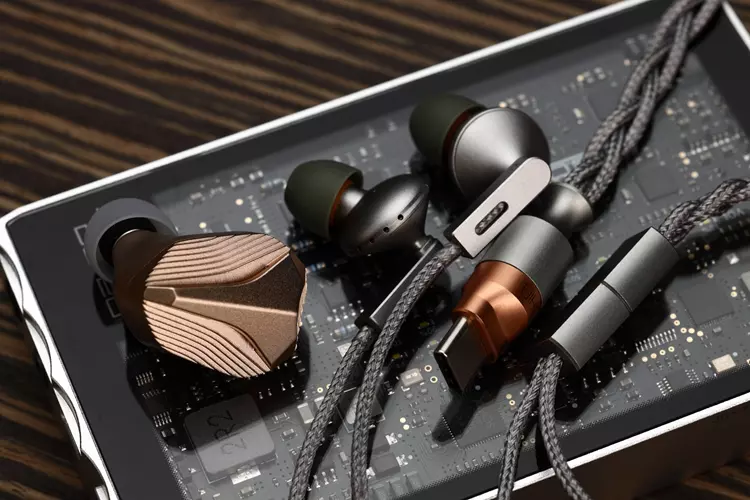
The ddHiFi Memory features a 13mm ultra-linear planar driver developed by MOONDROP. The driver is designed with a unique arrangement of circular magnets sandwiching a flat membrane and a flat, circular voice coil attached at the center.
The Memory has a built-in DAC chip in its non-removable cable’s USB-C connector. It uses the CS43198 DAC chip to convert digital audio signals to analog; it supports PCM and DSD. This means the Memory plugs directly to the USB-C source, bypassing my DAC/amps.
The Memory is a semi-in-ear IEM design that combines an IEM nozzle with a flat-head, earphone-shaped main shell. It has an interesting design, especially the flying-saucer-shaped driver shell with 10 side venting holes, which also looks like viewing windows for a flying saucer.
A nozzle juts out from the front end of the shell, and a post-shaped cable port is connected at the back.
Performance
The ddHiFi Memory has a relaxed, warm sound signature with boosted mid-bass, a neutral midrange, and a somewhat rolled-off, laid-back treble.
The MP145 PRO sounds more neutral with a flatter perceived frequency response. The Memory is more suited for relaxation, while the MP145 PRO is more suited for general-purpose listening.
In terms of soundstage, the MP145 PRO has a wider stage, while the Memory has a deeper stage, but overall, the MP145 PRO has a bigger and more spacious soundstage. The Memory presents a more intimate, relaxed soundscape.
The MP145 PRO is simply livelier-sounding due to its higher treble tuning. And when I compared them with approximately equal loudness, the MP145 PRO sounds more dynamic.
The Memory doesn’t sound compressed, though; it’s the relaxed tuning that makes it seem to sound less dynamic.
HIDIZS MP145
Technical
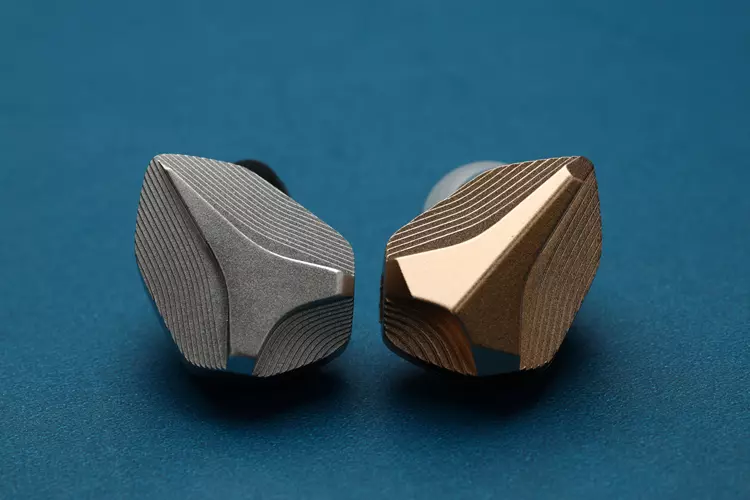
The Hidizs MP145 features a large 14.5mm planar magnetic driver with 7+7 N52H magnets. It has a 30Ω impedance and 104dB sensitivity. MP145 has 9 tuning possibilities via 3 types of pneumatic filters and 3 types of ear tips.
Design
The MP145 has a Whale-Inspired design with a faceplate featuring a unique pattern reminiscent of a whale’s tail fin. The main shell is made from aviation aluminum alloy using precision CNC machining.
Performance
No matter which nozzle and ear tip combination I use, the MP145 is bassier and warmer.
It has a U-shaped sound signature characterized by a prominently elevated mid-bass, a recessed upper midrange, and an elevated upper treble. The MP145 PRO is apparently more neutral, with a flatter perceived frequency response.
The MP145 PRO solves my issue with the original MP145: the laid-back vocals. The MP145 PRO has a more forward, accurate sound presentation, resulting in better, more defined imaging compared to MP145’s diffuse, laid-back imaging.
The original MP145 is focused on providing a large, cavernous soundstage while sacrificing imaging performance. The new MP145 PRO doesn’t do that and has both imaging and staging performance, albeit with a smaller stage than the MP145.
Both are dynamic and lively-sounding with good energy across the frequency range. They can go loud when given power, but I noticed the MP145 PRO can take more power and go louder than the older MP145 without distorting.
My Verdict
It’s as if HIDIZS read my mind about my complaint with the original MP145: it’s laid-back, diffuse imaging, and its sound signature, which is too warm for me, even though I like it and have listened to it a lot. I like that the new MP145 PRO has better imaging and a more accurate tonality.
There is a compromise made, though: an inevitable compromise. While the MP145 PRO has a vastly improved imaging performance, the soundstage size has shrunk a bit.
The MP145 PRO soundstage is still big, though, and I would take the better imaging over the bigger soundstage with mediocre imaging performance.
Also, I wish they had made the shell much smaller, though I suspect they have to do so to achieve this tuning and sound quality.
HIDIZS MP145 PRO offers many improvements, different sound, and tuning from the original MP145, which, for the big fans of the original, I highly suggest you take a close look at the MP145 PRO.
I would also suggest the HIDIZS MP145 PRO for the listeners looking for a relatively accurate, near-neutral-sounding, well-priced planar IEM with good sound staging and imaging.
Hidizs MP145 PRO Technical Specifications
- Model: MP145 PRO
- Driver Setup: 14.5 mm Planar magnetic
- Earphone type: In-Ear Monitor
- Design: CNC-machined aluminum alloy shells
- Tuning Filters: Silver (high frequency), rose gold (balanced), red (bass)
- Impedance: 30Ω.
- Sensitivity: 104dB.
- Distortion: less than 0.05%@1kHz.
- Frequency Response: 20Hz~40kHz.
- Cable Material: 6N high-purity single-crystal copper 4-core braided cable.
- Connector Type: 0.78mm 2-pin.
- Cable Plug: 3.5mm and 4.4mm.
- Cable Length: 1.2m
- Weight: 2 grams each
- Nozzle diameter: 6 mm
