

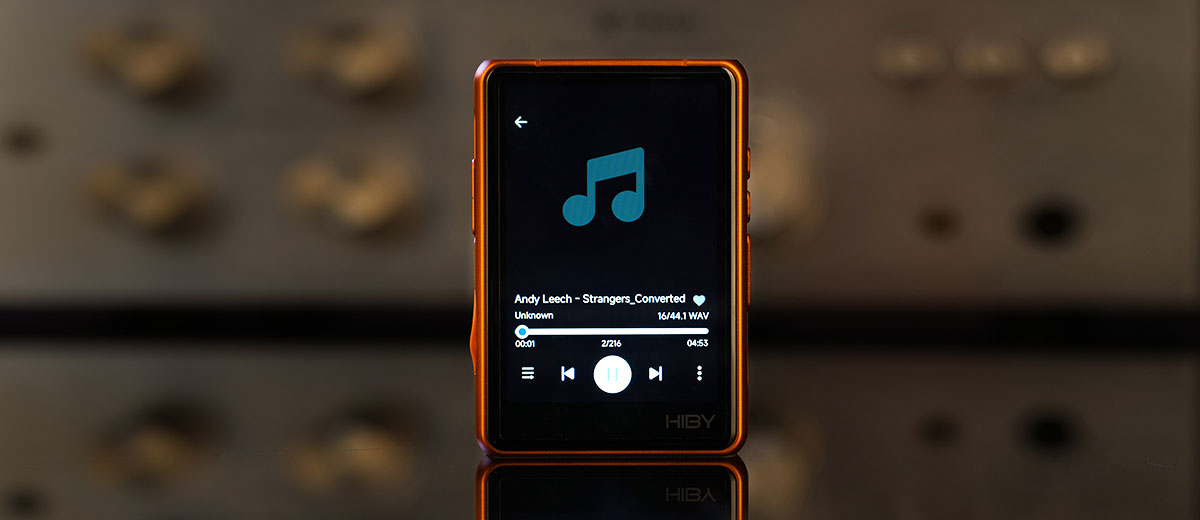
Sound Impressions
For the sound evaluation of the R3Pro II, I used my Celest Yaksha, Sivga Que UTG, MOONDROP Harmon IEMs, and Sennheiser HD 6XX headphones in balanced output mode.
I completed my standard 24-hour burn-in period by letting it play on my table while I was busy with other reviews. In hindsight, 2 hours of burn-in is more than enough.
I didn’t use EQ, MSEB, filters, sound field, or any other features that enhance the sound unless stated in the review below.
Summary
The HiBy R3Pro II has a neutral, warm, non-fatiguing sound, which is slightly mid-centric in presentation.
I’m sure that, if measured, the frequency response is ruler flat, but this is a subjective sound assessment. Indeed, it sounds flat; there is just a slightly more energy coming from the midrange relative to the bass and treble.
The bass is neutral with excellent tightness, depth, and speed. When used with IEMs, it delivers excellent slam and punch, particularly with certain movies and bass-heavy music.
It has enough bass speed and control to render orchestral-type music naturally and enough bass power to reproduce some movies with earth-shattering low-end rumble, but this is not for bassheads.
The R3Pro II doesn’t have the biggest bass presentation when compared to higher-end DAPs. Still, for the price, it is excellent as it doesn’t sound lean and dry, which plagues most DAPs in this price range.
The midrange sounds thick and lush in a natural, non-colored way. There is no hint of leanness or dryness to make the sound electronic; the midrange is very organic-sounding. And certainly not shouty and fatiguing.
I find the treble polite in presentation. It’s not immediately obvious and is certainly negligible when listening to the R3Pro II for an extended period of time. It becomes noticeable when switching to a different source with a brighter, more analytical, or digital style sound presentation.
The perceived resolution and detail are not the greatest. It’s high for the price, but don’t expect an endgame level of resolution and micro-detail rendition.
There is a twist. As a result, the sound presentation became analog-like, which is slightly warm and natural, unlike other similarly priced DAPs in this price range that attempt to sound hi-res but often come across as harsh, unrefined, dry, and musically unengaging.

Timbre
The R3Pro II timbre is natural and neutral, with only a slight warmth due to the perceived slight upper treble politeness mentioned above; there is no thickening of the instruments or added harmonics to the sound.
The transients sound very transparent; there’s no smearing, unlike what I’ve heard with other DAPs at this price. However, I notice a very slight rounding off of the leading edge.
I must add that I was in a critical listening mode to notice this, and that the resulting sound coloration is pleasant and subtractive, rather than additive, which would introduce unwanted coloration to the sound.
Staging & Dynamics
The R3Pro II soundstage is not the biggest, but certainly above average for the price. With good width, depth, and height. It is spherical and feels natural.
Due to the slightly energetic midrange, the presentation could sometimes feel intimate or too closed in, especially the vocals. However, the good thing is that it is 3-dimensional, not flat or 2D.
I can easily hear the background instruments and singers behind the main vocals, each with their own distinct space. There is good left, right, front, and back panning of the instruments.
There seems to be an unlimited dynamic range and explosive dynamics when used with easy-to-drive IEMs, including the Sivga Que UTG and the Celest Yaksha, as well as other IEMs not included in this review.
However, I noticed slight dynamic compression when driving the MOONDROP Harmon, which presents a difficult load and low sensitivity. I needed to set the volume at 90 percent or higher for loud volumes. Fortunately, there is no audible clipping.
DSP & EQ
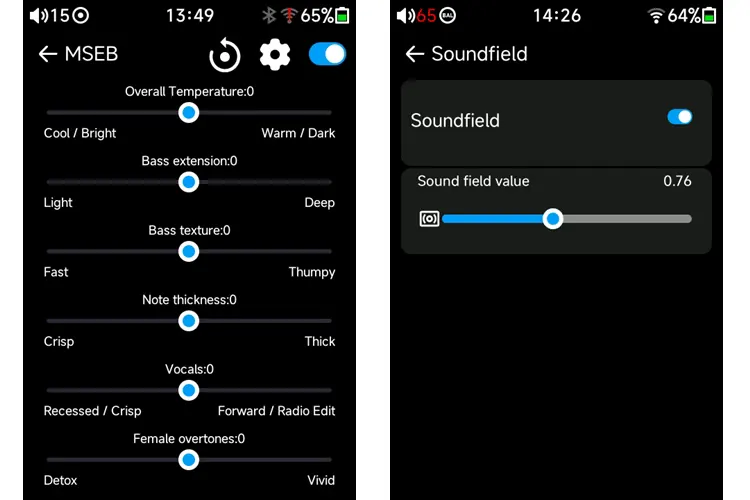
Everything changes with the use of an equalizer or MSEB on the R3Pro II; the perceived soundstage size and shape can be modified, as well as the tonality and frequency response.
It is easy to modify the sound with MSEB, especially for beginners, as it can be set to prevent users from making excessive changes to the sound.
For my personal use, I used the equalizer with the following settings: 2 dB boost at 31Hz, 2 dB boost at 1kHz, 2 dB boost at 4kHz, 4 dB boost at 8kHz, and 5 dB boost at 16kHz, to suit my taste for daily use.
There are not many changes with the use of the NOS feature; it is supposed to sound less processed by not oversampling the digital signal, but I prefer the cleaner sound of the standard, oversampling mode.
As for the R3Pro II’s digital filters, four options are available, but I used the default mode, which is the fast roll-off, low-latency mode.
There are very subtle differences in sound between the four, mainly in the way the image distance and definition are presented, but they are barely noticeable at best.
The soundfield feature allows you to change the soundfield effect from a narrow to a wide, surround sound type of stage. It is fun to listen to, but not something I would regularly use.

Synergy
I couldn’t hear any noise from the R3Pro II with headphones and IEMs. There is no hiss, clicking, or popping sound when the device is in operation. It is clean and noise-free.
It sounds great with all the IEMs included in this review; the 480mW rated output power of the R3Pro II makes driving any of the IEMs sound effortless. I did find it less comfortable when driving the Sennheiser HD6xx headphones, though.
IEM Pairings
I find that the R3Pro II drives the Celest Yaksha, SIVGA Que UTG, and the MOONDROP Harmon easily to high volumes, without noise, distortion, or any signs of difficulty.
Both the Yaksha and the Que UTG are sensitive IEMs; they reach loud levels at a 75 percent volume setting with a seemingly unlimited dynamic range.
Thanks to the clean 480 mW output power of the R3Pro II, however, when paired with the difficult-to-drive Harmon, I need to set the volume to 90 percent or higher, and I noticed a slight but negligible loss of dynamics.
Overall, I have no issues pairing with IEMs, which the R3Pro II was designed for.

Headphones Pairings
Paired with the popular but difficult to drive Sennheiser HD 6xx, due to its 300Ω impedance, which is almost 10 times higher than the average IEMs with 32Ω impedance. It sounds acceptable with the R3Pro II.
To achieve a satisfactory volume level, I typically set the volume to around 90 percent. The R3Pro II doesn’t distort at that volume setting with this pairing.
This pairing sounds neutral with flat bass, neutral midrange, and highs. It sounds detailed and airy; however, I find the bass lacks impact, tightness, and control. It sounds acceptable overall; it could go louder, but I’d be lying if I said it sounds its best.
For casual and non-critical listeners, this pairing is acceptable and enjoyable, but for die-hard Sennheiser HD 6XX fans, I wouldn’t recommend it.
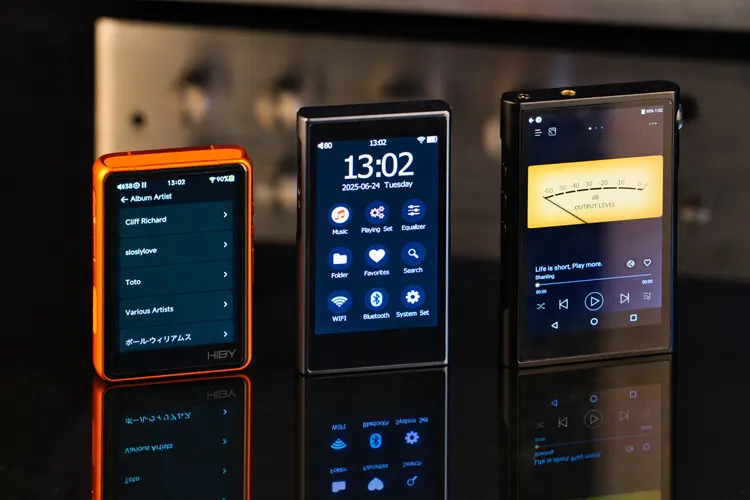
Select Comparisons
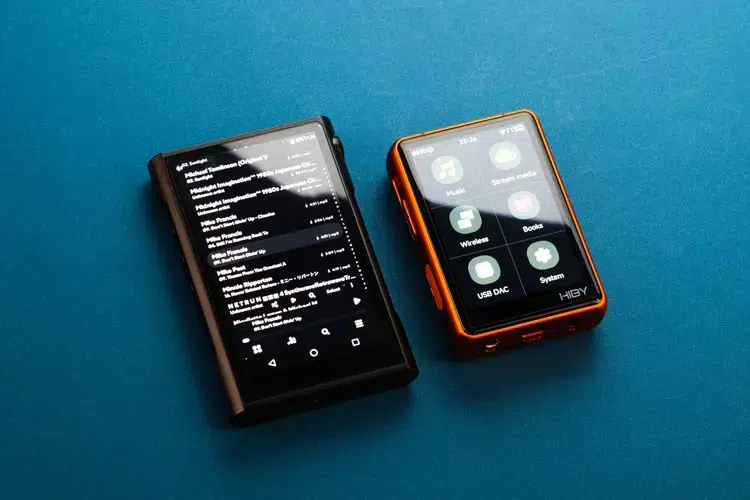
xDuoo X5
Technical
The xDuoo X5 utilizes a dual CS43131 DAC chip that directly drives both the 3.5 mm and 4.4 mm headphone outputs, with an output power rating of up to 270 mW.
It has a 2600mAh battery that can last up to 8 hours and charges for 3 hours. It features Bluetooth version 4.2, and its card slot supports up to 1 TB of storage space.
It features a 3.5-inch IPS touch screen with a 480 x 800 resolution.
Design
The xDuoo X5 has a fully aluminum alloy chassis with a touchscreen at the front. A blank top, a microSD card slot on the left, three control buttons on the right, and all the I/O at the bottom.
There is a clear tempered glass panel near the top of the back side, and some lettering is located near the bottom. It has a utilitarian design and looks spartan in comparison to the R3Pro II.
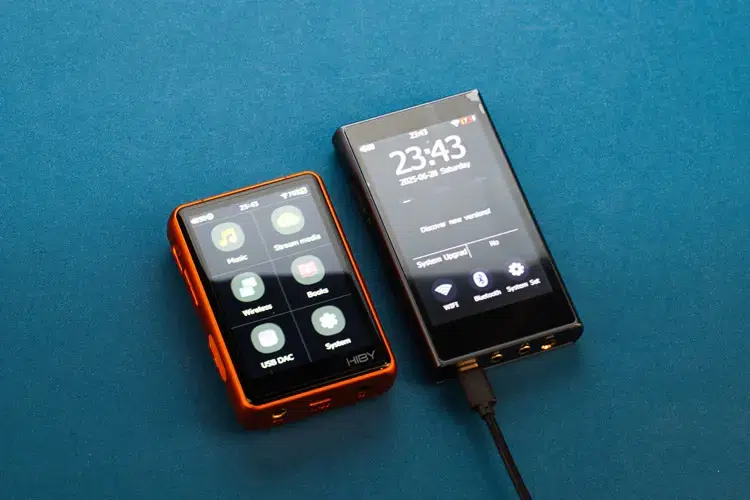
Performance
Tonally, the X5 has a warmer and bassier sound signature. The bass is more boosted but is less tight and sounds fatter. The midrange is slightly warmer, and the treble is about the same.
I prefer the sound signature of the X5; however, I ultimately prefer the R3Pro II overall sound quality, due to better technical performance, which I will discuss below.
Regarding dynamics, the R3Pro II is better at conveying macro dynamics, or sudden jumps in loudness; the X5 is more compressed, but only by a slight margin.
This isn’t noticeable at low volume levels or with an IEM that is easily driven and has good sensitivity, but thanks to the R3Pro II’s higher 480mW output rating, it handles a broader range of IEMs with ease.
They are similar in terms of detailed presentation, which is slightly laid-back; however, upon closer inspection, the R3Pro II has a higher resolution.
I suspect this is due to the R3Pro II’s use of a higher-end CS43198 DAC and OPA1622 amplifier chip. In comparison, the X5 utilizes the lower-tier CS43131 chip, which functions as both a DAC and an amplifier.
Regarding soundstage and imaging, the X5 has a bigger soundstage, but the R3Pro II is more precise and has better imaging, holography, and dimensionality.
The Equalizer can be used to enhance both DAPs in this regard, but I still observed a slightly cleaner and more precise sound with the HiBy R3Pro II.
Shanling M3X
Technical
The Shanling M3X utilizes a dual ESS Sabre ES9219C DAC/AMP chip that directly drives both the 3.5 mm and 4.4 mm headphone outputs, with an output power rating of up to 240mW @ 32Ω (Bal). It has a 3200 mAh battery that can last up to 19 hours in balance mode.
It features Bluetooth version 4.2, and its card slot supports up to 2 TB of storage space. It features a 4.2-inch IPS touch screen with a 1280 x 768resolution.
Design
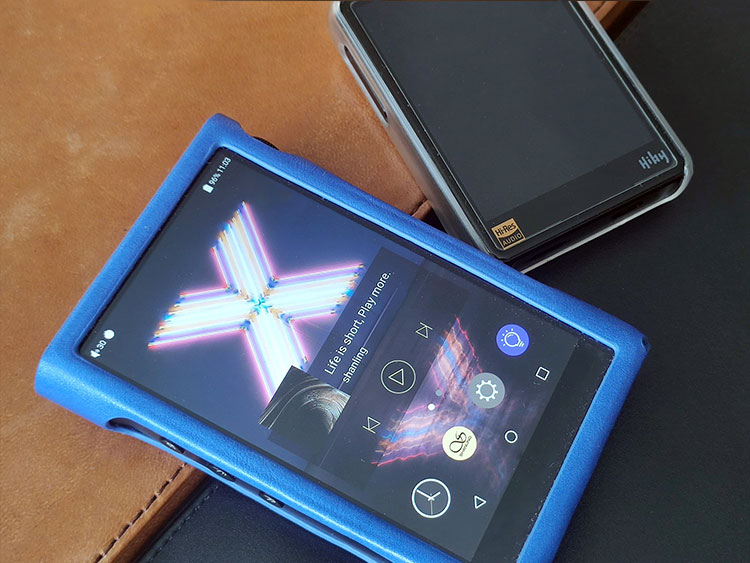
The M3X has a CNC-machined aluminum alloy chassis that is sandwiched with the screen on the front and a tempered glass panel at the back.
It features 3.5 mm and 4.4 mm headphone jacks at the top, a volume knob on the right, three control buttons on the left, a microSD card slot, and a USB-C port at the bottom.
Performance
Tonally, the M3X has a more neutral sound signature with a leaner bass and a more forward midrange and treble presentation. The R3Pro II has a warmer sound with more relaxed treble.
Regarding dynamics, the R3Pro II offers a more nuanced rendition of dynamic swings in music, while the M3X sounds flatter. Thanks to the R3Pro II’s amplifier stage and 480mW of rated power output, it offers more dynamics and a wider dynamic range.
The soundstage in the M3X is wide, albeit flat, compared to the deeper and more three-dimensional soundstage and holographic imaging presentation of the R3Pro II. Both DAPs can utilize an equalizer to slightly modify the soundstage.
Still, even so, I hear that the R3Pro II has cleaner background decay, making the soundstage appear deeper, regardless of whether an equalizer is used.
My Verdict
I love the design and build quality, the sound quality, the ease of use, the class-leading battery life, the price, and almost everything about the HiBy R3Pro II. It is hard to find faults at its cost, considering how well it is done and executed as a product.
The only thing it lacks for me is that it is a non-Android DAP, which means I cannot install my favorite Apps.
Still, I’m relatively certain that it won’t be feasible at $199 at the time of this writing, as making it Android would require a more powerful processor, a larger battery, and the operating system cost for Android.
The HiBy R3Pro II earns a high recommendation for its combination of high-quality hardware, well-optimized software, attractive design, and excellent sound quality at a reasonable price.
HiBy R3Pro II Technical Specifications
- SOC: X1600E
- DAC: CS43198 *2
- Dimensions: 86.9*60.6*21.6mm
- Weight: 160g
- Operating System: HiByOS (Linux-based)
- Battery life: 21 hours
- Standby times: 900 hours
