

Synergy
Efficiency
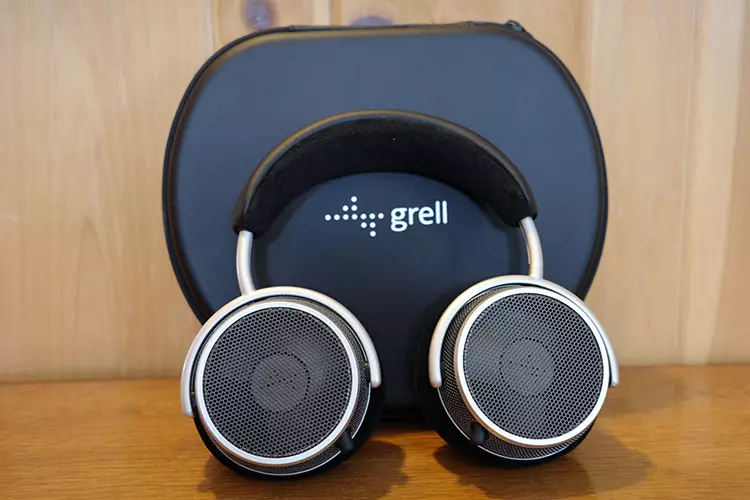
With a nominal impedance of 38 Ω, the Grell OAE2s are fairly easy to drive. Adding power from a quality source does present an additive effect to the music. Some say the better the source, the better the output from the headphones. The OAE2 is an example where this may indeed be true.
That is not to say the OAE2 presents poorly with a less efficient source, but give it proper power, and you are rewarded.
Pairings
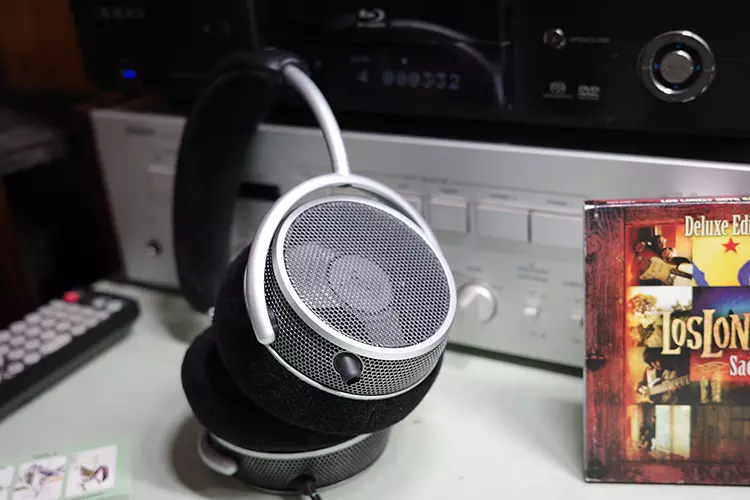
As mentioned above, the more powerful the source, the (potentially) better the result. When using quality offerings across the board, the Grell OAE2 rewarded me with a sound signature that was divine.
JC Acoustics UDP-5
The JC Acoustics UDP-5 has become my de facto desktop amplifier for various reasons. It is reasonably powerful, with a multitude of input options, and I appreciate the neutrality of sound emanating from within.
When paired with the Grell OAE2, the sound coming forth was a force of neutral sound, backed by the note weight that afforded a quality duo such as this.
I found the bass was tight and controlled, while allowing the midrange to shine. Without encumbering the sound, the UDP-5 paired without imbuing a sound signature on the Grell.
Yulong DA-ART Aquila III
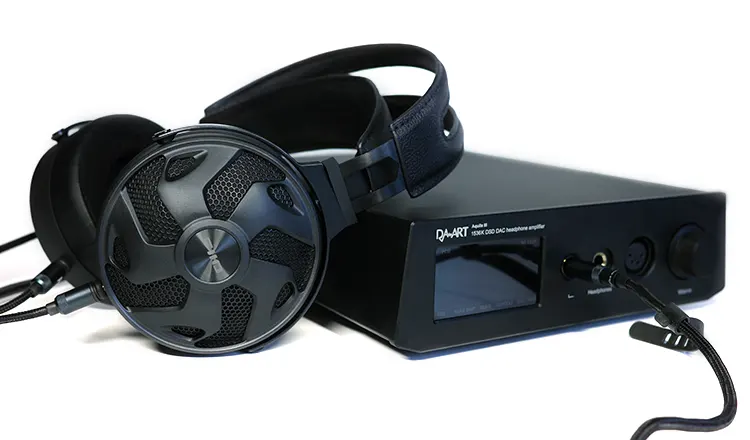
The Yulong DA-ART Aquila III is a beast. With power to burn, the sound is also more frontal in response to inputs. There is also a preponderance of high-end staccato response, punctuating that shortness into a bit too much sometimes.
When paired with the Grell OAE2, though, I found the duo intoxicating. While I might not have been able to raise the volume to the levels of the UDP-5 above, I found better detail response coming from this duo.
The clarity of notes, founded in that staccato response, lays bare any potential misgivings in clarity from the input. The honesty with which the duo played across many genres provided a nice counter to the JC Acoustics.
Cayin N6ii
The Cayin N6ii, to me, is an outstanding DAP, and paired equally well with the OAE2. This would make (and did) an outstanding portable pairing should the need arise.
For those times when you may want something to travel with, the duo presented the warmth and richness of the Cayin, pairing with the neutrality of the OAE2, making for a quite acceptable duo should traveling be the flavor.
HiBy R4
The HiBy R4 also presented a competent duo, but with a less detailed response than the other options. Feeding it into the desktop amplifiers helped, but when running the R4 alone with the OAE2, I did find the pairing worked to my satisfaction.
The Grell OAE2 works well across many platforms and many genres, which can be attributable to the time spent tuning the headphone.
Selected Comparisons
Crosszone CZ-10 Enhanced
Features
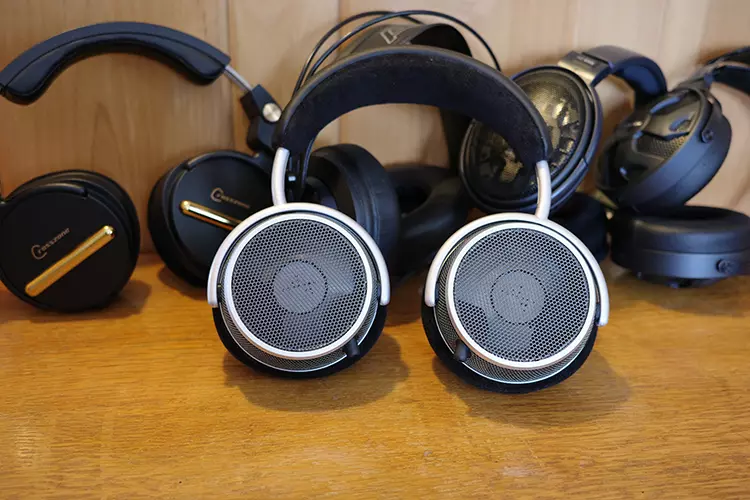
The Crosszone CZ-10 Enhanced is a set of closed-back dynamic driver circumaural headphones. They are rated at a fairly high 75Ω impedance with a sensitivity of 99 dB @1kHz, meaning good quality voltage-bias amplifiers might be ideal.
They are equipped with no less than 3 dynamic drivers of varying size per side, with each driver covering a specific frequency range. The inclusion here is for its unique chamber design, which follows the Grell OAE2 in a different design philosophy.
Two drivers (for high and low frequencies) create the direct sound, and another 35mm driver creates what is defined as a reverse channel sound.
Sound is actually fed into each side from the other, creating a stereophonic effect, not unlike the speaker response design of the OAE2s.
Crosszone has implemented this specific configuration in the Crosszone CZ-10 Enhanced to achieve an out-of-the-head listening experience akin to how you hear a set of stereo speakers.
The Grell OAE2s soundstage not only mimics a speaker set-up but also presents a slight out-of-head experience.
This does not mean that there is a 3-way crossover. They use high-frequency and low-frequency drivers to create the “direct sound” that faces the ear canal.
The Grell OAE2s design is much simpler, while focusing on the ear chamber design with the baffles and frontal placement of the dynamic driver.
The other driver is responsible for the sound from the opposite channel, as if your left ear can also hear what your right ear can hear, but with a short delay, achieved by the two air chambers that physically delay the waveforms.
Both headphones sport a spacious soundstage response, but I found the OAE2 filled in the space a bit better, whereas the Crosszone created an airier sound.
Design
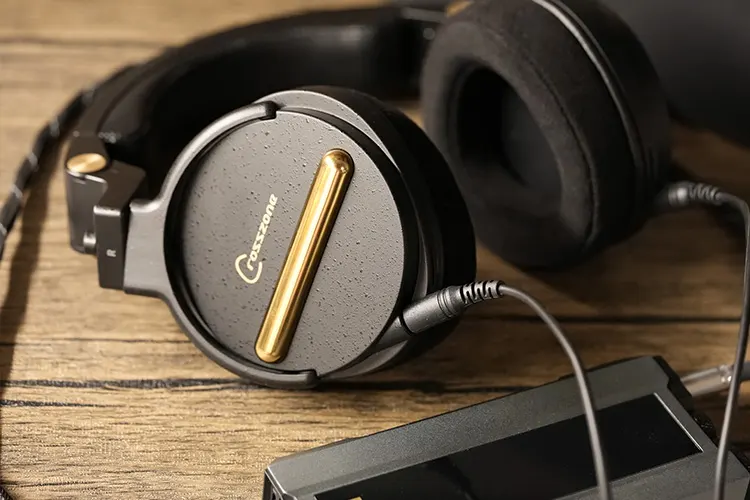
The structure of the CZ-10 Enhanced version is very differentiated from the competition, in its triangular ear chamber design.
The molded plastic framework and a broad headband enhance the weight distribution. Everything looks bold and firmly constructed with a smooth finish and a very Japanese-styled external paint scheme.
The comfort on both is similar, but I can feel the added weight of the Crosszone, even with the design aspect. That said, both are eminently comfortable for long periods, and the unique hinged design of the CZ-10 makes up for the additional weight between the two.
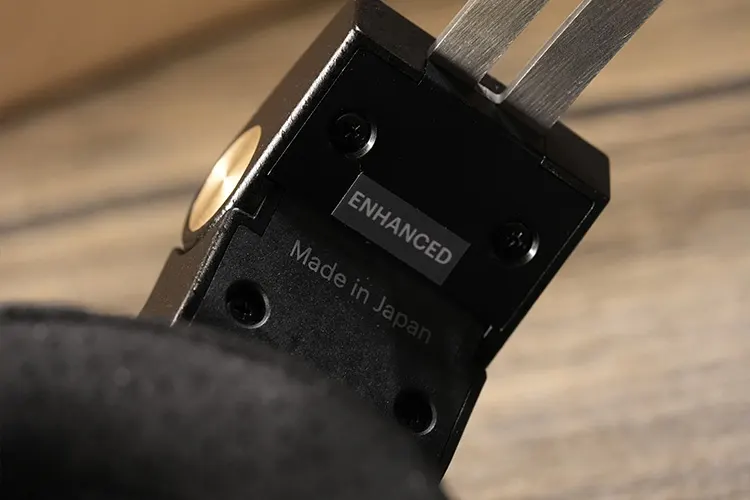
A gold-plated bar accents the external cup design, which looks quite attractive. It is not only for decoration, but there are also special constructions inside for the original ADC (Acoustic Delay Chamber) technology.
Performance
The CZ-10 sounds every bit as good as it looks. The stereophonic response across different genres can in large parts be attributable to the design.
But putting that into play makes for an even tonality that, while not as neutral as the OAE2, makes for a very competent signature.
Vocals and various instruments still maintain their distinguishable image and sound well separated, just with a bit more air between those instruments and notes than the Grell.
The unconventional placement of the drivers emphasizes the depth and intensifies the layering effect and texture. It also renders the stage in a lively way I have never experienced before, without sacrificing technicalities or sounding muffled or unnatural.
The out-of-head experience is wider, but not any higher than the OAE2. The slight thinning of notes of the CZ-10 can be heard versus the filling in of the space from the OAE2. The Grell does so without confining or mixing individual tones, too.
Drop x Sennheiser HD 6XX
Features
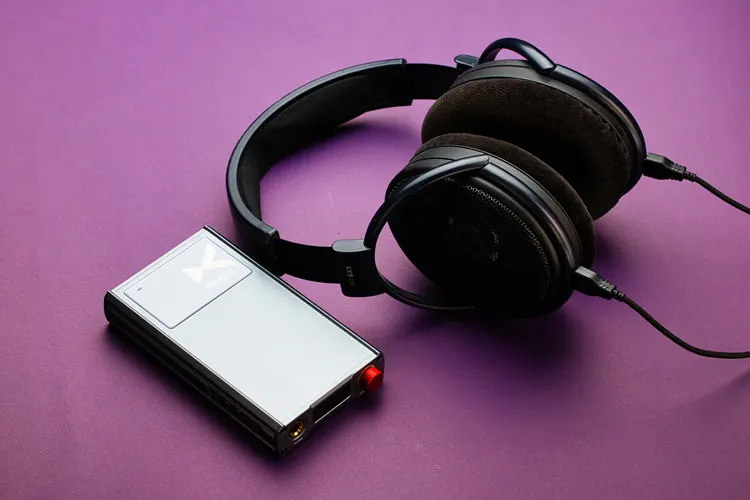
Another of the affordable, high-impedance open-back headphones, the HD 6XX comes with the familial 42 mm transducer and 38 mm diaphragm of the HD 650.
A frequency response of 10 Hz – 41 kHz and a nominal impedance of 300Ω make the HD 6XX harder to drive than the Grell OAE2. I had to raise the volume levels on average by about -8dB to mentally equalize between the two.
The cable sports the familiar Sennheiser dual-pin attachment jack, which you will either love or hate. But the proprietary nature of the cable and connection limits aftermarket cables somewhat.
Design
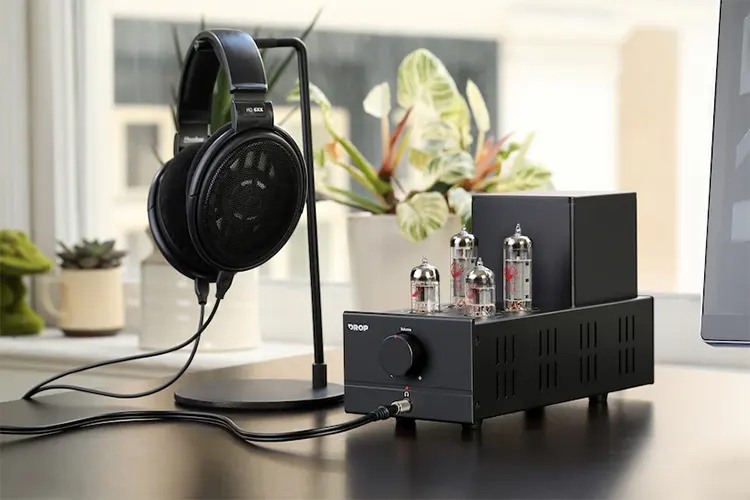
The tried-and-true 6XX series carries the familiar teardrop ear cup shape of its Sennheiser kin, one of the most recognizable shapes around. The clamping pressure is high, much higher than the Grell OAE2, in fact.
The Grell accomplishes what the HD 6XX does with a much more comfortable pressure. This, of course, lends itself to longer, more comfortable listening sessions.
The teardrop-shaped cups do help alleviate this a bit, but I found the narrow bottom portion hit my ear, and long sessions became an exercise in how long I could stand it. Props to Grell for comfort.
A single band provides the support, with a much higher clamp pressure than the Grell OAE2s single band, as mentioned above.
Fit is good, even with the narrower ear cups, but that increased clamp pressure presented more discomfort in long sessions than I cared for, versus the OAE2.
The stock cable is shorter than most, and much has been said about it. A somewhat easy change for a modest amount can alleviate this, but you cannot use existing cables that you may already own.
It is acceptable for portable use (provided your source can accommodate the higher impedance), but not too long. Portability is the mark here, versus listening sessions for the OAE2.
Performance
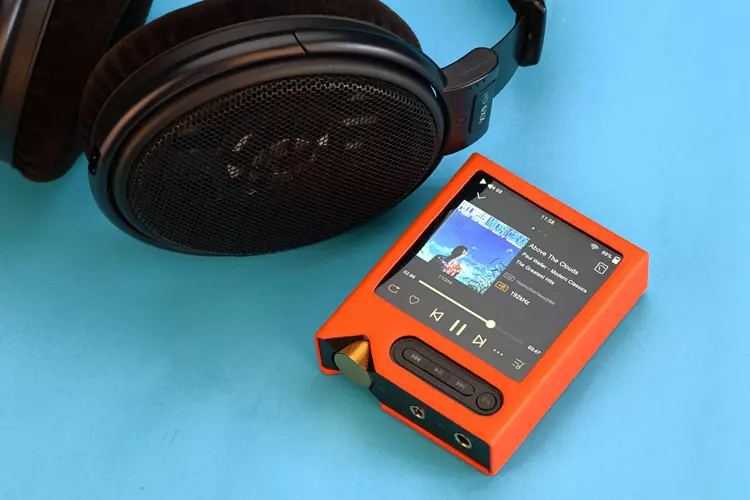
When going after the “king,” so to speak, one best not miss. In Michael’s review of the HD 6XX, he noted, “…quite literally the best open-back headphone deal that exists and I hope it forces Sennheiser to wake up and go back to their roots.” That sound belies the comfort issues mentioned above. For shorter sessions, anyway.
The smooth, laid-back presentation, with a balanced midrange and natural-sounding bass, makes for a wonderful near-reference-like signature. Mids, including vocals, are sublime, and presented with slightly better authority (note-weight) than the Grell OAE2, but only minimally so.
The bass hits harder, but the presentation of the Grell carries across the three spectrums better, with a neutral fullness to the sound than the HD6XX. You can hear the family resemblance, but the Grell OAE2 shows the full signature more fully.
The HD6XX is indeed harder to drive. When used with an acceptable source such as the Aquila III, the listener is rewarded much like the OAE2, which does not require as much power. The Grell OAE2 does benefit from a more powerful source, though, making this almost a draw.
Detail retrieval and clarity are good when properly driven. The similarities in both can be heard, but the Grell OAE2 does present a more neutral signature that may come across better due to a lack of coloration.
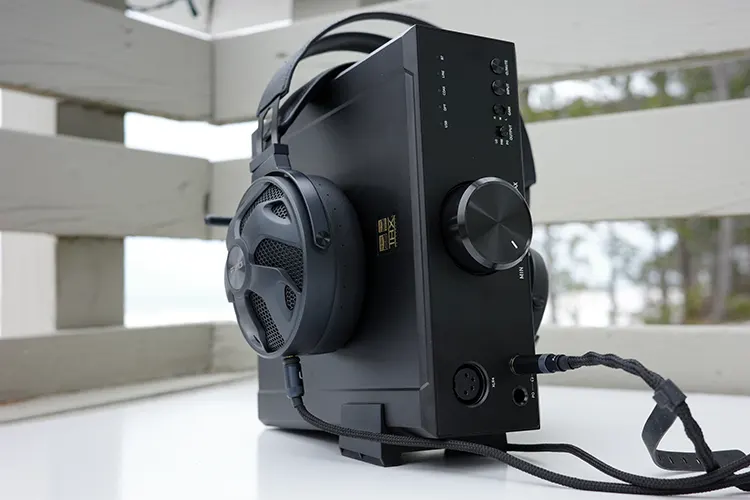
FiiO FT3 32 Ohm
Features
The FT3 32Ω uses a 60mm dynamic driver switching to an LCP Aluminum metal-plated gasket, and an aluminum metal diaphragm compared to the Beryllium-plated gasket of the 350Ω edition. The Grell OAE2’s smaller dynamic driver does not put it at a disadvantage.
The rated sensitivity rises to 110dB @1kHz, and the OAE2 is lower at 100 dB at 1 kHz, 1 VRMS.
Both are easy to drive for those who do not have an amplifier capable of handling the higher-impedance headphones. But the Grell benefits more from a powerful source than the FiiO.
The drivers are angled slightly forward for better placement in the sound signature within the sphere of your ear. While similar to the Grell, the FiiO keeps the driver centrally located, instead of more frontal. Similar, but different.
The stock cable is shorter and keeps its memory from being coiled up in a worse manner than the easier-to-use Grell OAE2 cable. There are slightly more microphonics associated with the FiiO cable comparatively, but both lay quite nicely while in use.
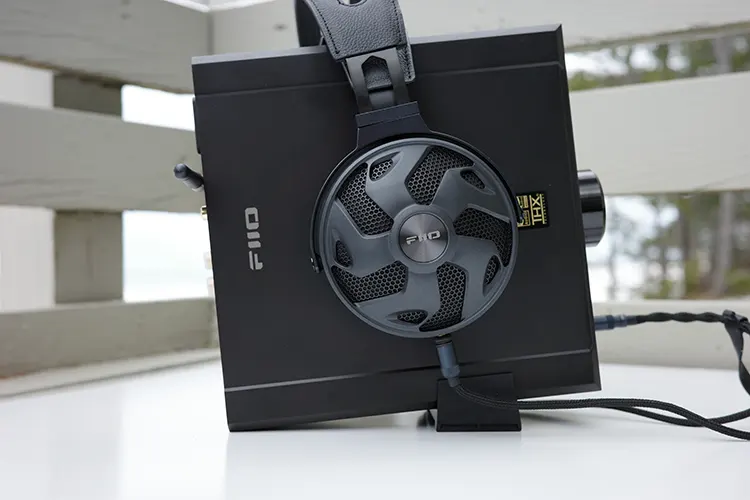
Design
A stark contrast in design separates the two, with the “spider-like” look of the FT3s making for a futuristic look as opposed to the refined, elegant, and more traditional look of the OAE2.
The FiiO FT3 32Ω all-aluminum open design still has the airflow potential of the Grell OAE2. Plus, I found that neither “suffer” from the “hands over the outside of the cups” test, as some open backs will.
The spoked spider-like wheel design on the back takes a bit of getting used to (as mentioned), but with its unique design, I have come to appreciate it. I do prefer the elegant look of the OAE2, though.
The suspension system has a strap extending through both sides of the sub-suspension, instead of the single headband of the OAE2. There is a kind of trampoline suspension to the FT3 32Ω, but one that does not bounce once the headphones are in place.
The suspended subsystem can touch the outer headband, but I never encountered this, not even while wearing a hat. I do like this sub-suspension design, due to the tension provided, which was neither too much nor too little.
The fit is a bit tighter than the Grell OAE2, but I found both could be worn for long listening sessions, as opposed to some here.
The gray coloring of the cup and spokes makes a nice, subdued look, and those spokes look like a raven running if you look closely. This subtlety does make up a bit for the modernistic look, moving closer to the Grell than not.
Performance
The FT3 32Ω is easy to drive, and with the ability to change pads quickly (I prefer the suede, just like on the FT13), you can tailor the sound with two distinct signatures. I did find the FT3 32Ω easier to drive than the OAE2s by about -10 dB on the Aquila III.
The FT3 32Ω embodies a certain amount of warmth and richness at the expense of some clarity, instead of the neutrality presented in the Grell OAE2.
The FT33 2Ω comes across with very good detail retrieval and cohesiveness, but with a more frontal (and slightly lifted) approach. That frontal approach, while similar to the OAE2, comes at the expense of the lows and highs, which are set back further than the midrange as a result.
The suede exclusive pads exude a warmer signature, while the combination pleather/suede pads give more detail with a bit deeper reach down low.
The soundstage on the FT3 32Ω is quite wide and deep, giving the notes room to spread out, but not become too thin. With good height too, it almost reaches the OAE2’s broad expansiveness, but I have to give the nod to the Grell for overall quality.
That frontal attack of sound becomes too much for me, even with the smoother character, and the Grell OAE2 presents a solid foundation without singling any part out.
My Verdict
The Grell OAE2 is a fabulous open-backed headphone that promotes a neutral sound, allowing the music to draw you into a space where listening is pure joy.
You are moved to listen without promoting any preferences, interferences, or persuasions.
What you hear is what you get, and that might be the best aspect of the OAE2’s tuning. Not coloration or a tendency to flaunt one part over another, not even more warmly or conversely, analytically.
No, the tuning of the Grell OAE2 gives the listener what they want: the music unadulterated, uncolored, and mostly neutral. If the bass goes deep on the source, the OAE2 presents what it can, without becoming muddied or overexuberant in presentation.
Add in the top end, which extends gloriously without having a strident or glaring nature, and you have the yin and yang of tuning on both ends.
The midrange moves frontally, without any lifting, making for a naturalness that pairs with the overall neutral signature. I appreciated that there was no lifting or false moving of any parts.
The design and implementation of the OAE2s driver and baffle played a big part in that. One of the “whole is a function of the parts placed together,” with overall functionality in mind.
If I had to quibble, it might be the lack of hard-hitting bass, but that would be minor, since this would indeed affect the overall signature in an adverse manner. Another fault might be the cable insertion point, which leaves the wire without a plastic protective sheath.
Throw in the soundstage, which presents a natural representation, continuing those neutral tendencies, and the Grell OAE2 presents a whole package. The build quality only helps to further that into the whole of the listener’s experience.
Grell OAE2 Technical Specifications
- Frequency response: 12 – 34,000 Hz (-3 dB), 6 – 46,000 Hz (-10 dB)
- Transducer principle: dynamic
- Ear coupling: circumaural
- Sound characteristics: front-oriented loudness, diffuse field equalization
- Adaptation to individual hearing curve: sound-field pinna interaction
- Nominal impedance: 38 Ω
- Sound pressure level: 100 dB at 1 kHz, 1 VRMS
- Maximum long-term input power: 500 mW (according to IEC 60268-7)
- Total harmonic distortion: 0.05 % at 1 kHz, 100 dB
- Weight without cable: 378 g
- Headband clamping force: 2.5 N
- Headphone connection: 2.5 mm TRRS plug
- Connection to a device: 3.5 mm stereo plug, 3.5 mm to 6.3 mm screw adapter (6.3 mm stereo plug), balanced cable (4.4 mm TRRRS plug)
- Cable: 2 x 1.8 m silver-plated OFC cable
